 Lynden Exterior
 Two Fiber Cement Products, One Big Difference in the Details
If you've been researching siding for a home in Lynden, you've probably noticed that "fiber cement" isn't a single product — it's a category. Cemplank and James Hardie both make cement-based lap siding, panels, and trim. Both resist fire, rot, and pests better than wood. Both hold paint far longer than vinyl. On paper, they look similar enough that a lot of homeowners assume the choice comes down to price.
It doesn't. We've installed fiber cement siding across Whatcom County long enough to have an opinion, and that opinion is that James Hardie is the only fiber cement brand we put on a home. This page explains what Cemplank does well, where it falls short of what we require for a Lynden install, and why we won't compromise on the brand even when it would be cheaper to say yes.
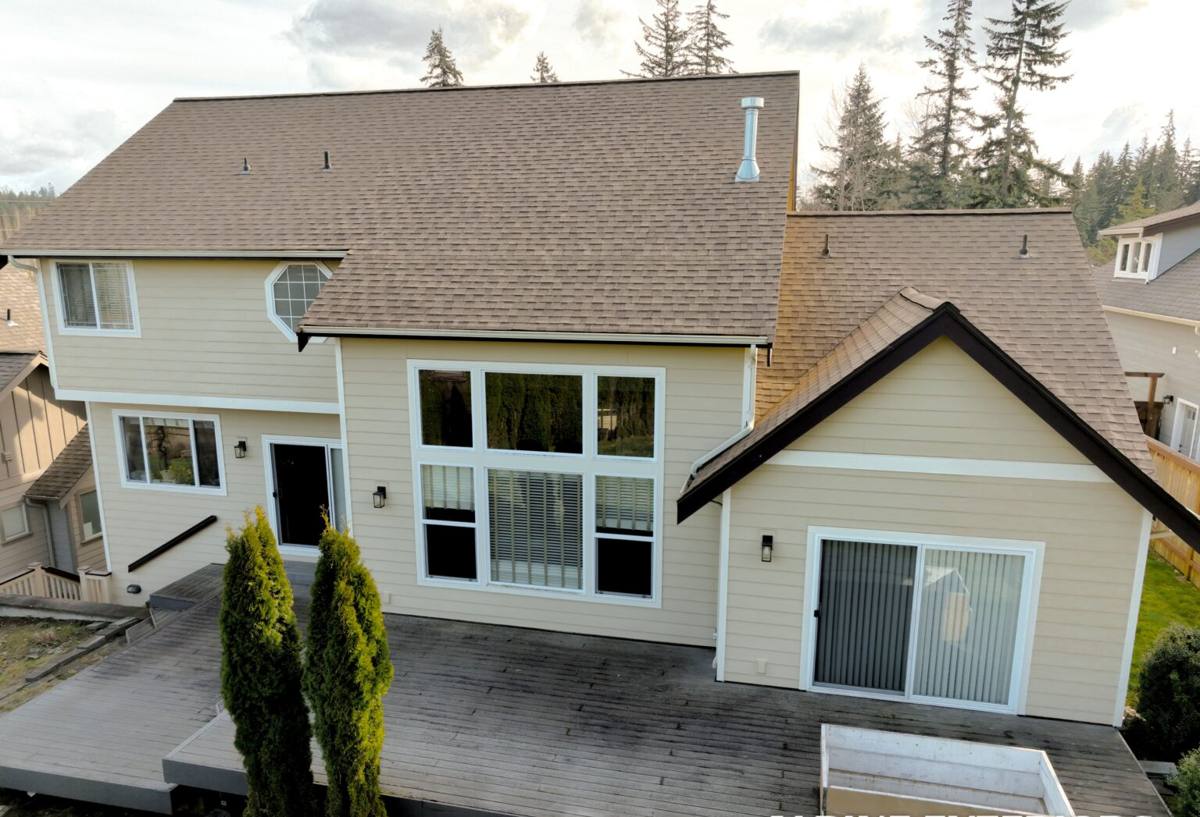
What Cemplank Gets Right
We're not going to pretend Cemplank is a bad product — it isn't. It's manufactured by Plycem, and it's a legitimate fiber cement siding that competes on price against Hardie in a lot of markets. Credit where it's due:
- It's non-combustible, like all true fiber cement, which matters more every wildfire season even here on the wetter side of the Cascades.
- It holds up better than wood or vinyl against woodpeckers, carpenter ants, and moisture-driven rot.
- It's available in lap, panel, and trim profiles that mimic traditional wood siding styles.
- It's generally less expensive per square foot than James Hardie, which is exactly why it shows up in a lot of bids.
If price were the only variable, Cemplank would be a reasonable siding choice for plenty of homes. The problem is that price isn't the only variable in Lynden.
Where the Comparison Gets Real
The gap between Cemplank and Hardie isn't in the raw material chemistry — both are cellulose-reinforced fiber cement. It's in the manufacturing consistency, the factory finish system, the engineering behind moisture management, and the warranty that stands behind the product for decades on a house that sits through Whatcom County winters.
Whatcom County's Climate Doesn't Forgive Shortcuts
Lynden sits inland from Bellingham Bay, but this is still marine Pacific Northwest weather — moisture-laden air moves in off the Salish Sea, and the Nooksack lowlands hold onto damp, overcast conditions for long stretches of the year. Add driving rain off winter storms and a moss season that can run from October well into spring, and you get a climate that actively hunts for weak points in a siding system.
Salt-tinged coastal air accelerates corrosion on fasteners and hardware. Sustained rain finds any gap in flashing or caulk and pushes water behind the cladding. Moss and algae thrive in the shade and shelter of tree-lined lots common around Lynden, and they don't just look bad — they hold moisture against the siding surface far longer than a dry climate would ever allow.
A siding product with an inconsistent factory finish, thinner engineered performance, or a warranty full of exceptions is exposed fastest in exactly this kind of weather. That's the environment we're building for, and it's the lens we use to judge every material that goes on a house here — not a showroom, not a dry-climate spec sheet.
Head-to-Head: What Actually Matters
| Factor | Cemplank | James Hardie |
|---|---|---|
| Base material | Fiber cement | Fiber cement, climate-engineered (HZ5 for this region) |
| Factory finish | Painted options available, consistency varies by line | ColorPlus baked-on finish, engineered for UV and moisture resistance |
| Regional engineering | General-purpose formulation | HZ product lines matched to specific climate zones |
| Fire resistance | Non-combustible | Non-combustible |
| Warranty | Manufacturer-backed, varies by product | Long, transferable, backed by the industry's largest fiber cement manufacturer |
| Installer network depth | Smaller regional presence | Well-established trained installer base in the Pacific Northwest |
| Upfront cost | Generally lower | Generally higher |
The upfront cost gap is real, and we won't pretend otherwise. But siding is a 20-to-40-year decision, and the numbers that matter most are the ones on the back end — how the finish holds up, how the warranty performs if something goes wrong in year twelve, and whether the product was engineered for this specific climate or just fiber cement in general.
Factory Finish: The Part Nobody Sees Until It Fades
This is where the two products separate the most in real-world performance. James Hardie's ColorPlus finish is baked on in a controlled factory environment through multiple coating and curing stages, specifically engineered to resist UV fading and hold up against the freeze-thaw and moisture cycling common in Whatcom County winters. It comes with a finish warranty that's separate from — and in addition to — the product warranty on the substrate itself.
Cemplank offers painted and factory-finish options, but the consistency and depth of that finish system isn't built to the same standard, and the warranty coverage on the finish itself is typically narrower. On a home exposed to driving coastal rain and long stretches of moss-friendly shade, a finish that starts chalking or fading early doesn't just look tired — it's often the first sign that moisture is getting past the surface layer faster than it should.
Installation Sensitivity: Why the Installer Matters As Much As the Product
Every fiber cement product — Cemplank included — is installation-sensitive. Improper fastening, missed clearances, wrong caulk in the wrong joint, or skipped flashing details will shorten the life of any fiber cement siding regardless of brand. This is one reason we don't spread ourselves across multiple product lines: mastering one system's exact specifications, fastening patterns, and moisture-management details is how you avoid callbacks ten years down the road.
James Hardie backs that installation discipline with a certified installer network and manufacturer specifications that are well-documented and widely trained on in this region. That combination — one product, deep installer familiarity, manufacturer-backed specs — is what actually protects a homeowner's investment, more than any single feature on a spec sheet.
What a Homeowner Should Ask Any Siding Contractor
- Which specific fiber cement brand and product line are you quoting, not just "fiber cement"?
- Is the installer certified or specifically trained on that manufacturer's installation requirements?
- What does the warranty actually cover — substrate, finish, labor — and is it transferable if you sell the home?
- Is the product engineered for this climate zone, or is it a general-purpose formulation?
- What fastener and flashing details will be used at seams, corners, and window returns?
Why We Standardized on One Product
We don't install LP SmartSide, vinyl, Cemplank, Allura, or primed wood siding — not because every one of those products is worthless, but because we made a decision to build our entire process, training, and warranty support around one manufacturer whose climate-engineered lines, factory finish, and warranty structure match what a Lynden home actually needs to survive. Splitting our installation expertise across five or six competing fiber cement brands would mean being mediocre at all of them instead of excellent at one.
James Hardie's HZ5 line is specifically engineered for the kind of wet, moderate-freeze climate that defines western Washington. Combined with the ColorPlus finish system and a warranty that transfers to a new owner if you sell, it's the product we're willing to put our name behind for the decades a siding job is supposed to last.
What This Means for Your Project
If you're comparing bids and one contractor is offering Cemplank at a lower price, that's not automatically a red flag — it may be an honest, competitively priced product for your situation. But go in with your eyes open about what you're trading for that lower number: a less climate-specific engineering spec, a narrower finish warranty, and a smaller pool of installers who've spent years learning that exact product's quirks.
For a home in Lynden dealing with salt-touched coastal air, sustained rain, and a moss season that tests every seam and joint, we think that trade-off isn't worth it. That's our professional judgment, not a knock on every homeowner who chooses differently.
Let's Talk About Your Home Specifically
Every house is different — sun exposure, tree cover, wall orientation to prevailing wind and rain all change what your siding actually has to withstand. If you'd like a straight answer about what James Hardie siding would look like on your Lynden home, including realistic cost ranges and what the installation process involves, request a free estimate below. No pressure, no upsell — just a clear look at your options.