 Lynden Exterior
 Exterior Work Built for Sumas Weather
Sumas sits at the far north edge of Whatcom County, tucked against the Canadian border and close enough to the water and the foothills that its homes take a particular kind of beating. It's not one dramatic storm that wears out a house here — it's the accumulation. Driving rain that comes in sideways for days at a time. Salt-tinged marine air drifting in off the Sound and up the valley. A moss season that, depending on the year, can stretch from October clear into May. None of that is exotic or unusual for this part of Washington, but it adds up fast on the parts of a house that are exposed to it year-round: siding, roofing, trim, decks, and windows.
We work throughout the Lynden area, and Sumas is part of that territory. The houses out here range from older farmhouses to newer builds, but the exterior problems tend to rhyme: paint that won't hold, trim that rots at the joints, roofs that stay damp longer than they should, and decks that turn green and slick well before they're structurally old. None of that is inevitable. It's a function of what materials were used, how they were installed, and whether anyone's been keeping up with basic maintenance.
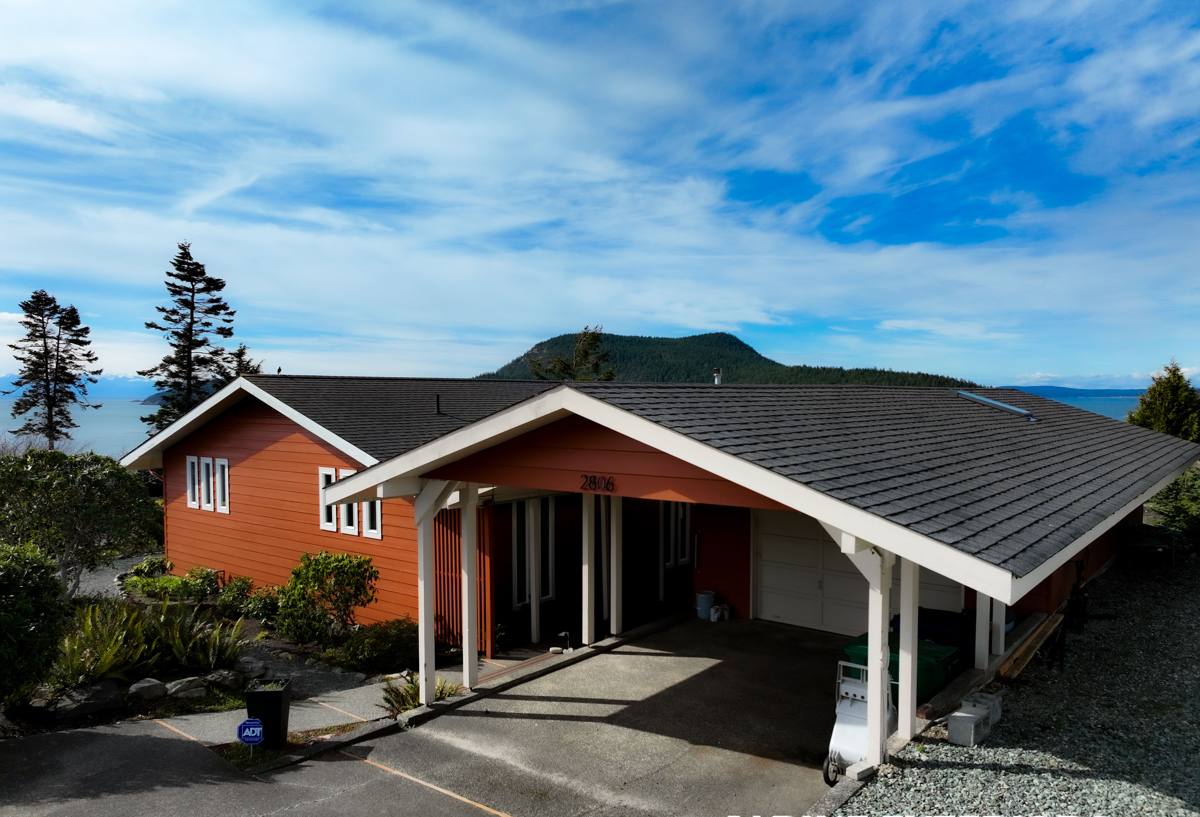
What Driving Rain and Salt Air Actually Do to a House
It helps to be specific about the mechanism, because "the weather's rough here" doesn't tell a homeowner what to actually watch for.
Driving Rain
Wind-driven rain doesn't just fall on a wall — it gets pushed sideways and upward into laps, seams, and fastener holes. Over years, any gap in a siding system's water management becomes an entry point. Wood-based products swell and shrink with repeated wetting and drying, which eventually opens joints and cracks paint film. Once water gets behind siding, it doesn't dry quickly in a climate this humid, and that's when rot and mold start.
Salt Air
Coastal and near-coastal air carries fine salt particles that accelerate corrosion on anything metal — flashing, fasteners, gutters, hardware — and can degrade certain coatings faster than they'd wear inland. It's a slower effect than rain damage, but it's a real one, especially on the side of a house that faces prevailing weather.
Moss and Prolonged Dampness
Whatcom County's moss season is long because the conditions moss needs — shade, moisture, mild temperatures — are present for most of the year. Moss on a roof isn't just cosmetic. It holds moisture against shingles, works its way under tabs, and can shorten a roof's usable life if left unchecked. On decking, algae and moss buildup makes surfaces slick and start to break down softer woods and coatings faster than dry-climate wear ever would.
Siding: Why We Only Install James Hardie
We made a decision a while back to stop installing several common siding products — not because they can't work anywhere, but because we don't think they hold up well to the specific combination of conditions this region throws at a house year after year. We only install James Hardie fiber cement siding now. Here's the honest reasoning.
What We Stopped Installing, and Why
- Vinyl siding is affordable and low-maintenance in mild climates, but it can warp or become brittle with temperature swings, and it relies heavily on trim and flashing details done right the first time — there's little margin for error in a wet climate.
- LP SmartSide and other engineered wood products perform reasonably well when installed and maintained perfectly, but they're wood-based at the core, meaning sustained moisture exposure is their biggest long-term risk — exactly the exposure Sumas homes get.
- Primed spruce and cedar are traditional and can look great, but they demand a repainting and caulking schedule most homeowners can't realistically keep up with in a climate this wet, and the failure point is almost always moisture intrusion at seams and end grain.
None of these are bad products in the abstract. They're just products whose weak points line up too closely with what this climate does worst.
Why James Hardie
Fiber cement is non-combustible and dimensionally stable — it doesn't swell and shrink with moisture the way wood-based siding does, which means paint and caulk joints hold up longer under repeated wet-dry cycles. Hardie's HZ5 product line is engineered specifically for climates with more moisture exposure, which fits this part of Washington. The factory-applied ColorPlus finish is baked on under controlled conditions, so it resists fading and chipping better than field-applied paint, and it comes with a meaningful warranty backing both the substrate and the finish. It's not the cheapest option on the shelf, but for a house that's going to sit through decades of Pacific Northwest weather, it's the one we're willing to put our name behind.
Roofing in a Long Moss Season
Roofing in this area is less about surviving one big storm and more about managing sustained dampness. A roof that drains poorly, holds debris in valleys, or has moss taking root under the tabs will age faster than the same roof properly maintained in a drier climate. We look at ventilation, underlayment quality, and flashing details as much as the shingle or panel choice itself, because those are usually where problems start. Metal roofing has gotten more popular in this region for good reason — it sheds moss and debris better than asphalt and handles driving rain well — but it's not automatically the right call for every home or budget, and we'll walk through the real trade-offs rather than push one material.
Decks That Hold Up to Wet Winters
A deck in Sumas spends a lot of the year damp, shaded part of the day, and collecting leaf litter and moss spores. That combination is hard on softwood decking and on fasteners that aren't rated for the exposure. When we build or replace a deck, the framing, fastener corrosion resistance, and drainage under the deck surface matter as much as the decking material on top. A deck that looks fine but was framed with the wrong hardware for this climate is a problem that shows up as rot a few years down the road, not immediately.
Windows: The Overlooked Piece
Windows don't get discussed as often as siding and roofing, but they're one of the most common leak points on older homes in this area. Failed seals, degraded flashing around the window opening, and old single-pane units all contribute to both moisture problems and energy loss. When we're already working on siding or trim, it's worth having windows assessed at the same time, since the flashing details around a window are tied directly into how well the surrounding wall sheds water.
What Drives Cost on These Projects
Every house is different, but these are the factors that most often move a project's price up or down in this area.
| Factor | Why It Matters |
|---|---|
| Existing wall/roof condition | Hidden rot or moisture damage found during removal adds repair work before new material goes on |
| Home size and complexity | More corners, dormers, and roof planes mean more flashing detail and labor time |
| Material selection | Fiber cement, metal roofing, and quality decking cost more up front than budget alternatives, but usually less over the life of the house |
| Access and site conditions | Steep lots, limited driveway access, or landscaping close to the house affect scaffolding and material staging |
| Scope bundling | Combining siding, roofing, or deck work in one project can reduce total mobilization and setup costs |
Why a Local Crew Matters Here
A contractor who mostly works drier inland climates will make different assumptions than one who works this stretch of Whatcom County every week. Flashing details that are optional elsewhere aren't optional here. Product choices that are fine in Eastern Washington aren't necessarily fine a few miles from the water. Knowing how a house in Sumas actually weathers — not in theory, but from having repaired the ones that were done wrong — changes how a job gets built from the start.
Simple Maintenance That Extends the Life of Your Exterior
Regardless of who installed your siding, roof, or deck, a few habits go a long way in this climate:
- Clean gutters at least twice a year, more often if you're under trees
- Check roof valleys and north-facing slopes for moss buildup each fall
- Keep vegetation trimmed back from siding to allow airflow and sun exposure
- Inspect caulking and trim joints annually, especially on the weather-facing side of the house
- Sweep and periodically treat deck surfaces to prevent moss and algae buildup
- Address small leaks or stains immediately rather than waiting for the next dry season
If you're dealing with aging siding, a roof that's holding onto moss longer than it should, or a deck that's seen better days, we're happy to take a look and give you a straightforward, no-pressure estimate. Use the form below to get started.