 Lynden Exterior
 Exterior Work Built for Nooksack's Climate
Nooksack sits in the northern reach of Whatcom County, close enough to the Salish Sea and the Nooksack River valley that homes here deal with a specific combination of weather stresses: damp marine air moving in off the water, long stretches of driving rain through fall and winter, and the kind of low light and standing moisture that keeps moss and algae active for most of the year. None of that is unusual for this part of Washington, but it adds up differently on a house than it does on a lawn or a fence post. Exterior materials that aren't built for sustained moisture exposure show it first — soft trim, swelling siding seams, roof edges that stay damp long after a storm has passed.
We work throughout Lynden and the surrounding Whatcom County communities, and Nooksack's homes get the same close attention as anywhere else on our route. Being local means we already know what this climate does to a house over ten or twenty years, not just what a product spec sheet claims it can handle.
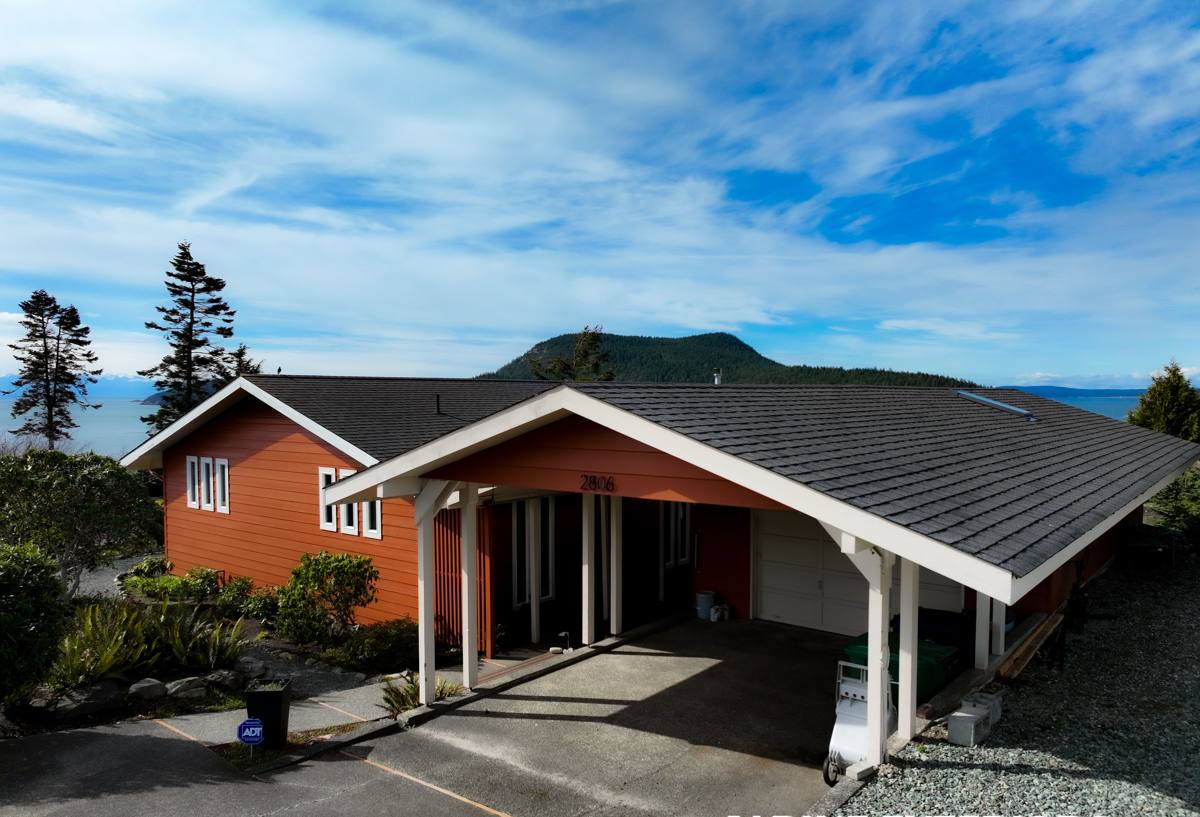
What Nooksack Homes Face
Salt Air and Moisture
Proximity to Puget Sound and Bellingham Bay means the air carrying rain inland also carries salt. Salt-laden moisture accelerates corrosion on fasteners, flashing, and any metal component on a home's exterior, and it speeds up the breakdown of coatings and finishes that aren't engineered to resist it. Over time, this shows up as premature fading, chalking paint, and rust streaking at seams and joints.
Driving Rain
Whatcom County doesn't just get a lot of rain — it gets wind-driven rain that hits siding and window assemblies at an angle instead of falling straight down. That matters because it pushes water into laps, seams, and trim joints that a vertical rain would never reach. A siding system with poor water-shedding detail, or installation that skips proper flashing and caulking sequence, will let that water find a way behind the cladding.
Moss and Algae Season
Between the shade cover common in this area and the extended damp season, moss and algae have a long window to establish themselves on roofs, north-facing siding, and shaded trim. Left unchecked, moss holds moisture against roofing material and siding surfaces far longer than open air would, which shortens the service life of whatever is underneath it.
Siding: Why We Only Install James Hardie
We install James Hardie fiber cement siding exclusively. We don't install vinyl, LP SmartSide, Cemplank, Allura, primed spruce, or cedar, and that's a deliberate standard, not an oversight. Each of those alternatives has legitimate uses and reasonable upfront cost, but each also carries a real-world trade-off in a climate like this one:
- Vinyl siding expands and contracts with temperature swings and can warp or crack under impact; it also isn't a moisture-managed rainscreen system the way Hardie's installation method is.
- LP SmartSide is an engineered wood product — wood-based products depend heavily on flawless caulking and paint maintenance to resist moisture, and any breach in that maintenance schedule invites swelling or rot faster than fiber cement will.
- Cemplank and Allura are also fiber cement, but they don't carry Hardie's factory-applied ColorPlus finish system or the same track record and warranty structure we've come to rely on for climate-engineered product lines.
- Primed spruce and cedar are natural wood — beautiful, but they require the most ongoing maintenance of any option here, and in a county with this much sustained moisture, that maintenance burden is significant and unforgiving of gaps.
James Hardie fiber cement is non-combustible, dimensionally stable in wet-dry cycling, and available in HZ5 formulations engineered for cooler, wetter climate zones like the Pacific Northwest. The ColorPlus factory finish is baked on under controlled conditions, which gives it more consistent, longer-lasting color retention than field-applied paint — something that matters directly in an area dealing with salt air and UV combined. Hardie also backs its siding with a strong transferable warranty, which carries real weight for anyone who might sell the home down the road.
None of that replaces correct installation. Fiber cement performs the way it's rated to perform only when joints, flashing, fastener patterns, and clearances are done to manufacturer spec — which is exactly the kind of detail work that separates a siding job that lasts twenty-plus years from one that fails at the seams in five.
How Hardie Siding Compares
| Material | Moisture Behavior | Maintenance | Typical Lifespan |
|---|---|---|---|
| James Hardie Fiber Cement | Dimensionally stable, moisture-resistant core | Repaint/recoat only after finish wears, no rot risk | 30+ years with proper install |
| Vinyl | Doesn't absorb water but can trap it behind panels if installed poorly | Low, but prone to warping/cracking | 20-30 years, shorter in impact-prone areas |
| Engineered Wood (LP SmartSide) | Vulnerable at cut edges and seams if caulking fails | Regular caulk/paint inspection required | 20-30 years with diligent upkeep |
| Cedar/Primed Spruce | Absorbs moisture, prone to swelling and rot over time | High — regular sealing/painting needed | 15-25 years depending on maintenance |
Roofing for a Wet, Moss-Prone Climate
Roofing in Nooksack has to manage two things at once: shedding heavy, wind-driven rain and resisting sustained moss and algae growth on shaded slopes. We look at underlayment quality, ventilation, and flashing detail at valleys and penetrations as closely as we look at the shingle or panel itself, because a roof's weak points are almost always at the transitions — chimneys, vents, skylights, and where roof meets wall. Proper attic and ridge ventilation also matters more here than in drier climates, since trapped moisture in an unventilated roof assembly accelerates deck rot from the inside out, independent of what's happening on the surface.
Windows: Sealing Out Wind-Driven Rain
Windows are one of the most common sources of hidden water intrusion in this region, and it's rarely the glass or frame that fails first — it's the flashing and sealant detail around the rough opening. Wind-driven rain pushes moisture sideways into any gap in that seal, and once water gets behind a window frame, it can travel and cause damage well away from the window itself before anyone notices. We install windows with attention to proper flashing sequencing (not just caulk) specifically because Whatcom County's rain patterns punish shortcuts here more than a drier climate would.
Decks: Built to Handle Standing Moisture
Decks in this area face near-constant exposure to damp shade, especially where trees or the house itself block direct sun for most of the day. That combination is exactly what accelerates rot in ledger boards, joists, and fasteners if the deck wasn't built with proper flashing and drainage gaps from the start. We pay particular attention to ledger board flashing (where a deck attaches to the house — a common point of hidden rot) and to gapping and fastener choice that lets water drain and air circulate instead of pooling.
Why a Local Crew Matters Here
A contractor working from outside the county can install a product correctly on paper and still get the climate detail wrong — under-flashing a valley that only floods during a real Whatcom County storm, or skipping extra ventilation because it "usually" isn't needed where they normally work. We're not usually — we're here, seeing what a full wet season does to homes in Lynden and the communities around it, including Nooksack, year after year. That's the difference between a install that looks right at completion and one that's still performing correctly in year fifteen.
What to Expect From a Local Exterior Project
- An on-site assessment that accounts for your home's specific sun exposure, shade pattern, and prevailing wind/rain direction
- Straight talk about which of our four services (siding, roofing, windows, decks) actually needs attention now versus what can wait
- James Hardie fiber cement siding as our only recommendation — no upsell into product lines we don't stand behind
- Flashing and moisture-management detail treated as core scope, not an afterthought
- A written scope of work before anything starts, so there's no ambiguity about what's included
Getting Started
Whether you're dealing with siding that's started to show its age, a roof that's holding moss longer than it used to, windows that let in drafts during a storm, or a deck that needs a real look at what's happening underneath it, we're glad to come take a look. If you're in Nooksack or anywhere else around Lynden and Whatcom County, reach out for a free, no-pressure estimate — we'll walk the exterior with you and tell you honestly what we see.