 Lynden Exterior
 Why We Narrowed Down to One Siding System
Most exterior contractors carry a menu of siding options and let the homeowner pick based on price. We used to do the same. Over years of installing, repairing, and tearing off failed siding jobs across Whatcom County, we stopped offering several products — not because they're worthless, but because our name goes on the warranty call five, ten, twenty years later, and we got tired of standing behind installations we knew were fighting the local climate from day one. James Hardie fiber cement is now the only siding system we install. This page explains the reasoning, not the marketing.
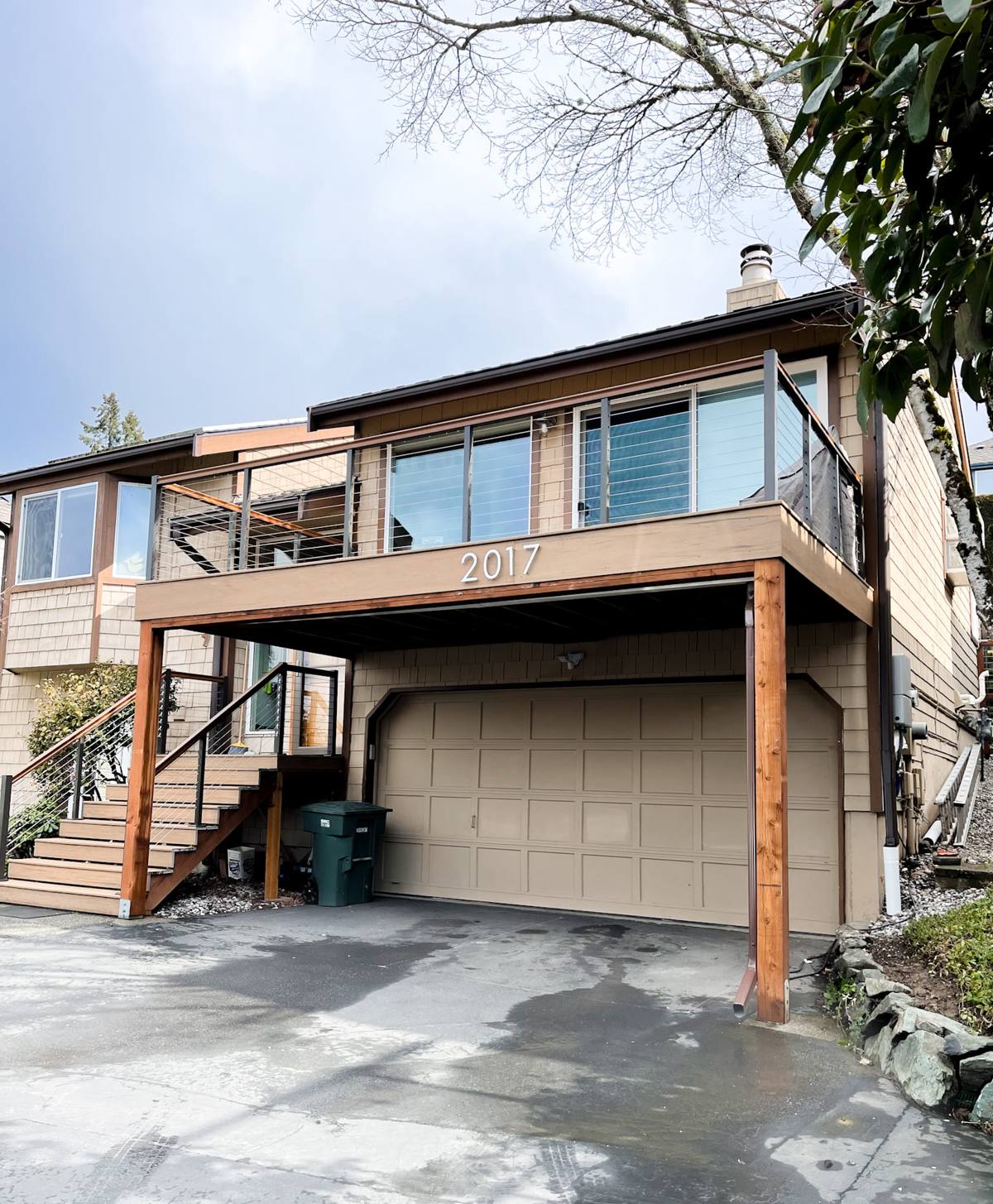
What Lynden's Climate Actually Does to Siding
Lynden sits close enough to the Salish Sea and the Nooksack lowlands that homes here deal with a specific combination of stressors: salt-laden air moving in off Puget Sound and the Strait of Georgia, long stretches of driving rain off the Pacific storm track, and a moss and algae season that can run eight or nine months out of the year in shaded, north-facing exposures. None of these alone is unusual for the Pacific Northwest. Together, over decades, they separate siding products that hold up from products that need constant attention.
Salt Air and Metal Fasteners
Coastal and near-coastal moisture carries chloride that accelerates corrosion on exposed fasteners, flashing, and trim hardware. Siding systems that rely on lightweight components or that expose more fastener heads to weather show this first — streaking, rust-through, and premature hardware failure years before the panel itself would have needed replacing.
Driving Rain and Wind-Driven Moisture
Whatcom County storms don't just drop rain straight down — wind pushes it sideways into lap joints, butt seams, and inside corners. Any siding product with weak seams or a moisture-sensitive core is exposed at exactly the points where water gets driven hardest.
Moss, Algae, and Shade
Lynden's tree cover and cloud cover mean many exterior walls stay damp longer than they would in a drier climate. Moss and algae aren't just cosmetic — sustained organic growth holds moisture against the siding surface, which matters enormously depending on what that surface is made of.
What We Stopped Installing, and Why
We don't install vinyl siding, engineered wood products like LP SmartSide, fiber cement alternatives like Cemplank or Allura, or raw wood siding such as primed spruce or cedar. Each of these is a legitimate, code-compliant product used successfully across the country. Here's the trade-off analysis that led us away from each one for our climate and our warranty standards.
| Product | What it does well | Trade-off in our climate |
|---|---|---|
| Vinyl siding | Low material cost, no painting required | Expands and contracts significantly with temperature swings; can crack or blow off in high wind; softens and warps near heat sources; limited color depth that fades over time |
| LP SmartSide (engineered wood) | Lighter weight, easier to cut and install than fiber cement | Wood-strand core is moisture-sensitive at cut edges and seams; requires diligent field-sealing of every exposed edge; long-term performance depends heavily on installer discipline |
| Cemplank / Allura (other fiber cement) | Similar core material to Hardie, competitive pricing | Factory finish and warranty terms are less proven regionally; we standardized on one manufacturer's system so every detail, flashing method, and finish is consistent and fully backed |
| Primed spruce / raw wood siding | Traditional look, repairable board by board | Requires ongoing painting and caulking; end grain and lap joints absorb moisture readily; highest long-term maintenance burden in a wet climate |
The common thread isn't that these products are bad. It's that each one asks the homeowner to either accept a shorter realistic lifespan in our climate, take on more maintenance than most people want, or depend on perfect field execution at every seam and cut edge to perform as promised. We'd rather install one product we can back completely than offer four and hope the installation crew gets every detail right on all of them.
Why James Hardie Is What We Put on Homes Instead
Non-Combustible Core
Hardie siding is fiber cement — a mix of cement, sand, and cellulose fibers — which does not burn. That's a genuine safety advantage over wood-based and vinyl products, and increasingly relevant as wildfire risk and insurance underwriting standards shift across Washington.
Climate-Engineered Product Lines
James Hardie makes region-specific "HZ" formulations engineered for different climate zones. The Pacific Northwest formulation is built around resisting exactly the moisture cycling — wet winters, drier summers, persistent damp shade — that defines a Whatcom County exterior wall.
ColorPlus Factory Finish
Rather than field-painting, most Hardie installations use ColorPlus — a baked-on, factory-applied finish with a longer color warranty than typical field paint jobs. It resists fading and, importantly, resists the kind of surface breakdown that lets moss and algae get a foothold as easily as they do on porous or field-painted surfaces.
Dimensional Stability
Fiber cement doesn't expand and contract with temperature the way vinyl does, and it doesn't swell at cut edges the way engineered wood can if a seam isn't perfectly sealed. That stability matters directly for how well seams, caulking, and trim hold up through repeated wet-dry, warm-cold cycles.
Warranty Structure
Hardie's warranty coverage, including transferability to a new owner if the home sells within the coverage period, is a meaningful factor for homeowners thinking about resale value — not just how the siding performs, but what happens if a problem shows up.
What Correct Installation Actually Involves
Fiber cement performs to spec only when it's installed to spec. This is not a product where "close enough" holds up over twenty years, especially in a wet climate like ours.
- Correct fastener type, spacing, and embedment depth — under- or over-driven nails are a leading cause of early failure
- Proper clearance from grade, decks, and roof lines to keep the bottom edge out of standing water and splash-back
- A functioning water-resistive barrier and rainscreen gap behind the siding, not just the panel itself
- Correctly lapped and sealed joints, especially at butt seams and inside/outside corners
- Factory-cut edges used wherever possible, with any field cuts sealed per manufacturer specification
- Flashing integrated properly at windows, doors, and any wall penetrations
Every one of these details is where a rushed or under-trained crew introduces the moisture path that eventually causes a callback. Installing one product exclusively means our crews aren't relearning fastener schedules and flashing details across four different systems — they do it the same way, correctly, every time.
Cost Considerations, Honestly
James Hardie siding costs more upfront than vinyl and generally more than engineered wood. We won't pretend otherwise. The honest way to weigh that is against total cost of ownership: repainting cycles, moss treatment and cleaning, caulk maintenance, and the realistic age at which a homeowner is looking at full replacement rather than repair. For a lot of homeowners in Lynden's climate, a higher installed cost with a factory finish, a strong warranty, and low ongoing maintenance ends up being the more economical choice over a fifteen- to twenty-year horizon — but that math depends on how long you plan to own the home and how much maintenance time you're willing to put in either way.
Questions Worth Asking Before You Commit to a Siding Product
- What is the manufacturer's specific climate rating or formulation for this region?
- Is the finish factory-applied or will it need field painting, and on what cycle?
- What does the warranty actually cover, and is it transferable if I sell the home?
- How exposed is this side of my house to wind-driven rain and shaded moisture?
- What installation details does this product require that a crew could get wrong?
Our Position, Plainly
We're not going to tell you vinyl or engineered wood siding will fail on your house — plenty of it is out there performing fine, especially with diligent maintenance. What we will tell you is that after years of installation and repair work in Whatcom County's specific mix of salt air, driving rain, and long moss seasons, we decided we'd rather install and warranty one system we trust completely than offer several and let price alone make the decision. That's why James Hardie is the only siding that goes on a home we build.
If you're weighing siding options for a home in Lynden or anywhere in Whatcom County, we're happy to walk your property, point out the exposures that matter most, and put together a free, no-pressure estimate — no obligation either way.