 Lynden Exterior
 Exterior Contracting for Bellingham's Coastal Climate
Bellingham sits close enough to Bellingham Bay and the Salish Sea that salt-laden air is a fact of life for anyone who owns a home here, and it's a different set of conditions than what you'd design for even a few miles inland in Whatcom County. Add in the driving rain that comes off the water through fall and winter, plus a moss and algae season that can run eight or nine months out of the year on north-facing roofs and siding, and you have an exterior environment that punishes shortcuts. We work throughout the Bellingham area doing siding, roofing, windows, and decks, and nearly every job we look at here has some combination of moisture intrusion, moss buildup, or coastal weathering driving the need for repair or replacement.
A local crew matters in a market like this because the failure patterns aren't generic. A contractor who mostly works drier inland areas can under-detail flashing, skip proper rainscreen gaps, or spec a siding product that looks fine in a showroom but struggles against sustained coastal moisture. We build every exterior around what actually happens to a house near Bellingham Bay, not what happens to a house in a different climate zone.
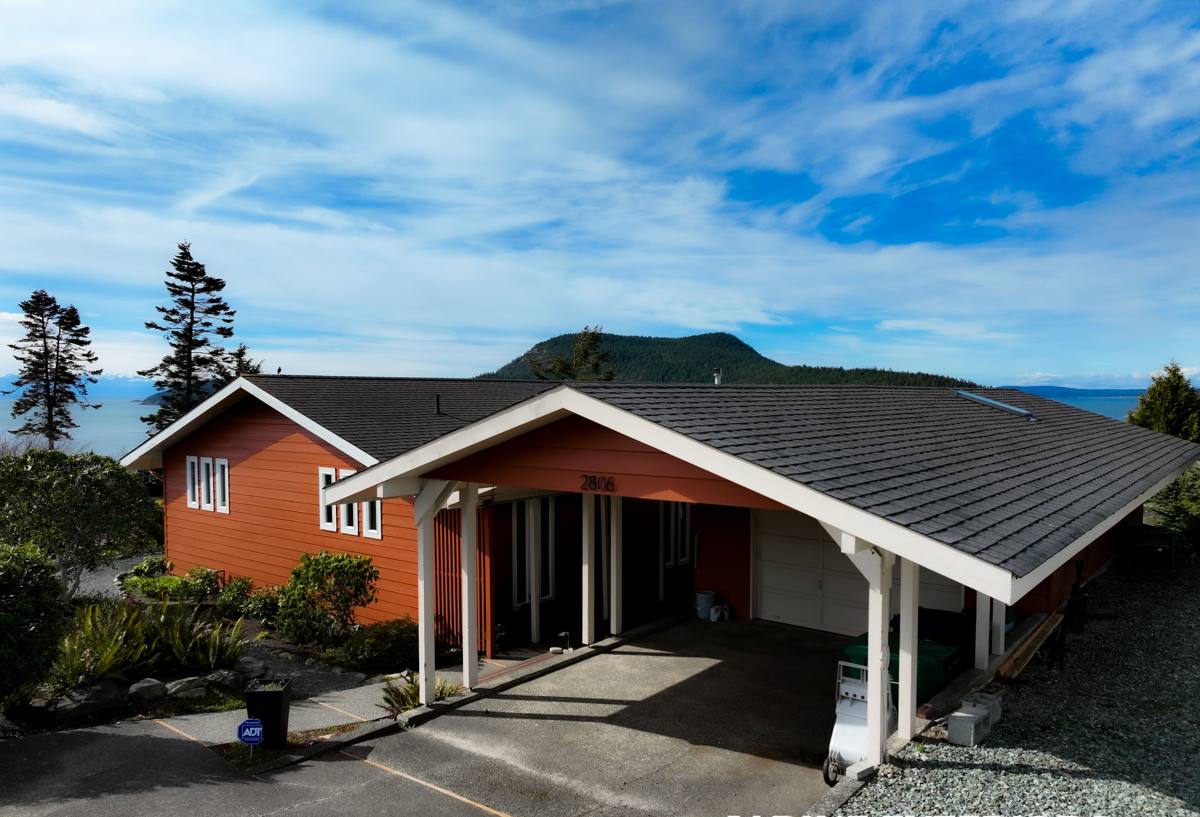
What Bellingham Homes Face From the Climate
Salt Air and Coastal Exposure
Homes closer to the water deal with airborne salt that accelerates corrosion on fasteners, flashing, and any exposed metal trim. Over time, salt exposure also degrades paint films and lower-grade coatings faster than a standard weathering estimate would predict, which is part of why factory-applied, baked-on finishes hold up so much better here than field-applied paint.
Driving Rain and Wind-Driven Moisture
Storms moving in off the Salish Sea don't just drop rain straight down — wind pushes it sideways into wall assemblies, under poorly lapped siding, and into any gap around windows and trim that wasn't sealed correctly the first time. Wall systems here need real drainage planes and correct water-shedding detail at every horizontal joint, not just a caulk gun.
Moss, Algae, and Shade
Bellingham's tree cover and consistent moisture mean roofs and north-facing siding stay damp for long stretches, which is exactly what moss and algae need to take hold. Moss on a roof isn't just cosmetic — it holds water against shingles and roofing underlayment, works its way under tabs, and shortens the life of the roof. On siding, sustained moss and algae growth is often a sign that a product's surface isn't shedding water and drying out the way it should.
Siding: Why We Only Install James Hardie
We install James Hardie fiber cement siding exclusively. We don't install vinyl, LP SmartSide, Cemplank, Allura, or primed wood siding like spruce or cedar, and that's a deliberate standard, not a sales pitch — it comes from what we see holding up in this specific climate and what doesn't.
Vinyl
Vinyl siding is inexpensive and easy to install, and for a lot of the country it's a reasonable choice. In a coastal, high-moisture, high-wind climate like Bellingham's, vinyl's weak points show up faster: it can warp or buckle with heat and cold cycling, its seams and panel laps are more prone to letting wind-driven rain behind the cladding, and it's a petroleum-based product that doesn't stand up to long-term UV and salt exposure as well as fiber cement.
LP SmartSide, Cemplank, Allura
LP SmartSide is an engineered wood product — it performs reasonably in drier climates but is more sensitive to sustained moisture exposure at cut edges and joints, which matters a great deal in a region with our rainfall totals. Cemplank and Allura are fiber cement competitors to James Hardie; they're not bad materials in principle, but we've standardized on one system so our crews master one set of installation specs, one flashing detail, and one warranty structure, rather than splitting expertise across several product lines with different quirks.
Primed Wood (Spruce, Cedar)
Cedar and primed spruce are genuinely beautiful, and cedar in particular has real heritage appeal in the Pacific Northwest. But both are organic materials that require ongoing maintenance — refinishing, caulking, and vigilant moisture management — to keep rot and moss at bay in a climate this wet. In a market where sustained dampness is the norm eight-plus months a year, that maintenance burden is significant, and the long-term cost of keeping wood siding sound often exceeds what homeowners expect going in.
Why James Hardie
James Hardie fiber cement is non-combustible, dimensionally stable, and engineered specifically for climate zones like ours through its HZ5 product line, which is built for wetter, harsher weather regions. The ColorPlus factory finish is baked on under controlled conditions rather than applied on site, which means better fade and moisture resistance than field-applied paint — a real advantage against Bellingham's salt air and long wet season. It also carries a strong transferable warranty, which matters if you ever sell the home. None of this means Hardie is maintenance-free, but installed correctly it holds up to exactly the conditions this area throws at a house year after year.
| Material | Moisture Resilience | Maintenance Burden | Fits Bellingham Climate |
|---|---|---|---|
| James Hardie Fiber Cement | High | Low | Yes — HZ5 engineered for wet climates |
| Vinyl | Moderate | Low | Weak seams under wind-driven rain |
| LP SmartSide | Moderate | Moderate | Edge/joint moisture sensitivity |
| Cedar / Primed Spruce | Low without upkeep | High | Struggles with sustained dampness |
Roofing for a Wet, Moss-Prone Climate
Roofing in the Bellingham area has to account for both volume of rainfall and duration of dampness. That means correct underlayment, properly lapped flashing at every valley and penetration, and attention to ventilation so the roof deck can dry out between storms instead of staying saturated. Where trees shade a roof for much of the day, we also talk through moss-resistant material options and realistic maintenance expectations, because no roofing product is completely immune to moss in a shaded, damp microclimate — the goal is to minimize how much it can hold onto and how much damage it does before it's addressed.
Windows
Window performance in this climate comes down to two things: how well the unit itself resists air and water infiltration, and how well it's flashed into the wall assembly. A high-end window installed with poor flashing will leak; a mid-grade window installed correctly with proper drainage will often outperform it. We treat window replacement as a systems problem — the window, the flashing, and the siding around it all have to work together to shed wind-driven rain.
Decks Built for Salt Air and Rain
Decks near Bellingham face the same driving rain and salt exposure as the rest of the exterior, plus the added stress of standing water on horizontal surfaces and fasteners that see constant wet-dry cycling. Ledger board attachment and flashing at the house connection are the most common failure points we find on older decks in this area — moisture gets behind the ledger and works on the structure for years before it's visible. Composite decking is worth serious consideration here because it doesn't absorb water the way wood does, and it resists the graying and splintering that salt air and rain accelerate on untreated lumber.
How We Approach a Bellingham Project
- Assess existing moisture damage before quoting any siding or roofing work, not after tearing into the wall
- Confirm proper drainage plane and rainscreen detailing behind new siding, not just a flat nail-up
- Flash every window, door, and horizontal joint to shed wind-driven rain, not just vertical rainfall
- Match roofing material and ventilation to the amount of shade and moss exposure on each roof plane
- Inspect and correct deck ledger attachment as part of any deck replacement, not as an afterthought
- Use James Hardie's HZ5 line and ColorPlus finishes chosen for coastal, high-moisture performance
What to Look for in a Local Contractor
Whatcom County has no shortage of exterior contractors, but not all of them build for coastal conditions the same way. Ask any contractor bidding your project how they detail flashing around windows, what underlayment and ventilation they use on roofs, and why they've chosen the siding products they install. A contractor who can answer specifically, rather than generically, is one who's actually thought through what this climate does to a house.
Get a Free Estimate
If you're dealing with moss buildup, moisture damage, aging siding, or a deck that's starting to show its age, we're happy to take a look and walk you through honest options for your home. Request a free, no-pressure estimate using the form below, and we'll talk through what actually makes sense for your property and budget.