 Lynden Exterior
 Exterior Work in Ferndale: A Different Climate Than a Few Miles Inland
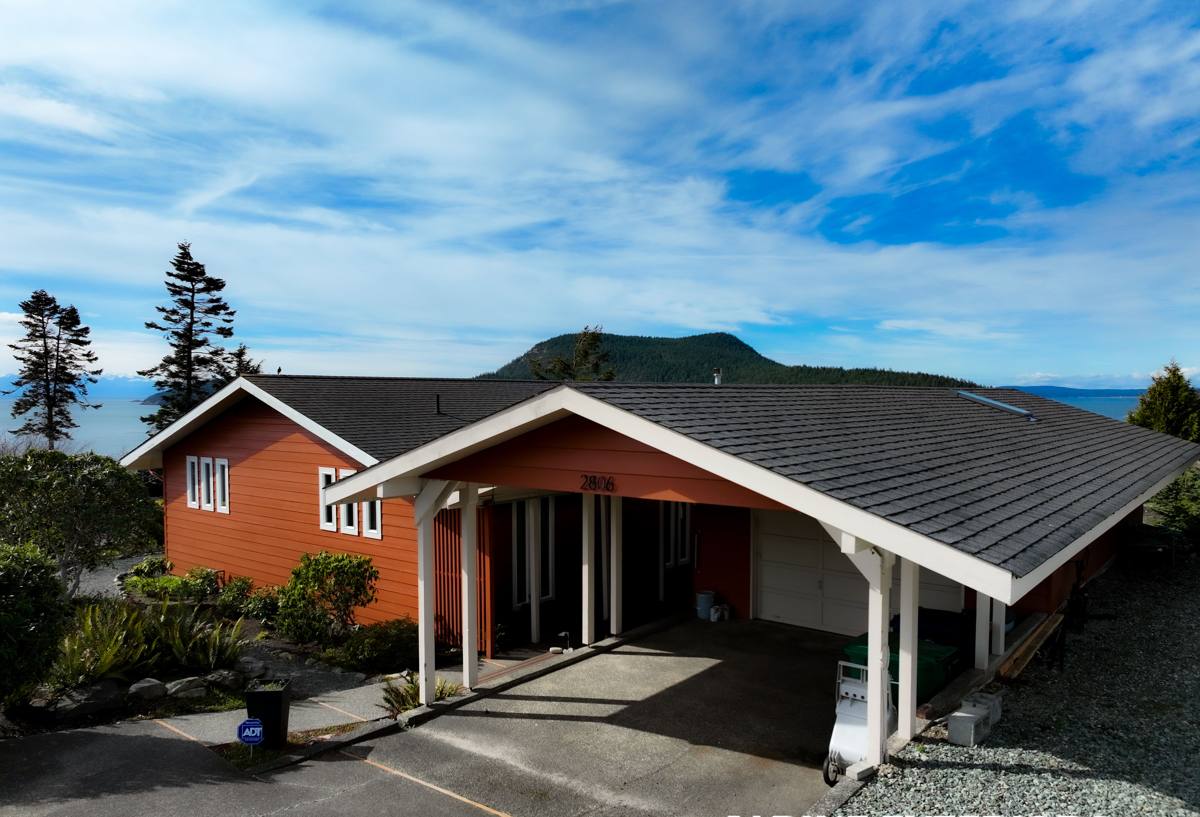
Ferndale sits close to the water, out toward Bellingham Bay and the Strait of Georgia, and that proximity changes what a house has to deal with compared to homes farther inland in Whatcom County. Salt-laden air moves in off the water, wind-driven rain comes in sideways during fall and winter storms, and the same marine moisture that keeps lawns green year-round also keeps roofs, siding, and trim damp for long stretches at a time. We do exterior work throughout this part of the county, and Ferndale homes consistently show a specific pattern of wear that's worth understanding before you decide what to repair or replace.
None of this is unique to any one street or neighborhood in Ferndale — it's a function of being a coastal Whatcom County community, and it applies whether a house is a few blocks from downtown or out toward the water. What changes house to house is how much shade the lot gets, which direction the prevailing weather hits the walls, and how the exterior materials were chosen and installed in the first place.
What Salt Air Actually Does to a House
Salt air is corrosive in ways that aren't always obvious until you look closely. Exposed metal fasteners, flashing, and hardware corrode faster near the coast than they do even ten or fifteen miles inland. Paint and factory finishes break down faster under salt exposure combined with UV, which is part of why homes closer to the water tend to need repainting more often than homes in Lynden or Everson. Wood trim and wood-based siding products absorb the moisture that rides in with the salt air, and that combination of salt, moisture, and sun cycling day after day accelerates rot, checking, and finish failure.
This is a big part of why we standardized on James Hardie fiber cement siding rather than wood-based products, primed spruce, or vinyl. Fiber cement doesn't rot, and Hardie's factory-applied ColorPlus finish is baked on and warrantied against fading and flaking in a way that field-applied paint on wood trim simply isn't. That matters more in Ferndale than it does in a lot of inland Whatcom County towns.
Fasteners and Flashing Matter as Much as the Siding Itself
A house can have excellent siding and still fail early if the flashing details and fasteners underneath are cheap or installed wrong. In a salt-air environment we pay close attention to corrosion-resistant fastener specs and proper flashing at every penetration, window, and butt joint — not because it's unusual practice, but because the margin for error is smaller this close to the water.
Driving Rain: The Enemy of a Poorly Sealed Exterior
Wind-driven rain doesn't just fall on a house, it gets pushed into every gap, seam, and lap that isn't properly sealed and flashed. Ferndale gets its share of fall and winter storms that bring rain sideways off the water, and that kind of weather finds weaknesses that a calm, straight-down rain never would. Homes here are more exposed to that pattern than homes tucked farther inland with more windbreak from terrain and tree cover.
This is where installation quality outweighs almost everything else. Two houses can have the same siding product and end up with completely different outcomes ten years later based on how the laps were sized, how the window and door flashing was integrated, and whether the water-resistive barrier behind the siding was installed and lapped correctly. We install to manufacturer spec — proper clearances, correct fastener placement, and flashing details sized for real weather, not just code minimums — because in an area that takes wind-driven rain seriously, corners cut during installation show up as callbacks within a few years.
Moss Season Runs Long Here
Anyone who has lived in Whatcom County near the coast knows the moss season isn't really a season — it's most of the year. Consistent moisture, mild temperatures, and shaded north- and west-facing exposures give moss and algae exactly what they need to take hold on roofing, siding, and even fencing and decking. Moss on a roof isn't just cosmetic. It holds moisture against roofing material, works its way under shingle tabs, and can shorten the useful life of a roof system if it's left unaddressed.
On siding, algae staining is mostly a cosmetic and maintenance issue, but it's a maintenance issue that never really goes away with some products. This is another place where the material choice matters: factory-finished fiber cement resists moss and algae staining better than bare or lightly primed wood-based sidings, and when staining does occur it cleans up without stripping a field-applied finish down to bare substrate.
What Homeowners Can Do Between Professional Service Visits
- Keep gutters and downspouts clear so water isn't pooling against the roofline or siding
- Trim back tree limbs that shade roof and wall sections and keep them perpetually damp
- Rinse visible moss and algae buildup on siding gently rather than pressure-washing aggressively, which can force water behind laps
- Watch for soft spots, staining, or bubbling paint on trim and siding, especially on north-facing walls
- Have roofing and siding inspected periodically rather than waiting for an obvious problem to appear
Siding: Why We Only Install James Hardie
We install James Hardie fiber cement siding exclusively. We don't install vinyl, LP SmartSide, Cemplank, Allura, primed spruce, or cedar, and that's a deliberate professional standard, not a lack of options. In a coastal Whatcom County environment with salt air, driving rain, and near-constant moisture cycling, the trade-offs of those other products show up faster and more visibly than they would in a drier inland climate.
Vinyl can warp and become brittle with age and UV exposure, and it doesn't hold up structurally the way fiber cement does in wind events. Wood-based and OSB-core products like LP SmartSide depend heavily on an intact factory or field coating to keep moisture out of the substrate — once that coating is compromised at a cut edge or fastener, water intrusion and swelling can follow, and that's a bigger risk in a climate this wet. Primed spruce and cedar are natural wood products that require ongoing paint or stain maintenance to perform, and in a marine climate that maintenance interval shrinks. James Hardie fiber cement is non-combustible, dimensionally stable in wet climates, and comes with a factory ColorPlus finish backed by a real warranty — which is why it's the only product we put our name behind.
Hardie Product Lines We Install
| Product | Best Use | Notes |
|---|---|---|
| HardiePlank lap siding | Most common wall application | Available in smooth and cedar-textured finishes |
| HardieShingle | Accent gables, dormers | Staggered or straight-edge panel styles |
| HardiePanel | Modern vertical siding looks | Often paired with battens |
| HardieTrim | Corners, fascia, window trim | Matches ColorPlus finish system |
Roofing for a Coastal Whatcom County Exposure
Roofing decisions in Ferndale need to account for wind exposure and the long moss season as much as they account for basic weatherproofing. We look at ventilation, underlayment quality, and flashing details at valleys, chimneys, and roof-to-wall transitions, because those are the places where wind-driven rain and years of moss growth cause the most damage. A roof that's properly ventilated also dries out faster between storms, which slows down moss regrowth even if it doesn't eliminate it.
Whether a roof needs full replacement or targeted repair depends on the age of the material, the condition of the decking underneath, and how much of the damage is isolated versus widespread. We give straight answers on that rather than pushing a full replacement when a repair is the honest recommendation.
Windows: Sealing Out Wind and Moisture, Not Just Upgrading Glass
Window replacement in a coastal exposure is as much about the flashing and sealing detail as it is about the window unit itself. A high-efficiency window installed with poor flashing will still leak and let drafts in around the frame during a driving rain event. We integrate window flashing with the surrounding siding's water-resistive barrier so the whole wall assembly sheds water correctly, not just the glass unit in isolation. That integration matters more here than it does in a sheltered inland location, because Ferndale's exposure to wind-driven rain will find any gap in that system eventually.
Decks: Built for Wet, Salt-Exposed Conditions
Decks near the coast face the same moisture and salt exposure as siding and roofing, plus the added stress of foot traffic and direct sun-to-rain cycling on horizontal surfaces. Fastener corrosion resistance, proper spacing between boards for drainage, and ledger flashing where the deck meets the house are the details that determine whether a deck lasts or starts showing problems within a few years. We build and repair decks with those coastal-specific details in mind rather than treating every deck project the same regardless of location.
Why a Local Crew Matters for This Kind of Work
A crew that works throughout Whatcom County, including Ferndale, Lynden, and the surrounding communities, has already seen how salt air, driving rain, and long moss seasons play out on real houses over years, not just at the time of installation. That experience shows up in decisions that don't get made by a crew unfamiliar with this exposure — sizing flashing generously, choosing corrosion-resistant fasteners as a default rather than an upgrade, and recommending materials that are proven to hold up in this specific climate rather than materials that perform fine somewhere drier.
It also means we're not guessing about warranty and manufacturer requirements. James Hardie's installation specifications exist for a reason, and following them precisely is what keeps the product warranty valid and the wall assembly performing the way it's designed to.
Get a Straight Answer on Your Ferndale Home
If you're dealing with moss buildup, staining, a roof or siding issue, or you're just planning ahead for a home exposed to Ferndale's coastal climate, we're happy to take a look and give you an honest assessment — no pressure, no upsell. Request a free estimate below and we'll walk the exterior with you and talk through what actually needs attention.