 Lynden Exterior
 Exterior Work Built for Birch Bay's Coastal Conditions
Birch Bay sits right on the water, and that changes what a home needs from its exterior. Homes a few miles inland in Lynden deal with plenty of Whatcom County rain, but Birch Bay properties get that same rain load plus salt-laden air coming straight off the bay, near-constant wind exposure, and a moss season that runs long into the year on north- and west-facing walls and roof planes. We work on both sides of that divide regularly, and the difference in wear shows up clearly when we're doing inspections and estimates. A siding, roofing, window, or deck system that holds up fine in a more sheltered spot inland can fail faster on a waterfront or near-waterfront lot in Birch Bay if it wasn't chosen and installed with that exposure in mind.
This page covers what we see most often on Birch Bay homes, how our siding, roofing, window, and deck work addresses those conditions, and why we standardized on one siding system instead of offering several.
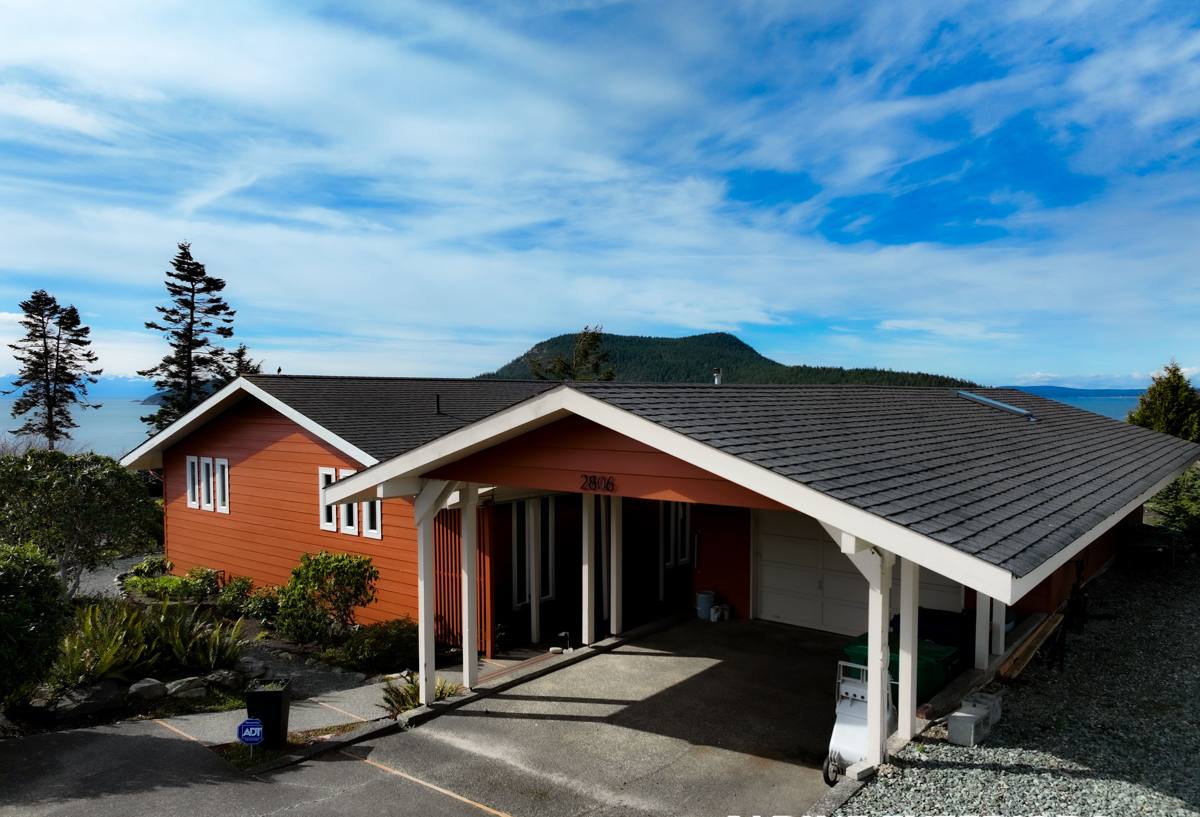
What Salt Air, Driving Rain, and Moss Actually Do to a Home
Salt Air
Airborne salt is corrosive to metal fasteners, flashing, and trim, and it accelerates the breakdown of coatings and finishes that aren't rated to handle it. Over years, homes closer to the water tend to show finish failure, fastener corrosion, and paint breakdown sooner than homes further inland, even when the underlying materials started out identical.
Driving Rain
Wind off the water doesn't just bring rain straight down — it drives it sideways into wall assemblies, around window and door openings, and under poorly lapped siding or trim. Water intrusion problems in this area are rarely about a single leak; they're usually about wind-driven moisture finding the weak point in flashing details, caulk joints, or siding laps over time.
Moss and Sustained Dampness
Whatcom County's wet season is long, and Birch Bay's exposure to marine moisture keeps shaded roof and wall surfaces damp for extended stretches. That's exactly the environment moss and algae need to establish. Left unmanaged, moss holds moisture against roofing and siding surfaces, works into laps and seams, and shortens the service life of whatever's underneath it.
Siding: Why We Install Only James Hardie Fiber Cement
We get asked fairly often why we don't offer vinyl, LP SmartSide, Cemplank, Allura, or unfinished wood siding like primed spruce or cedar. It's a fair question, especially since some of those products are less expensive up front. Here's the honest answer.
What those other products get right
- Vinyl siding is inexpensive and low-maintenance in mild conditions, and it doesn't rot.
- LP SmartSide (engineered wood) installs quickly and has a wood-grain look many homeowners like.
- Cemplank and Allura are also fiber cement products and share some of fiber cement's core advantages.
- Cedar and primed spruce offer a traditional, natural look that some homeowners specifically want.
Where the trade-offs matter in a place like Birch Bay
Vinyl can warp or become brittle under sustained UV and wide temperature swings, and it doesn't hold up well to direct wind-driven debris the way a denser material does. Engineered wood products like LP SmartSide are wood-based, and any wood-based siding depends heavily on unbroken factory sealing and careful field caulking at every cut edge — in a high-moisture, wind-driven-rain environment, any gap in that seal is an invitation for swelling and edge deterioration. Unfinished wood siding (primed spruce, cedar) demands an ongoing repainting and sealing schedule to keep water out at all, which is a real maintenance burden on a home exposed to constant marine moisture and salt air.
Cemplank and Allura are legitimate fiber cement products, and we don't have a complaint about the category. We simply standardized our crews, our install details, and our warranty backing on one manufacturer — James Hardie — because their HZ5 product line is engineered specifically for the wetter Pacific Northwest climate zone, their ColorPlus factory finish is baked on and doesn't rely on field painting to perform, and their transferable warranty structure is one we're comfortable standing behind on a coastal job. Fiber cement as a category is non-combustible and dimensionally stable in a way vinyl and wood aren't, and Hardie's engineering and finish process is the version of that category we trust our name to.
| Factor | James Hardie Fiber Cement | Vinyl | Engineered Wood / Unfinished Wood |
|---|---|---|---|
| Moisture resistance | Engineered for wet climates (HZ5) | Doesn't rot, but can warp/crack | Vulnerable at unsealed cuts and edges |
| Finish durability | Factory-baked ColorPlus finish | Color molded in, can fade/chalk | Requires ongoing repainting |
| Wind/impact resistance | Dense, rigid material | Can crack in cold, flex in wind | Moderate |
| Maintenance burden | Low — periodic wash and caulk check | Low | High — recoat on a schedule |
| Combustibility | Non-combustible | Combustible | Combustible |
Roofing in a Long Moss Season
Roofing in Birch Bay has to account for two things at once: the same driving-rain exposure that affects siding, and a moss season that can run for much of the year on shaded slopes. We look at underlayment quality, flashing details around every penetration and valley, and ventilation when we're evaluating a roof, because trapped moisture under a roof deck causes as much long-term damage as anything hitting the surface from outside. Moss management matters too — we advise on realistic maintenance intervals rather than promising a moss-free roof forever, because on a shaded, coastal lot that's not a realistic claim to make.
Signs a Birch Bay roof needs attention
- Moss buildup concentrated on north- or west-facing slopes
- Granule loss showing up in gutters
- Soft spots or discoloration on ceilings below valleys or penetrations
- Visible flashing corrosion around chimneys, vents, or skylights
- Curling, cracked, or missing shingles after a windy winter
Windows: Sealing Against Wind-Driven Moisture
Window failures in coastal Whatcom County homes are usually installation and flashing problems, not glass problems. Wind-driven rain finds its way in around a window opening long before it finds its way through the glass itself. Correct flashing integration with the water-resistive barrier, proper sill pan drainage, and quality sealant at every joint matter more here than they would on a sheltered inland lot, because the wind pressure differential during a coastal storm is genuinely higher. When we replace windows, we treat the flashing and integration details as the part of the job that actually determines whether the install lasts — the window unit itself is only part of the equation.
Decks: Built for Salt Air and Standing Water
A deck near Birch Bay takes on salt air corrosion on fasteners and hardware, and it needs a structural frame and ledger connection detailed to shed water rather than trap it against the house. We pay particular attention to ledger flashing where the deck meets the wall — that's one of the most common failure points on any coastal deck, wood or composite — and we spec fasteners and hardware rated for corrosive, high-moisture exposure rather than standard interior-grade hardware.
Why a Local Crew Matters Here
A contractor who mostly works inland, further from the water, doesn't necessarily see the accelerated wear that salt air and constant wind-driven rain cause on a Birch Bay property. We work throughout Whatcom County, including Lynden and the coastal communities around Birch Bay, and we adjust our material choices and installation details based on how exposed a specific site actually is — orientation to the water, how much wind protection the lot has from trees or terrain, and how shaded the roof and walls stay through the wet season. That's a judgment call that comes from doing the work in this specific area repeatedly, not from a generic spec sheet.
What to Expect From an Estimate
When we come out to a Birch Bay property, we look at the whole exterior picture rather than just the one component you called about, because siding, roofing, window, and deck problems on a coastal home are often connected — a roof moisture issue can show up as siding damage below it, or a failed deck ledger flashing can lead back to a wall moisture problem. We'll walk the exterior, point out what we're seeing, and give you a straightforward assessment of what's actually needed now versus what can wait.
Questions worth asking any exterior contractor bidding coastal work
- How do you detail flashing differently for a wind-driven-rain site versus a sheltered one?
- What fastener and hardware grade do you use for salt-air exposure?
- What's your plan for moss-prone, shaded roof and wall areas?
- Which siding manufacturer do you install, and why that one specifically?
- What does your warranty actually cover, and is it transferable if the home sells?
If you're dealing with a specific problem — a moss-covered roof, siding that's failing near the water, drafty windows, or a deck that needs attention — or you just want an honest look at where your Birch Bay home stands, we're glad to come take a look. The estimate is free and there's no pressure to move forward with anything.