 Lynden Exterior
 Exteriors Built for Custer's Coastal-Edge Climate
Custer sits close enough to the Strait of Georgia and Birch Bay that homes here deal with a mix most inland Whatcom County properties don't: salt-laden air off the water, driving rain that comes in sideways during winter storms, and the same long, damp moss season that plagues everything from Lynden to Blaine. If your house sits on a rural lot with open exposure to wind, or tucked into tree cover that keeps roofs and north-facing siding shaded most of the day, you're getting a double dose of moisture stress. We work throughout this corridor and see the same patterns show up on siding, roofing, windows, and decks year after year.
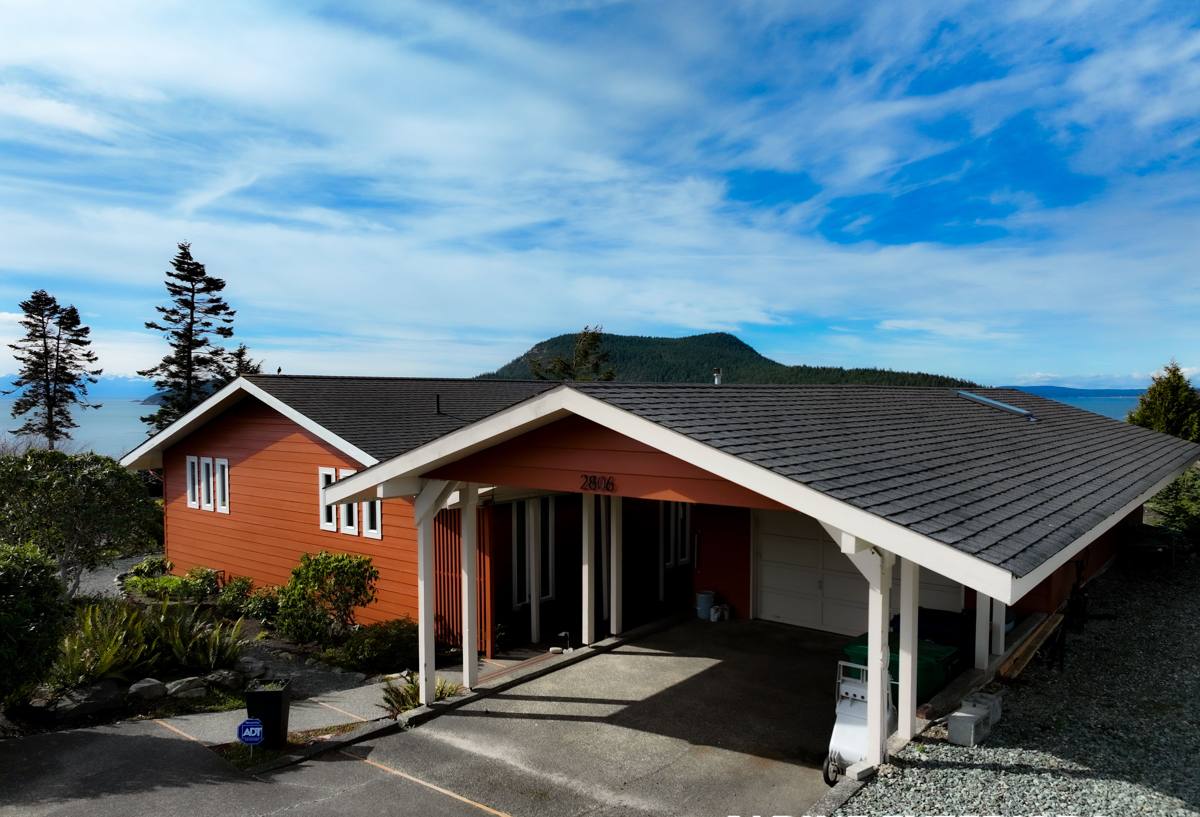
What the Climate Actually Does to a Custer Home
Salt Air and Driving Rain
Salt air accelerates corrosion on fasteners, flashing, and any exposed metal trim. It also settles into porous or absorbent siding materials over time, which is one reason wood-based and engineered wood products tend to show wear faster in properties closer to the water. Driving rain — rain pushed sideways by wind rather than falling straight down — is a bigger deal than most homeowners realize. It forces water into seams, laps, and joints that would stay dry in a calmer climate. Siding, trim, and window flashing all have to be detailed correctly for wind-driven rain, not just gravity-fed runoff.
Moss and Prolonged Dampness
Whatcom County's moss season runs long — often eight months or more of the year with enough moisture and mild temperatures for moss, algae, and lichen to take hold on roofs and shaded siding. Moss holds water against the surface it's growing on. On a roof, that means shortened shingle life and a higher chance of moisture working under the roofing material at laps and valleys. On siding, sustained dampness behind moss or algae growth is what eventually leads to soft spots, paint failure, or rot in materials that aren't built to shed water aggressively.
Siding: Why We Standardize on One Product
We install James Hardie fiber cement siding exclusively. We don't install vinyl, LP SmartSide, Cemplank, Allura, primed spruce, or cedar. That's a deliberate standard, not a marketing line, and it's worth explaining honestly rather than just asserting it.
What We're Weighing
Wood-based products — cedar, primed spruce, engineered wood like LP SmartSide — all rely on a factory or field-applied coating to keep moisture out. In a climate with this much sustained dampness and salt exposure, that coating is doing a lot of work, and any gap in maintenance (a missed repaint cycle, a scratch that goes unsealed, caulking that fails at a seam) gives water an entry point. Once wood-based siding takes on moisture repeatedly, swelling, delamination at edges, or rot can follow — not because the product is poorly made, but because it's fundamentally a moisture-sensitive material in a place that doesn't give it many dry stretches to recover.
Vinyl siding avoids the rot question but brings its own trade-offs: it can warp or distort in temperature swings, it's prone to cracking on impact in colder snaps, and it doesn't hold paint, so your color options are locked in for the life of the product. It also doesn't offer the same fire resistance as fiber cement.
Other fiber cement brands like Cemplank or Allura are legitimate products in the same category as Hardie. Our reason for standardizing on Hardie specifically comes down to their HZ5 product engineering for wetter, colder climates, the factory-applied ColorPlus finish (which resists fading and chipping better than field-applied paint), and a transferable warranty structure we're comfortable standing behind on every install.
What Fiber Cement Gets Right for This Area
- Non-combustible — a real advantage as wildfire smoke and dry-season risk become more common even in western Washington
- Doesn't absorb water the way wood does, so it holds up better against sustained damp and salt exposure
- Factory-applied color finish resists moss and algae staining better than bare or site-painted wood
- Holds paint and caulk lines tightly, which matters when wind-driven rain is testing every seam
- Rated for the specific climate zone it's engineered for, rather than a one-size-fits-all coating system
Roofing in a Long Moss Season
Roofing decisions in Custer come down to two things: material selection and detailing at the vulnerable points — valleys, penetrations, and eaves. Asphalt shingle roofs are still the most common choice and work fine here when installed with attention to underlayment and ventilation, but they need moss treatment and gutter maintenance on a regular schedule to hit their expected lifespan. Metal roofing sheds moss growth more effectively and holds up well against salt air when properly coated, which is why we see more homeowners near the coastal side of the county asking about it. Whatever the material, proper attic ventilation matters as much as the roofing itself — trapped moisture under a roof deck causes problems no shingle or panel can fix from above.
Windows and the Envelope
Windows are one of the most common leak points on older homes in this area, not because the glass fails but because the flashing and sealant around the frame degrade over time under repeated wind-driven rain. When we replace siding, we also inspect window flashing and integrate new siding properly around each opening — this is one of the most common places we find hidden water damage on older Custer homes that's gone unnoticed because it's inside the wall cavity, not visible from outside.
Decks: Built to Handle Standing Water and UV
Decks in this area face a different combination of stresses: standing water from long rain stretches, UV exposure during the drier summer months, and ground-level moisture if the deck sits low or close to landscaping. Composite decking has become the practical choice for most homeowners here because it doesn't require the annual staining and sealing that wood decking demands to stay watertight — a maintenance cycle that's easy to fall behind on given how much of the year is wet here anyway. Proper spacing between boards and correct ledger flashing where the deck attaches to the house are the details that determine whether a deck lasts 10 years or 25.
Cost Factors to Understand Before You Budget
| Factor | Why It Matters in This Area |
|---|---|
| Home exposure (open lot vs. tree cover) | Open exposure means more wind-driven rain contact; heavy tree cover means more moss and shaded dampness |
| Existing siding removal | Rot or water damage found underneath old siding adds scope once walls are opened up |
| Roof pitch and valleys | More valleys and penetrations mean more detailing work and higher moss-catch points |
| Window count and age | Older flashing often needs full replacement, not just new siding butted against it |
| Deck size and ledger condition | A deteriorated ledger board attachment point is a common hidden repair cost |
| Access and site conditions | Rural lots and long driveways can affect equipment staging and material delivery |
What to Check Before You Hire Anyone
Custer has a mix of established homes and newer construction, and the contractors working this stretch of Whatcom County range widely in experience with coastal-edge conditions. A crew that mostly works drier inland areas may not detail flashing and laps the same way as one that works this corridor regularly.
- Ask specifically how they detail siding laps and window flashing for wind-driven rain, not just standard installation
- Confirm they're a factory-certified installer if you're getting fiber cement siding — installation quality affects the warranty
- Ask how they handle moss removal and prevention as part of a roofing job, not as a separate afterthought
- Get a clear answer on what happens if rot or water damage is found once old siding comes off
- Check that any warranty offered is actually transferable if you sell the home
Why a Local Crew Matters Here
Custer isn't a place where generic detailing gets away with much for long. A crew that's used to installing siding and roofing across Whatcom County's wetter, coastal-influenced stretch knows to slow down at laps, flashing, and penetrations because that's where driving rain and salt air actually find their way in over time. That's the difference between an exterior that looks fine on install day and one that's still performing the way it should ten winters later.
If you're dealing with moss buildup, aging siding, a leak you can't quite trace, or you're just planning ahead for your home's exterior, we're happy to take a look and walk you through what we're seeing — no pressure, no obligation. Use the form below to request a free estimate.