 Lynden Exterior
 Exterior Work Built for Blaine's Coastal Conditions
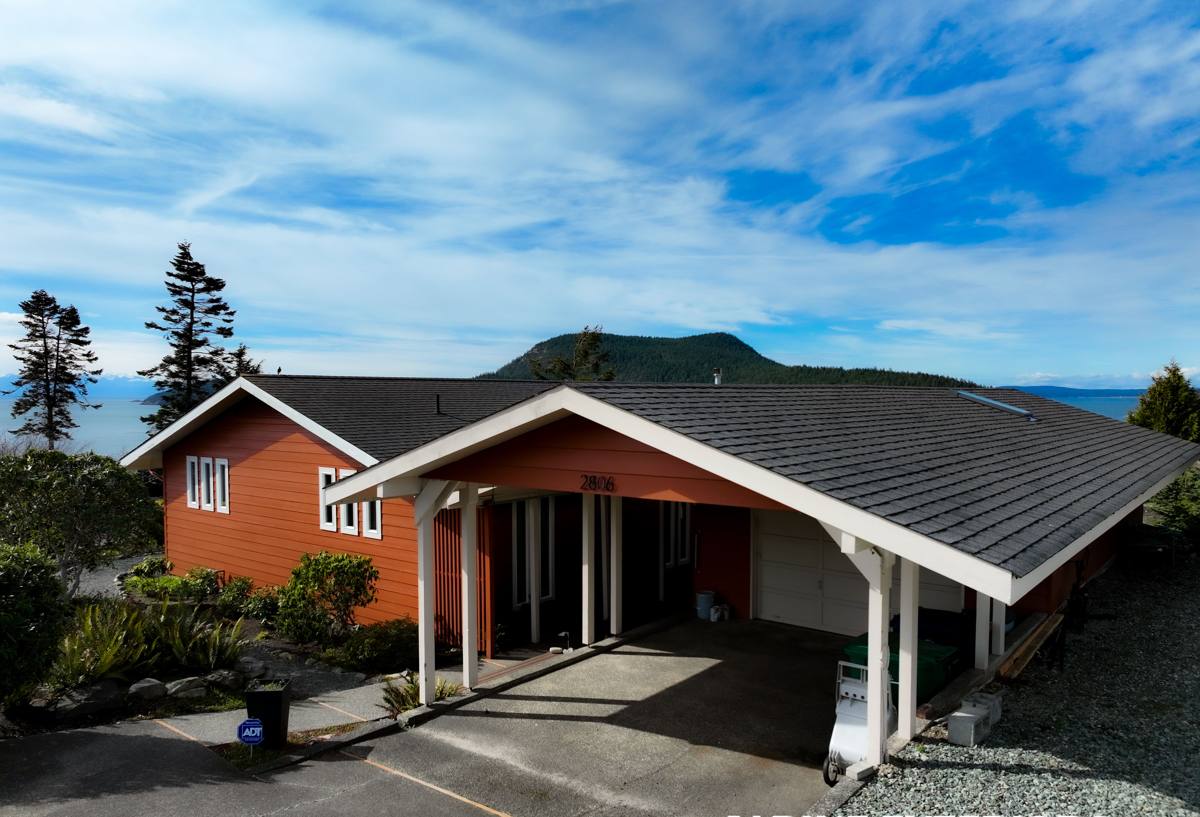
Blaine sits right where Whatcom County meets Semiahmoo Bay and the Canadian border, and that location comes with a specific kind of weather stress most inland homes never deal with. Salt-laden air off the water, driving rain that comes in sideways during winter storms, and a long, damp moss season that can stretch from fall through spring all put extra demand on a home's exterior. We work throughout Whatcom County out of Lynden, and Blaine is one of the areas where we see, year after year, how coastal exposure ages a house faster than homeowners expect.
This page covers how we approach siding, roofing, windows, and decks for homes in and around Blaine, and why the details of installation matter more here than they would in a drier, more sheltered part of the state.
What Blaine's Climate Actually Does to a Home
Salt Air and Corrosion
Homes closer to the water take on airborne salt that settles on siding, trim, fasteners, and roofing hardware. Over time, salt exposure accelerates corrosion in lower-grade metal fasteners and flashing, and it can degrade paint finishes faster than the same product would wear in an inland town. This is one reason material choice and fastener quality matter more in Blaine than they would twenty miles east.
Driving Rain and Wind-Driven Moisture
Open exposure near the bay means wind-driven rain doesn't just fall straight down — it gets pushed sideways into wall assemblies, window seams, and roof-to-wall transitions. A house can look fine from the curb and still have moisture finding its way behind siding or under flashing at the vulnerable points: corners, penetrations, and butt joints. Good exterior work in this climate is as much about water management behind the surface as it is about what you see on top.
Moss and Prolonged Dampness
Whatcom County's long wet season keeps roofs and north-facing siding damp for extended stretches, which is exactly what moss and algae need to establish. Moss holds moisture against roofing material and can work into seams over time, and organic growth on siding isn't just cosmetic — sustained dampness against a wall surface shortens the life of whatever's underneath it.
Siding for Blaine Homes
We install James Hardie fiber cement siding exclusively. That's a deliberate standard, not a limitation, and it matters especially in a coastal-influenced climate like Blaine's.
Fiber cement doesn't rot, and it isn't a food source for the moss and algae that thrive in this kind of dampness the way some wood-based and engineered wood products can be. Hardie's ColorPlus finish is baked on at the factory and is formulated to hold up under UV and moisture cycling better than field-applied paint, which matters when a house is getting the kind of weather rotation Blaine sees — wet, dry, salt-exposed, repeat. Hardie also offers HZ5 product formulations engineered for harsher climate zones, which fits a coastal Whatcom County exposure better than a generic siding spec.
We don't install vinyl, LP SmartSide, Cemplank, Allura, primed spruce, or cedar. Each of those has genuine strengths, but they each also carry trade-offs — moisture sensitivity, seam and caulk maintenance, expansion and contraction behavior, or ongoing upkeep — that we think are a poor match for what a Blaine exterior actually has to survive over 20-30 years. We'd rather put one product on every home and stand behind it fully than offer several options with different long-term risk profiles.
Siding Comparison at a Glance
| Factor | James Hardie Fiber Cement | Vinyl | Engineered Wood (e.g. LP SmartSide) |
|---|---|---|---|
| Moisture/rot resistance | Non-combustible, does not rot | Doesn't rot, but seams can trap moisture | Treated but wood-based; moisture-sensitive at cut edges |
| Salt air performance | Factory finish holds up well | Can chalk and fade near salt exposure | Coating wear can expose substrate over time |
| Moss/algae resistance | Not an organic food source | Not an organic food source | More susceptible if coating is compromised |
| Finish longevity | Factory-baked ColorPlus finish | Color molded through, can fade | Field or factory coating, needs maintenance |
| Fire resistance | Non-combustible | Can melt/deform under heat | Combustible |
Roofing in a Long Moss Season
Roofs in Blaine deal with the same combination that makes moss such a persistent problem across Whatcom County: shade from mature trees, long stretches of damp weather, and roof lines that don't dry out quickly between rain events. We look at ventilation, flashing condition, and moss growth patterns when we assess a roof here, not just shingle wear. A roof that's shedding water fine on the south-facing slope can still be holding moisture and growing moss on the north side, and that uneven aging is common in this area.
Good roofing work in a climate like this means proper underlayment, correctly lapped flashing at every penetration and wall transition, and attention to ventilation so the roof deck itself isn't staying damp from the inside out. We also talk homeowners through realistic moss management — it's an ongoing maintenance item in this climate, not a one-time fix.
Windows That Handle Wind-Driven Rain
Window performance in Blaine comes down to two things: the unit itself and how well it's flashed and sealed into the wall. A quality window installed poorly will leak in wind-driven rain; a mid-grade window installed correctly with proper flashing integration will often outperform it. We pay close attention to how new or replacement windows tie into the surrounding siding's water management plane, since that's the detail that actually keeps wind-blown rain out of the wall cavity near the coast.
Energy performance matters too — Blaine's winters bring cold wind off the water, and a well-sealed window envelope makes a real difference in comfort and heating costs, not just moisture protection.
Decks Built for Wet, Salt-Influenced Exposure
Outdoor living spaces in Blaine take a beating from the same conditions as the rest of the exterior: sustained dampness, salt air on fasteners and hardware, and moss growth on any surface that stays shaded and wet. We focus on proper fastener selection (corrosion resistance matters more here than in a dry inland location), adequate drainage and airflow underneath the deck structure, and material choices that hold up to repeated wet-dry cycling without cupping, splitting, or excessive maintenance.
Why a Local Whatcom County Crew Matters
A crew that works across Whatcom County regularly, not just occasionally, has a working knowledge of how this specific stretch of coastline behaves — where wind-driven rain tends to concentrate, which roof orientations hold moss longest, and how salt exposure differs even between Blaine, Birch Bay, and inland Lynden. That local pattern recognition shapes real decisions: fastener selection, flashing detail, product line selection within the Hardie system, and where extra attention is worth the time on a given house.
We're based in Lynden and treat Blaine as part of our regular service area, not a special trip. That means the same crew, the same standards, and the same product line on every job.
What to Check Before Hiring an Exterior Contractor Near the Coast
- Ask what fastener and flashing materials they use, and whether those materials are rated for coastal/salt exposure.
- Confirm whether the contractor has experience specifically with wind-driven rain details, not just standard installation.
- Ask which siding products they install and why — and whether they stand behind one system or install "whatever the customer picks."
- Check that roof ventilation and moss mitigation are part of the roofing conversation, not an afterthought.
- Get a clear explanation of manufacturer warranty terms and what voids them (poor installation is the most common cause).
- Make sure the contractor is licensed, insured, and willing to put the scope of work in writing.
Our Process for Blaine Projects
Every project starts with an on-site look at the specific exposure your home faces — orientation to prevailing wind and rain, shade patterns that affect moss, and the current condition of siding, roofing, windows, and any decking. From there we walk through what we'd recommend and why, including where James Hardie's product lines fit the specific exposure of your home. We give straightforward scopes and timelines, and we don't push work that isn't needed.
If you're in Blaine and dealing with siding that's showing its age, a roof that's carrying more moss than it should, windows that let in drafts or moisture during storms, or a deck that needs attention, we'd be glad to take a look. Reach out for a free, no-pressure estimate — there's a form below to get started.