 Lynden Exterior
 Two Very Different Materials, Same Job
Vinyl and fiber cement both claim to protect your home and make it look good doing it, but they are not close cousins. Vinyl is an extruded PVC plastic product. Fiber cement is a composite of cement, sand, and cellulose fiber, engineered and kiln-cured into boards that are then painted or factory-finished. Because the raw materials behave so differently — in heat, in moisture, under impact, over decades — the comparison isn't really "which color and style do you like better." It's a question about what kind of material you want protecting your walls for the next 30-plus years in a Whatcom County climate that doesn't cut anyone a break.
We install James Hardie fiber cement exclusively. We don't install vinyl. That's a real position, not a sales pitch, and we think you deserve the honest reasoning behind it rather than a vague "trust us." So here's a straight comparison, including where vinyl genuinely earns its popularity.
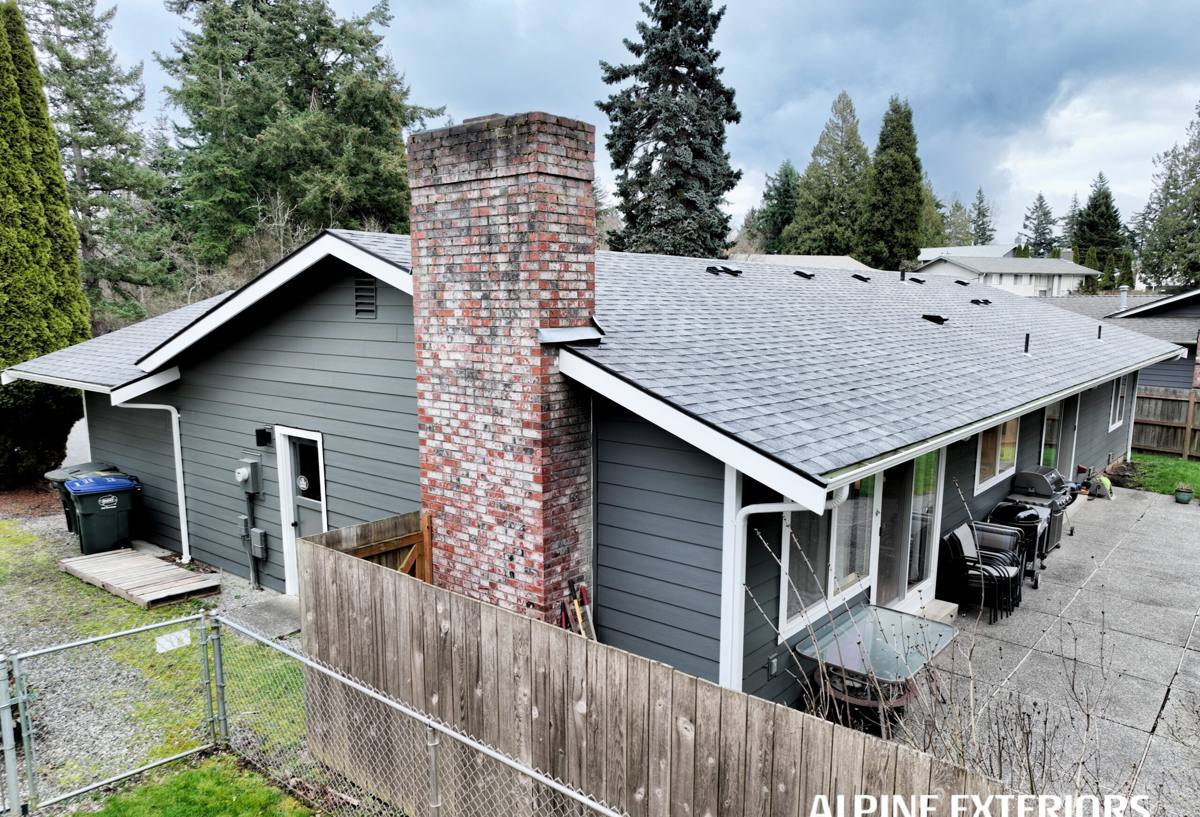
What Vinyl Siding Gets Right
Vinyl didn't become the most common siding in America by accident. It's worth being fair about why:
- Lower upfront material and installation cost than most other siding types.
- Lightweight, which makes it fast to install and easy on labor.
- No painting required — the color runs through the material.
- Reasonably good performance in mild, dry climates with less demand on the material.
- Wide availability and a large pool of installers, which keeps pricing competitive.
If budget is the single deciding factor and the home is going to be resided again in a decade or two anyway, vinyl isn't an unreasonable choice on paper. Our concern isn't that vinyl is a scam — it's that it's a product optimized for cost and speed, not for the specific punishment a Lynden exterior takes year-round.
Where Vinyl Struggles in This Climate
Whatcom County sits in a spot that's tough on siding in ways that don't show up in a showroom. Between the Puget Sound's salt air moving inland, long stretches of driving rain off the water, and a moss season that can run most of the year in shaded, north-facing spots, exteriors here are under near-constant moisture pressure.
Heat Distortion and Warping
Vinyl is a thermoplastic — it softens and expands with heat and contracts with cold. On south- and west-facing walls that catch direct sun, especially near reflective surfaces like windows or dark trim, vinyl panels can warp, buckle, or "oil-can" over time. It's rarely catastrophic, but it's a visible, permanent cosmetic problem that isn't cheap to fix piecemeal because color-matching old vinyl to new is unreliable.
Moisture Behind the Panel
Vinyl siding is installed loose, hung on a nail hem rather than fully fastened flat, and it's designed to let water get behind it and drain out the bottom. That's fine when the drainage plane behind it is intact and the flashing detail is right. But it also means the housewrap, seams, and flashing are doing all the real waterproofing work — the siding itself is more of a rain screen than a barrier. In a region with sustained wind-driven rain, any gap in that drainage plane becomes a slow, hidden moisture problem, often behind J-channel, at window returns, or at inside corners where installers cut corners on flashing.
Moss, Mildew, and Salt Air
Vinyl doesn't rot, which is a real advantage. But it does collect grime, algae, and moss growth in shaded, damp areas the same as any other siding, and its slightly textured surface and seams give organic growth places to take hold. Salt-laden air off the Sound also accelerates fading and chalking on vinyl's surface pigment faster than most homeowners expect, especially on darker colors.
Impact Damage
Vinyl is brittle in cold weather. A stray branch, a ladder bump, or hail can crack a panel in winter in a way that wouldn't happen in July. Once cracked, that section needs to be replaced — not patched — and matching sun-faded vinyl to a new panel is hit or miss.
What Fiber Cement Gets Right
Fiber cement was developed specifically to solve the problems that plague both wood and vinyl siding: it doesn't rot, it doesn't attract insects, it's non-combustible, and it holds paint and factory finishes far longer than vinyl holds its integral color. James Hardie's HZ5 product line, in particular, is engineered for climates like the Pacific Northwest — freeze-thaw cycling, sustained moisture exposure, and coastal-influenced air.
It's heavier and more labor-intensive to install than vinyl, and it costs more upfront. That's the honest trade-off. What you get for it is a material that's dimensionally stable (it doesn't expand and contract the way vinyl or wood do), holds a factory finish for decades rather than years, and stands up to impact, moisture, and UV exposure without the failure modes vinyl is prone to.
Installation Sensitivity: The Product Isn't the Whole Story
Neither vinyl nor fiber cement performs well with a sloppy install, but fiber cement is far less forgiving of shortcuts — and that cuts both ways. Get it right and it will outlast the people who installed it. Get it wrong — wrong fastener pattern, missing kerf caulk joints, boards installed too close to grade or a roofline, inadequate clearance for water-resistive barrier laps — and you can create moisture problems that show up years later as a callback nobody wants.
This is a big part of why installer skill matters as much as brand choice. A poorly installed fiber cement job can underperform a well-installed vinyl job. The reverse is also true. If you're comparing bids, ask pointed questions about fastening, flashing, and clearances regardless of which material you're leaning toward — the installer's process is doing at least as much work as the material itself.
Cost and Lifecycle Comparison
| Factor | Vinyl | Fiber Cement (James Hardie) |
|---|---|---|
| Upfront cost | Lower material and labor cost | Higher material and labor cost |
| Expected lifespan (installed to spec) | Shorter, especially with sun and impact exposure | Long-term, engineered for decades of coastal-climate exposure |
| Finish durability | Integral color fades and chalks with UV and salt air over time | Factory-baked ColorPlus finish resists fading far longer than field-painted or vinyl color |
| Moisture behavior | Relies on drainage plane behind loosely hung panels | Dense, stable board with correct flashing and clearances at seams |
| Fire rating | Combustible plastic | Non-combustible |
| Repair/repaint needs | Panel replacement for cracks; color-matching is unreliable | Touch-up paint or panel replacement; finish is far more stable long-term |
| Resale perception | Viewed as a budget/standard exterior | Viewed as a premium, low-maintenance upgrade |
The gap in lifecycle cost is the real story. Vinyl's savings are front-loaded; fiber cement's value shows up over the ownership period in fewer repairs, less fading, and a warranty that actually means something when the material is installed and maintained correctly.
Fire, Impact, and Warranty Differences
Two practical differences are worth calling out directly. First, fiber cement is non-combustible, which matters more every year as wildfire smoke and ember exposure become a bigger part of Pacific Northwest summers, even in a wetter county like Whatcom. Vinyl, being a plastic, will soften and burn in direct flame or radiant heat exposure. Second, James Hardie's warranty structure is transferable to a subsequent homeowner within the coverage period when the product is professionally installed — a detail that matters if you plan to sell within the warranty window and want that value to carry forward rather than reset.
Color and Curb Appeal Over Time
Both products look good on day one. The difference shows up around year eight to twelve. Vinyl's color is mixed into the plastic itself, which sounds durable but actually means the pigment is exposed to UV and salt air with nothing protecting it — it fades and chalks unevenly, especially on south and west exposures. James Hardie's ColorPlus finish is baked on in a factory process with multiple coats and a clear topcoat, engineered specifically to resist fading, chipping, and chalking far longer than field-applied paint or integral vinyl color. In a climate with this much sun-to-rain contrast, that finish stability is one of the most visible long-term differences between the two products.
Questions to Ask Before You Decide
- What is the manufacturer's actual warranty, and is it transferable if I sell the home?
- What fastening and flashing details will the installer use at seams, corners, and window returns?
- How does this material perform specifically in coastal, high-moisture climates, not just "in general"?
- What does routine maintenance look like — cleaning, repainting, moss treatment — and how often?
- How does the material handle direct sun exposure on south- and west-facing walls?
- What happens to color match if a section needs replacing five or ten years from now?
Why We Standardized on James Hardie
We stopped installing vinyl, LP SmartSide, and other fiber-cement alternatives because we got tired of doing the same job twice — once when it went up, and again a decade later when the material didn't hold up to this region's weather the way homeowners expected. James Hardie's HZ5 product line was engineered for exactly the conditions Lynden and the rest of Whatcom County deal with: sustained rain, coastal-influenced air, and long moss seasons. It's non-combustible, it holds its factory finish, and the warranty structure backs up the claim in a way that means something when it's installed correctly. That's the product we're willing to put our name behind.
If you're weighing vinyl against fiber cement for your own home, we're happy to walk the exterior with you, point out what's actually going on with your current siding, and give you a straight, no-pressure estimate for what a correctly installed Hardie exterior would look like. There's no obligation — just an honest look at your options.