 Lynden Exterior
 Wiser Lake Homes Face a Different Kind of Wear
Wiser Lake sits in a low, wooded pocket of Whatcom County just outside Lynden, and that setting shapes what happens to a house here. Mature tree cover keeps yards shaded for much of the day, the lake itself keeps ambient humidity higher than in open farmland a mile away, and the combination means exterior surfaces stay damp longer after every rain. Add in the marine air that rolls in off the Salish Sea and Puget Sound, and you get a slow, steady kind of weathering — less about any single storm and more about months of moisture sitting against wood, paint, and trim that never fully dries out.
We've worked on enough homes around Wiser Lake, and across Lynden and greater Whatcom County generally, to know this isn't a hypothetical. It shows up as soft trim boards, moss creeping up north-facing siding, roof valleys that stay dark and wet longer than they should, and window sills that have started to swell. None of that means a house is falling apart — it means the exterior needs to be built and maintained with this specific climate in mind, not a generic one.
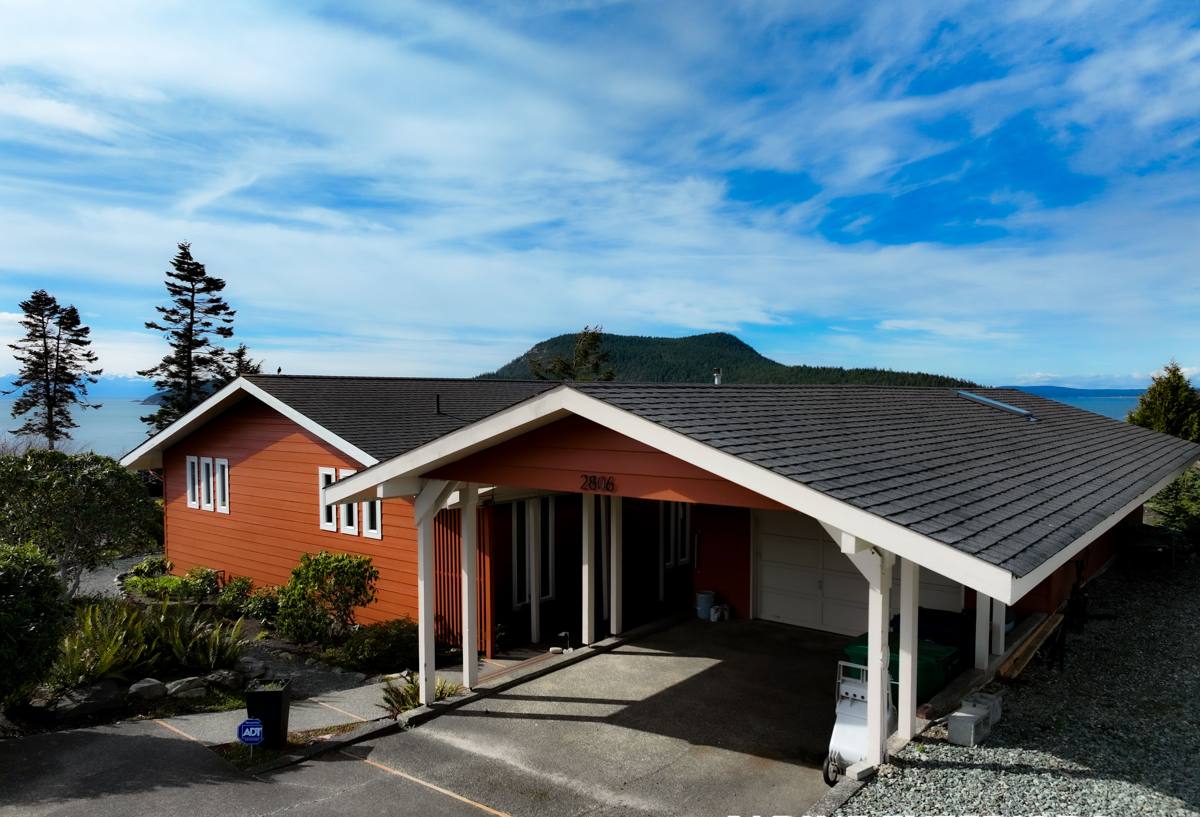
Salt Air, Driving Rain, and a Long Moss Season
Salt Air
Whatcom County isn't coastal in the dramatic sense, but the marine influence off the Sound reaches inland further than most homeowners assume. Salt-laden moisture in the air accelerates corrosion on fasteners, flashing, and hardware, and it works against paint films and finishes that aren't rated for it. Over years, that's the difference between trim that holds its finish and trim that chalks and peels early.
Driving Rain
Lynden gets a lot of sideways rain over the course of a fall and winter — wind-driven rather than straight-down. That matters more than people think, because driving rain finds every lap, seam, and penetration in a wall system that a calm rain would never reach. Siding, window flashing, and deck-to-house connections all get tested by this kind of weather far more often than by any single big storm.
The Moss Season
Between the shade around the lake and the length of our wet season, moss and algae have months to establish themselves on roofs, north walls, and anything that stays damp. Moss isn't just cosmetic — it holds moisture against roofing material and siding surfaces, and over time that trapped moisture is what causes rot, granule loss, and finish failure. A property near Wiser Lake will generally deal with more moss pressure than one out in open, sunny farmland closer to the highway.
Siding: Why We Only Install James Hardie
This is the single biggest decision on any exterior project, and it's the one we're the most opinionated about. We install James Hardie fiber cement siding exclusively. We don't install vinyl, LP SmartSide, Cemplank, Allura, or unfinished cedar or primed spruce, and that's a deliberate standard, not a matter of availability.
In a climate like Wiser Lake's — shaded, humid, and wet for long stretches — the material behind the paint matters more than it does in a drier climate. Fiber cement is non-combustible and dimensionally stable; it doesn't absorb and release moisture the way wood-based products do, so it isn't prone to the swelling, delaminating, and edge softening that engineered wood and untreated wood siding can develop when they stay damp for weeks at a time. Vinyl holds up reasonably well against moisture itself, but it has its own trade-offs in appearance, impact resistance, and how it ages in direct weather cycling — and it simply isn't the product we've chosen to stand behind.
James Hardie's ColorPlus finish is baked on at the factory under controlled conditions, which gives it better adhesion and UV stability than field-applied paint — a real advantage in a spot that gets a lot of shade-driven mildew growth and moisture cycling. Hardie also engineers specific product lines (their HZ5 line, for instance) for wetter, harsher climate zones, which lines up with what a Wiser Lake or greater Lynden property actually experiences year to year. Backed by a strong, transferable manufacturer warranty, it's the product we're comfortable putting our name behind on a home that's going to sit in this kind of moisture exposure for decades.
Siding Material Comparison
| Material | Moisture Behavior | Long-Term Maintenance | Our Position |
|---|---|---|---|
| James Hardie fiber cement | Stable, doesn't swell or rot with sustained damp exposure | Low — factory finish holds color for years | What we install |
| Vinyl | Doesn't absorb moisture, but seams and laps can trap it behind panels | Low-moderate, but fades/becomes brittle over time | Not installed by us |
| LP SmartSide / engineered wood | Can swell at edges and fastener points if moisture reaches the core | Moderate — edge sealing and caulk upkeep matter | Not installed by us |
| Cedar / primed wood | Absorbs and releases moisture readily; needs a sound finish to perform | High — repainting/staining on a recurring cycle | Not installed by us |
Roofing for a Shaded, Moss-Prone Property
Roofs near Wiser Lake fight moss and moisture retention more than almost anything else in the county. We pay close attention to a few things that matter more here than on an open, sunny lot: proper ventilation so the roof deck can actually dry out between rain events, correct flashing at valleys and penetrations where driving rain tends to find its way in, and material choices that resist moss growth rather than just tolerate it. A roof that looks fine from the driveway can still be holding moisture under a mat of moss on the shaded side — that's the kind of thing we check for, not just the obvious stuff.
Windows That Handle Wind-Driven Rain
Windows are one of the most common points of water intrusion on homes in this kind of climate, and it's almost never the glass itself — it's the flashing and the seal around the frame. With driving rain coming off the lake and through the trees, a window installed without proper flashing integration into the wall system will eventually leak, even if the unit itself is a good one. We install and integrate windows as part of the whole wall assembly, not as a standalone swap, which matters most exactly in conditions like this.
Decks That Don't Fight the Shade
Decks around Wiser Lake often sit under tree cover, which keeps them cooler in summer but also keeps them wet and slow to dry the rest of the year. That combination is hard on fasteners, ledger connections, and any decking material that isn't built for sustained dampness. Proper ledger flashing where the deck meets the house, adequate airflow underneath, and hardware rated for damp, semi-shaded exposure all matter more here than they would on a deck baking in full sun most of the year.
Why a Local Crew Matters Here
A crew that mainly works dry, open sites elsewhere in the county can miss the specific failure patterns that show up around a shaded lake property — moss creep, slow-drying north walls, flashing details that need to handle wind-driven rain rather than straight rain. We're based in Lynden and work this area regularly, so we're not guessing at how Wiser Lake's microclimate behaves; we've seen what holds up and what doesn't, year after year, on homes with the exact same tree cover and moisture exposure.
Signs Your Exterior Needs a Look
- Moss or algae established on the roof, especially on the north or shaded side
- Siding that feels soft, spongy, or shows dark staining at seams and corners
- Paint or finish that's peeling, chalking, or has failed faster than expected
- Window sills or trim that have started to swell or feel soft to the touch
- Deck ledger board or fasteners showing rust staining or dark, wet wood
- Persistent damp smell near exterior walls, especially in shaded rooms
How We Approach a Wiser Lake Project
We start with an honest walk-around of the exterior, looking specifically for the moisture and moss patterns this location produces, not a generic checklist. From there we talk through what actually needs attention now versus what can be monitored, and we're direct about it if a repair makes more sense than a full replacement. When siding is the right call, James Hardie is what goes up, sized and detailed for the exposure that particular wall actually gets. The same logic applies to roofing, windows, and decks — solutions matched to the moisture load a Wiser Lake property really carries, not a one-size-fits-all spec.
If you're seeing any of the wear signs above, or just want an honest read on how your home's exterior is holding up against the moss and moisture around Wiser Lake, we're happy to take a look. Reach out for a free, no-pressure estimate using the form below.