 Lynden Exterior
 Exterior Work in Deming: A Different Kind of Wear
Deming sits in the Nooksack River valley at the foot of the Mount Baker corridor, and that location shapes what happens to a house here over time. Homes are often set back under fir and cedar canopy, tucked close to the river, or sitting in low pockets where fog and damp air linger longer than they do out on open farmland closer to Lynden. That combination of shade, moisture, and tree cover is a tougher environment for exterior materials than most people realize until they're dealing with soft trim, streaked siding, or a roof that never quite dries out between storms.
Whatcom County as a whole deals with driving rain, a long moss season, and the general dampness of a Pacific Northwest winter. In Deming specifically, that gets compounded by tree shade cutting down on sun exposure and airflow, and by proximity to the river adding humidity that keeps siding, decking, and roof surfaces wet longer after a storm passes. None of this is unusual or alarming — it's just the reality of building and maintaining a home in this part of the county, and it's exactly why exterior material choices and installation quality matter more here than they would in a drier climate.
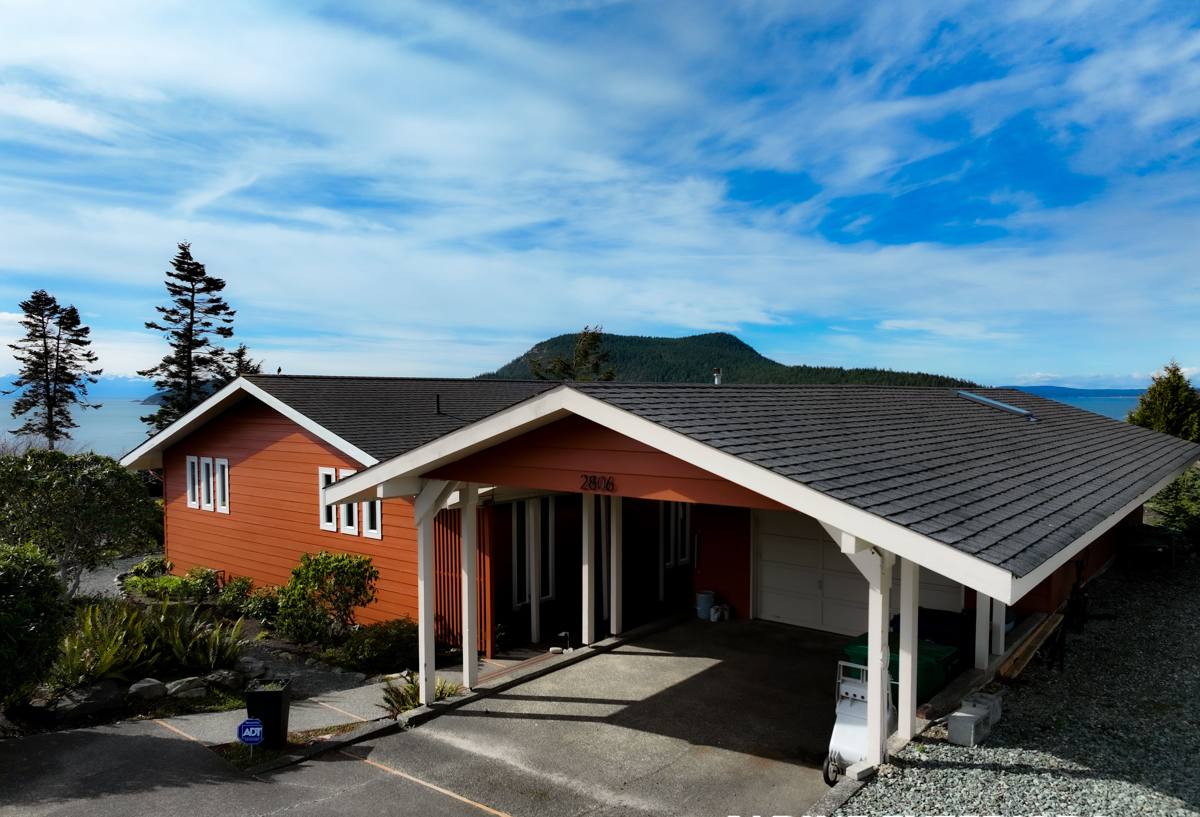
What the Climate Does to Common Exterior Materials
Every material reacts differently to sustained moisture and shade. Understanding the failure patterns helps explain why we make the choices we do on Deming homes.
Wood and wood-based products
Cedar trim, wood siding, and engineered wood products like LP SmartSide are wood-based, meaning they're dimensionally reactive to moisture — they swell, shrink, and can take on water at cut edges and fastener points. In a shaded, damp environment like much of Deming, that moisture exposure is more constant, which shortens the window between required maintenance cycles (caulking, painting, sealing) and raises the risk of edge swelling or rot if that maintenance slips.
Vinyl siding
Vinyl doesn't rot, but it isn't rigid, and in a valley setting with more temperature swing between shaded and sun-exposed walls, panels can warp or oil-can over time. It also doesn't hold paint, so a homeowner is locked into whatever color the panel was manufactured in — no repainting to freshen up a house that's picked up algae or moss staining from the shade.
Roofing
Shaded, damp roof sections — north-facing slopes, areas under overhanging branches — are where moss establishes first and where granule loss and premature aging tend to show up earliest. Roofs in Deming's more tree-covered lots need attention to ventilation and moss prevention that a roof on an open, sun-exposed lot in town doesn't need as urgently.
Decks
Decks built in shaded, low-airflow spots stay wet the longest of anything on the property. Ledger board attachment, joist protection, and decking material choice all matter more when a deck doesn't get much direct sun to dry it out between rain events.
Siding: Why We Install Only James Hardie
We install James Hardie fiber cement siding exclusively. We don't install vinyl, LP SmartSide, Cemplank, Allura, primed spruce, or cedar siding — not because those products have no merit, but because after years of doing exterior work in this climate, we've standardized on the one product line that holds up consistently in conditions like Deming's without asking a homeowner to keep up with heavy maintenance.
Fiber cement is non-combustible and doesn't absorb and swell with moisture the way wood-based products do. Hardie's ColorPlus factory-applied finish is baked on under controlled conditions, which gives it more consistent coverage and better fade and moisture resistance than field-applied paint — a real advantage in a shaded, damp valley where a wall might not dry out for days after a storm. Hardie also engineers specific product lines (their HZ5 line, for example) for wetter, harsher climates, which is a meaningful distinction from siding products that are made and sold the same way regardless of region.
We're not going to tell you a product with real market share is worthless — vinyl and engineered wood sidings have honest use cases and plenty of homes wearing them without incident. But when we're the ones responsible for what goes on a wall in a place like Deming, and for standing behind that installation, fiber cement is the product we're willing to warranty our workmanship against. That's the standard, and it's consistent on every home we side, not just the ones where it's convenient.
Roofing for River Valley and Wooded Lots
Roofing work in Deming has to account for shade and moss more than roofing in open areas of Whatcom County. That means paying real attention to a few things during both inspection and installation:
- Adequate attic and roof ventilation, so moisture from inside the home doesn't add to what the roof is already dealing with from outside
- Proper underlayment and flashing detail at valleys, penetrations, and eaves, where standing water and moss growth tend to start
- Material selection suited to shaded exposure, since some roofing products resist algae and moss growth better than others
- Realistic maintenance expectations — a shaded roof will need moss treatment and gutter clearing more often than a sun-exposed one, regardless of the material chosen
We'll walk a roof and tell you honestly what it needs, whether that's a full replacement, targeted repair, or just a maintenance plan to get more life out of what's already up there.
Windows: Moisture and Efficiency in a Damp Climate
Older or failing windows show their age fastest in humid, shaded conditions — fogging between panes, soft or swelling sills, and drafts that get worse as wood frames absorb moisture over multiple wet seasons. In Deming's climate, condensation control matters as much as energy efficiency. A window that traps moisture against the frame or sill, rather than shedding it, will cause wood rot and finish failure well before the glass itself fails. When we replace windows, we're looking at proper flashing and sealing around the opening as much as the window unit itself — a well-built window installed with poor flashing will leak and fail regardless of the manufacturer's rating.
Decks Built for Shade and Moisture
A deck in a shaded Deming yard needs to be built assuming it will stay damp longer than a deck out in the open. That changes a few practical decisions:
- Ledger board flashing and waterproofing where the deck attaches to the house — this is the single most common source of hidden rot on older decks
- Joist tape or protective flashing on structural framing to slow moisture absorption into the wood
- Decking material choice that accounts for reduced sun exposure and slower drying
- Airflow underneath the deck where grading and lot layout allow it, to help the structure dry between rain events
We build decks to handle the conditions they'll actually sit in, not a generic spec that assumes full sun and good airflow.
Why a Local Crew Matters
Deming isn't a big commercial strip — it's a rural, tree-covered community, and jobs out here often mean navigating longer driveways, septic and well locations, tree cover close to the house, and lot conditions that a crew unfamiliar with the area might not anticipate. A local crew that already knows the general character of Whatcom County's river valley communities shows up prepared instead of improvising. It also means someone is actually reachable if a question comes up after the work is done — not a call center or a subcontractor who's moved on to the next county.
What Drives Cost on a Deming Exterior Project
| Factor | Why It Matters Here |
|---|---|
| Home size and elevation count | More wall area and complex rooflines mean more material and labor, regardless of location |
| Existing condition / tear-off needs | Homes with wood rot or moisture damage from years of shade exposure often need more prep work before new material goes on |
| Access and lot layout | Long driveways, tree cover, and limited staging space common on rural Deming lots can affect labor time |
| Product line selected | Hardie's various siding profiles and colors carry different material costs; roofing and window products vary similarly |
| Roof pitch and shading | Steeper or heavily shaded roofs may need extra ventilation or moss-resistant materials, adding modest cost upfront to reduce maintenance later |
We give straightforward, itemized estimates so you can see exactly what's driving the number — no vague lump-sum quotes.
What to Look for When Hiring for Exterior Work in Deming
- Are they licensed, bonded, and insured in Washington State — and will they show you proof without hesitation?
- Do they have real experience with shaded, damp, rural properties, not just tract housing on open lots?
- Do they explain product trade-offs honestly, or push whatever they have the most margin on?
- Is the warranty on both materials and labor spelled out in writing?
- Will the same crew that gives the estimate actually do the work, or is it subcontracted out sight unseen?
If you're weighing siding, roofing, window, or deck work on a home in Deming, we're glad to come take a look and give you a straightforward, no-pressure estimate — just fill out the form below.