 Lynden Exterior
 Metal Roofing Built for Abbotsford, BC's Weather
Abbotsford sits in the Fraser Valley, just north of the Sumas border crossing and a short drive from Lynden and the rest of northern Whatcom County. Homes here deal with the same weather pattern that defines this whole corridor: long stretches of low, wet cloud cover, driving rain that comes in sideways off the valley, and a moss season that can run from early fall through spring. A roof that works fine in a drier climate often struggles here after a few winters. Metal roofing has become a popular answer for homeowners who are tired of replacing asphalt shingles every 15 to 20 years and want something that actually sheds this region's weather instead of slowly absorbing it.
We're not going to tell you metal is the right choice for every house or every budget — it isn't, and we'll say so plainly during an estimate if that's the case. But for homeowners in and around Abbotsford who are ready for a roof that holds up to sustained wet weather, steep valley wind gusts, and heavy moss pressure, metal is worth a serious look.
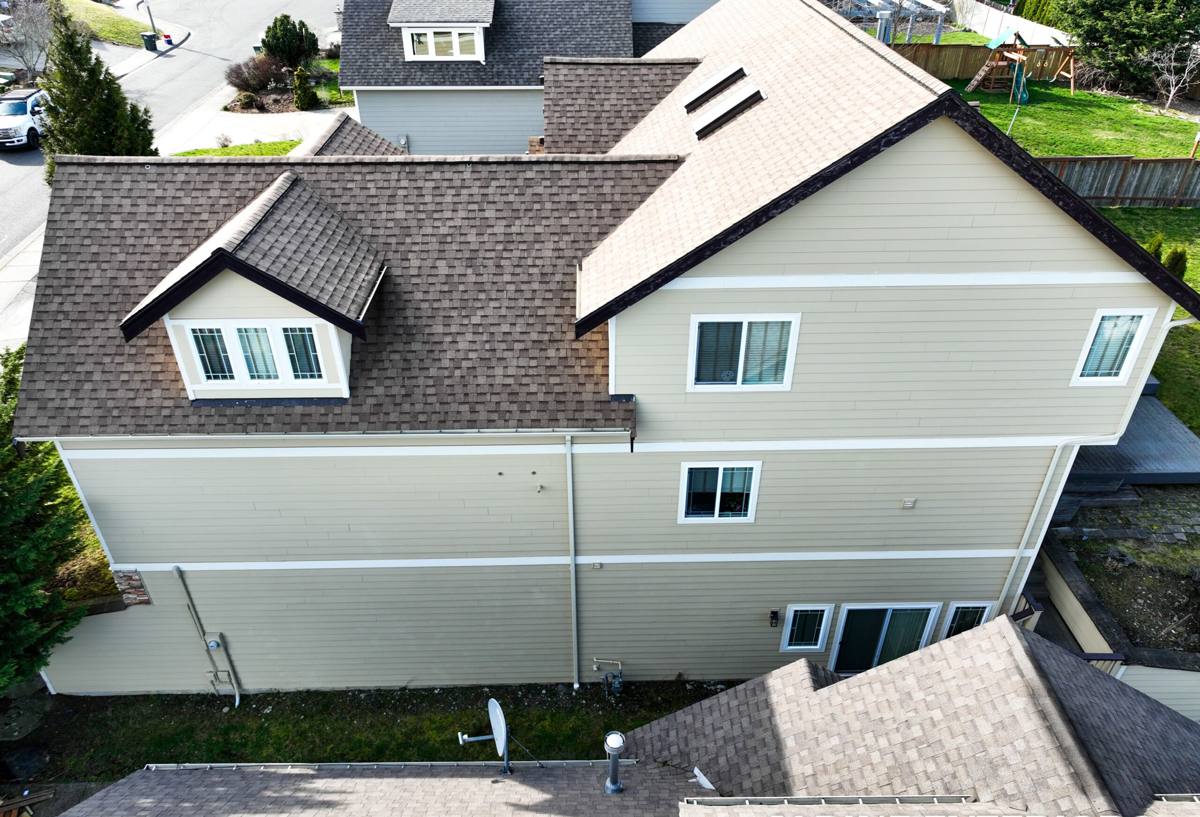
What This Region's Climate Does to a Roof
Whatcom County and the adjacent Fraser Valley share a marine-influenced climate: mild temperatures, high annual rainfall, and enough humidity that moisture sits on roof surfaces longer than it does in drier parts of the state or province. Add periodic salt-laden air moving in off the Strait of Georgia and Puget Sound, and you get a combination that's genuinely hard on roofing materials over time.
Three things stand out as the biggest long-term stressors for roofs in this area:
- Driving rain. Wind-driven rain doesn't just fall straight down — it pushes up under shingle tabs, around poorly sealed flashing, and into any gap that a calmer climate would never test.
- Persistent moss and moisture. Shaded north slopes and valleys with heavy tree cover hold moisture on roof surfaces for days at a time, which is exactly what moss and algae need to establish and spread.
- Corrosive, salt-influenced air. Even away from the immediate coastline, salt-bearing air moves inland on weather systems and accelerates corrosion on unprotected metal fasteners, flashing, and lower-grade roofing hardware.
None of this means a roof is doomed — it means the materials and installation details have to be chosen with this climate in mind, not a generic one.
Metal Panel Types We Install
"Metal roofing" isn't one product. The panel style you choose affects how the roof handles water, how long it lasts, and what it costs. Here's how the main options compare for homes in this climate:
| Panel Type | How It Sheds Water | Typical Lifespan | Best Fit |
|---|---|---|---|
| Standing seam | Concealed fasteners, raised interlocking seams — no exposed penetrations on the roof field | 40-60+ years | Homes prioritizing maximum weather resistance and low long-term maintenance |
| Exposed fastener panel | Screws driven through the panel face into gasketed washers | 25-40 years | Budget-conscious projects, outbuildings, shops, and secondary structures |
| Metal shingle / shake profile | Interlocking stamped panels that mimic shingle or shake appearance | 40-50 years | Homeowners who want a metal roof's durability with a traditional look |
For primary residences in a climate this wet, we lean toward standing seam or metal shingle systems, since neither relies on exposed fasteners that can loosen, corrode, or lose their seal over decades of rain and temperature swings. Exposed fastener panels have their place, especially on shops and outbuildings, but we're upfront that they require more attention over the roof's life.
What a Correct Installation Actually Involves
Metal roofing has a reputation for being low-maintenance, and it earns that reputation — but only when it goes on correctly. A rushed or corner-cutting install undermines everything metal roofing is supposed to deliver. Here's what we treat as non-negotiable.
Deck Prep and Underlayment
We check the roof deck for soft spots, rot, and proper fastening before anything goes down. In this climate, we install a high-temperature synthetic underlayment as a secondary water barrier, with self-adhered membrane at eaves, valleys, and other water-concentration points — the same spots where driving rain and ice-adjacent conditions cause the most trouble.
Flashing and Penetrations
Flashing is where most roof leaks actually originate, metal or otherwise. Every chimney, vent pipe, skylight curb, and wall transition gets custom-formed flashing sized to the panel profile, not a generic stock piece forced into place. Sealants and closures at these points are chosen for long-term UV and moisture exposure, not just what's fastest to install.
Fastening and Panel Layout
Panel layout starts with the roof's most exposed elevations — the sides that take the brunt of driving rain and prevailing wind. Fasteners and clips are matched to the panel material to avoid galvanic corrosion, which is a real issue when mismatched metals sit in contact with each other in a consistently damp environment.
Ventilation
A metal roof over a poorly ventilated attic can trap moisture underneath it just as easily as any other roofing material. We check ridge and soffit ventilation as part of the job, not as an afterthought, since trapped attic moisture leads to condensation, wood rot, and mold regardless of what's covering the roof deck.
Our Process, Start to Finish
- On-site assessment. We walk the roof, check the deck condition from the attic side where accessible, and note flashing points, valleys, and any existing moss or moisture damage.
- Written estimate. You get a clear scope of work and pricing before anything is scheduled — no verbal ballparks that change later.
- Material selection. We walk through panel profile, gauge, and finish options based on your budget, the roof's exposure, and how the house looks from the street.
- Tear-off and deck prep. Old roofing comes off, the deck is inspected and repaired as needed, and any damaged sheathing is replaced before underlayment goes down.
- Installation. Underlayment, flashing, and panels go on in sequence, with attention to the exposed, weather-facing elevations first.
- Final walkthrough. We review the finished roof with you, cover care and maintenance basics, and make sure the job site is cleaned up — including a magnetic sweep for stray fasteners.
What Metal Roofing Costs in This Area
Metal roofing costs more upfront than asphalt shingles — that's a fair trade-off to weigh honestly. Rather than quote a number that doesn't mean much without seeing your roof, here's what actually moves the price:
| Cost Factor | Why It Matters |
|---|---|
| Panel type | Standing seam costs more than exposed fastener panel per square, largely due to concealed-fastener installation labor |
| Roof complexity | Steep pitches, multiple valleys, and dormers all add labor time and material waste compared to a simple gable roof |
| Tear-off requirements | Removing old roofing and repairing deck damage adds cost that isn't visible in the finished product |
| Gauge and coating | Heavier-gauge steel and higher-grade paint or coating systems cost more but hold up longer against sun, rain, and salt-influenced air |
| Accessibility | Roof height, site access, and staging all affect labor and equipment costs |
We give a written, itemized estimate so you can see where the money goes rather than a single lump number — that way you're deciding based on real information, not guesswork.
Maintenance Checklist for Metal Roofs in a Wet, Mossy Climate
Metal roofing needs far less attention than asphalt shingles, but "low-maintenance" doesn't mean "no maintenance." A little seasonal attention protects the investment:
- Clear leaves, needles, and debris from valleys and gutter lines each fall before the heavy rain sets in
- Check for moss or algae growth on shaded, north-facing slopes and address it early rather than letting it establish
- Inspect flashing around chimneys, vents, and skylights annually for sealant wear
- Keep overhanging branches trimmed back to reduce shade, debris, and physical contact with the roof surface
- Confirm gutters and downspouts are draining freely, since standing water at the eaves is where driving rain does the most damage
- Watch for any fastener or flashing corrosion, especially on exposed fastener panel systems
Why Hiring a Crew That Already Works Abbotsford, BC Matters
Roofing crews unfamiliar with this specific corridor between Lynden and Abbotsford sometimes treat it like any other Pacific Northwest job — and that's usually where problems start. The combination of valley wind patterns, sustained wet-season rainfall, and heavy moss pressure on shaded roof slopes is a specific local condition, not a generic regional one. A crew that regularly works this stretch of Whatcom County and the border area knows which roof elevations take the worst of the weather, which valleys and low-slope sections need extra attention, and how fast moss actually re-establishes on an untreated roof here.
That familiarity shows up in small decisions that matter: where to run extra underlayment, how aggressively to detail flashing on north-facing slopes, and which panel finishes actually hold their coating in this humidity over decades rather than just on a spec sheet. It's the difference between a roof that's technically installed correctly and one that's installed correctly for this specific climate.
Signs Your Current Roof Is Ready for a Metal Upgrade
Not every roof needs to be replaced right now, and we'll tell you honestly if yours has life left in it. But a few signs are worth taking seriously:
- Shingles that are curling, cupping, or losing granules faster than expected for their age
- Persistent moss growth that returns within a season or two of cleaning
- Visible sagging along the roofline or soft spots underfoot on the roof deck
- Recurring leaks around chimneys, vents, or valleys despite past repairs
- An asphalt roof already past 15-18 years old heading into another wet winter
If you're seeing one or more of these, it's worth having someone look before the next storm season rather than after it causes damage.
If you're weighing a metal roof for your Abbotsford-area home, we're happy to come take a look and walk you through your options honestly — no pressure, no pushy sales pitch. Use the form below to request a free estimate.