 Lynden Exterior
 Exterior Work in Acme, Washington
Acme sits inland from Lynden in Whatcom County, in the kind of Pacific Northwest weather pattern that doesn't care whether a house is close to the water or tucked back against the foothills. Homes here deal with a long wet season, salt-tinged air moving in off the Sound and up the valleys, driving rain that comes in sideways more often than straight down, and a moss season that can run most of the year on a shaded roof or a north-facing wall. If you own a home in this area, you already know the exterior isn't decorative — it's the thing standing between your framing and a climate that stays damp for months at a stretch.
We work throughout Whatcom County, and Acme is part of that service area. This page covers how our siding, roofing, window, and deck work holds up to local conditions, what we install and why, and what to look for whether you hire us or someone else.
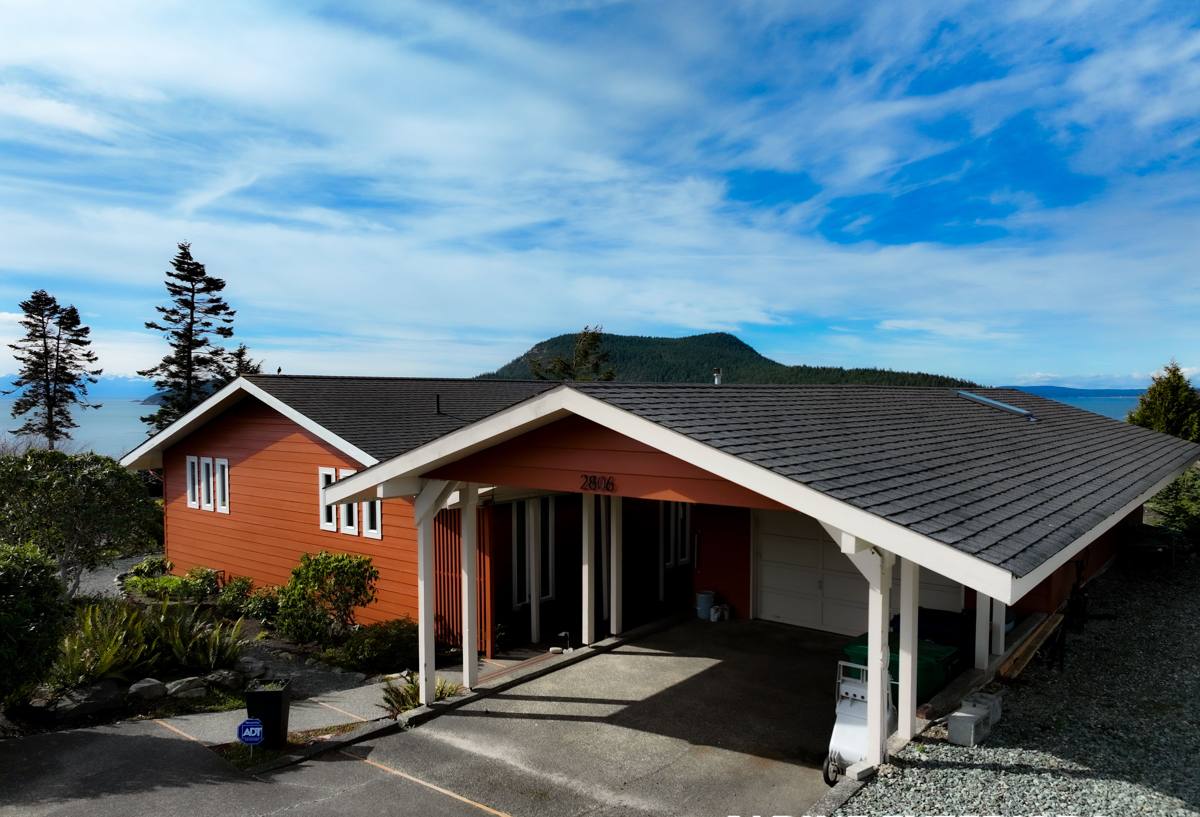
What Whatcom County Weather Does to an Exterior
Most exterior failures we see in this region aren't dramatic. They're slow. Water finds a seam, a fastener hole, or a poorly lapped joint, and it works on that spot for years before anyone notices a soft spot or a stain. Understanding the specific pressures helps explain why our material choices are what they are.
Moisture and a Long Moss Season
Moss and algae need moisture, shade, and time — and Acme's tree cover and overcast stretches provide all three for much of the year. On roofing, moss lifts shingles and holds water against the deck. On siding, it holds moisture against the substrate and, on the wrong product, feeds rot from the surface inward. On decking, it turns walking surfaces slick and accelerates wood breakdown at the boards and ledger.
Wind-Driven Rain
Straight-down rain is manageable for almost any exterior product. Wind-driven rain is the harder test — it pushes water sideways and upward into laps, trim joints, and window flashing that were never designed to handle that direction of attack. This is where installation detail (flashing, caulking, lap sequence) often matters more than the product itself.
Salt-Influenced Air
Even inland from the immediate coastline, air moving through the Whatcom County lowlands carries enough salt influence to accelerate corrosion on fasteners, hardware, and unprotected metal trim over time. It's a slower effect than direct coastal exposure, but it adds up over a couple of decades, which is the timeframe homeowners actually care about.
Siding: Why We Install James Hardie and Nothing Else
We install James Hardie fiber cement siding exclusively. That's not a marketing preference — it's a standard we set after weighing how different siding materials actually perform in exactly the conditions described above, over the 20-30 year timeframe a homeowner is really buying into.
Hardie's fiber cement is non-combustible, which matters more each year as wildfire smoke seasons stretch further into the Pacific Northwest calendar. It's engineered specifically for climate — Hardie makes HZ5 product lines built for wetter, harsher regions like ours, with moisture and freeze-thaw performance baked into the formulation rather than added on. The ColorPlus factory-applied finish is baked on in a controlled environment, which gives more consistent, longer-lasting color than field-applied paint, and it carries a real transferable warranty backing it up.
What We Won't Install, and Why
We get asked about alternatives regularly, and we're upfront about why we don't install them:
- Vinyl siding: Inexpensive and low-maintenance in mild climates, but it can warp under wide temperature swings, and it relies almost entirely on the seams and trim details staying intact — any gap becomes a direct path for wind-driven rain to get behind it.
- LP SmartSide: An engineered wood product with real strengths, but it's still wood-based, meaning it's more sensitive to sustained moisture exposure at cut edges and butt joints than fiber cement, and it demands stricter field caulking and maintenance discipline to hold up long-term in a wet climate.
- Cemplank and Allura: Both are fiber cement competitors to Hardie, and reasonable products in their own right — but we've standardized our crews, warranty relationships, and color systems around one manufacturer so every job gets the same trained installation and the same backing if something goes wrong.
- Primed spruce and raw cedar: Beautiful when new, but both require an ongoing maintenance commitment — repainting, resealing, checking for checking and rot — that most homeowners underestimate until the first re-coat comes due years earlier than they expected.
None of this means those products are junk. It means we've picked one system we trust completely, train our crews on exclusively, and stand behind without hedging.
Siding Material Comparison
| Material | Moisture Behavior | Maintenance | Typical Lifespan Range |
|---|---|---|---|
| James Hardie fiber cement | Engineered for wet climates; doesn't rot | Occasional wash; factory finish holds color | 30-50+ years installed to spec |
| Vinyl | Sheds water if seams stay tight; no rot risk itself, but water tracks behind it easily | Low, but seams/trim need periodic checks | 20-30 years, shorter with UV/impact damage |
| LP SmartSide / engineered wood | Wood-based; sensitive at cut edges and joints | Regular caulk/paint upkeep required | 20-30 years with diligent maintenance |
| Cedar / primed spruce | Natural wood; absorbs and releases moisture | Highest — recoat and inspect regularly | Variable, often 15-25 years before major work |
Roofing in a Wet, Mossy Climate
Roofing in Acme has to handle sustained rain volume, moss and algae growth, and the wind-driven rain that finds weak points at valleys, flashing, and penetrations. We look at ventilation and moisture management as part of the roofing conversation, not just shingle selection — a roof that traps heat and moisture underneath will grow moss and fail from below faster than one that breathes properly. Flashing detail at chimneys, skylights, and wall intersections is where most leaks actually start, and it's where careful installation earns its keep over the life of the roof.
Windows: Sealing Out Wind-Driven Rain
Older windows in this region often show their age around the flashing and trim before the glass itself fails — water working in from the sides during a windy rain event, rather than through the window unit. When we replace windows, proper flashing integration with the surrounding siding and wall assembly matters as much as the window's energy rating. A well-installed window ties into the water management plane of the whole exterior; a poorly flashed one becomes the weak point regardless of how good the window itself is.
Decks Built for Pacific Northwest Weather
Decks in Acme take a beating from the same moisture and moss pressures as the rest of the exterior, plus direct foot traffic and standing water risk at ledgers and joints. Proper flashing at the ledger board where the deck meets the house is one of the most common points of hidden rot we find on older decks — it's out of sight, so it's often out of mind until there's a structural problem. Board spacing, drainage slope, and fastener choice all affect how a deck handles a wet season that can stretch from October through May.
Deck Maintenance Checklist for This Climate
- Clear moss and debris from board gaps before it holds moisture through the winter
- Check the ledger board flashing annually for gaps or staining
- Look for soft or spongy spots near stair stringers and post bases
- Confirm water is draining off the surface, not pooling
- Re-seal or re-stain wood decking on the manufacturer's recommended schedule, not just when it looks faded
Why a Local Crew Matters
Exterior work done by a crew that doesn't work in Whatcom County regularly tends to treat every job like it's in a mild, dry climate — because that's where most national installation guides and default specs come from. A crew that works in Acme, Lynden, and the surrounding area every week knows where wind-driven rain actually tests a wall, which north-facing exposures grow moss fastest, and how to detail flashing and laps for a climate that doesn't give an exterior much of a break between wet seasons. That local knowledge shows up in the small decisions — lap direction, flashing overlap, fastener spacing — that don't show up in a sales brochure but decide whether a job lasts 15 years or 40.
What to Ask Any Contractor Before Hiring
- Are they licensed and insured to do exterior work in Washington State?
- Do they specify flashing and moisture-barrier details in writing, not just materials?
- Will the manufacturer's warranty be honored based on how they install, not just what they install?
- Do they have experience with this specific climate, not just exterior work in general?
- Can they explain why they use the materials they use, beyond price?
If you're weighing siding, roofing, windows, or a deck project for a home in Acme, we're happy to walk the property, look at what the weather has already done to your exterior, and put together a straightforward, no-pressure estimate — just fill out the form below.