 Lynden Exterior
 Exterior Work Built for Kendall's Climate
Kendall sits up the Nooksack River corridor northeast of Lynden, tucked against the foothills that lead toward Mount Baker. It's a different pocket of Whatcom County than the open farmland closer to town — more tree cover, more shade, more standing moisture on roofs and siding that never quite gets a full day of sun to dry out. Homes here deal with a longer, wetter shoulder season than properties out on the flats, and that shows up in the exterior materials that fail early: siding that swells at the seams, roofing that grows moss in the valleys, and window trim that goes soft before anyone notices a leak.
Whatcom County as a whole sits under a marine-influenced weather pattern — damp, salt-tinged air pushes in off the Strait of Georgia and Puget Sound, then rides up the river valleys with driving rain that comes in sideways during fall and winter storms. By the time that weather reaches Kendall's tree-shaded lots, the wind has usually died down, but the moisture hasn't. It settles into bark, moss, and shaded siding and stays there for days at a time. That's the environment we build our exterior work around, not a generic "Pacific Northwest" pitch.
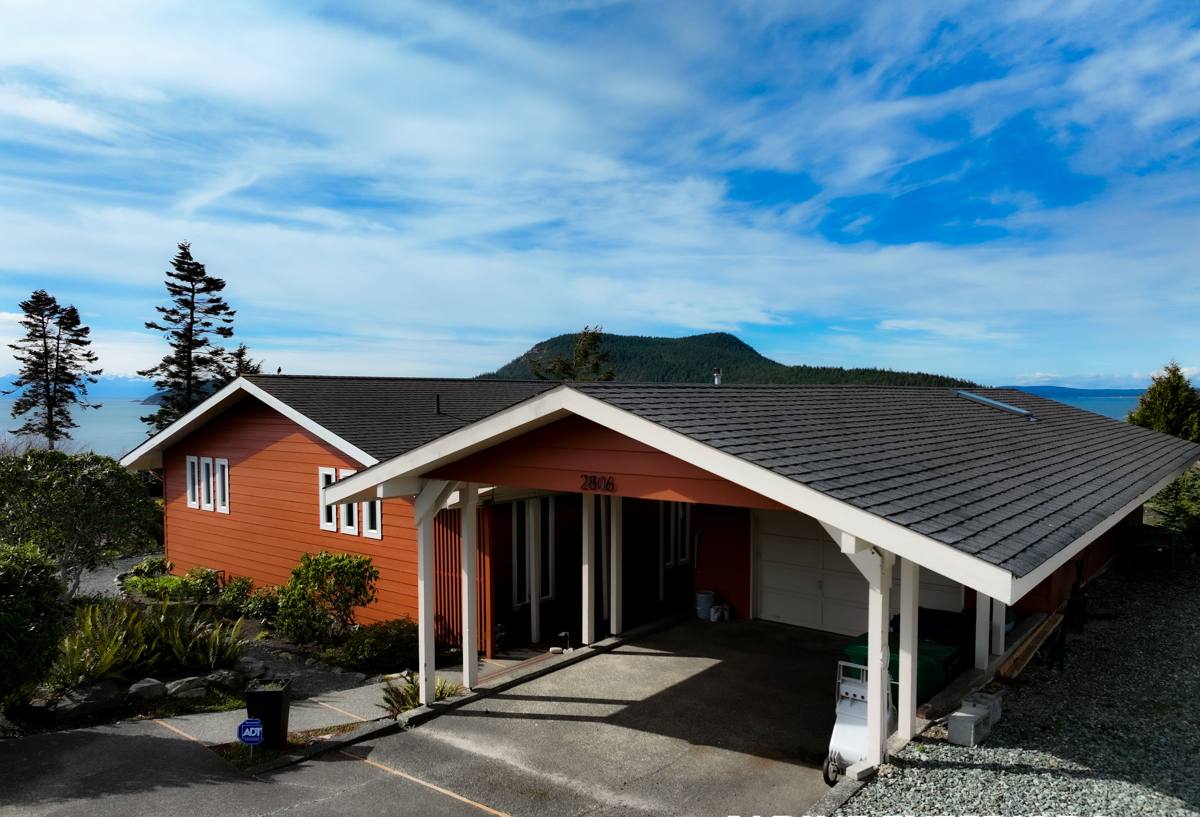
What Kendall Homes Tend to Face
Moss and Shade
Forested and semi-rural lots mean more shaded roof and wall sections that stay damp longer after a rain event. Moss doesn't just look bad — it holds water against roofing material and siding seams, and over years that constant moisture exposure is what breaks products down faster than their rated lifespan would suggest. A roof or wall section under mature fir or cedar canopy is doing different work than the same material out in open sun, even a few miles away.
Driving Rain and Wind-Driven Moisture
Storms moving up the valley don't always hit Kendall with the same wind force they hit the coast with, but the rain volume is real, and it finds gaps. Poorly flashed windows, undersized roof overhangs, and siding installed without proper weather-resistive barrier detailing are where that moisture gets in — usually slowly, over a few seasons, before anyone sees a stain on drywall.
Longer Wet Cycles
Rural and wooded properties dry out slower than open ones. Less wind movement, more shade, more organic debris (needles, leaf litter, moss spores) collecting in gutters and roof valleys. That extends the number of days per year that exterior materials are sitting wet, which is exactly the condition that separates a product that holds up for decades from one that starts failing at year ten or twelve.
Why We Only Install James Hardie Siding
We install exclusively James Hardie fiber cement siding. We don't install vinyl, LP SmartSide, Cemplank, Allura, or primed wood species like spruce or cedar lap. That's not a marketing angle — it's a standard we hold because of what we've seen play out on homes in exactly the kind of climate Kendall sits in.
Vinyl siding is affordable and low-maintenance in dry climates, but in a shaded, damp environment it doesn't manage moisture the way fiber cement does — it can trap water behind panels, warp with temperature swings, and it's not a fire-resistant product, which matters more the closer a property sits to wooded, rural surroundings. Engineered wood siding products like LP SmartSide perform reasonably well when installation and caulking are perfect and stay perfect for the product's lifespan, but any breach in that seal lets moisture into the wood-based substrate, and a shaded, wet lot is the worst possible place for that seal to fail. Primed wood siding — spruce, cedar — is a beautiful, traditional look, but it demands a repainting and caulking cycle that most homeowners underestimate, and a damp, low-sun lot shortens that cycle further. Other fiber cement brands, like Cemplank and Allura, are legitimate products, but we've standardized on Hardie specifically for its factory-applied ColorPlus finish, its HZ5 product engineering for cold, wet climates, and the depth of its installer network and warranty backing in this region.
James Hardie fiber cement is non-combustible, doesn't swell or rot when it takes on moisture, and the ColorPlus finish is baked on at the factory under conditions no field-applied paint job can match — which matters enormously on a shaded wall that stays damp longer than a sun-exposed one. It's engineered material, not organic material, so moss and mildew sit on the surface instead of feeding into it. That's the difference that counts on a lot like the ones common around Kendall.
Siding Installation, Done Right
Hardie siding is only as good as its installation. The product itself is excellent; a bad install with wrong nailing patterns, missing flashing, or tight-to-grade clearance will cause problems regardless of what's on the wall. Our process on every job includes:
- Proper weather-resistive barrier and flashing at every window, door, and penetration
- Correct fastener spacing and type per Hardie's published installation guide
- Minimum clearance from grade, decks, and roof lines to keep splashback and standing moisture off the bottom course
- Factory-mitered or properly caulked joints, not gapped or overlapped seams
- Ventilation detailing behind the siding plane where the wall assembly calls for it
Skipping any one of those steps is how a good product ends up with a bad reputation. We build every wall assembly to the spec Hardie actually publishes, not a shortcut version.
Roofing for Wooded, Shaded Lots
Roofing decisions in Kendall need to account for canopy cover in a way that a roof out on open farmland doesn't. Moss growth, needle buildup, and slower drying times all shorten the practical lifespan of a roof system if the underlying details aren't right. We pay particular attention to:
- Underlayment quality and ice-and-water shield coverage in valleys and eaves
- Ventilation — a roof that can't breathe traps moisture underneath the surface material, which accelerates rot in the sheathing regardless of what's on top
- Flashing at every penetration, chimney, and roof-to-wall transition
- Gutter and downspout sizing adequate for driving rain volume, not just average rainfall
Moss removal and prevention treatments help, but they're maintenance, not a substitute for correct roof ventilation and underlayment. We're upfront with homeowners about which is which.
Windows: The Most Common Failure Point
More exterior moisture problems trace back to window flashing than almost anything else. A window installed without proper head flashing, sill pan, and integration into the weather-resistive barrier will leak eventually — sometimes years later, quietly, into the wall cavity where nobody sees it until there's a real problem. On a shaded, damp lot, that timeline compresses. We integrate window replacement with the surrounding siding work so the flashing and water management is continuous across the whole wall plane, not patched around an existing window that may already have a compromised seal.
Decks Built for Standing Moisture
Decks in a wooded, shaded setting deal with more standing moisture, more leaf and needle debris in the joints, and more moss growth on horizontal surfaces than a deck out in open sun. Framing and ledger board flashing matter more here than the decking material choice itself — a ledger board without proper flashing against the house is one of the most common sources of hidden rot on any deck, and it's worse on a lot that stays damp longer. We build deck structures with drainage and ventilation in mind from the framing stage, not just the surface material.
Cost Factors on Kendall Properties
| Factor | Why It Matters Locally |
|---|---|
| Tree cover / access | Shaded, wooded lots can mean longer driveways and more limited staging space, which affects labor time |
| Existing moisture damage | Homes with longer wet-cycle exposure are more likely to need sheathing repair once old siding comes off |
| Roof pitch and complexity | Valleys and shaded planes need more attention to underlayment and ventilation detailing |
| Deck ledger condition | Rot at the ledger connection is common on older decks and often isn't visible until removal |
| Material selection | Hardie fiber cement costs more upfront than vinyl or engineered wood but avoids the recurring maintenance cycle those products require |
We give honest estimates that account for what we actually find once material comes off the wall — not just what's visible from the driveway.
Why a Local Crew Matters
A contractor working across Whatcom County day in and day out knows the difference between a job on open farmland near Lynden and a job on a shaded, rural lot near Kendall — and builds accordingly. We're not applying a one-size-fits-all installation approach; we're adjusting for canopy cover, moisture cycles, and site access on every property we bid. That local knowledge is part of what a homeowner is paying for when they hire a crew that works this specific region, not a company dispatching crews in from out of the area who treat every job the same regardless of what the site actually demands.
What to Expect From an Estimate
We walk the property, look at the current siding, roofing, window flashing, and deck framing condition, and give a straight assessment of what's actually needed versus what can wait. If moss and shade have already caused hidden damage, we tell you before work starts, not after material is off the wall. There's no pressure and no inflated scope — just an honest look at what your home needs and what it would cost to do it right with materials built for this climate.
If you're planning siding, roofing, window, or deck work on a Kendall-area property, we'd like to take a look. Reach out for a free, no-pressure estimate using the form below.