 Lynden Exterior
 Exterior Work Built for Maple Falls
Maple Falls sits up in the Whatcom County foothills, in the shadow of the Nooksack valley and the approach to Mount Baker. It's a different world than the flat farmland around Lynden proper — more tree cover, more shade, more elevation, and a noticeably wetter, mossier microclimate. Homes out here take a steady beating from moisture that has nowhere fast to go. If you own a house in Maple Falls, you already know the drill: gutters that need clearing twice a season, north-facing walls that never quite dry out, and roofs that grow a green coat if you don't stay ahead of it.
We're a Lynden-based exterior contractor, and Maple Falls is part of our regular service area. We handle siding, roofing, windows, and decks, and we install exactly one siding product: James Hardie fiber cement. Everything on this page explains why that matters for a house in this particular corner of Whatcom County.
What the Climate Does to a Maple Falls Home
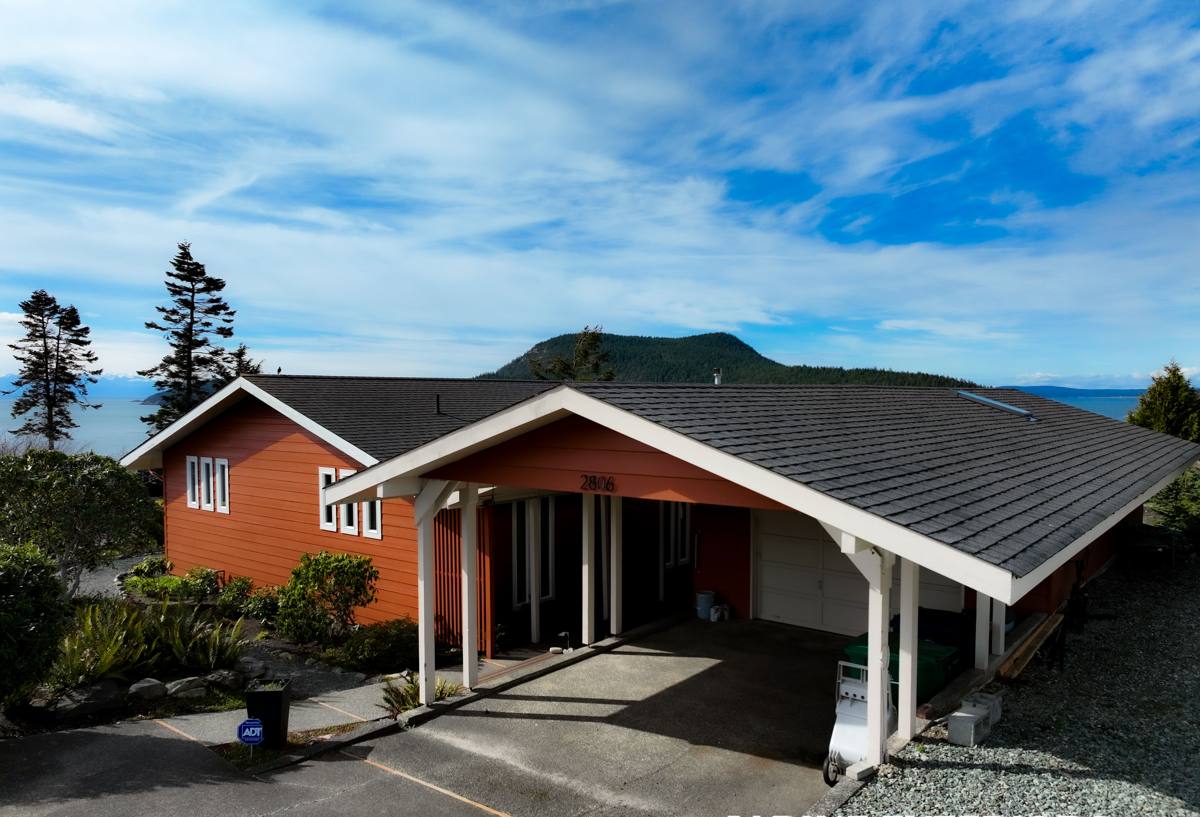
Whatcom County as a whole deals with marine-influenced weather — moisture-laden air moving in off the Salish Sea, driving rain through the fall and winter, and a moss season that can stretch most of the year in shaded spots. Maple Falls gets its own version of that, amplified by geography. The foothill terrain traps clouds and rain longer than the lowlands, tree canopy keeps roofs and siding shaded and damp, and many lots slope enough that water runs toward the house instead of away from it unless the grading and drainage were done right the first time.
The specific stresses we see most often
- Prolonged surface moisture: shaded exteriors that don't get direct sun for days or weeks at a stretch, which keeps wood-based siding and trim damp longer than they were engineered for.
- Moss and algae growth: roofs and north walls under tree cover build up organic growth that holds moisture against the surface and accelerates rot or granule loss.
- Debris load: needles, leaves, and cones collect in valleys, gutters, and deck boards, creating spots where water sits instead of shedding.
- Wind-driven rain: storms coming up the valley push rain sideways into wall assemblies, testing every seam, joint, and flashing detail.
- Freeze-thaw swings at elevation: Maple Falls sits high enough that winter cold snaps and occasional snow load stress materials and fasteners in ways the lowlands see less often.
None of this is unique to any one house — it's the baseline for building and maintaining an exterior in this part of the county. The difference between a home that holds up for decades and one that needs early repairs almost always comes down to material choice and installation quality.
Siding: Why We Only Install James Hardie
We get asked why we don't offer vinyl, LP SmartSide, cedar, primed spruce, or other fiber cement brands like Cemplank or Allura. The honest answer is that we looked at how those products perform in exactly the conditions Maple Falls throws at them, and we decided we didn't want our name on installations that would need premature repair.
Wood-based and engineered wood siding
Cedar and primed spruce look great fresh off the truck, but they're organic material in a climate that stays damp for long stretches. In a shaded, tree-covered setting like much of Maple Falls, wood siding stays wet longer between dry spells, which is exactly the condition that invites rot, cupping, and paint failure. LP SmartSide is engineered to resist that better than raw wood, but it's still wood-strand product with a resin coating — edge damage, poor caulking, or a nick in the surface can let moisture in, and once it does, the strand core swells. That's a maintenance conversation we don't want to have with a homeowner five years after installation.
Vinyl siding
Vinyl is inexpensive and low-maintenance in a general sense, but it's a thin plastic product that expands and contracts with temperature swings, can crack in a hard freeze, and doesn't hold up well to sustained direct impact from wind-driven debris — a real factor on tree-lined lots. It also has no meaningful fire resistance, which matters more each year as wildfire smoke and ember exposure become part of summer in this region.
Other fiber cement brands
Cemplank and Allura are fiber cement, and fiber cement as a category is the right call for this climate. But we standardized on James Hardie specifically for its ColorPlus factory-baked finish, its HZ5 product engineering for the Pacific Northwest's moisture and temperature profile, and its transferable warranty structure. We'd rather install one product exceptionally well than spread our crews thin across several.
Why James Hardie Fits Maple Falls
James Hardie fiber cement is non-combustible, doesn't swell or rot from prolonged dampness the way wood-based products can, and its HZ product line is engineered for regions with sustained moisture exposure — which describes Maple Falls about as well as anywhere in the county. The ColorPlus finish is baked on at the factory rather than field-applied, so it resists the fading and peeling that show up fastest on shaded, damp walls. It's also heavy enough and dense enough to shrug off the kind of wind-driven debris impact that's routine under tree cover.
| Factor | James Hardie Fiber Cement | Vinyl / Wood-Based Alternatives |
|---|---|---|
| Moisture behavior | Engineered to resist swelling and rot in sustained damp conditions | Vinyl can warp; wood-based products absorb and swell |
| Fire resistance | Non-combustible core | Vinyl melts/deforms; wood is combustible |
| Finish durability | Factory-baked ColorPlus finish | Field-applied or lower-durability factory coatings, fade faster |
| Impact resistance | Dense material resists debris strikes | Vinyl can crack; wood dents and splits |
| Warranty | Long-term, transferable | Varies, often shorter or non-transferable |
Roofing in a Moss-Prone, Shaded Setting
Roofs in Maple Falls fight two battles: shedding rain fast enough during a storm, and drying out fast enough between storms. Under heavy tree cover, that second part is the harder one. A roof that's shaded most of the day holds moisture longer, which feeds moss and algae growth, and moss holds water against shingles or panels in a way that shortens their service life regardless of brand or material.
What we focus on
- Proper ventilation so the roof deck can dry from underneath, not just the surface from above
- Flashing details at valleys, chimneys, and wall intersections — the spots where wind-driven rain finds a way in
- Material selection matched to the amount of shade and debris load a specific roof sees
- Gutter and downspout sizing that can keep up with heavy seasonal rain rather than overflowing at the worst possible time
We'll also talk straight with you about moss: a treatment or cleaning schedule matters more on a shaded Maple Falls roof than on an open, sunny lot closer to Lynden's flatland, and we'll tell you what that upkeep should look like for your specific roof and tree cover.
Windows: Sealing Out Wind-Driven Rain
Old or poorly installed windows are one of the most common sources of hidden water intrusion we find on foothill homes. It's rarely the glass itself — it's failed flashing, degraded sealant, or a frame that was never properly integrated with the water-resistive barrier behind the siding. Wind-driven rain coming up the valley will find that gap eventually.
When we replace windows, we treat the flashing and integration with the wall assembly as seriously as the window unit itself. A high-end window installed with a sloppy flashing detail will leak just as surely as a cheap one. We also talk with homeowners about energy performance — at Maple Falls' elevation, winter heating load is real, and a properly sealed, well-rated window pays for itself in comfort as much as in looks.
Decks: Built to Survive Shade and Moisture
Decks take the same punishment as roofs and siding, plus the added stress of foot traffic and standing water on horizontal surfaces. In a shaded Maple Falls yard, a deck can stay damp for days after a storm, which is exactly the condition that rots ledger boards, corrodes fasteners, and grows slick moss on walking surfaces.
What matters most in this setting
- Proper ledger board flashing where the deck attaches to the house — the single most common failure point on older decks
- Fastener and hardware selection rated for sustained moisture exposure, not just general outdoor use
- Gapping and drainage in the decking layout so water doesn't pool between boards
- Material choice that accounts for how much direct sun (or lack of it) the deck actually gets
Why a Local Crew Matters Out Here
Maple Falls isn't downtown Lynden. The lots are bigger, the tree cover is heavier, the terrain is less forgiving, and the weather pattern skews wetter and shadier than the valley floor. A crew that mostly works flat, open lots in town can miss details that matter here — drainage paths that need to route around a slope, ventilation that has to work harder because the roof rarely sees direct sun, or siding fastening that needs to account for wind funneling up the valley.
We work throughout Whatcom County, including Maple Falls, and we plan projects around what the specific site is doing — sun exposure, slope, tree cover, and how water actually moves across the property — rather than applying a one-size-fits-all approach.
Planning a Project: What to Expect
Every exterior project starts with a straightforward site walk. We look at what's actually happening on your home — where moisture is collecting, where moss has taken hold, how the current siding, roofing, or decking is holding up — before we recommend anything.
A short pre-project checklist we walk through with homeowners
- Where does water currently pool or run against the house during heavy rain?
- Which walls and roof sections stay shaded most of the day?
- Is there visible moss, algae, or staining on siding, roofing, or decking?
- Are gutters and downspouts sized and positioned to handle the actual rainfall this property sees?
- Are there overhanging branches or heavy tree cover contributing to debris buildup?
- What's the age and condition of existing flashing around windows, doors, and roof penetrations?
That walk-through shapes the recommendation — whether that's a full siding replacement, a roofing project, window upgrades, deck work, or some combination.
Getting Started
If you're dealing with moss buildup, damp siding that never seems to dry, a roof that's showing its age faster than it should, or a deck that's starting to feel soft underfoot, it's worth having someone look at it before small problems turn into structural ones. We offer free, no-pressure estimates for homeowners in Maple Falls and throughout the surrounding area — use the form below to get in touch and we'll walk the property with you.