 Lynden Exterior
 Board & Batten Siding for Acme's Wooded, Wet Climate
Acme sits in the Nooksack River valley east of Lynden, tucked against the foothills that lead up toward Mt. Baker. That location means more tree cover, more shade, and more standing moisture on exterior surfaces than homes closer to open ground. Combine that with Whatcom County's long wet season and the wind-driven rain that pushes through the valley off Pacific storm systems, and you get a climate that is genuinely hard on siding. Board and batten is one of the most requested looks for homes out here — it reads as clean, modern-farmhouse, and it suits the barns, outbuildings, and rural character of the area. Done right, in the right material, it also happens to be a smart technical choice for this specific climate. Done wrong, it's one of the faster ways to end up with hidden rot behind a good-looking wall.
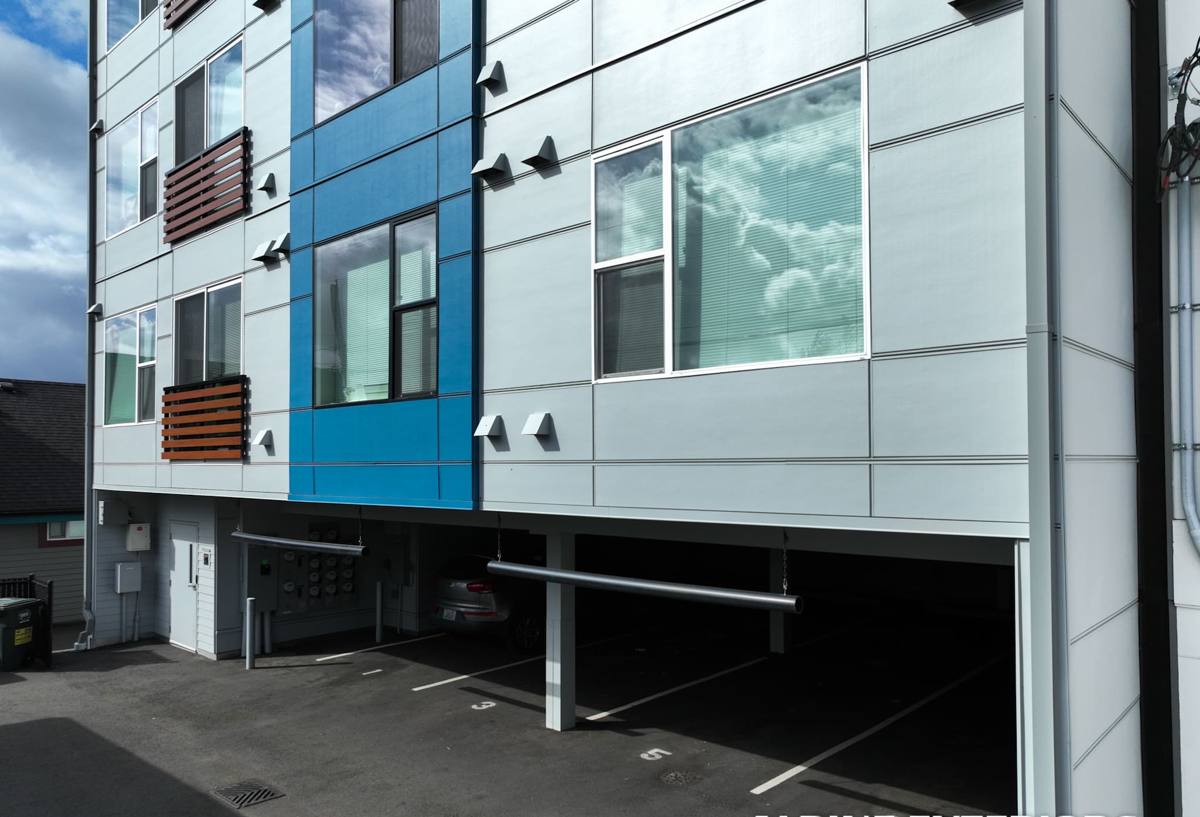
What Acme's Weather Actually Does to a Wall Assembly
Three things define the exterior environment around Acme and the rest of Whatcom County: persistent moisture, driving rain that hits siding at an angle instead of straight down, and shaded, forested lots that stay damp longer after a storm passes. Add in the salt-influenced marine air that moves inland off the Sound during weather systems, and you have conditions that keep exterior wood and low-grade composite products perpetually damp for months at a time.
For board and batten specifically, this matters because the style relies on vertical seams — the battens covering the joints between wide panels. Every one of those seams is a place water can find its way behind the cladding if the flashing detail, caulking, or panel material isn't right. In a drier climate, a mediocre seam might survive for years without consequence. In Acme's long wet season, a weak seam becomes a wet cavity behind the wall within a season or two, and that's how you get soft trim, stained sheathing, and eventually the kind of rot that isn't visible until it's expensive.
The long moss season compounds this. Moss doesn't just grow on roofs — it colonizes any siding surface that stays damp and shaded long enough, including the horizontal ledges that battens can create if they aren't detailed to shed water. Moss holds moisture against the surface, which accelerates whatever degradation is already happening underneath.
Why This Is a Material Problem, Not Just a Workmanship Problem
You can hire the best installer in Whatcom County, but if the underlying panel material absorbs water, swells, or breaks down under repeated wet-dry cycles, you're only delaying the problem. This is the core reason we standardized on James Hardie fiber cement and stopped installing wood, engineered wood, or vinyl board and batten systems. The material has to be able to handle Acme's climate on its own merits, before installation quality even enters the picture.
Board & Batten Material Comparison for This Climate
| Material | Moisture Behavior | Typical Concern in Acme's Climate |
|---|---|---|
| Primed wood (cedar, spruce) | Absorbs water at cut edges and joints | Swelling, cupping, and rot at battens if maintenance lapses even one season |
| Vinyl board & batten | Doesn't absorb, but expands/contracts with temperature swings | Seams can gap or warp, letting wind-driven rain track behind the panel |
| LP SmartSide (engineered wood) | Resists moisture better than raw wood but still wood-based | Edge swelling if caulking or flashing details fail over time |
| James Hardie fiber cement | Non-combustible cement composite, engineered for wet/humid climates | Minimal moisture absorption when installed to spec; factory finish resists the wear that drives most repaint cycles |
We're not going to tell you every wood or vinyl board and batten job in Acme fails — plenty hold up fine with diligent upkeep. What we will say is that we stopped installing those systems because the margin for error in this climate is thin, and the maintenance burden to keep them performing is more than most homeowners want to sign up for. Fiber cement gives you a wider margin.
What a Correct Board & Batten Job Actually Involves
Board and batten looks simple from the street — vertical panels, vertical strips covering the seams — but the assembly behind it is what determines whether it lasts. A correct installation includes:
- A weather-resistive barrier (house wrap) installed and lapped correctly before any siding goes on
- Proper rainscreen or furring strategy where needed, so water that does get behind the cladding can drain and the wall can dry
- Correct fastener pattern and fastener type matched to the panel manufacturer's specification, not generic nails
- Flashing at every window, door, and roofline intersection — the most common failure point on any vertical siding style
- Proper clearance at the base of the wall (typically 6 inches minimum off grade, more near landscaping beds) so splash-back and ground moisture don't sit against the bottom course
- Batten spacing and fastening that allows for the panel's expansion and contraction without cracking caulk lines
Skipping any one of these doesn't necessarily cause a visible problem in year one. It shows up in year five or eight, usually as a stain, a soft spot, or a section that needs to come off entirely to find out how far the damage spread. This is why we talk through the assembly with Acme homeowners before we talk about color and reveal width — the technical details are what actually protect the house.
The James Hardie Board & Batten System
We install James Hardie exclusively, and for board and batten that typically means HardiePanel vertical siding paired with Hardie's batten trim, or a board-and-batten configuration built from HardieTrim boards over HardiePanel. Both approaches give you the same visual result with a non-combustible, engineered material underneath.
HZ5 vs. HZ10 Engineering
Hardie manufactures its products in climate-specific formulations. Homes in this part of Washington fall under the HZ5 product line, engineered for the freeze-thaw cycles and sustained moisture exposure typical of the Pacific Northwest — a different formulation than what Hardie ships to hot, dry, or humid-South climates. That distinction matters more in a valley climate like Acme's, where damp conditions persist for extended stretches, than it does somewhere with short, dry summers.
ColorPlus Factory Finish
For board and batten in particular, a factory-applied finish is worth paying attention to. Field-painted board and batten has a lot of surface area and a lot of seams, and the quality of that paint job depends entirely on weather conditions during application and the skill of whoever's holding the sprayer. ColorPlus finish is baked on in a controlled factory environment before the siding ever reaches Acme, which means consistent coverage on every board, including the edges and battens that are hardest to paint evenly on site. It also carries a longer finish warranty than a standard field-applied paint job.
Our Process for a Board & Batten Project in Acme
- On-site assessment — we walk the exterior, check current siding and trim for existing moisture damage, and evaluate sun/shade exposure and drainage around the foundation, since these vary a lot from lot to lot in the valley
- Design and material selection — panel reveal, batten spacing, and ColorPlus color selected against the home's roofline and surroundings
- Prep and tear-off — removal of existing siding, inspection of sheathing underneath for rot that needs to be addressed before new material goes up
- Weather barrier and flashing — house wrap, window/door flashing, and drainage details installed correctly the first time, since this is the layer nobody sees again once siding is up
- Installation — panels and battens installed to Hardie's fastening specification, not shortcuts
- Final walkthrough — caulking, trim, and touch-up checked against the original scope before we call it done
Signs Your Current Siding May Already Be Struggling
If you're in Acme and wondering whether it's time to look at replacement, these are the signs worth taking seriously before another wet season passes:
- Soft or spongy spots when you press on siding or trim, especially near the bottom courses or around windows
- Persistent moss or dark streaking that comes back within weeks of cleaning
- Visible gaps or cracking at batten seams or caulk lines
- Paint that's peeling or bubbling rather than just fading
- A musty smell in an adjacent interior wall or noticeably higher heating bills, which can indicate moisture-compromised insulation
Maintenance After Installation
Fiber cement board and batten is low-maintenance compared to wood, but "low" isn't "none." A yearly rinse to knock off pollen, moss spores, and organic buildup keeps the ColorPlus finish looking right, and it's worth a quick visual check of caulk lines at trim joints every couple of years, since caulk is the one component that ages faster than the siding itself. Catching a failed caulk joint early is a five-minute fix; ignoring it for a few wet seasons is not.
Why Local Experience in Acme Specifically Matters
Acme isn't downtown Bellingham and it isn't the open farmland around Lynden proper — it's a forested valley community with its own microclimate quirks: more shade, more standing moisture, and lot layouts often shaped by the river and surrounding terrain. A crew that already works this area knows to expect heavier moss pressure on north-facing walls, to plan drainage details around denser tree cover, and to account for the driving rain patterns specific to the valley rather than applying a one-size-fits-all approach pulled from a drier region. That local familiarity shows up in the details — where extra flashing gets added, how clearances are handled near landscaping, and which walls need the most attention.
If you're considering board and batten for a home in Acme, we're happy to walk the property, look at what's there now, and talk through what a correct installation would involve for your specific site. Reach out for a free, no-pressure estimate using the form below.