 Lynden Exterior
 Windows Built for the Acme Area's Weather, Not Just the Showroom
Homes in the Acme area, out toward the eastern edge of Whatcom County near Lynden, sit in a different microclimate than a lot of homeowners realize. You get the same driving rain that hammers the rest of the county, but you're also closer to timber and tree cover that keeps things shaded, damp, and slow to dry out. Add in the salt-laden air that rides inland off Bellingham Bay and the Strait of Georgia on a west wind, and you've got a combination that's genuinely hard on window assemblies — frames, seals, hardware, and glazing all take a beating over time.
A window that's rated fine for a dry interior climate can start failing here in five to eight years instead of twenty, simply because it wasn't installed with this specific mix of moisture, wind-driven rain, and slow-drying shade in mind. This page is about what actually holds up on Acme-area homes, what a correct installation looks like, and how we approach the job when we come out to your property.
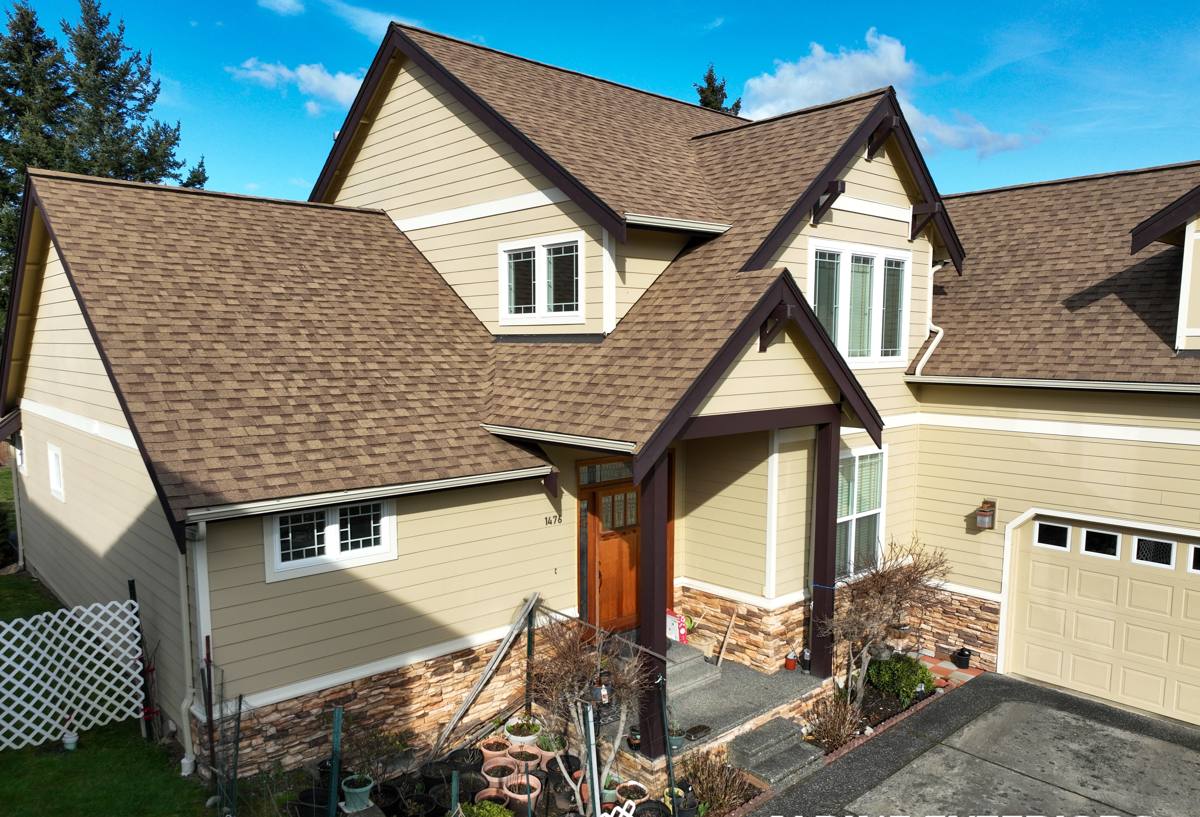
What This Climate Actually Does to a Window Over Time
It helps to know what you're up against before you pick a product or a contractor. The issues we see repeatedly on homes in this part of Whatcom County aren't random — they're predictable results of the local conditions.
Driving Rain and Wind-Driven Moisture
Rain that comes in sideways during a windstorm doesn't behave like rain falling straight down. It gets pushed up under trim, into any gap in flashing, and against seals that were only ever tested for standing water. Over years, that pressure finds every weak point in a window's water management system.
Salt Air and Corrosion
Even well inland from open saltwater, a west or southwest wind carries fine salt particulate that settles on exterior surfaces. On windows, that means accelerated corrosion of hardware — hinges, locks, balance systems — and pitting on lower-grade aluminum components. It also speeds up the breakdown of certain sealants and finishes that weren't formulated with coastal exposure in mind.
Moss, Shade, and Slow Drying
Properties with tree cover or north-facing exposures stay damp longer after every rain. That extended dampness is exactly what moss and mildew need, and it's also what accelerates wood rot in sills, trim, and any exposed framing. A window that dries out fully between storms in an open, sunny yard might stay damp for days on a shaded Acme lot — and that difference matters more than most manufacturers' warranties account for.
What a Correct Custom Window Installation Involves
"Custom" doesn't just mean the window is built to your exact rough opening — though that matters. It means the whole assembly, from the framing out to the trim, is treated as a water-management system, not just a hole with glass in it.
Flashing and Water Diversion
Every opening needs a flashing sequence that sheds water down and out, never allowing it to pool behind the window or wick into the wall assembly. This is the single most common place we find shortcuts on older or poorly done installs — and it's invisible until the drywall or sheathing starts showing damage.
Sill Pan Protection
A sill pan under the window creates a backstop so that any water that does get past the exterior seal has somewhere to go besides your framing. On a property with the rain exposure Acme gets, we treat this as standard, not an upgrade.
Sealant Selection and Placement
Not every sealant is rated for the temperature swings and UV exposure this region sees, and even the right sealant fails if it's the only thing keeping water out. Proper installation uses sealant as one layer of a redundant system, not the whole defense.
Fastening and Structural Fit
A custom window that isn't shimmed and fastened correctly will rack out of square over time, which stresses the sash, wears out balance hardware early, and opens gaps that let both water and air through. Getting the reveal even on all sides isn't cosmetic — it's what keeps the unit operating smoothly for decades.
Signs Your Current Windows Are Already Struggling
Homeowners in the Acme area often come to us after noticing one or two of these — worth checking before problems get expensive.
- Fogging or moisture between panes on double- or triple-glazed units (a sign the seal has failed)
- Soft or discolored wood at the sill or lower corners of the frame
- Visible moss or dark streaking on the frame or nearby trim
- Windows that are hard to open, close, or lock, or that have started sticking
- Noticeable draft or cold spot near the window even when it's fully closed
- Paint or finish peeling specifically around the window, not the surrounding wall
- Condensation forming on the interior glass or frame during cold, wet weeks
- Visible corrosion or chalky white buildup on hardware or aluminum components
Any one of these on its own isn't necessarily an emergency, but a few together usually means water has already gotten past the original seal and is working on the framing behind it.
Choosing the Right Frame Material for This Climate
There's no single "best" window material for every home — it depends on your home's exposure, your maintenance appetite, and your budget. Here's how the common options actually compare for a property dealing with salt air, driving rain, and shade-driven dampness.
| Frame Material | Moisture & Salt Air Resistance | Maintenance | Typical Trade-Offs |
|---|---|---|---|
| Vinyl | Good — won't rot or corrode | Low | Can look less premium; color/style options more limited than fiberglass |
| Fiberglass | Excellent — very stable in wet, salt-exposed conditions | Low | Higher upfront cost than vinyl |
| Aluminum | Fair — prone to corrosion and pitting near salt exposure unless a marine-grade finish is used | Moderate | Thin sightlines are attractive, but we're selective about where we recommend it here |
| Wood (clad exterior) | Good on the exterior face if properly clad; interior wood still needs care | Higher | Best warmth and character, but the wood core is unforgiving of any seal failure |
For most Acme-area homes, we steer people toward vinyl or fiberglass for anything with real weather exposure, and reserve wood-clad or standard aluminum for more sheltered elevations where the maintenance trade-off makes sense. This is a professional judgment call based on how the material actually performs here over time — not a knock on any manufacturer.
Our Process, Start to Finish
A custom window job is only as good as the steps that happen before and after the window itself goes in.
- On-site assessment — we look at every opening individually, checking existing framing, sill condition, and signs of past water intrusion before recommending anything.
- Accurate measurement and ordering — every window is measured to the actual rough opening, not a catalog standard, since older homes in this area often have openings that have shifted slightly over the decades.
- Removal and inspection — once the old unit is out, we inspect the framing and sill for rot or hidden moisture damage before anything new goes in. This is often where we find problems the homeowner didn't know existed.
- Repair as needed — any soft or damaged framing gets addressed before the new window is installed, not covered over.
- Flashing, sill pan, and installation — installed as a complete water-management system, not just a fastened frame.
- Trim, sealant, and finish work — matched to your home's existing exterior so the new window looks original to the house, not bolted on.
- Walkthrough and operation check — every window is opened, closed, and locked in front of you before we consider the job done.
What Affects the Cost of a Custom Window Project
Every home is different, so we don't quote sight unseen — but these are the main factors that move the price up or down.
| Factor | Why It Matters |
|---|---|
| Frame material | Vinyl, fiberglass, and clad-wood carry different material costs and labor requirements |
| Condition of existing framing | Rot or moisture damage found during removal adds repair scope |
| Window size and configuration | Larger units, custom shapes, and multi-window assemblies take more time and material |
| Number of openings | Per-unit cost typically drops on larger whole-house projects |
| Access and elevation | Second-story or hard-to-reach openings add setup and safety time |
| Trim and finish matching | Custom trim profiles to match an existing home take more labor than standard trim |
We'll walk through all of this on-site so you understand exactly what you're paying for and why — no surprise line items after the fact.
Why It Matters That We Already Work in Acme
A contractor who's worked on multiple homes in the Acme area already knows how the shade patterns, wind exposure, and rain angles vary lot to lot out here — that's different knowledge than what applies in downtown Lynden or a more open, sunnier part of the county. We've seen which framing details hold up on the shadier, tree-covered lots and which ones need extra attention on properties catching more wind off the open fields. That's the kind of thing you can't get from a general contractor working from a checklist alone — it comes from doing the work locally, repeatedly, in these specific conditions.
It also means we're not learning on your house. We know what a healthy sill looks like out here versus one that's already compromised, and we know which materials are worth the extra cost for your specific exposure and which aren't.
Living With Your New Windows: Simple Upkeep for This Climate
Even a correctly installed window benefits from a little seasonal attention in an area with this much rain and shade.
- Rinse frames and sills periodically to keep moss and organic buildup from taking hold, especially on shaded elevations
- Check weep holes (the small drainage openings at the bottom of the frame) to make sure they're clear of debris
- Inspect exterior caulking annually and touch up any cracked or separated sections before winter rains set in
- Wipe down hardware occasionally if you're near enough to catch salt air, to slow corrosion buildup
- Trim back vegetation that's shading a window and keeping it damp longer than necessary
None of this is intensive, but a few minutes a couple of times a year goes a long way toward getting the full lifespan out of a properly installed window in this climate.
If you're seeing any of the warning signs above, or you're simply ready to stop fighting drafts and fogged glass through another Whatcom County winter, we're happy to come take a look. There's no pressure and no obligation — just a straight assessment of your windows and an honest estimate, using the form below.