 Lynden Exterior
 Storm Damage Roof Repair for Acme Homes
Acme sits back in the foothills east of Lynden, closer to the timber and the South Fork Nooksack valley than to the open flats most people picture when they think of Whatcom County. That setting changes what "storm damage" usually means for a roof out here. Instead of wide-open wind exposure off the water, Acme homes deal with heavy tree canopy, narrow valleys that funnel wind unpredictably, and a lot of standing moisture that never quite gets a clear shot of sun to dry out. Add in the driving rain and long moss season that touch the whole county, and you get roofs that fail in specific, predictable ways — just not always the ways homeowners expect.
We work storm damage calls across Whatcom County, from the salt-air coastal edges near Lynden and Bellingham Bay to foothill communities like Acme where the damage pattern is more about wind-driven branches, saturated moss mats, and slow leaks than it is about missing shingles from an open gale. Knowing that difference matters when you're deciding whether a roof needs a patch, a partial repair, or a full section replacement.
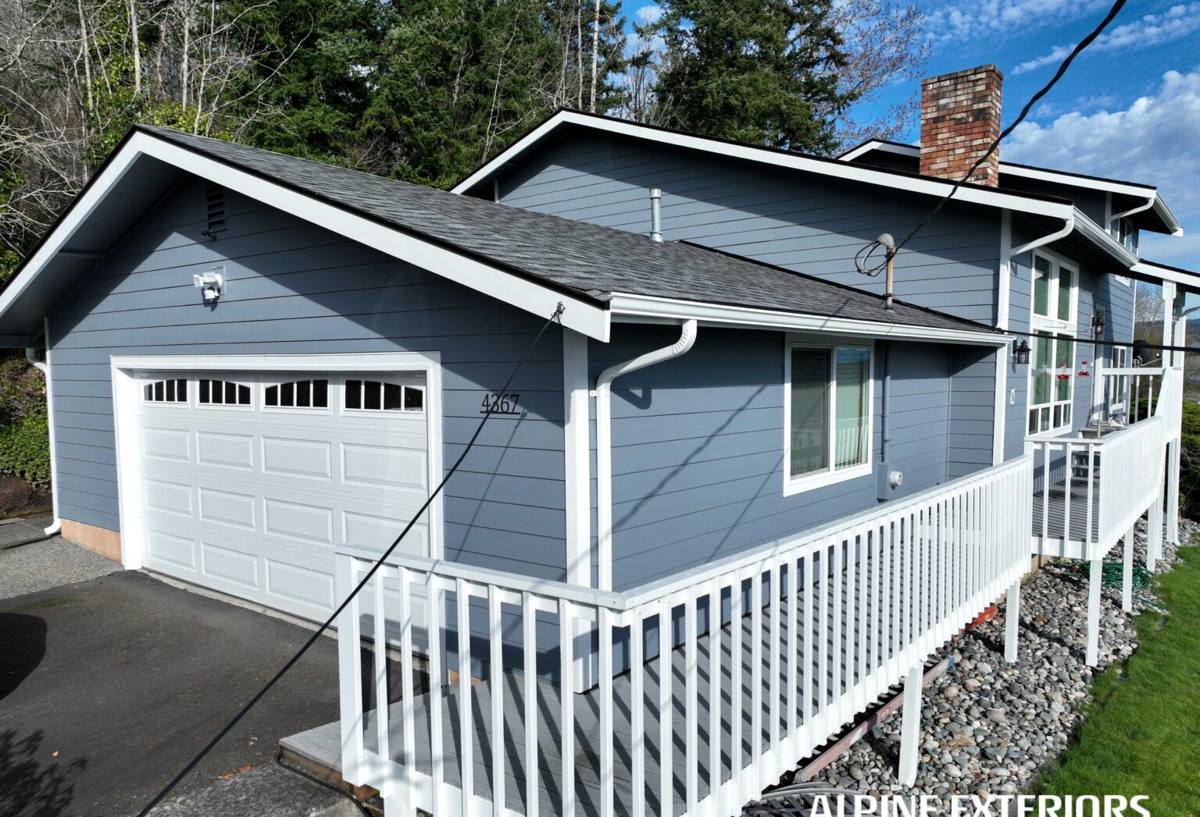
What Makes Acme's Storm Damage Different
Tree Cover and Wind Funneling
Acme's tree lines do double duty — they block a lot of straight-line wind, but they also mean storm damage is frequently caused by falling limbs and debris rather than wind alone lifting shingles. A gust that wouldn't bother an open roof can still snap a branch loose thirty feet up and drop it straight through a roof plane. We check for impact damage as carefully as we check for wind-lift damage on every storm call in this area.
Moisture That Doesn't Leave
Because Acme sits in a valley with more shade and less direct wind exposure than the coastal parts of the county, roofs here tend to hold moisture longer after a storm passes. That extended damp period is exactly what moss needs to get established, and it's why moss-related roof damage shows up more aggressively in foothill communities than in wide-open, sun-exposed neighborhoods.
Driving Rain and Wind-Driven Water
Whatcom County's storms rarely come straight down. Wind-driven rain gets pushed sideways under lifted or cracked shingles, around flashing that's lost its seal, and into any gap that a calm-weather inspection would miss entirely. This is the single most common reason a homeowner gets a leak weeks after a storm rather than during it — the water found a path in during the wind event, then it just took time to show up as a stain on the ceiling.
Common Types of Storm Damage We See in Acme
- Impact damage from falling branches or debris knocked loose by wind — cracked shingles, dented flashing, punctured decking
- Wind-lifted or torn shingles, especially along ridge lines and roof edges where uplift is strongest
- Moss-lifted shingles, where moss mats have worked underneath shingle tabs and broken the seal, letting wind get under them more easily during the next storm
- Flashing failures around chimneys, skylights, and roof-to-wall transitions, where sealant has aged and wind-driven rain finds the gap
- Gutter and downspout damage that lets water back up under the roof edge instead of draining away
- Saturated or compromised decking from a slow leak that's been running longer than the homeowner realized
What a Correct Storm Damage Repair Actually Involves
A storm repair done right isn't just about replacing what's visibly broken. It starts with figuring out how the water actually got in, because a shingle that looks fine on the surface can still be sitting over compromised decking if a leak has been active for a while. We check the roof deck itself where accessible, not just the shingle layer, before we call a repair complete.
It also means matching materials correctly. Roofing shingles change slightly between production runs and manufacturers age at different rates, so a patch using mismatched material can look fine for a season and then stand out — or worse, fail to seal properly against the surrounding shingles. We use materials suited to the existing roof system and, where an exact match isn't realistic, we're upfront with the homeowner about that before starting work rather than after.
Finally, a correct repair addresses the cause, not just the symptom. If moss buildup contributed to the failure, we deal with the moss and the drainage issue behind it, not just the hole it created. Repairing the same spot twice in two years usually means the underlying cause was never fixed the first time.
What We Check On Every Storm Damage Visit
- Shingle condition across the whole roof plane, not just the area the homeowner flagged
- Flashing at every penetration — chimneys, vents, skylights, roof-to-wall joints
- Decking condition where a leak has been present for more than a few days
- Moss and debris buildup in valleys, behind chimneys, and along north-facing slopes
- Gutter and downspout function, since backed-up water mimics roof damage from the inside
- Attic ventilation and insulation, where accessible, for signs of moisture intrusion
Our Process, Start to Finish
1. Inspection and Documentation
We inspect the full roof, not just the damaged section, and document what we find with photos before touching anything. This matters for insurance purposes and for giving the homeowner a clear, honest picture of what's actually going on.
2. Straight Talk on Scope
We tell you whether this is a spot repair, a section replacement, or something that's better handled as a full re-roof — and why. We're not going to sell a full roof replacement when a repair will hold, and we're not going to patch something that's going to fail again in a year.
3. The Repair Itself
Work is done with materials matched to the existing roof system wherever possible, with flashing and underlayment addressed alongside shingles — not just the top layer that's visible from the ground.
4. Final Check and Cleanup
We walk the roof again after the repair, check the surrounding area for missed debris or nails, and make sure gutters and downspouts are clear so water actually drains the way the repair assumes it will.
Repair vs. Replace: How We Make the Call
| Factor | Leans Toward Repair | Leans Toward Replacement |
|---|---|---|
| Extent of damage | Isolated to one section or slope | Spread across multiple planes or the whole roof |
| Roof age | Under 10-12 years, otherwise sound | Nearing or past expected service life |
| Decking condition | Dry, solid where exposed | Soft, stained, or showing rot |
| Moss history | Light, surface-level growth | Established moss with lifted shingles in several areas |
| Prior repairs | First repair on this section | Same area patched more than once already |
No two roofs land on this table the same way, which is why we walk the actual roof before giving a recommendation rather than quoting off a phone description.
Insurance Claims and Storm Damage
Many storm damage repairs end up going through a homeowner's insurance policy, especially when a specific wind event or falling tree limb caused the damage. We can document damage in a way that's useful for a claim — clear photos, a written description of cause and extent — but the claim itself is between the homeowner and the insurance carrier. We're happy to meet an adjuster on site and explain what we found, but we don't represent that we can guarantee claim outcomes, because that decision sits with the insurer.
Why Hire a Crew That Already Works in Acme
Acme isn't a big commercial strip with easy access from every direction — it's a spread-out foothill community, and knowing the area means fewer surprises about access, driveway length, or how a property sits relative to tree cover and drainage. A crew that's worked roofs in and around Lynden and the surrounding Whatcom County foothills already understands how moss behaves on shaded, valley-facing slopes here versus more open, wind-exposed roofs closer to the coast. That's the difference between a repair that just covers the visible damage and one that accounts for why the damage happened in the first place.
Local familiarity also matters for response time after a storm. When wind or a falling limb causes a leak, a tarped roof or a properly sealed temporary fix in the first day or two can be the difference between a straightforward repair and a much bigger decking and interior repair bill down the line.
Between-Storm Maintenance Checklist
Most storm damage repairs are less painful when the roof was in reasonable shape going into the storm. A few habits go a long way in Acme's climate:
- Clear gutters and downspouts before the fall rains start, and again mid-winter if tree cover is heavy
- Trim back branches that overhang the roofline, especially anything that could reach the roof in high wind
- Have moss treated before it establishes a mat, not after shingles start lifting
- Check attic insulation and ventilation periodically — poor airflow accelerates moisture problems from the inside
- After any significant wind event, do a ground-level visual check for obviously missing or displaced shingles
- Get a professional inspection every year or two, even with no visible problems, since slow leaks don't always show themselves quickly
Get an Honest Look at Your Roof
If a recent storm has you wondering whether your Acme roof took damage, we're glad to come out, walk it, and give you a straight answer — repair, replacement, or nothing urgent at all. The estimate is free and there's no pressure attached to it. Use the form below to get in touch and we'll set up a time to take a look.