 Lynden Exterior
 Birch Bay's Coastal Exposure vs. Inland Lynden
Birch Bay sits right on the water, and that changes what a roof has to deal with compared to a home a few miles inland in Lynden proper. Homes closer to the shoreline take a steadier dose of salt-laden air, more direct wind off the water, and rain that doesn't just fall straight down — it gets pushed sideways into laps, flashing, and eaves that a calmer, inland roof rarely has to contend with. Whatcom County as a whole sees a wet, mild climate, but the difference between a sheltered Lynden lot and an open Birch Bay property is real, and it shows up in how fast a roof ages.
None of this means Birch Bay homes need exotic materials or a completely different approach. It means the details that are optional elsewhere — fastener choice, flashing quality, ventilation balance, algae resistance — stop being optional here. A shingle roof installed the same way you'd install one on a protected inland lot will wear faster and show problems sooner near the water.
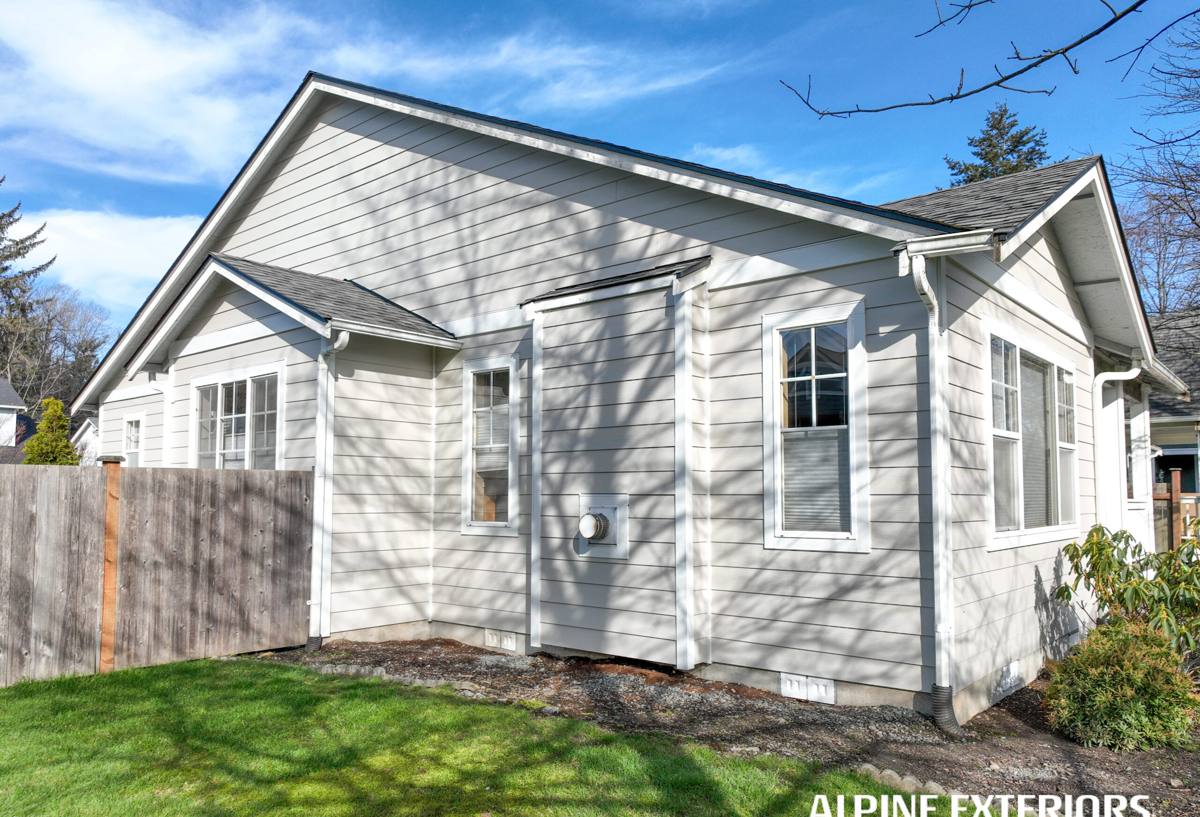
What Salt Air, Driving Rain, and a Long Moss Season Actually Do to a Roof
Each of these stresses works on a roof in a different way, and they compound each other over the life of the roofing:
Salt Air
Airborne salt accelerates corrosion on exposed metal — nail heads, flashing, vent housings, and gutter hardware. Once a fastener starts to rust, it loses holding power and can streak or stain the shingles around it. This is a slow process, but it's steady, and it's one of the main reasons fastener and flashing material choice matters more for a Birch Bay roof than for one set back from the water.
Driving, Wind-Blown Rain
Straight-down rain is easy for any properly lapped shingle roof to shed. Wind-driven rain is different — it can be pushed sideways or even slightly upward under an eave, which means gaps and shortcuts that would never leak in calm weather can leak here. This is why lap patterns, valley construction, and edge details need to be done correctly and not just "good enough."
A Long Moss Season
Whatcom County's damp, mild winters and shoulder seasons give moss and algae a long window to establish themselves, especially on north-facing slopes and anywhere tree cover keeps shingles shaded and slow to dry. Moss doesn't just look bad — it holds moisture against the shingle surface, lifts shingle edges as it grows under the tabs, and speeds up granule loss. Left alone long enough, it can shorten the useful life of an otherwise sound roof by years.
Picking the Right Asphalt Shingle for This Exposure
Asphalt shingles aren't one product — they come in tiers that differ in wind rating, algae resistance, and expected service life. For a Birch Bay home, we weigh those differences more heavily than we would for a sheltered lot.
Wind Rating and Fastening
Standard three-tab shingles are rated for lighter wind exposure than architectural (laminated) shingles, and in an open, waterfront-adjacent setting, that gap matters. We also adjust nailing patterns and fastener count for exposure — a roof that catches more direct wind off the water is fastened accordingly, not installed to the bare minimum the shingle wrapper allows.
Algae and Moss Resistance
Most major shingle lines now offer an algae-resistant option, typically using copper- or zinc-infused granules that slow biological growth on the shingle surface. It costs a bit more up front. Given how long the moss season runs here, we consider it a practical upgrade for Birch Bay rather than an optional extra — it buys time between cleanings and helps the roof hold its appearance longer.
| Shingle Tier | Typical Wind Rating | Algae/Moss Resistance | Best Fit |
|---|---|---|---|
| Standard 3-tab | Lower end of the range | Base level unless upgraded | Budget-driven projects on more sheltered lots |
| Architectural / laminated | Mid to upper range | Often available with algae-resistant granules | Most Birch Bay homes — the standard we recommend near the water |
| Premium / designer | Upper range | Algae-resistant standard on most lines | Homeowners prioritizing appearance and longest service life |
There's no single "correct" tier for every house — roof pitch, tree cover, sun exposure, and budget all factor in. What we won't do is talk a homeowner into a shingle that isn't matched to how exposed their particular roof is. That's a decision we walk through together during the estimate, not something we default to.
What a Correct Installation Involves
Shingles are the visible layer, but most roof failures near the water start underneath them or at the edges, not in the shingle itself.
Deck, Underlayment, and Flashing
We start with the roof deck — soft or delaminated sheathing gets replaced, not shingled over. From there, a quality synthetic underlayment goes down as the primary water barrier, with self-adhering ice-and-water membrane at eaves, valleys, and other vulnerable transitions. This isn't just an ice-dam measure; on a wind-exposed roof, that membrane is also insurance against wind-driven rain finding its way under the shingle field. Flashing at chimneys, walls, valleys, and pipe penetrations is formed and lapped correctly, using fasteners chosen to hold up to salt air rather than the cheapest option in the bin.
Ventilation Balance
A roof with unbalanced intake and exhaust ventilation traps moisture in the attic, and that moisture works its way back through the deck and into the underside of the shingles. In a damp coastal climate, that's a direct contributor to premature aging and to the kind of persistent dampness that lets moss and algae get a foothold from below as well as above. We check and correct ventilation balance as part of every reroof — not as an upsell, but because it's part of doing the job correctly.
Moss and Algae: Prevention Beats Reaction
Once moss is established and growing under shingle tabs, cleaning becomes a careful, deliberate process — not a pressure-wash job. High-pressure washing strips granules and can shorten a roof's remaining life faster than the moss would have on its own. Where cleaning is needed, we use low-pressure methods appropriate to asphalt shingles, and we address the roots of the problem alongside the cleanup:
- Trimming back overhanging branches that keep shingles shaded and slow to dry
- Clearing gutters and valleys so water and debris don't sit against the shingle edge
- Installing zinc or copper control strips near the ridge on moss-prone slopes, where rainwater carries trace metal down the roof to inhibit regrowth
- Confirming attic ventilation isn't adding moisture to the problem from underneath
Prevention built in at installation — the right shingle, the right ventilation, a control strip on the shaded slope — costs far less over the life of the roof than repeated reactive cleanings.
Our Process, Start to Finish
The process for a Birch Bay reroof follows the same basic steps as anywhere else, but every stage accounts for the added exposure:
- Inspection and estimate — we look at the deck, existing ventilation, moss/algae history, tree cover, and wind exposure specific to your lot, then walk you through shingle and flashing options honestly.
- Tear-off and deck check — old roofing comes off, and the deck is inspected and repaired before anything new goes down.
- Underlayment and flashing — ice-and-water membrane and synthetic underlayment go in first, followed by properly formed and lapped flashing at every penetration and transition.
- Shingle installation — installed to the fastening pattern appropriate for the exposure, not just the shingle manufacturer's minimum.
- Ventilation check — intake and exhaust are verified and corrected if the attic isn't breathing properly.
- Cleanup and final walkthrough — magnetic sweep for stray fasteners, debris hauled off, and a walkthrough so you understand what was done and why.
Maintenance Checklist for Birch Bay Homeowners
A well-installed asphalt shingle roof in this climate still benefits from basic seasonal attention. A short list worth keeping on hand:
- Clear gutters and downspouts at least twice a year — more often under heavy tree cover
- Look for moss starting on shaded, north-facing slopes before it spreads across the roof
- Check flashing and vent boots visually from the ground for obvious rust, lifting, or cracking
- Trim tree limbs back from the roofline to cut down on shade, debris, and abrasion
- After a significant windstorm, do a visual check for lifted or missing shingles rather than waiting for a leak to show up inside
- Have the roof looked at by a professional every few years, even if nothing looks obviously wrong
Why Hire a Crew That Already Works Birch Bay
A roof installed by someone unfamiliar with this exposure isn't necessarily installed wrong — but it's often installed to a generic standard that doesn't account for what salt air, driving rain, and a long moss season do to a roof over time. Knowing which slopes in a given neighborhood tend to hold moss, which fastener and flashing choices actually hold up near the water, and where wind-driven rain likes to find weak spots isn't something that comes from a manufacturer's install guide. It comes from working roofs in this specific stretch of Whatcom County, season after season, and seeing what lasts and what doesn't.
That local experience shows up in small decisions throughout the job — the underlayment detail at a valley, the fastener spec on an exposed slope, whether a control strip is worth adding — that add up to a roof that holds up rather than one that needs early attention.
If you're weighing a shingle roof replacement or repair for a Birch Bay home, we're happy to take a look and give you a straight assessment. Reach out for a free, no-pressure estimate using the form below.