 Lynden Exterior
 Building Decks for Blaine's Coastal Conditions
Blaine sits closer to open water and salt air than most of the towns we work in around Whatcom County, and that changes how a deck should be built here. A deck design that holds up fine twenty minutes inland in Lynden can fail early in Blaine because of one variable those other jobs don't have to deal with: airborne salt combined with near-constant moisture. We build decks in this area with that reality in mind from the footings up, not as an afterthought once the framing is done.
This page is specifically about deck building for homes in and around Blaine. It's not a generic deck page with the city name swapped in — the fastener choices, the coating decisions, and the maintenance conversation we have with Blaine homeowners are genuinely different from what we'd recommend elsewhere in the county.
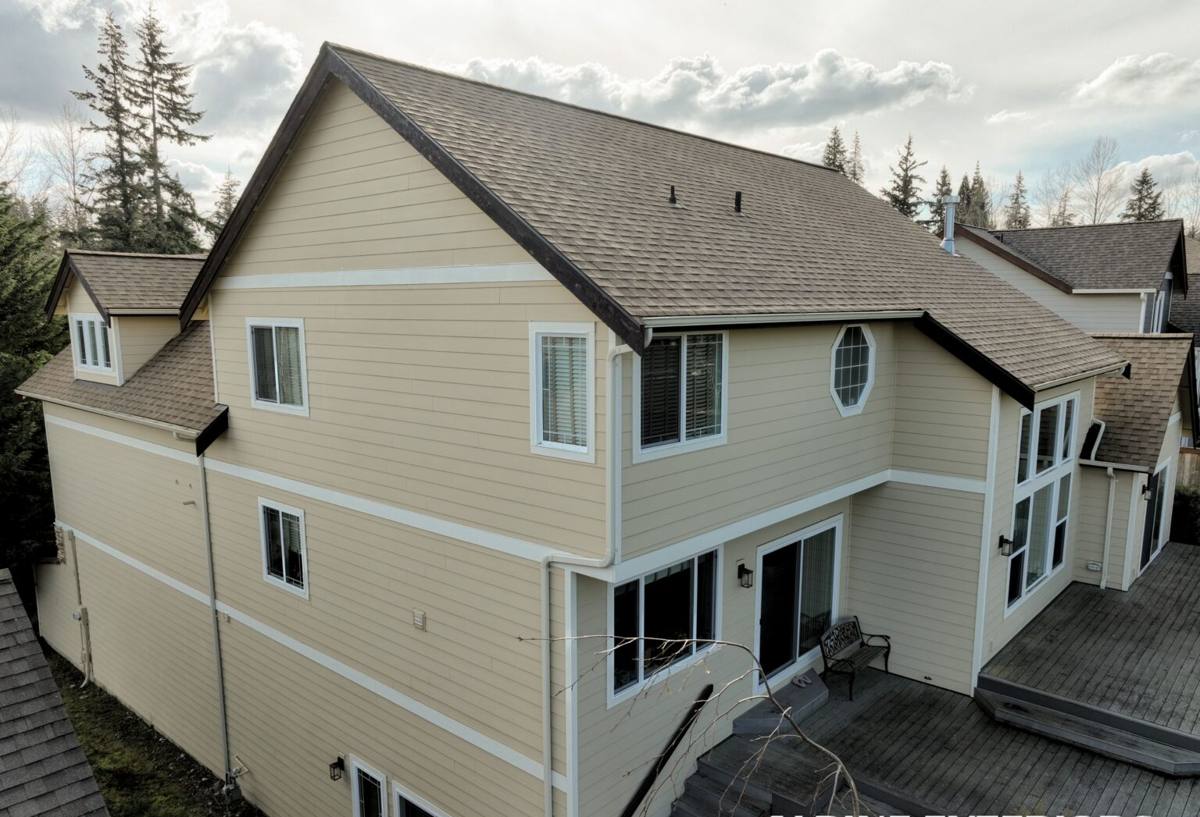
What Blaine's Climate Actually Does to a Deck
Three things work against outdoor structures here, and they compound each other:
- Salt air: Proximity to the water means airborne salt settles on every exposed surface, including metal fasteners, hardware, and hidden connectors. Salt accelerates corrosion far faster than plain rain does, and it doesn't announce itself the way a leak does — it works quietly inside joints and connections.
- Driving rain: Whatcom County's marine weather brings rain that comes in sideways as often as it falls straight down. That means ledger boards, rim joists, and any vertical trim take on more wind-driven moisture than a typical rainfall chart would suggest, and water finds its way into spots a fair-weather design wouldn't need to guard against.
- Moss season: Long stretches of damp, low-light months let moss and algae establish on any surface that stays shaded and wet — deck boards under trees, the north side of a structure, and gaps where debris collects. Moss holds moisture against wood and composite surfaces alike, and it turns decking slick and slippery underfoot.
None of this means a deck can't last in Blaine. It means the build has to account for salt, wind-driven rain, and moss from the start rather than relying on standard practices designed for a drier or more inland climate.
Fasteners and Hardware: Where Salt Air Does the Most Damage
The single biggest difference in how we build a deck near the coast versus further inland is hardware selection. Standard galvanized fasteners are rated for general outdoor use, but in a salt-air environment they corrode noticeably faster — and once a joist hanger or structural screw starts rusting, the failure is happening where you can't see it.
Our standard for Blaine builds
- Stainless steel or heavy-duty coated fasteners rated for coastal or high-corrosion exposure, used throughout the structural connections — not just on visible trim.
- Corrosion-resistant joist hangers and structural hardware at every ledger and beam connection, since these are the hardest points to inspect or replace later.
- Avoiding mixed-metal contact where possible, since dissimilar metals in a salt-air environment can accelerate corrosion at the point they meet.
This adds some cost up front compared to standard-grade hardware, but replacing a corroded structural connector after the decking is already installed is a much bigger job than paying for the right fastener the first time.
Ledger Attachment and Flashing: The Most Common Failure Point
Most deck failures we're called out to inspect anywhere in the region — not just Blaine — trace back to the ledger board connection, where the deck attaches to the house. Combine a marginal ledger detail with driving rain and salt air, and it fails faster.
A correct ledger connection includes:
- Proper flashing that directs water away from the house band joist rather than letting it wick behind the ledger board.
- A water-resistant barrier between the ledger and the house sheathing, sized and installed to shed wind-driven rain, not just vertical rainfall.
- Correctly spaced, corrosion-resistant lag bolts or through-bolts sized to the actual load the deck will carry — not a generic bolt pattern applied without checking span and load.
- A small gap or drainage path so water that does reach the connection has somewhere to go instead of sitting against the house.
This is the part of a deck build that's invisible once the project is finished, which is exactly why it's the part most likely to get shortcut. It's also the detail we'd encourage any Blaine homeowner to ask about directly when comparing bids.
Choosing Decking Material for a Salt-Air, High-Moisture Environment
There's no single "correct" decking material for every home — it depends on budget, maintenance appetite, and how exposed the deck is to weather. Here's how the common options actually perform in Blaine's conditions:
| Material | How it handles salt air & moisture | Maintenance in this climate |
|---|---|---|
| Pressure-treated wood | Treatment resists rot but doesn't stop moss growth or surface graying; fasteners matter as much as the board | Annual cleaning and periodic sealing to control moss and moisture uptake |
| Cedar | Naturally rot- and insect-resistant, but softer surface can hold moss in shaded, damp spots | Regular cleaning, occasional oil or sealant to maintain appearance and resist moisture |
| Composite decking | Does not rot or absorb water like wood, but can still grow surface moss/algae in shaded, wet areas | Periodic washing to keep surfaces from getting slick; no sealing needed |
| PVC decking | Fully non-organic surface resists moisture damage and moss adhesion better than wood-based composites | Lowest maintenance of the group; occasional cleaning for appearance |
We walk Blaine homeowners through this table in person, because the right answer genuinely depends on how much shade the deck gets, how close it sits to the water, and how much upkeep the homeowner wants to take on.
A Note on Product Selection
We install a limited set of decking brands and systems rather than whatever a homeowner finds cheapest online. That's not a knock on other products — it's because we've standardized on materials whose warranty structure, installation tolerances, and long-term moisture behavior we can vouch for firsthand. When a product has a fussier installation process or a warranty that's hard to actually use, we'd rather steer a homeowner toward something we can stand behind for the long run.
Structural Considerations Specific to Coastal Whatcom County Lots
Beyond materials and fasteners, a few structural habits matter more near the coast:
- Footing depth and drainage: Wet ground near the water table can stay saturated longer into the season. Footings need to be set to the correct frost depth and on stable, well-draining soil, not just poured to a minimum spec.
- Beam and joist spacing: Conservative spacing gives the structure more margin against long-term moisture-related wood movement, which matters more in a consistently damp climate than in a drier one.
- Airflow underneath: A deck built low to the ground with poor ventilation underneath traps moisture and encourages both wood rot and moss/algae growth. We design skirting and clearance to allow air movement, not just for looks.
- Railing and post hardware: Same corrosion-resistant hardware standard applies to railings and posts, since these connections see direct weather exposure and are harder to inspect once trim is installed.
Moss Management: Designing It Out, Not Just Cleaning It Off
Moss on a deck isn't just cosmetic — it holds water against the surface and creates a genuinely slick, unsafe walking surface, especially on stairs. Rather than treating moss as a cleaning problem to solve after the fact, we build in a few things that reduce how much moss takes hold in the first place:
- Board spacing that allows adequate drainage and airflow between boards, so water and debris don't sit and collect.
- Orienting or designing decking in shaded, north-facing areas with extra attention to gap spacing and material choice.
- Keeping surrounding vegetation and overhangs in mind during design, since heavy shade and organic debris are what feed moss growth.
Even with good design, homeowners in this climate should expect to do periodic cleaning during the wetter months — that's a fact of building outdoor structures here, not a defect in the deck.
Our Deck Building Process
Every deck we build in Blaine follows the same sequence, adjusted for the specific lot and home:
- On-site assessment: We look at sun exposure, shade patterns, drainage, and proximity to the water to understand what this specific deck will be up against.
- Design and material selection: We walk through decking and hardware options honestly, including trade-offs in cost, maintenance, and longevity for this location.
- Permitting: Deck projects typically require a building permit; we handle the application and inspection scheduling as part of the job.
- Footings and framing: Built to correct depth and spacing for local soil and moisture conditions, using corrosion-resistant hardware throughout.
- Ledger attachment and flashing: Installed with proper flashing and fastening to prevent the most common cause of deck failure.
- Decking, railing, and stairs: Installed to the chosen material's spec, with attention to board spacing and drainage.
- Final walkthrough: We review maintenance expectations specific to this climate so there are no surprises the first wet season.
A Practical Maintenance Checklist for Blaine Decks
Whatever material a deck is built from, a few habits go a long way in this climate:
- Sweep debris and organic matter off the deck surface regularly, especially in fall.
- Rinse or wash the deck surface periodically to discourage moss and algae buildup.
- Check for standing water after storms — pooling usually signals a drainage or spacing issue worth addressing.
- Inspect railing posts and stair connections annually for any looseness, which can signal hardware corrosion.
- Re-seal or re-stain wood decking on the schedule appropriate to that product, rather than waiting until it visibly fails.
Why Local Experience in Blaine Matters
A deck built to a generic national spec sheet can still fail early in a place like Blaine if the crew building it hasn't accounted for salt air, wind-driven rain, and a long moss season. Hardware that would be fine in a drier climate corrodes here. Ledger details that pass a basic inspection inland can still let water in when rain comes sideways off the water. A crew that already builds decks in this specific environment knows to plan for these conditions from the first footing, not after a callback.
If you're planning a new deck or replacing an aging one in Blaine, we're happy to walk the site, talk through material options honestly, and put together a free, no-pressure estimate — just fill out the form below.