 Lynden Exterior
 Storm Damage Roofing in Blaine's Marine Climate
Blaine sits right at the edge of Semiahmoo Bay and Drayton Harbor, about as close to open water as a Whatcom County roof can get. That location is part of what makes the town beautiful, and it's also exactly why roofs here take a different kind of beating than roofs ten or fifteen miles inland. Wind off the water arrives with more force and less warning, rain comes in sideways during a real blow, and the salt-laden air works on metal and fasteners year-round, storm or no storm. When a roof in Blaine gets hit, the damage often isn't just "a few shingles gone" — it's usually a combination of wind uplift, water intrusion, and accelerated wear on parts of the roof that were already softened up by the coastal environment.
We're based in Lynden and work storm damage calls across Whatcom County, but Blaine gets its own approach. A repair that would hold up fine on a sheltered roof in Lynden or Everson can fail fast on a Blaine roof facing the bay, if the materials and details aren't chosen with that exposure in mind.
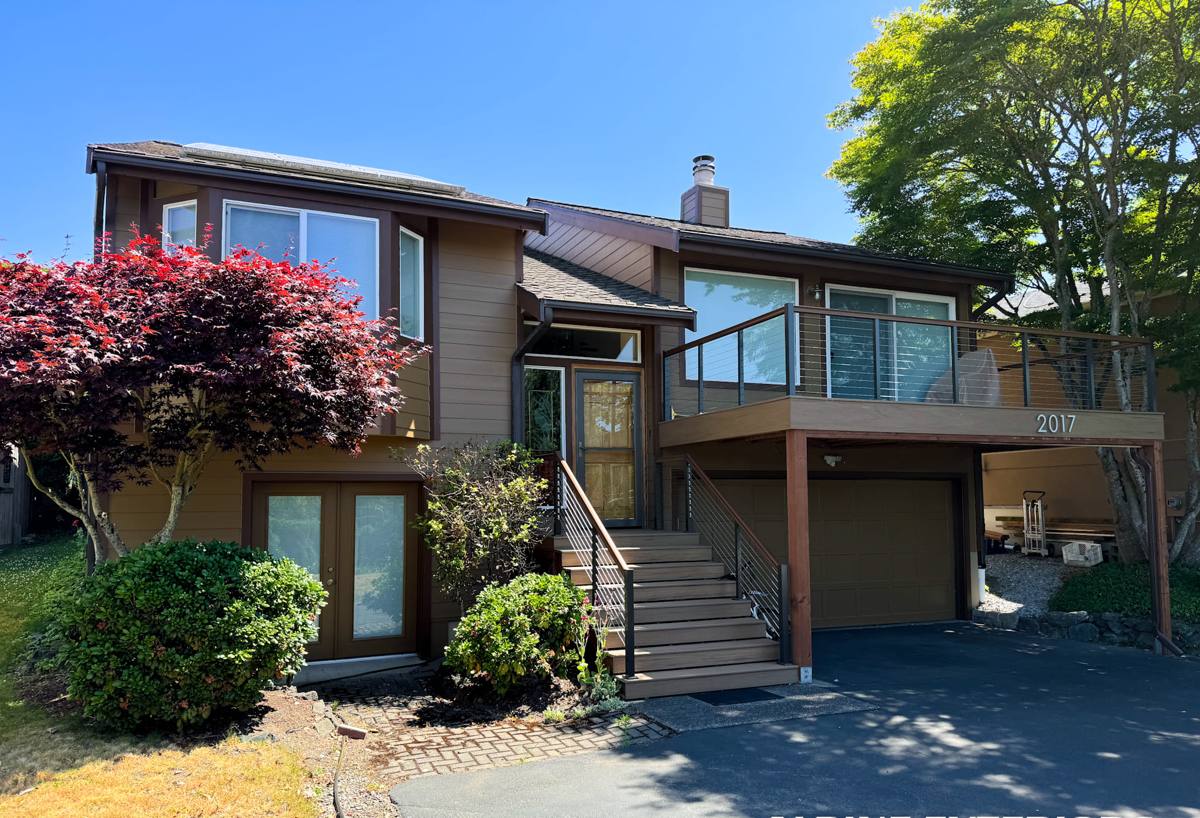
How Blaine's Coastal Climate Wears Down a Roof
Salt Air and Corrosion
Homes near the water deal with airborne salt settling on every exposed metal surface — nails, flashing, gutter hangers, screw heads on ridge caps. Over time this accelerates rust and corrosion in ways that inland roofs simply don't experience at the same rate. A fastener that's holding fine in year three can be visibly compromised by year eight or nine on a bay-facing roof. This matters most after a storm, because storm damage repair often starts at a point of existing weakness — a flashing seam or fastener that was already halfway to failing before the wind ever picked up.
Driving Rain and Wind-Driven Water
Standard rain falls mostly straight down and sheds off a properly lapped roof without much drama. Storm-driven rain in a Blaine windstorm often comes in at an angle, sometimes a steep one, which means it can get pushed up and under shingle edges, around chimney flashing, and into vent boots that would otherwise be watertight. This is why storm damage on a Blaine roof frequently shows up as a leak somewhere that "looks fine from the ground" — the actual entry point is often a lifted edge or a flashing gap that only lets water in when the rain is moving sideways.
A Long Moss Season
Whatcom County's damp, mild climate supports moss growth for most of the year, and Blaine's proximity to the water keeps humidity and shade-driven dampness around even longer in some spots. Moss holds moisture against the roofing material, and a roof that's already carrying a moss load handles a storm worse than a clean one — the added weight, the trapped water, and the way moss lifts shingle tabs all combine to make wind and rain damage more likely and more severe.
Common Storm Damage We See on Blaine Roofs
- Wind-lifted or torn-off shingles, especially along ridges, edges, and any roof plane facing the water
- Flashing separation around chimneys, skylights, and roof-to-wall transitions, where wind-driven rain finds a way in
- Displaced or cracked ridge caps from sustained gusts
- Damaged or torn-loose gutters and downspouts, sometimes pulling fascia boards with them
- Moss-related shingle lift made worse by the storm's wind and water load
- Granule loss on asphalt shingles from driving rain and debris impact, which shortens the material's remaining service life even where there's no visible hole
What a Correct Storm Damage Repair Actually Involves
A rushed or partial storm repair is one of the most common reasons a homeowner ends up dealing with the same leak again during the next storm. Doing it right means treating storm repair as a real roofing project, not a patch job.
Step One: Stop Further Water Intrusion
If a roof has open damage, the first priority is a proper tarp or temporary cover — secured well enough to survive continued wind, not just laid over the damaged area. This protects the interior and the roof deck while a full repair is scheduled.
Step Two: A Full Roof Assessment, Not Just the Obvious Spot
Storm damage rarely stays confined to the area you can see the problem from the ground. We check the whole roof — all planes, all flashing points, the ridge, the gutters — because wind damage on one side of the roof often means stress and lifted fasteners elsewhere that haven't failed yet but will.
Step Three: Match Materials and Techniques to the Existing Roof
Repairs should tie into the existing roofing system correctly — matching shingle type and where possible color/profile, using proper flashing techniques (not just sealant over a gap), and re-fastening to code. On a coastal roof, that also means using fasteners and flashing metal suited to salt exposure rather than whatever is cheapest.
Step Four: Address the Underlying Cause
If moss contributed to the damage, or if a flashing detail was undersized for the exposure this roof actually gets, a good repair fixes that root cause — not just the visible hole. Otherwise you're paying to fix the same spot again after the next storm.
Repair vs. Replacement: How We Make the Call
Not every storm-damaged roof needs full replacement, and not every roof should be patched. The right call depends on a few honest factors:
| Factor | Leans Toward Repair | Leans Toward Replacement |
|---|---|---|
| Roof age | Under roughly half its expected lifespan | Already near or past typical service life |
| Extent of damage | Isolated to one area or plane | Spread across multiple planes or recurring in the same spots |
| Condition around the damage | Surrounding shingles and flashing still sound | Widespread granule loss, brittleness, or prior patch history |
| Moss and moisture history | Minor, manageable moss presence | Long-term moss damage affecting the deck or underlayment |
| Material availability | Matching shingles still obtainable | Discontinued product, visible mismatch unavoidable |
We'll walk you through where your roof actually falls on this list rather than defaulting to "replace everything" — a targeted, well-done repair is the right answer more often than people expect, especially on a roof that's otherwise in decent shape.
Our Storm Damage Repair Process
- Response and temporary protection — securing the roof against further water intrusion if needed
- On-site inspection of the full roof, not just the reported problem area
- Photo documentation of the damage, useful for your own records and for any insurance claim
- A clear, plain-English explanation of what's damaged, what's causing it, and what repair options make sense
- The repair itself, done to match the existing roof and built for this location's wind and salt exposure
- Cleanup and a final walk-through before we consider the job done
Insurance Claims and Storm Damage
Many storm damage repairs in Blaine are covered in whole or part by homeowner's insurance, particularly after a documented wind event. We're not your insurance adjuster and won't promise a claim outcome, but we can provide the kind of documentation — photos, a written description of the damage, and an honest repair scope — that makes the claims process smoother on your end. If you're not sure whether your damage is claim-worthy, it's worth having it assessed before you decide either way; that assessment costs you nothing.
Signs You May Have Storm Damage Worth Checking
- A new water stain on a ceiling or wall after a windy, rainy stretch
- Shingle pieces or granules showing up in gutters or on the ground around the house
- Visibly lifted, curled, or missing shingles from the ground or a neighboring vantage point
- A gutter or downspout that's pulled loose, bent, or hanging
- A sudden increase in moss or dark streaking after a wet stretch, which can hide deeper shingle lift
- Drafts or daylight visible in an attic space that weren't there before
Materials and Fasteners Built for This Exposure
For roofs facing Semiahmoo Bay and Drayton Harbor, we lean toward corrosion-resistant fasteners and flashing metals over standard-grade options, and we're deliberate about flashing details at every roof-to-wall and roof-to-chimney transition — those are the spots that fail first under driving rain. This isn't about upselling premium materials for their own sake; it's a practical response to what actually happens to a roof that sits this close to salt water for years at a time. A repair done with standard hardware might look identical on day one and still fail early because the exposure here simply asks more of the materials.
Why a Crew That Already Works Blaine Matters
Storm damage repair isn't just about roofing skill in general — it's about knowing what this specific stretch of Whatcom County coastline does to a roof over time. A crew that regularly works Blaine knows which flashing details tend to fail first on bay-facing homes, how aggressive the moss season gets in the shadier lots, and what a wind-driven rain event actually does to a roof here versus an inland roof. That local pattern recognition means a faster, more accurate assessment and a repair that's built for the conditions your roof will keep facing, not just the damage it has right now.
If a recent storm has left you with damage — or you're just not sure whether what you're seeing is a problem — we're happy to take a look. Reach out for a free, no-pressure estimate using the form below.