 Lynden Exterior
 Board & Batten Siding, Built for How Bellingham Actually Weathers
Board and batten has become one of the most requested looks for homes around Bellingham — the vertical lines read as clean, modern, and a little more custom than standard lap siding. But the look only holds up if the material underneath it does. Bellingham sits close enough to the water that homes take on salt-laden air, and Whatcom County's long, wet fall-through-spring stretch means siding here spends months at a time damp, shaded, and slow to dry. Add in the moss and algae growth that thrives on north-facing walls and anything shaded by trees, and you've got a climate that's genuinely hard on exterior materials — especially wood-based ones.
We install board and batten in James Hardie fiber cement exclusively. This page covers what that means specifically for a board and batten install in the Bellingham area, what separates a correct job from a problem waiting to happen, and how we approach the work.
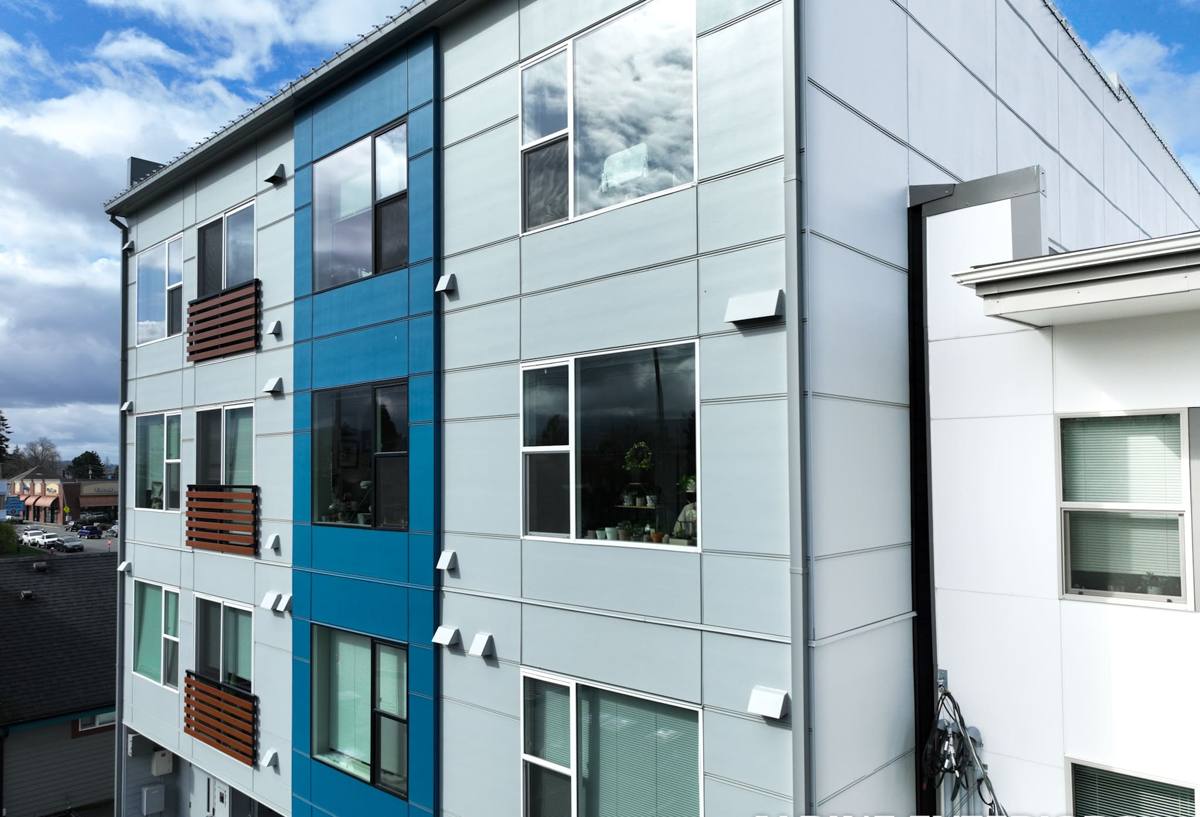
Why Board & Batten Is Unforgiving in This Climate
Board and batten isn't just lap siding turned sideways — the seams, joints, and batten strips create more opportunities for water to find a way behind the cladding if the install isn't done right. That matters more in Bellingham than in drier parts of the state.
Driving Rain and Wind-Driven Moisture
Storms coming off the water don't just fall straight down — wind pushes rain sideways into wall assemblies, and vertical board and batten seams are one of the more exposed profiles for that kind of intrusion if flashing and caulking details aren't handled correctly at every batten and board edge.
Salt Air and Slow Drying Cycles
Salt in the air accelerates corrosion on fasteners and hardware, and it doesn't play well with materials that absorb moisture. Combined with our long grey stretches where walls simply don't get much direct sun to dry out, any siding material prone to swelling, cupping, or rot has a much harder time here than it would in a drier climate.
Moss and Algae Season
Shaded walls, north exposures, and tree-lined lots around Bellingham are prime territory for moss and algae growth. Porous or wood-based siding gives moss something to grip and feed on; the wrong finish can also trap moisture underneath organic growth, which accelerates whatever damage is already happening.
Why We Only Install James Hardie for This Application
Board and batten is available in vinyl, engineered wood, and fiber cement — but we've standardized on James Hardie for every board and batten project we take on, in Bellingham and everywhere else we work. It comes down to how the material behaves over the long haul, not just how it looks on day one.
Non-Combustible, Dimensionally Stable
James Hardie fiber cement doesn't swell, warp, or rot the way wood-based products can when they take on repeated moisture. That stability matters a lot on a profile like board and batten, where every seam and joint needs to stay tight for the assembly to keep water out over the years, not just the first season.
Engineered for Wet, Coastal-Influenced Climates
Hardie's HZ5 product line is engineered specifically for climates like ours — freeze-thaw cycling, sustained moisture exposure, and coastal-influenced weather. That's a meaningfully different product than what gets shipped to a dry inland market, and it's part of why we don't treat siding as a one-size-fits-all material choice.
A Factory Finish That Resists What Grows on This Siding
ColorPlus factory-applied finish is baked on under controlled conditions, which gives it better adhesion and fade resistance than field-applied paint — and a harder, more consistent surface is simply less hospitable to moss and algae taking hold than a porous or unevenly coated one.
What a Correct Board & Batten Install Actually Involves
The vertical batten look is simple to picture but not simple to get right. A lot of what determines whether it lasts happens behind the boards, not on the surface.
Weather-Resistive Barrier and Drainage
Every board and batten wall we install goes over a properly lapped weather-resistive barrier, with attention paid to how water that does get past the cladding is meant to drain back out rather than pool behind it.
Flashing at Every Penetration
Windows, doors, hose bibs, light fixtures, vents — every penetration through a board and batten wall needs its own flashing detail. Skipping this is one of the most common ways a board and batten job fails years down the line, usually with no visible sign until the damage is already done underneath.
Fastening and Batten Spacing
Battens have to be fastened into structural framing at correct intervals, following Hardie's engineering specs for this region's exposure and wind loads — not just whatever spacing looks even to the eye.
Gaps, Caulking, and Expansion
Board and batten needs the right gaps at joints and transitions, sealed with a product suited to the movement and moisture cycling our climate puts siding through. Too tight, and the assembly has nowhere to move; too loose or poorly sealed, and it becomes an entry point for water.
Board & Batten vs. Other Siding Profiles for Bellingham Homes
| Factor | Board & Batten (Hardie) | Standard Lap Siding (Hardie) |
|---|---|---|
| Visual style | Vertical, modern/farmhouse lines | Traditional horizontal lines |
| Install complexity | Higher — more seams and flashing details | Lower — fewer vertical joints |
| Moisture management | Requires precise flashing and gapping at every batten | Relies mainly on correct lap overlap |
| Best-fit exposure | Great as an accent or full facade on well-detailed walls | Reliable default for full-elevation coverage |
| Moss/algae resistance | Strong with ColorPlus finish; more seams to keep clean | Strong with ColorPlus finish; fewer seams overall |
Board and batten isn't a "better" or "worse" choice than lap siding — it's a different look with a different set of installation demands. Plenty of Bellingham homes mix the two: board and batten as a gable accent or entry feature, lap siding across the main elevations.
Our Process for a Board & Batten Project in the Bellingham Area
1. On-Site Assessment
We walk the home, check current siding and sheathing condition, note exposure to prevailing wind and rain direction, and flag any moss or moisture staining that points to existing drainage issues.
2. Design and Material Plan
We spec the Hardie board and batten profile, HZ product line, and ColorPlus color that fits the home, then plan batten spacing and any transitions to adjoining siding profiles or trim.
3. Prep and Weather Barrier
Old siding removal (where applicable), sheathing inspection and repair, and installation of a properly lapped and taped weather-resistive barrier before a single board goes up.
4. Installation to Spec
Battens and boards fastened per James Hardie's engineering requirements for our region, with flashing at every window, door, and penetration.
5. Final Detailing
Caulking, touch-up, and a walk-through so you know exactly what was done and why.
What to Check Before Hiring Anyone for Board & Batten Work
- Do they install board and batten in fiber cement, or only in vinyl/engineered wood?
- Will they show you their flashing plan for windows, doors, and penetrations before work starts?
- Are they a James Hardie-trained/preferred installer, and can they explain HZ product selection for our climate?
- Do they inspect and repair sheathing before installing new siding, rather than covering up existing damage?
- Can they explain batten spacing and fastening requirements specific to this profile, not just generic siding install steps?
- Do they carry proper licensing and insurance for exterior work in Washington?
Why Local Experience with This Profile Matters
Board and batten done wrong doesn't usually fail in year one — it fails in year five or six, after repeated wet seasons have worked their way behind a poorly flashed joint or an undersized gap. A crew that's installed this profile across homes in and around Bellingham knows which walls take the worst of the wind-driven rain, which exposures grow moss fastest, and where the extra hour of flashing detail actually pays off. That's the difference between a board and batten wall that still looks and performs right after a decade of Whatcom County winters, and one that needs remedial work long before it should.
If you're considering board and batten siding for a home in the Bellingham area, we're happy to walk the property, talk through what the profile would look like on your specific home, and give you a straightforward, no-pressure estimate using James Hardie fiber cement — the only material we put behind this kind of work.