 Lynden Exterior
 Building Decks for Custer's Coastal Conditions
Custer sits close enough to the water that salt air is a real factor in how a deck ages, not just a talking point. Between the marine influence coming off the Strait of Georgia and Puget Sound, the steady winter rain that Whatcom County is known for, and a moss season that can run from fall through spring, a deck built here has to work harder than one built inland. We've built and repaired decks throughout the Custer area long enough to know which shortcuts show up as problems in year two or three, and which construction choices actually hold up.
This page is about one thing: custom deck construction for homes in and around Custer. Not a general overview of every exterior service we offer — just what matters when you're planning a new deck or replacing a failing one in this specific stretch of Whatcom County.
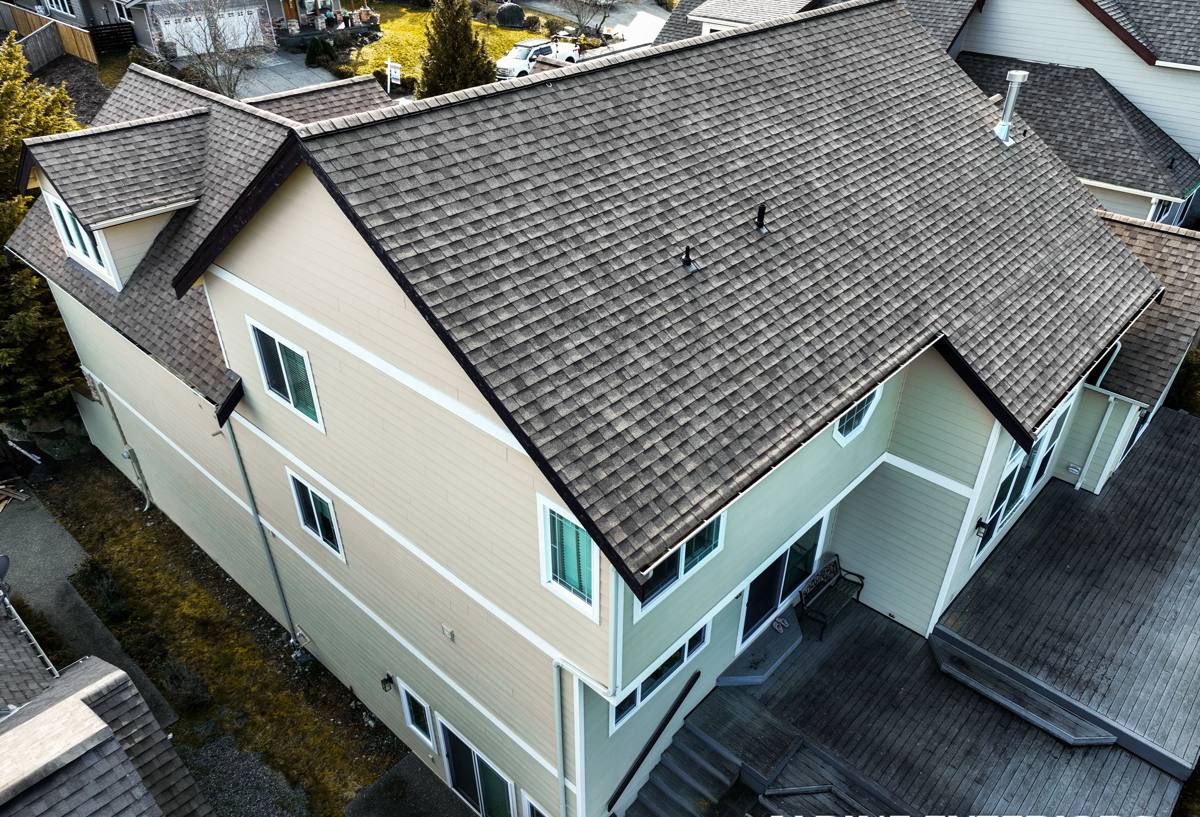
What Custer's Climate Actually Does to a Deck
Salt Air and Corrosion
Airborne salt doesn't need direct ocean spray to cause damage — it travels on wind and settles on any exposed metal. Over time it accelerates corrosion on fasteners, brackets, and hardware that would last much longer a few miles further inland. A deck built with the wrong grade of hardware in a coastal-influenced area like Custer can develop rust streaks, weakened joist hangers, and loosening screws well before the wood itself is due for replacement.
Driving Rain and Moisture Intrusion
Whatcom County rain isn't always gentle — wind-driven rain pushes water sideways into places a flat roof deck or a fair-weather build might not account for. That means ledger board connections, stair stringers, and any point where the deck meets the house need real flashing and drainage detail, not just caulk.
The Long Moss Season
Shaded yards, tree cover, and consistent damp conditions give moss and algae months to establish themselves on horizontal wood and composite surfaces. Beyond looking bad, a mossy deck surface holds moisture against the boards and gets slick and genuinely dangerous underfoot, especially on stairs.
Choosing Decking Material for a Custer Property
There's no single "best" decking material — the right choice depends on your budget, how much upkeep you want to do, and how exposed the deck is to sun, shade, and weather. Here's how the common options compare specifically for this area's conditions.
| Material | Moisture & Rot Resistance | Moss/Algae Resistance | Maintenance | Typical Lifespan Here |
|---|---|---|---|---|
| Pressure-Treated Pine | Good if properly sealed and re-sealed | Low — needs regular cleaning | Annual cleaning, re-staining every 2-3 years | 15-20 years with upkeep |
| Western Red Cedar | Naturally decent, but surface needs protection | Moderate — still needs cleaning | Cleaning and oil/stain every 1-2 years | 15-25 years with upkeep |
| Capped Composite | Very good — won't rot or absorb water like wood | Moderate to good depending on brand/texture | Occasional washing, no staining or sealing | 25-30+ years |
| PVC Decking | Excellent — essentially non-porous | Good, though smooth surfaces can still film over in deep shade | Occasional washing | 30+ years |
In practice, most Custer homeowners land in one of two camps: those who want the natural wood look and are willing to keep up with cleaning and re-coating on a schedule, and those who'd rather pay more up front for composite or PVC and largely stop thinking about maintenance. Neither is wrong — it's a real trade-off between upfront cost and long-term labor, and we'll walk through the honest numbers for your specific project rather than pushing one material.
Framing and Fasteners: Where Salt Air Does Its Damage
The decking boards are the part everyone sees, but the framing underneath is what actually determines whether a deck is safe and long-lasting. In a salt-air-influenced area, this is where we're most careful:
- Fasteners: Stainless steel or high-grade coated fasteners rated for coastal/corrosive exposure, not standard galvanized screws that can start showing rust bleed within a few years.
- Joist hangers and structural hardware: Hot-dip galvanized or stainless connectors, installed with matching corrosion-resistant nails or screws — mixing metals accelerates corrosion through galvanic reaction.
- Ledger board flashing: Properly integrated flashing where the deck attaches to the house, so wind-driven rain can't work its way behind the siding.
- Framing lumber: Pressure-treated framing rated for ground contact where posts meet footings, even when the visible decking is composite or cedar.
This is the part of the job that doesn't show up in photos but is exactly what separates a deck that's solid in year fifteen from one that's soft and wobbly by year seven.
Drainage and Slope: Preventing Moss Before It Starts
The single biggest factor in how fast moss and algae take hold on a deck isn't the material — it's how well water actually leaves the surface. A deck built without attention to slope and airflow will stay damp longer after every rain, and in Whatcom County that's most of the year.
When we frame a deck, we build in a slight slope away from the house so water sheets off rather than pooling. We also pay attention to gaps between boards for drainage and airflow underneath the structure, and to how close nearby landscaping or fencing sits to the deck, since dense shade and poor airflow are exactly what moss needs to establish. None of this is complicated, but it's easy to skip, and it's the difference between a deck that needs a yearly wash and one that's green by its second winter.
Our Deck-Building Process
1. On-Site Assessment
We walk the property, look at sun and shade exposure, existing drainage patterns, and how the deck will tie into the house, and talk through what you actually want to use the space for.
2. Design and Material Selection
We go over layout, size, railing style, and decking material options with honest pros and cons for your specific site — not a one-size-fits-all pitch.
3. Permitting
Most new deck construction and many deck replacements in Whatcom County require a building permit, particularly for elevated structures or anything attached to the home. We handle that process as part of the job rather than leaving it to the homeowner.
4. Framing and Structural Work
Footings, posts, beams, and joists go in first, built to the loads and spans required for your design, with the corrosion-resistant hardware discussed above.
5. Decking, Railing, and Stairs
Once the frame is inspected and solid, we install the decking surface, railings, and any stairs, with attention to fastener spacing and board gapping for drainage.
6. Final Walkthrough
We walk the finished deck with you, cover any care instructions specific to the material you chose, and make sure everything meets code before calling the job done.
Permits and Local Considerations Around Custer
Because Custer is unincorporated, deck permitting and inspection typically go through Whatcom County rather than a city building department. Requirements can vary based on deck height, size, and whether it's attached to the house, and setback rules depend on your specific lot. We don't guess on this — we confirm what's required for your property before work starts, so you're not left with a deck that causes problems at resale or insurance time.
Maintenance Checklist for Custer Deck Owners
Whatever material you choose, a little regular attention goes a long way in this climate. A simple seasonal routine:
- Sweep off leaves and debris regularly, especially in fall — trapped organic matter holds moisture and feeds moss.
- Wash the deck surface at least once a year with a cleaner suited to your material (wood vs. composite cleaners aren't interchangeable).
- Check and re-apply sealant or stain on wood decks every 1-3 years depending on sun exposure.
- Inspect fasteners and hardware annually for rust streaks or loosening, especially near the ledger board.
- Keep nearby shrubs and landscaping trimmed back to allow airflow and sunlight onto the deck surface.
- Clear gaps between boards of debris so water can keep draining as designed.
Why a Crew That Already Works Custer Matters
A deck built to a generic spec sheet can look fine on installation day and still be the wrong build for this area. Knowing how far salt air travels inland from the coast, how long moss season actually runs here, and which fastener grades hold up through a Whatcom County winter isn't something you get from a materials catalog — it's something you learn by building and repairing decks in this specific area over time. That's the difference between a deck that needs real attention by year four and one that's still solid well past year fifteen.
If you're planning a new deck or replacing one that's showing its age, we're happy to come take a look and give you a straightforward, no-pressure estimate. There's a form below to get that started.