 Lynden Exterior
 Roofing in Custer Has to Answer to the Weather, Not Just the Calendar
Custer sits close enough to the water that salt air is part of daily life, and it shows up in how roofs age here. Add in Whatcom County's long stretch of driving rain through fall and winter, plus a moss season that can run most of the year in shaded, north-facing sections, and you have a climate that is genuinely harder on a roof than most inland areas. A roof that would hold up fine 40 miles east can fail early in Custer if it wasn't built with this specific combination of conditions in mind.
That's the difference between a generic roof install and one that's actually right for this area. We're not describing exotic problems here — just the ordinary, cumulative wear that salt-laden air, sustained moisture, and organic growth put on shingles, flashing, fasteners, and the wood underneath them, year after year.
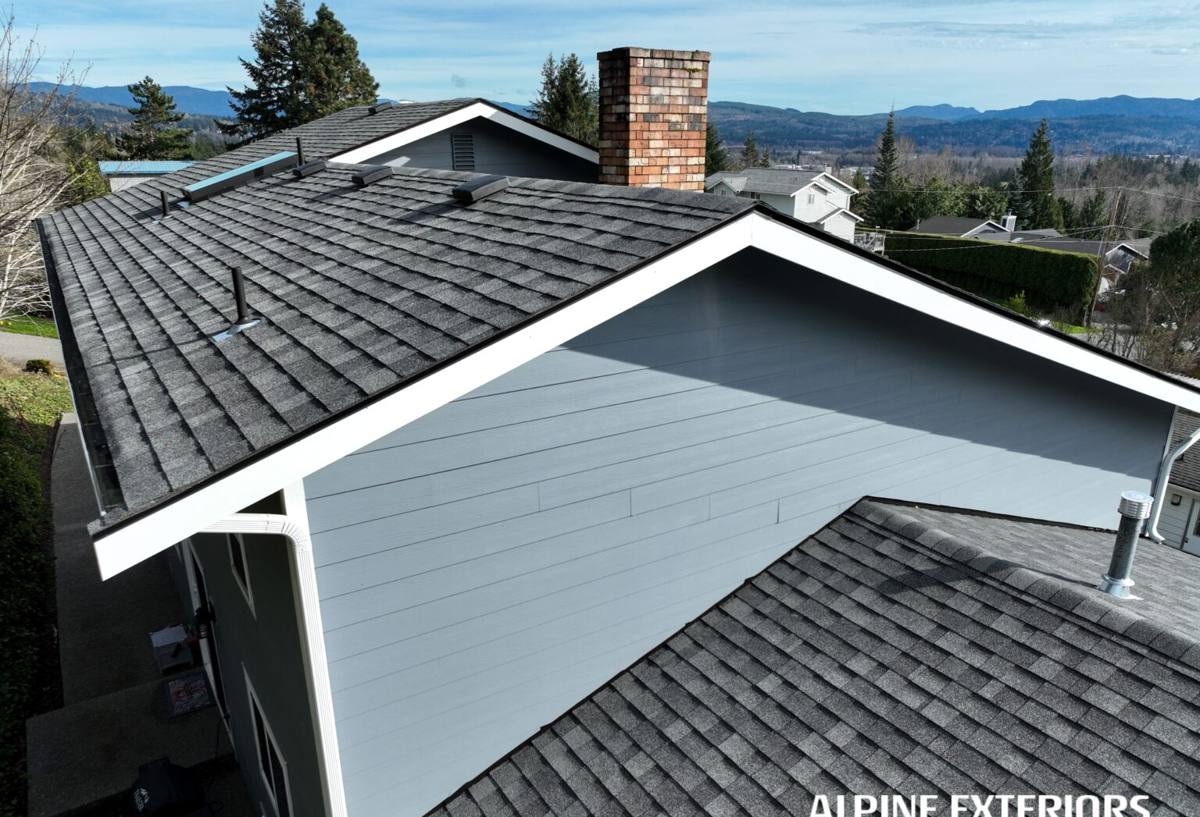
Signs a Custer Roof Needs Replacement, Not Another Patch
Homeowners often call us after a repair company has already been out once or twice. Repairs have their place, but there's a point where patching a roof costs more over time than replacing it, and it's usually reached faster here than in drier climates. Some signs worth taking seriously:
- Granule loss showing up in gutters or at downspouts, especially on a roof more than 15-18 years old
- Moss mats thick enough that you can't see the shingle surface underneath in shaded areas
- Soft or spongy spots when walked, which usually means the deck underneath has already taken on moisture
- Rust streaking or corrosion around flashing, vents, or exposed fasteners
- Daylight visible through the attic sheathing, or consistent damp smell in the attic during wet months
- Multiple past repairs in different areas of the same roof within a few years
Any one of these on its own might just mean a repair. Two or three together, especially on an older roof, usually means the underlying materials are past the point where patching makes financial sense.
What a Correct New Roof Installation Actually Involves
A roof looks simple from the ground. What actually protects a Custer home is everything underneath the visible surface — the parts that determine whether the roof lasts 15 years or 30.
Full Tear-Off and Deck Inspection
We don't install new roofing over old material, and we're skeptical of anyone who offers to. Overlaying hides the condition of the deck and traps moisture that's already there. A full tear-off lets us actually see the plywood or plank decking, replace any sections that are soft, delaminated, or water-stained, and confirm the structure underneath is sound before anything new goes on.
Underlayment and Moisture Barriers
This is where a coastal-influenced climate like Custer's earns its extra attention. We use synthetic or self-adhered underlayment sized to the exposure of each roof, with ice-and-water shield along eaves, valleys, and any low-slope transitions where wind-driven rain tends to find its way in. This layer is what keeps a roof watertight during the years between when the shingles are new and when they're worn — it matters more here than in areas with lighter, more predictable rainfall.
Ventilation That Matches the Home
Poor attic ventilation is one of the most common reasons roofs fail early in this part of Whatcom County. Trapped moist air condenses against the underside of the deck, which rots sheathing from the inside and feeds the same moss and algae growth that shows up on the shingle surface outside. We balance intake at the eaves with exhaust at the ridge or through vents sized to the attic volume, not just whatever was there before.
Flashing and Fasteners Rated for Salt Exposure
Standard fasteners and flashing corrode faster in salt-influenced air than manufacturers' general specs assume. We use corrosion-resistant flashing and fastener hardware around chimneys, skylights, valleys, and roof-to-wall transitions — the places where a roof is most likely to leak first, and where cheap hardware fails soonest in this environment.
Material Options for a Custer Roof
There's no single "best" roofing material — the right choice depends on budget, the home's roof pitch, and how much long-term maintenance an owner wants to take on. Here's how the common options compare for a coastal-influenced Whatcom County climate:
| Material | Typical Lifespan | Moss/Moisture Resistance | Maintenance Needs |
|---|---|---|---|
| Architectural asphalt shingle | 25-30 years | Good with algae-resistant granules; moss still needs periodic clearing | Low to moderate; occasional cleaning in shaded areas |
| Standard 3-tab asphalt shingle | 15-20 years | Fair; more prone to granule loss and moss buildup over time | Moderate; shorter service life in this climate |
| Standing seam metal | 40-50+ years | Excellent; sheds moisture and resists moss due to smooth surface | Low; occasional fastener and seam checks |
| Cedar shake | 20-30 years with upkeep | Poor without regular treatment; absorbs moisture and hosts moss | High; needs periodic treatment and moss removal |
For most Custer homes, architectural asphalt shingle strikes the right balance of upfront cost and durability, and it's what we install most often. Metal roofing costs more initially but makes sense for homeowners planning to stay long-term or who want to minimize moss and moisture maintenance almost entirely. We'll walk through the honest trade-offs for your specific roof rather than pushing whichever product has the best margin.
Our Installation Process, Start to Finish
- On-site inspection and estimate. We walk the roof, check the attic, and give you a written estimate with no pressure to decide on the spot.
- Material selection. We go over the options above based on your budget, roof pitch, and how much long-term maintenance you want to take on.
- Scheduling around the weather. Given how much rain this area sees, we plan installation windows carefully and stage materials so a roof isn't left exposed longer than necessary.
- Tear-off and deck repair. Old roofing comes off completely, and any compromised decking is identified and replaced before moving forward.
- Underlayment, flashing, and ventilation installed. This is the layer that does the real long-term work, as covered above.
- New roofing installed to manufacturer spec. Proper nailing pattern, exposure, and fastening — details that affect both warranty coverage and wind resistance.
- Final walkthrough and cleanup. We check the finished roof with you, clear debris and nails from the property, and confirm everything meets what was agreed on.
Moss Season and What Happens After Installation
A new roof isn't maintenance-free in this climate, even a well-built one. Custer's tree cover and damp winters mean moss will eventually try to establish itself again, especially on north-facing slopes that stay shaded most of the day. Zinc or copper strips near the ridge can help slow regrowth on many roof types, and periodic gentle cleaning (not pressure washing, which strips granules and shortens shingle life) keeps moss from taking hold and lifting shingle edges. We're happy to explain what a reasonable maintenance schedule looks like for whatever material you choose.
Why a Crew That Already Works in Custer Makes a Difference
Roofing companies based farther inland or focused mainly on drier parts of the county don't always build in the extra margin this area needs — the upgraded underlayment, the corrosion-resistant hardware, the ventilation sized for sustained moisture rather than occasional rain. We work in Custer and the surrounding Lynden area regularly, so these aren't upsells we're proposing after the fact — they're standard on every roof we install here, because we've seen what happens to roofs that skip them.
Being local also means faster response if something needs a second look after installation, and a crew that understands how this specific stretch of Whatcom County weather behaves across seasons, not just what a spec sheet says on paper.
A Few Questions Worth Asking Before You Hire
Whoever you choose for a new roof, these are reasonable things to ask before signing anything:
- Is the estimate written and itemized, or just a verbal number?
- Does the crew carry liability insurance and workers' comp, and can they provide proof?
- Will they do a full tear-off, or are they proposing to roof over existing material?
- What underlayment and ventilation approach are they using, and why?
- Who's actually on the roof — the company's own crew, or a subcontractor you haven't met?
- What does the warranty cover, and is it backed by the manufacturer, the installer, or both?
A contractor who answers these clearly and without hesitation is usually one worth hiring. Vague or rushed answers are worth treating as a warning sign, regardless of how good the initial quote looks.
If your roof in Custer is showing its age or you're just weighing options before it becomes urgent, we're glad to take a look and give you a straight answer about what it needs. Use the form below to request a free, no-pressure estimate.