 Lynden Exterior
 Siding Built for Custer's Weather, Not Just Installed on It
Custer sits close enough to the water and open farmland north of Lynden that its homes take a different kind of beating than siding fifty miles inland. Salt-tinged air off the Strait and Georgia Strait corridor works into seams and fastener heads. Driving rain off winter storms hits walls sideways, not straight down, which means it finds every gap a lazy installation leaves behind. And the long, damp Whatcom County shoulder seasons — soggy fall into wet spring — give moss and algae months at a time to gain a foothold on anything that stays wet. Siding installation out here isn't a cosmetic upgrade. It's the single biggest factor in whether a home stays dry, holds its paint, and avoids rot for the next 30 years.
We install siding for homes in and around Custer regularly, and the patterns repeat: south and west walls with the worst moss and mildew staining, north-facing walls that never fully dry out between rain events, and older homes where the original siding was never given a real drainage plane to begin with. A correct installation in this micro-climate has to account for all three, not just look good on installation day.
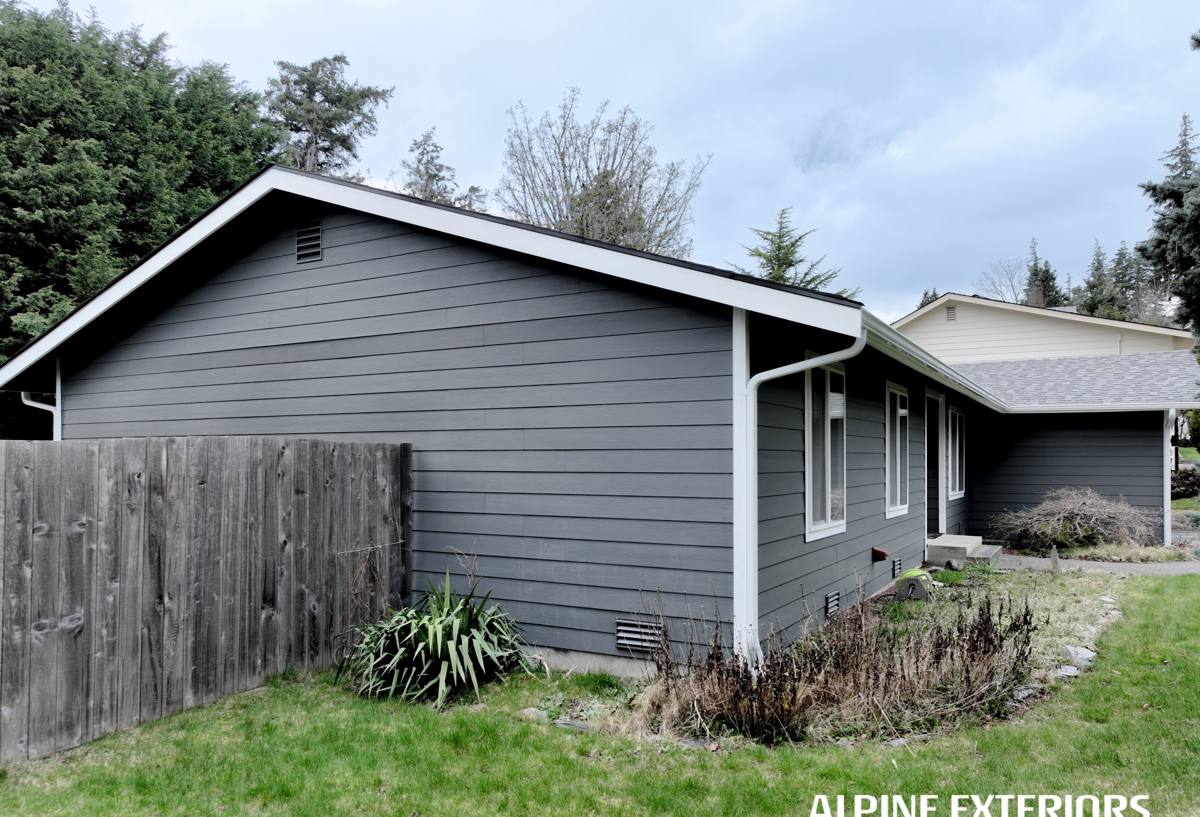
What Salt Air, Driving Rain, and Moss Actually Do to Siding
Salt air and corrosion
Airborne salt is corrosive to metal fasteners, flashing, and trim. Cheap or under-spec fasteners rust from the inside of the panel out, leaving a stain trail long before the siding itself fails. It also accelerates the breakdown of lower-grade coatings, which is part of why factory-applied, baked-on finishes hold up so much better here than field-applied paint.
Wind-driven rain
Rain that's pushed sideways by wind doesn't respect standard lap overlaps or loose caulk joints. It gets forced upward and sideways into seams, behind trim, and around window and door openings. If the weather-resistive barrier and flashing details behind the siding aren't done correctly, the siding can look fine while water is already working into the sheathing behind it.
Moss, algae, and constant dampness
Custer doesn't get the driest summers in the state, and shaded or north-facing walls can stay damp for days after a storm. Moss and algae need moisture and organic material to grow on — porous or wood-based siding gives them both. Once established, moss holds water against the wall surface, which speeds up rot in wood-based products and keeps the whole assembly wetter than it should be.
Why We Only Install James Hardie Fiber Cement Here
We standardized on James Hardie fiber cement siding — no vinyl, no LP SmartSide, no Cemplank, no Allura, no primed spruce or cedar — because it's the product that holds up best against exactly the conditions Custer sees.
- Non-combustible core: fiber cement doesn't feed a fire the way wood-based products can, which matters for insurance and long-term peace of mind.
- ColorPlus factory finish: the color is baked on in a controlled environment, not sprayed or brushed on site, so it resists the fading and chalking that salt air and UV speed up on field-painted products.
- Moisture-stable core: fiber cement doesn't swell, cup, or rot the way wood-based siding can when it stays damp for extended periods — a real factor with Custer's moss season.
- Climate-engineered HZ lines: Hardie's HZ5 product line is formulated specifically for wetter, colder regions like ours, rather than a one-size-fits-all national spec.
- Strong transferable warranty: a real, documented warranty on the product itself, backed by a manufacturer with decades in the fiber cement category.
We're upfront that vinyl, LP SmartSide, and cedar all have legitimate use cases and loyal fans. But for the specific combination of salt exposure, wind-driven rain, and moss pressure that Custer homes deal with, we've made a professional judgment call: we'd rather install one product exceptionally well than juggle several and hope each holds up.
What a Correct Installation Involves
The siding panel itself is maybe 20% of what determines how a wall performs over time. The other 80% is what happens underneath and around it.
Weather-resistive barrier and drainage
Every wall gets a code-compliant weather-resistive barrier, and on the walls that see the most driving rain, a drainage gap behind the siding so any moisture that does get past the surface can drain and dry instead of sitting against the sheathing.
Flashing at every penetration
Windows, doors, hose bibs, vents, and deck ledgers all get proper flashing and integration with the barrier — this is where wind-driven rain finds its way in if it's skipped or rushed.
Fastening to spec
Hardie siding has specific fastener type, spacing, and embedment requirements. In a salt-air environment, using the right corrosion-resistant fasteners — and the right number of them, placed correctly — is the difference between siding that stays tight for decades and siding that works loose or streaks with rust.
Clearances and ground contact
Minimum clearance from grade, roof lines, and decks keeps the bottom edge of the siding out of standing water and constant splash-back, which is one of the most common places we see moss and soft trim on older Custer homes.
Caulking and joint treatment
Joints get sealed per manufacturer spec with a quality sealant rated for our climate — not just whatever was left in the truck.
Our Process, Start to Finish
- On-site assessment: we walk the exterior, check for existing moisture damage, moss buildup, and problem areas specific to your home's orientation and exposure.
- Tear-off and sheathing check: old siding comes off and we inspect the sheathing underneath for rot or damage before anything new goes up — this step gets skipped by crews trying to move fast, and it's where hidden problems get found or missed.
- Barrier, flashing, and drainage installation: the unglamorous work that determines whether the wall stays dry for the next 30 years.
- Hardie panel or lap installation: installed to manufacturer spec for fastening, clearance, and joint treatment.
- Trim, caulking, and final inspection: details finished and the whole job walked before we call it done.
Siding Material Comparison for Custer's Climate
| Material | Moisture Behavior | Finish Durability | Moss/Algae Resistance |
|---|---|---|---|
| James Hardie Fiber Cement (HZ5) | Stable, doesn't swell or rot | Factory ColorPlus finish resists fading | Non-organic surface, holds up well with normal cleaning |
| Vinyl | Doesn't rot but can warp/crack in temperature swings | Color molded in but fades over decades; can't be repainted easily | Can trap moisture behind panels if installed loose |
| LP SmartSide (engineered wood) | Wood-based; sensitive to sustained moisture exposure | Field or factory finish, needs consistent maintenance | Organic material, more susceptible if coating fails |
| Cedar / Primed Spruce | Natural wood; absorbs and releases moisture | Requires regular repainting/staining | Most susceptible without diligent upkeep |
What Drives the Cost of a Siding Installation
| Factor | Why It Matters |
|---|---|
| Home size and wall complexity | More corners, gables, and dormers mean more cutting, flashing, and labor |
| Existing siding removal and sheathing repair | Rotted sheathing found during tear-off adds material and labor |
| Product line and profile | Lap, panel, and shingle profiles vary in material cost and install time |
| Trim and detail work | Window/door casing, corner treatments, and fascia detailing add scope |
| Access and site conditions | Tight lots, landscaping, or multi-story walls affect staging and time |
We give straightforward, itemized estimates after walking the actual home — we don't quote off a photo or a phone call.
What to Ask Before Hiring a Siding Contractor in Custer
- Do they have experience specifically with fiber cement fastening and flashing requirements, not just general siding?
- Will they inspect and document sheathing condition before covering it back up?
- What weather-resistive barrier and drainage approach do they use on wind-exposed walls?
- Are they a factory-trained or certified James Hardie installer?
- Do they carry proper licensing and insurance for exterior work in Whatcom County?
- Will they put the scope, materials, and warranty terms in writing before work starts?
Why a Crew That Already Works Custer Matters
Custer isn't a generic Pacific Northwest job site — it's a specific combination of salt exposure, wind direction, and moisture load that shows up differently than it does even a few miles away in downtown Lynden. A crew that's worked this area knows which walls typically need extra flashing attention, how much clearance to leave given local drainage patterns, and what moss growth on an existing home usually signals about what's happening underneath. That local pattern recognition doesn't replace following the manufacturer spec — it just means fewer surprises and a tighter, more accurate estimate from the start.
If you're dealing with aging, moss-stained, or failing siding on a Custer home, we're happy to take a look and walk you through what we're seeing — no pressure, no obligation. Fill out the form below and we'll set up a free estimate.