 Lynden Exterior
 Deck Repair Built for Custer's Coastal-Adjacent Climate
Custer sits close enough to the water off Birch Bay and the Strait of Georgia that homes here take on a mix of problems you don't see as much a few miles inland around Lynden proper. Salt-laden air moves through the area, driving rain comes in sideways off the water during fall and winter storms, and the shaded, damp stretches of many yards stay wet long after the rain stops. A deck out here isn't just fighting normal Pacific Northwest weather — it's fighting weather plus salt exposure plus a moss season that runs longer than most homeowners expect.
We repair decks for homeowners in and around Custer regularly, and the failure patterns are consistent enough that we can usually tell what we're dealing with before we even pull up a board. This page covers what actually goes wrong with decks in this specific area, what a correct repair looks like, and how we approach the work.
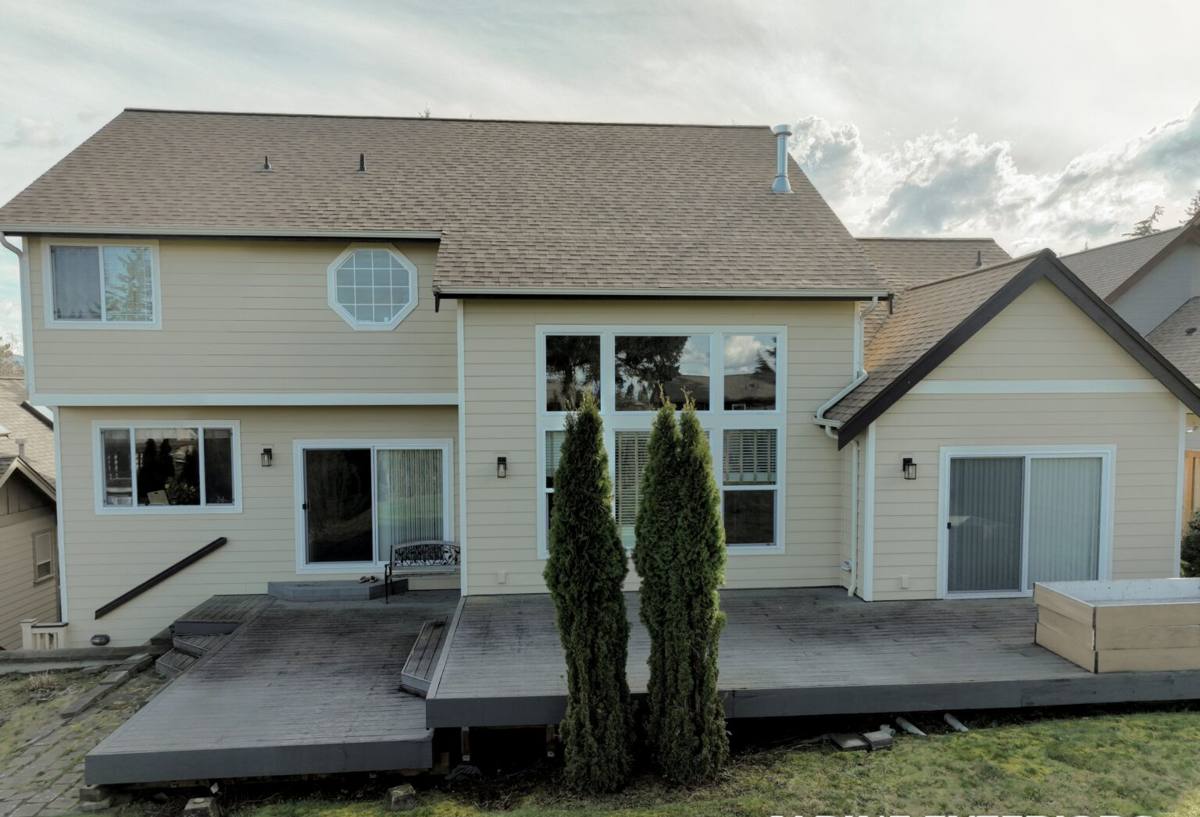
Why Custer's Climate Is Hard on Decks
Salt Air and Metal Fasteners
Airborne salt from the nearby coastline accelerates corrosion on anything metal — nails, screws, joist hangers, post brackets, and railing hardware. Once a fastener starts rusting, it swells slightly, which cracks the wood fibers around it and gives water a new path inside. This is often the real reason a deck feels "loose" or a board squeaks more than it used to — it's not the wood failing first, it's the hardware failing and taking the wood down with it.
Driving Rain
Whatcom County gets plenty of straight-down rain, but the wind off the water pushes a lot of it sideways during winter storms. That matters for decks because sideways rain gets up under railings, into end-grain cuts, and behind ledger boards — areas that a deck built for calmer weather wasn't necessarily flashed or sealed to handle.
Extended Moss and Algae Season
Shaded decks, decks under trees, and decks on the north side of a house stay damp for long stretches between fall and spring. That damp surface is exactly what moss and algae need. Beyond making boards slick and unsafe, moss holds moisture against the wood surface around the clock, which is a major contributor to early rot on deck boards that otherwise still have years of life in them.
Signs Your Deck Needs Repair
Most deck problems in this area start small and stay hidden until they're not. Here's what we tell Custer homeowners to check for, ideally before the wet season sets in:
- Soft, spongy, or springy spots when you walk across the deck
- Rust streaks running down from screws, nails, or metal brackets
- Gaps opening up where the ledger board meets the house
- Railings or posts that wiggle more than they used to
- Persistent green or black staining that doesn't clean off easily
- Boards that feel damp or cool days after the last rain
- Visible daylight or gaps at stair stringers or post bases
- A musty smell coming from underneath the deck
Any one of these on its own might not mean much. Two or three together, especially on a deck that's more than 8-10 years old, usually means it's time for a closer look.
Common Repairs We Handle Around Custer
Ledger Board and Rim Joist Rot
The ledger board — where the deck attaches to the house — takes the brunt of driving rain because water gets forced against the house wall and has nowhere to go but down into that connection. If flashing was missing or installed incorrectly originally, this is often the first structural point to fail. We check this connection closely on every inspection because it's also the most important one structurally.
Post Base and Footing Deterioration
Posts that sit close to grade or in landscaping beds stay wet longer and are more exposed to splash-back and standing moisture. Combined with salt-accelerated corrosion on the metal post base hardware, this is a common spot for rot to set in at the bottom few inches of a post — often invisible until the post is tested.
Fastener and Hardware Corrosion
We replace rusted or failing hardware with fasteners and connectors rated for coastal and exterior exposure rather than standard interior-grade hardware. This is one of the cheapest parts of a repair and one of the most important, since undersized or wrong-grade hardware is a big reason decks fail early in salt-air areas.
Board Replacement and Surface Repair
Individual boards that have cupped, split, or rotted get replaced rather than the whole deck being torn out, as long as the framing underneath is sound. We match spacing and fastening pattern to the existing deck so repaired sections don't stand out or behave differently than the rest of the surface.
Railing and Stair Repair
Railings take constant hand pressure and weather exposure at the same time, which is a rough combination. Loose balusters, wobbly posts, and rotted stair stringers are safety issues first and cosmetic issues second — we prioritize these when we find them during an inspection.
Moss, Algae, and Surface Restoration
Where moss and algae have taken hold but the wood underneath is still structurally sound, we clean and treat the surface rather than replacing boards that don't need it. Where moss has been sitting long enough to soften the wood, that's a repair issue, not just a cleaning issue.
Repair or Replace? How We Make That Call
Not every deck problem means starting over, and not every deck is worth continuing to patch. We look at a few honest factors before recommending either path.
| Factor | Points Toward Repair | Points Toward Replacement |
|---|---|---|
| Framing condition | Joists and posts are solid when probed | Structural members are soft or crumbling |
| Extent of damage | Isolated to a few boards or one connection | Rot or corrosion found in multiple areas |
| Deck age | Under 15 years, built to reasonable standards | Older deck nearing the end of its practical life |
| Original construction | Ledger flashing and hardware were done correctly | Missing flashing or undersized original hardware |
| Your plans for the deck | Keeping the current size and layout | Wanting a different footprint, level change, or upgrade |
We'll always tell you honestly when a full deck is a better long-term value than another round of repairs — and just as honestly when it isn't. A well-built deck with isolated damage doesn't need to be replaced just because a contractor would rather sell a bigger job.
Our Deck Repair Process
- On-site inspection. We walk the entire deck, probe suspect boards and posts, check the ledger connection, and look underneath where access allows.
- Honest assessment. You get a clear explanation of what's failing, why, and what your realistic options are — repair, partial rebuild, or full replacement.
- Written estimate. Scope and pricing in writing before any work starts, so there are no surprises once boards start coming up.
- Repair work. Damaged material comes out, framing and hardware get inspected and upgraded where needed, and new material goes in matched to the existing deck.
- Final walkthrough. We check the repaired areas together and go over any maintenance recommendations specific to your deck's exposure.
Materials and Hardware We Use for This Area
Given the salt exposure and rain patterns around Custer, we lean toward materials and hardware that hold up to that specific combination rather than defaulting to whatever is cheapest.
| Component | What We Use and Why |
|---|---|
| Fasteners | Hot-dip galvanized or stainless-rated screws and nails, sized for exterior/coastal exposure |
| Connectors and hangers | Corrosion-resistant coated hardware rated for ground contact and exterior use |
| Framing repairs | Pressure-treated lumber rated for ground contact where posts and beams are involved |
| Decking boards | Matched to your existing deck — wood or composite — with attention to how each handles moisture |
| Ledger flashing | Proper flashing detail at the house connection, since this is the single most water-exposed joint on the deck |
We don't push a single "best" decking material on every job. Wood, composite, and PVC-based boards each have real trade-offs in maintenance, upfront cost, and how they behave in a damp, shaded, salt-air environment — we'll walk through those honestly based on your specific deck and yard.
Maintenance That Actually Extends Deck Life Here
Repair work lasts longer when a few basic habits are kept up afterward, especially in a moss-prone, salt-air location like Custer:
- Sweep leaves and debris off the deck regularly, especially in fall
- Keep gutters and downspouts clear so runoff isn't landing directly on or near the deck
- Trim back vegetation that keeps deck sections shaded and damp
- Rinse salt residue off hardware and railings a few times a year
- Reseal or restain wood decking on the schedule appropriate to the product, not just when it "looks bad"
- Check under the deck once a year for early signs of moisture or pest activity
Why a Crew That Already Works Custer Matters
Deck repair looks straightforward from the outside, but knowing which failure points to check first — the ledger connection, the salt-exposed hardware, the shaded post bases — comes from having actually worked on decks in this specific stretch of Whatcom County, not just decks in general. We've seen how Custer's proximity to the water and its rain patterns show up differently on a deck than they do a few miles inland, and we build our inspections and repairs around that.
We're not a large out-of-area outfit rotating through on a sales route. We work this area consistently, which means when we tell you a repair will hold up through another wet season, that's based on what we've actually seen hold up here — not a generic guess.
Get a Free, No-Pressure Estimate
If your deck in Custer is showing soft spots, rust stains, persistent moss, or just doesn't feel as solid as it used to, we're happy to take a look. The estimate is free, there's no pressure to move forward, and you'll get a straight answer about what's actually going on. Use the form below to get started.