 Lynden Exterior
 Metal Roofing Built for Deming's Weather
Deming sits back in the Nooksack River valley, closer to the foothills than the shoreline, but that doesn't mean the roof over your head gets a break. The same marine air that carries salt off the Salish Sea moves inland across Whatcom County, and out here it mixes with heavy tree cover, steady valley rainfall, and long stretches of shade that never quite dry out. Add rain that comes in sideways during the wetter months and roof planes shaded by fir and cedar that hold moss for most of the year, and you've got a climate that's genuinely hard on a roof — just not in the way people picture when they think "coastal."
Metal roofing holds up well against all of that when it's specified and installed correctly. It sheds moss better than most roofing materials, handles driving rain without relying on granules or tabs to keep water out, and can go 40 to 60 years or more without needing replacement. But "metal roof" covers a wide range of products and installation methods, and the difference between a system built for this valley and one that isn't shows up as leaks, rust streaking, or fastener failure years down the road — usually right when you've stopped thinking about the roof at all. This page covers what a correct metal roof install actually involves for a Deming home, what to look for in a bid, and how we run the job from first inspection to final walkthrough.
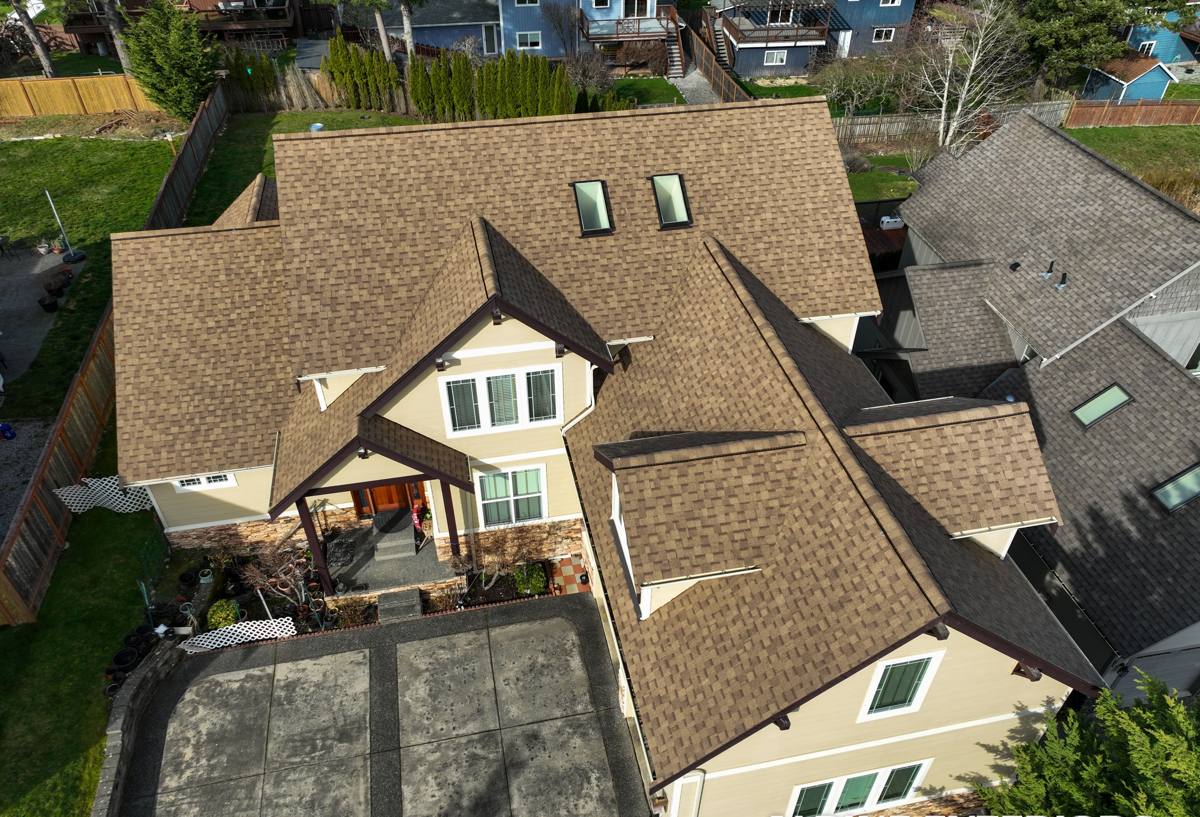
Why Metal Roofing Fits This Valley So Well
Metal roofing earns its reputation in wet, shaded, tree-heavy areas like Deming for a few concrete reasons. A smooth metal panel gives moss spores and organic debris far less to grip onto than the textured surface of a shingle, so roof planes that stay shaded most of the year hold onto far less growth. Panels shed water fast and shed snow load off steep pitches without the granule loss and edge-lifting that shorten a shingle roof's life. And a well-built metal roof simply lasts longer than most homeowners will own the house, which matters if you're trying to stop dealing with your roof for good rather than replace it again in twenty years.
None of that happens automatically just because the material is metal. The panel itself is only one part of the system — fastening method, underlayment, flashing, and coating all have to be matched to the conditions this valley actually produces, or the roof underperforms what the material is capable of.
What Local Conditions Actually Demand
- Corrosion-resistant fasteners and coatings: Marine-influenced moisture speeds up corrosion on unprotected steel over time, which is why panel coating and fastener grade both matter more here than they would in a dry inland climate.
- High-quality underlayment: A synthetic, high-temperature underlayment gives the roof deck a real secondary barrier for the stretches when rain is being driven under panel edges rather than just running off.
- Properly sealed end-laps and side-laps: Panel overlaps have to be lapped and sealed to spec, not just butted together, or wind-driven rain finds the seam.
- Debris management at valleys and gutters: Needle litter and leaf debris from surrounding trees collect in valleys and gutters faster in a shaded, forested setting like Deming, and trapped debris holds moisture against the panel edge.
What a Correct Metal Roof Install Involves
A metal roof is a system, not a single product, and each layer underneath the visible panel is doing real work. Skipping or downgrading any one of them is usually where a "metal roof problem" actually starts.
Deck Inspection and Prep
Whether the job is a full tear-off or, in the right circumstances, an over-existing-roof install with furring strips, the deck needs to be inspected for rot and soft spots before anything goes down. Covering existing damage with a new roof on top doesn't make that damage go away — it just hides it until it's worse and more expensive to fix.
Underlayment
Metal roofing needs underlayment rated for the heat a metal panel can hold in direct sun, not standard felt, which can degrade under that heat over time. Ice-and-water shield membrane at eaves and valleys adds a second line of defense exactly where wind-driven rain and debris buildup are most likely to cause a problem.
Panel Fastening System
This is the single biggest factor in how a metal roof performs long-term. Concealed-fastener systems, like standing seam, use hidden clips that let the panel expand and contract with temperature swings without stressing any exposed penetration. Exposed-fastener panels are screwed directly through the face of the panel using rubber-gasketed screws, which cost less up front but rely on that gasket staying intact for decades — and gaskets are a wear part, not a permanent seal.
Flashing at Valleys, Eaves, and Penetrations
Metal roof leaks almost never start in the open field of a properly fastened panel. They start at valleys, chimney and vent penetrations, and eave transitions where flashing has to be custom-formed and integrated with the underlayment, not just caulked against the panel afterward.
Ventilation
Balanced attic ventilation keeps the underside of the deck dry and reduces the temperature swing the deck and fasteners experience under a metal roof exposed to direct sun on clear days. It's an easy detail to overlook because it doesn't show from the ground, but it affects how long the whole system lasts.
Comparing Metal Roofing Systems for a Deming Home
| System | Typical Lifespan | Fit for Deming Conditions |
|---|---|---|
| Exposed-Fastener Panel | 25-40 years | Lower upfront cost; gasketed screws need periodic inspection and eventual replacement as they age |
| Standing Seam (Concealed Fastener) | 40-60+ years | Highest upfront cost, but no exposed penetrations for moisture or wind-driven rain to work into over time |
| Stone-Coated Steel | 40-50 years | Mimics shingle or shake profiles; good moss resistance with a more traditional appearance |
For most homes in Deming, standing seam is worth the added cost specifically because it removes the one part of a metal roof — exposed fastener gaskets — that actually wears out under this valley's rain and temperature swings. Exposed-fastener panels aren't a bad choice on a budget or on a secondary structure, but they come with a maintenance schedule that standing seam simply doesn't have.
Cost Factors Worth Understanding
Metal roofing bids can vary widely even for similar-sized roofs, and the spread almost always comes down to real differences in scope rather than one contractor padding the number.
| Factor | What It Affects |
|---|---|
| Panel profile and fastening system | Whether the roof has exposed penetrations that will need attention over its life |
| Panel gauge and substrate | How resistant the panel is to hail, foot traffic, and denting over decades of service |
| Coating and finish | Corrosion resistance, color retention, and how the panel ages under sun and moisture exposure |
| Tear-off vs. install-over | Whether hidden deck or old roof damage gets found and addressed before new panels go on |
| Flashing scope | How thoroughly valleys, penetrations, and eaves are custom-formed rather than generic-fit |
| Roof pitch, complexity, and access | Labor time and staging requirements, especially on steeper or more cut-up rooflines |
Ask any bid to break these out individually rather than presenting one lump number. A bid that specifies panel profile, gauge, and coating tells you what you're actually buying; one that just says "metal roof installed" doesn't.
How Our Process Works
A metal roof is a long-term investment, and we run the process so you know exactly what's being installed and why before any panel goes on.
- In-person inspection: We walk the existing roof and attic ourselves and document deck condition, ventilation, and any problem areas before quoting anything.
- Written estimate: You get an itemized bid covering panel system, gauge, coating, underlayment, flashing, and ventilation — not a single vague line item.
- Scheduling around weather: We build reasonable flexibility into the timeline, since wet-season delays are a normal part of roofing work in this valley, not an excuse.
- Deck prep and repair: Any rot or soft decking we find gets repaired before underlayment or panels go down.
- Underlayment, flashing, and panel installation: Each layer goes on to manufacturer specification, with extra attention at valleys, penetrations, and eave transitions.
- Final walkthrough and cleanup: We review the finished roof with you in person and do a full site sweep before calling the job done.
Why Hiring a Crew That Already Works in Deming Matters
A crew that's worked roofs in and around Deming has already seen how shade and tree cover extend moss season on certain roof planes, which valleys collect the most debris in this specific setting, and how the fastening system on an older metal roof in this area tends to age. That's the kind of practical knowledge that shapes real decisions on your job — not something a crew unfamiliar with this stretch of the valley would necessarily catch.
It also matters after the crew leaves. A workmanship warranty only means something if the company behind it is still reachable in this area years later, not a name that did one job here and moved on.
A Practical Checklist Before You Choose a Metal Roofer
- Does the bid specify panel profile, gauge, and coating, not just "metal roofing"?
- Is the fastening system — concealed clip or exposed fastener — clearly stated, along with why it fits your roof?
- Is flashing work at valleys, penetrations, and eaves explicitly written into the scope?
- Do they carry current WA contractor licensing, liability insurance, and workers' compensation?
- Can they point to recent, real metal roofing work in or near Deming or the surrounding valley?
- Does the bid separate the panel manufacturer's material warranty from the contractor's own workmanship warranty?
Signs Your Deming Metal Roof May Need Attention
Metal roofs fail slower and quieter than shingle roofs, but they still give warning signs before a real problem develops.
- Rust streaking or bubbling at cut edges, fastener heads, or panel seams
- Loose, backed-out, or stripped exposed fasteners, especially on older exposed-fastener roofs
- Moss or debris buildup collecting in valleys or against eave trim despite metal's generally better shedding
- Visible oil-canning (a rippled look in flat panel areas) that's worsened or is paired with a leak
- Water staining on interior ceilings or in the attic near valleys, penetrations, or eaves
Catching any of these early is almost always a smaller fix than waiting for a leak to force the issue, particularly heading into the wetter months.
If you'd like an honest, no-pressure look at your Deming roof and a written estimate that spells out exactly what's included, we're glad to come take a look. Use the form below to request a free estimate.