 Lynden Exterior
 Why Deming's Setting Changes What a Roof Has to Handle
Deming sits along the Mount Baker Highway corridor in the Nooksack River valley, tucked under heavy conifer cover that keeps much of the neighborhood shaded for a good part of the year. That shade is easy on the eyes and hard on a roof. Shingles and shakes under a tree canopy stay damp longer after every rain, which is exactly the condition moss, lichen, and algae need to take hold. Add in the driving rain events that move through Whatcom County off the Pacific, and the marine-influenced, salt-tinged air that reaches inland from Bellingham Bay, and you have a climate that asks more of a roof than a drier, more open lot would.
None of this means a roof in Deming has to fail early or need constant babying. It means the installation has to account for slower drying times, heavier organic debris, and a genuinely long moss season, not just copy a spec sheet written for a sunny suburb somewhere else.
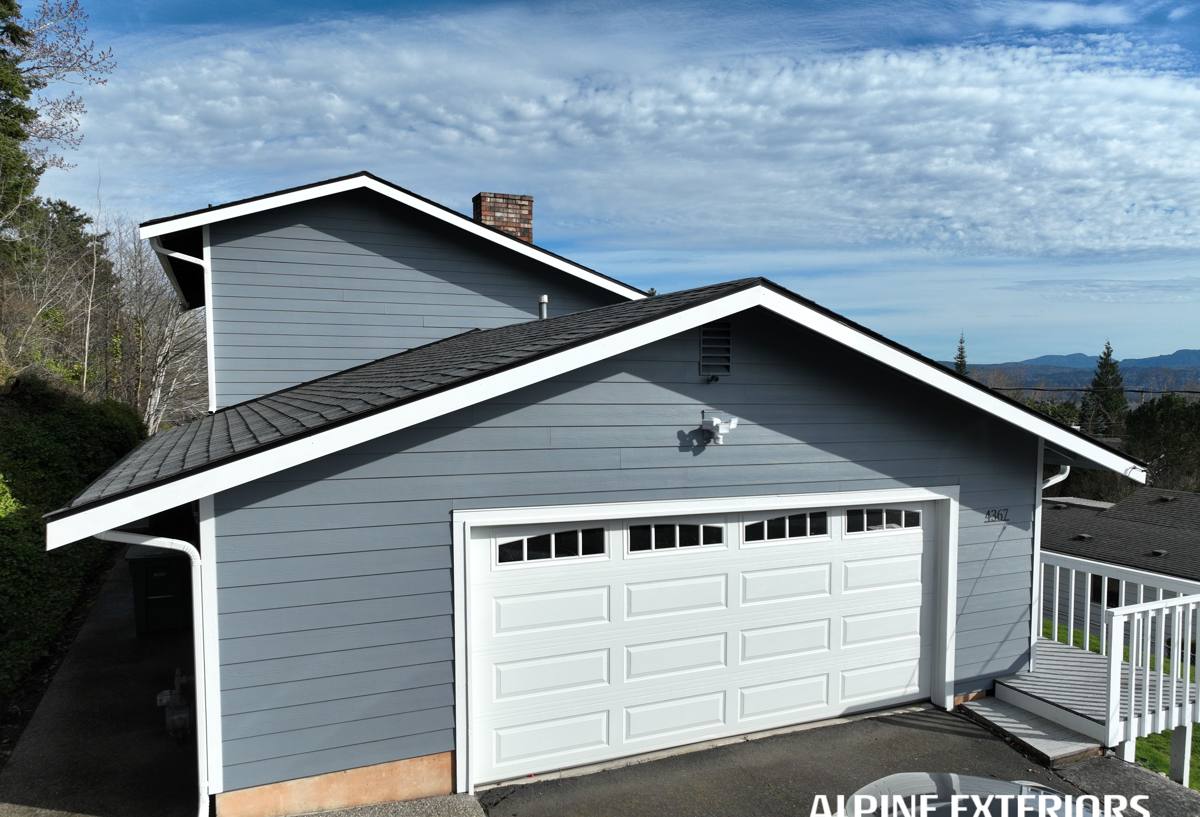
What a Correct New Roof Installation Actually Involves
"New roof" covers a lot of ground, and the difference between a roof that lasts and one that causes problems in five years usually isn't the shingle brand — it's what happens underneath and around it.
- A full tear-off to bare deck (not a recover over old layers) so we can actually see the wood and find soft spots, old leaks, or rot before they're buried under a new roof
- Deck repair or replacement of any damaged sheathing, not just a patch over it
- Ice-and-water shield or a comparable self-adhering membrane at eaves, valleys, and around penetrations, where moss and standing moisture do the most damage
- Synthetic underlayment across the full field for a consistent moisture barrier
- Proper nailing pattern and placement — this is one of the most common shortcuts on rushed jobs and it directly affects wind and warranty performance
- New step flashing at walls and chimneys, and correctly lapped valley flashing, rather than reusing old flashing to save time
- Drip edge at eaves and rakes so water sheds off the roof instead of running behind the fascia
Every one of these details matters more in a wet, shaded valley setting than it would somewhere drier, because a small gap in flashing or underlayment has more moisture cycling through it, more often.
Choosing Materials for a Shaded, Wet River Valley Property
There's no single "best" roofing material for every Deming home — it depends on the roof's pitch, how much tree cover it sits under, and what the homeowner wants to maintain over time. Here's how the common options stack up for this specific setting.
| Material | Moss/moisture resistance | Typical lifespan | Maintenance under tree cover |
|---|---|---|---|
| Architectural asphalt shingle | Good with proper underlayment; moss can still take hold in shaded valleys without upkeep | 25–30 years | Periodic moss treatment and gutter clearing recommended |
| Standing seam metal | Very good — smooth surface sheds debris and resists moss anchoring | 40–50+ years | Low; occasional debris clearing from valleys |
| Composite/synthetic shake | Good; more resistant than wood shake without wood's moisture absorption | 30–50 years | Low to moderate |
| Cedar shake | Requires the most upkeep in shaded, damp conditions | 20–30 years with upkeep | High — regular treatment and inspection needed to manage moisture and moss |
We don't push one product on every roof. What we do is tell homeowners plainly what a given material will actually need from them over the next 20-plus years living under Deming's tree cover, so the decision isn't a surprise later.
Ventilation and Moisture Control — The Part You Don't See
A roof is only half a moisture system on the outside; the other half lives in the attic. Under heavy tree canopy, humid air can sit in an attic space longer than it would on an open lot, and if that air isn't moving, it condenses on the underside of the deck. Over time that leads to sheathing rot from the inside — a failure mode that has nothing to do with the shingles themselves and everything to do with airflow.
A correctly installed roof balances intake ventilation (typically at the soffits) with exhaust ventilation (typically at the ridge), so air actually flows through the attic instead of sitting stagnant. We check and correct this balance on every new roof, not just install a ridge vent and call it done. It's an easy thing to skip and a hard thing to fix later without opening the roof back up.
Our Process for a Deming Roof Replacement
The steps themselves aren't unusual, but the order and the details matter.
- On-site inspection: we get on the roof and, where accessible, in the attic to assess the deck, current ventilation, flashing condition, and any moss or moisture damage already present
- Written scope and material walk-through: you get a clear, itemized plan and a real conversation about material trade-offs for your specific roof and tree cover, not a generic pitch
- Permitting: we handle the Whatcom County permit process so it's not on you to navigate
- Site protection: landscaping, siding, and gutters get protected before tear-off begins
- Tear-off and deck assessment: old roofing comes off down to the deck, and any rot or soft sheathing gets replaced — not covered up
- Underlayment and flashing: ice-and-water membrane at vulnerable areas, full synthetic underlayment, new flashing at every penetration and wall intersection
- Roof installation: material goes on to manufacturer specification, including nailing pattern and exposure
- Ventilation and cleanup: intake and exhaust ventilation confirmed, then a full site cleanup including a magnetic sweep for stray nails
- Final walk-through: we go over the finished roof with you before we consider the job done
Because rain is a real factor in scheduling here, we also watch the weather window closely and plan tear-off days around it — an open deck sitting exposed overnight in a Whatcom County downpour is a problem we plan around, not one we let happen.
Moss, Debris, and What a Deming Roof Needs Afterward
A well-installed roof under conifer cover still needs some ongoing attention — that's just the reality of a long, damp moss season in a wooded valley. The good news is that the maintenance is manageable if it's done on a regular basis rather than skipped for years.
- Clear needles, cones, and leaf debris from valleys and gutters at least twice a year — more often on heavily treed lots
- Keep gutters and downspouts flowing freely so water isn't backing up under the roof edge
- Have moss growth treated before it thickens; a light coating is far easier to manage than a mat that's been holding moisture against the shingles for a season
- Consider zinc or copper strips near the ridge on shingle roofs, which help suppress new moss growth over time
- Trim back overhanging limbs where practical to cut down on shade and debris load
- Schedule a roof inspection every year or two, especially after major wind or rain events
Cost Factors for a New Roof in Deming
Every roof is different, and the only way to get an accurate number is an on-site look — but these are the factors that actually move the price up or down.
| Factor | How it affects cost |
|---|---|
| Roof size and pitch | Larger and steeper roofs take more material and more labor time, and steep pitches require additional safety measures |
| Number of existing layers | Tearing off multiple old layers costs more in labor and disposal than a single-layer tear-off |
| Deck condition | Rot or soft sheathing found during tear-off adds repair cost — this is common on older roofs that have dealt with years of moisture |
| Material choice | Standing seam metal and composite products generally cost more up front than asphalt shingle but ask less in ongoing upkeep |
| Roof complexity | Valleys, dormers, skylights, and multiple chimneys all add flashing work and labor time |
| Site accessibility | Tree cover, driveway length, and staging space affect how efficiently material and equipment can move on and off the property |
We walk through these factors with you in plain terms before any work starts, so the number you're given reflects your actual roof rather than a generic average.
Why a Crew That Already Works Deming Makes a Difference
A roof crew that hasn't spent time on wooded, rural Whatcom County properties tends to learn these lessons on your roof, at your expense. Knowing how tree cover affects drying time and moss growth, how to stage material and equipment on a rural driveway, how Whatcom County permitting works, and how to read the region's rain patterns to schedule a tear-off safely — none of that is guesswork when it's familiar ground. It shows up in fewer surprises during the job and a roof that's built for the conditions it actually has to survive, not a textbook version of them.
Signs It's Time to Consider Full Replacement
Not every roof problem means a full new roof — but there are signs that point toward replacement rather than another round of repairs.
- Granule loss heavy enough that you can see bare, shiny patches on shingles
- Moss or lichen that has been present long enough to lift shingle edges or hold consistent moisture against the deck
- Soft, spongy spots underfoot when walking the roof, which usually signal deck rot
- Recurring leaks in different locations rather than one isolated spot
- Flashing that's cracked, rusted, or separating at chimneys, walls, or valleys
- A roof approaching or past the upper end of its material's expected lifespan, especially if it's never had a tear-off
If you're seeing one or two of these, a repair may still make sense. If several apply at once, a new roof is usually the more honest recommendation, and we'll tell you which situation you're actually in.
If you're weighing a new roof for a Deming property, we're glad to take a look and give you a straightforward, no-pressure estimate — just fill out the form below to get started.