 Lynden Exterior
 The Everson Climate Problem Your Siding Has to Solve
Everson sits in the low, flat river-valley country north of Lynden, in the part of Whatcom County where marine air off the Puget Sound and Strait of Georgia region pushes inland and collides with cooler valley air almost year-round. That combination is what makes siding decisions here different from siding decisions in a drier inland climate. It isn't one hard freeze or one big storm that wears down the exterior of a house near Everson — it's the accumulation of hundreds of gray, damp days a year, each one adding a little more moisture load to whatever is on the walls.
Marine Air and Driving Rain
Wind-driven rain in this part of Whatcom County doesn't fall straight down. It comes in at an angle, off the water and across open farmland, and it finds every horizontal seam, every under-caulked joint, and every spot where trim meets siding. Products that depend on a perfect, unbroken paint film to stay dry — primed wood, some engineered wood sidings — are working against that pattern every single season. Fiber cement handles wind-driven moisture differently, because the material itself doesn't swell, wick, or rot the way wood-based products can when water gets past the surface.
The Long Moss Season
Everson's tree cover, river-valley humidity, and long stretches of overcast weather add up to a moss and algae season that runs far longer than most homeowners expect — often eight or nine months out of the year on north- and shade-facing walls. Moss doesn't just look bad. It holds moisture against the siding surface, and on products with a porous or absorbent surface, that trapped moisture is what eventually causes swelling, delamination, or paint failure. The siding you choose, and the finish on it, determines how much of a foothold moss actually gets.
Why We Install Only James Hardie Fiber Cement
We don't install vinyl siding, LP SmartSide, Cemplank, Allura, primed spruce, or cedar. That's not a marketing line — it's a standard we hold ourselves to because of what we've seen these products do, and not do, in exactly this kind of climate. Every one of those alternatives has legitimate strengths in the right application. In Everson's combination of driving rain, humidity, and long moss seasons, they also carry real trade-offs in moisture behavior, maintenance burden, or long-term appearance that we're not willing to put our name behind.
Non-Combustible, Not Just Weather-Resistant
James Hardie siding is fiber cement — sand, cement, and cellulose fiber, not wood fiber or vinyl. It's non-combustible, which matters for fire risk and for insurance considerations, and it holds paint and factory finish differently than wood-based siding because it isn't feeding on organic material the way wood products can. That's a structural difference in the product, not just a coating difference.
Engineered for This Climate: The HZ Product Line
James Hardie builds its siding in climate-specific formulations, marketed as its HZ system, engineered for the moisture and freeze-thaw conditions of a given region. For Whatcom County's wet, moderate marine climate, that means a product line built to resist moisture intrusion and cracking under exactly the wet-then-dry cycling that Everson homes go through most of the year — not a one-size-fits-all product borrowed from a drier or harsher climate zone.
What a Correct James Hardie Installation Involves
The product only performs as well as the installation behind it. A lot of siding problems homeowners blame on "bad siding" are actually installation problems — gaps, missed flashing, wrong fasteners — that would have caused trouble with almost any siding product. Getting this right matters more in a climate like Everson's, where the margin for error on water management is thin.
Water Management Behind the Siding
Correct installation starts before a single piece of siding goes up: weather-resistant barrier, properly lapped and taped seams, flashing at every window, door, and horizontal transition, and a drainage plane that gives any water that does get behind the cladding somewhere to go. On a lot of older Everson-area homes being re-sided, this is also the point where a crew finds and corrects years of prior water damage that was hiding behind the old siding.
Fastening, Clearances, and Caulking
James Hardie publishes specific fastening patterns, clearances from grade, decks, and roof lines, and caulking requirements at every joint. Skipping or shortcutting these — fastening too close to panel edges, running siding straight down to grade with no gap, using the wrong caulk at butt joints — is exactly what turns a 30-plus-year product into a 10-year problem. This is installer discipline, not product quality, and it's the single biggest variable in how long a James Hardie job actually lasts.
The ColorPlus Factory Finish
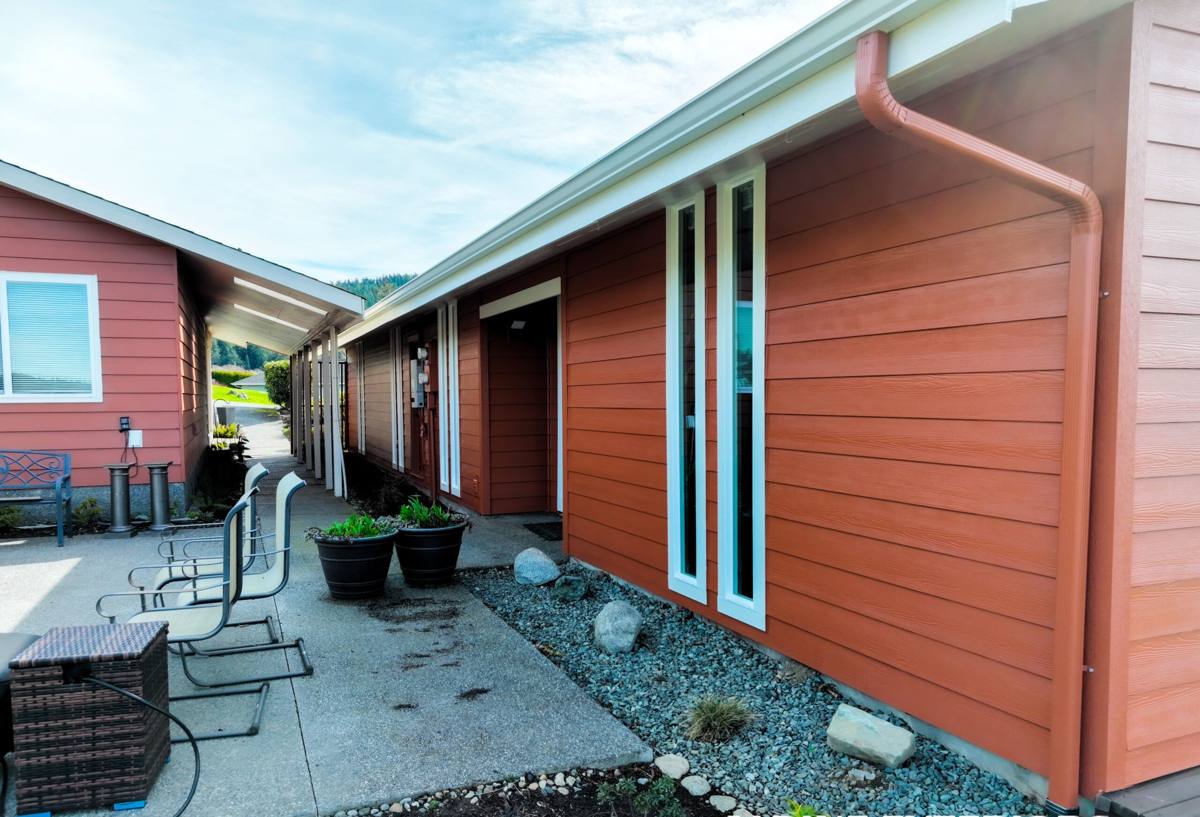
Most of what we install carries James Hardie's ColorPlus factory finish — color baked on at the factory under controlled conditions, rather than field-painted after installation. Field-painted siding is only as good as the weather conditions and prep work on the day it's painted; a factory finish removes that variable and gives a more consistent, longer-lasting finish, which matters in a climate where you don't get many dry weeks in a row to paint correctly on-site anyway.
Choosing the Right Siding Profile for an Everson Home
James Hardie makes several distinct profiles, and the right one depends on the home's architecture, age, and how it's already trimmed out. Most Everson-area projects fall into one of three categories.
| Profile | Best Fit | Climate Consideration |
|---|---|---|
| Lap Siding (HardiePlank) | Traditional farmhouse and ranch-style homes common in the Everson/Lynden area | Horizontal laps must be correctly overlapped and caulked to shed wind-driven rain |
| Panel Siding (HardiePanel) | Modern or accent-wall applications, gable ends | Vertical joints need proper battens or trim to manage water at the seams |
| Shingle Siding (HardieShingle) | Craftsman-style detailing, accent gables | More surface texture can hold moss longer if shaded — placement matters |
We walk through this decision with the homeowner on-site, looking at the home's actual exposure — which walls get the most driving rain, which stay shaded and damp longest — before recommending a profile, rather than defaulting to whatever's fastest to install.
Our Process, Start to Finish
- On-site walkthrough of the home's current siding, trim, and any existing moisture or moss damage
- Assessment of water management behind the current siding, including sheathing condition where accessible
- Recommendation on profile, HZ product line, and ColorPlus color based on the home's exposure
- Written estimate with a clear scope — what's being removed, what's being repaired underneath, what's going up
- Installation following James Hardie's published fastening, clearance, and flashing specifications
- Final walkthrough with the homeowner before we consider the job done
Why a Crew That Already Works Everson Matters
Whatcom County's building departments, typical framing conventions, and local weather windows aren't identical to what you'd find in a different part of the state, and a crew that already works this specific area isn't relearning those things on your project. That includes knowing what permitting is typically required for a full re-side, understanding how older homes in this river-valley area were commonly built and where that tends to cause hidden moisture issues, and knowing which weeks of the year actually give a realistic run of dry days to work with. A crew that's already local to Lynden and the surrounding Whatcom County communities, including Everson, has already worked through those variables on other homes nearby — that's not something you get from a crew driving in from outside the region for a single job.
Cost Factors on an Everson James Hardie Project
We don't quote a number without seeing the house, but the same handful of factors drive cost on nearly every Hardie siding project in this area.
| Factor | Why It Matters |
|---|---|
| Home size and wall complexity | More corners, gables, and cutouts mean more labor and material waste |
| Condition of the existing wall assembly | Rot or moisture damage found during tear-off adds repair scope before new siding can go up |
| Siding profile and trim detail | Shingle accents and custom trim take more time than straight lap siding |
| Access and site conditions | Multi-story sections, tight lot lines, and landscaping can add scaffolding or staging time |
| Color and finish choice | Factory ColorPlus finishes vs. field-applied paint affect material cost and long-term maintenance |
Keeping Your New Siding Looking Right
James Hardie siding is low-maintenance compared to wood-based alternatives, but "low-maintenance" isn't "no-maintenance," especially with Everson's moss season working against it year-round.
- Rinse siding annually, especially shaded and north-facing walls where moss and algae build up fastest
- Keep gutters clear so overflow doesn't run down the siding face during heavy rain
- Trim back vegetation and tree limbs that keep a wall shaded and damp longer than it needs to be
- Check caulking at trim joints and penetrations every year or two, and re-caulk as it wears
- Address any impact damage or cracked pieces promptly, before water has a chance to get behind them
If your Everson-area home is due for new siding, or you're just trying to figure out whether what's on the walls now is holding up, we're glad to come take a look. The estimate is free, there's no pressure, and you'll get a straight answer about what your home actually needs.