 Lynden Exterior
 Siding Repair Built for Kendall's Climate, Not a City Job Site
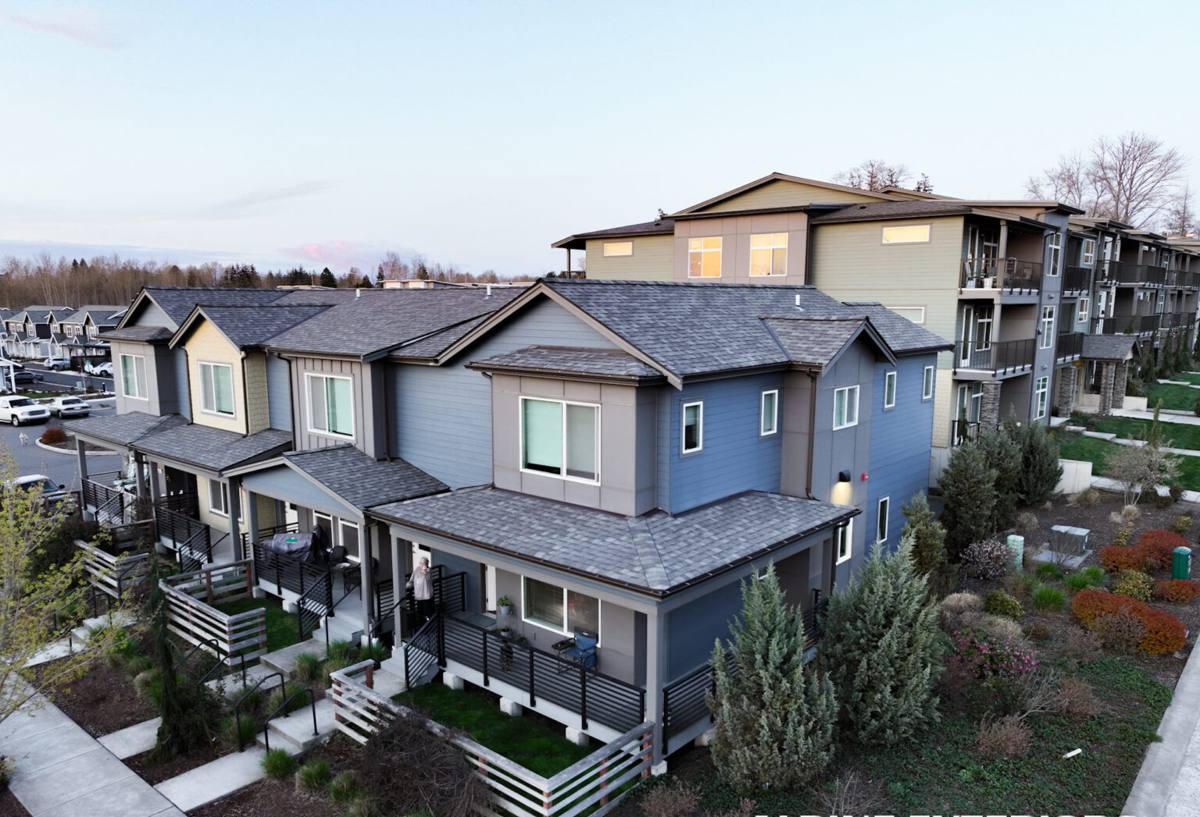
Kendall sits back from town in the wooded, low-lying country east of Lynden, closer to the foothills and the Nooksack River drainage than to open, wind-scoured farmland. That setting changes what siding repair actually needs to accomplish here. Homes tucked under fir and cedar canopy stay damp longer after a storm passes, get less direct sun to dry out wall surfaces, and collect moss and organic debris in places a more exposed house never would. Add Whatcom County's long, wet fall-through-spring stretch and the occasional push of marine air off the Sound, and you get siding that's under near-constant low-grade moisture pressure for much of the year.
That's a different problem than heat-cracked siding in a dry climate or wind-driven damage on an exposed bluff. In Kendall, the enemy is usually water that never fully leaves, moss and algae that hold moisture against the wall, and small failures — a gap in caulk, a cracked panel, a piece of trim pulling away — that don't look urgent until they've let water behind the cladding for a season or two.
What's Actually Causing the Damage
Before any repair gets scheduled, it's worth understanding what's driving it. Most of the siding repair calls we run in the Kendall area trace back to one of a few root causes:
Sustained moisture, not single storms
Whatcom County's rain isn't usually violent — it's persistent. Siding that's shaded most of the day, or backed up against landscaping and tree cover, can stay wet for days after a system moves through. Over years, that constant dampness is what breaks down poorly sealed seams, softens fastener points, and lets rot get started in wood trim and any exposed untreated edges.
Moss and algae buildup
The same shade and moisture that keep the ground green year-round do the same thing to siding, especially on north-facing walls and anywhere runoff collects. Moss doesn't just look bad — it holds water against the surface and, on the wrong material, can accelerate deterioration underneath it.
Freeze and thaw cycling
Kendall's inland, higher-elevation position means it sees more frost and the occasional hard freeze than areas right on the water. Water that's worked its way into a crack or a failed joint and then freezes will expand that damage every time the temperature drops.
Impact and settling damage
Rural and wooded lots come with rural and wooded risks — branches, debris, equipment, and normal settling around older additions or outbuildings. A cracked or dented panel is a small problem until moisture finds the crack.
Common Repair Scenarios We See
Water-damaged or rotted sections
Usually found at the bottom courses near grade, around window and door trim, or wherever flashing was skipped or installed wrong the first time. The visible damage is often smaller than what's happening behind the wall — a proper repair means opening up the area enough to find where the water is actually getting in, not just patching what's visible.
Cracked, warped, or delaminating panels
Common on siding materials that weren't built for sustained Pacific Northwest moisture exposure. Wood-based products can swell, warp, and delaminate at the edges; even some fiber cement can crack if it was installed without the correct gaps and clearances.
Failed caulking and trim joints
Caulk is a wear item, not a permanent seal. When it dries out, shrinks, or separates from years of expansion and contraction, water gets a direct path behind the siding at exactly the joints designed to keep it out.
Moss and algae staining
Sometimes cosmetic, sometimes a sign of a bigger moisture problem underneath. Part of a proper repair visit is telling you which one you're looking at.
What a Correct Repair Actually Involves
A siding repair that just covers up the visible problem is a repair that fails again in a year or two. Done right, the process looks like this:
- Find the water source first. Damaged siding is almost always a symptom. Fixing the panel without fixing the flashing, grading, or gap that let water in guarantees a repeat call.
- Open up enough to see the real extent of the damage. Rot and water damage spread sideways and behind the surface. A visual patch over hidden damage is not a repair.
- Match materials correctly. Mixing incompatible products, thicknesses, or finishes at a repair seam creates a new weak point.
- Rebuild the water management, not just the surface. Correct flashing, house wrap integration, and drainage gaps matter as much as the visible siding.
- Finish to last. Caulk, paint, or factory-matched finish applied correctly so the repair blends in and holds up under the next several wet seasons, not just the next dry month.
Repair or Replace? What Actually Determines the Answer
Not every damaged section needs a full re-side, and not every siding problem should be patched forever. The honest answer depends on a few factors:
| Factor | Leans toward repair | Leans toward replacement |
|---|---|---|
| Extent of damage | Isolated section, clear boundary | Damage found in multiple areas or spreading |
| Root cause resolved | Flashing/water source is fixable | Systemic issue (missing house wrap, bad original install) |
| Age and material | Newer siding, still within useful life | Original siding near end of life or a discontinued product |
| Material match available | Matching panels/color still obtainable | No reasonable match; patch would be visibly obvious |
| Cost over time | Repair cost is a small fraction of replacement | Repeated repairs are adding up to near replacement cost |
We'll tell you honestly which category your home falls into — including when a repair is genuinely the right call and a full re-side isn't necessary.
Why We Repair and Replace With James Hardie Fiber Cement
When a repair does call for new material — whether it's a few panels or a full section — we use James Hardie fiber cement, and we don't install anything else. That's a deliberate standard, not a default. Fiber cement doesn't absorb water the way wood-based products can, doesn't support rot the way exposed wood trim does, and is non-combustible, which matters in a wooded, rural area where wildfire risk is a real consideration. Hardie's HZ5 product line is engineered specifically for climates with heavy moisture and freeze exposure — a good fit for the conditions Kendall actually sees. The factory-applied ColorPlus finish also means a repaired section can be color-matched reliably instead of relying on field-mixed paint that fades differently over time.
We won't tell you a vinyl patch or a piece of primed wood trim is a bad product across the board — they have their place. But when we're the ones doing the repair or replacement work, we stand behind the material going on your wall, and that's why it's Hardie.
Our Process for Kendall Siding Repair Calls
- Assessment: We walk the affected area, probe suspect sections, and identify the actual moisture source — not just the visible damage.
- Honest scope and quote: You get a clear explanation of what's damaged, why, and whether repair or partial replacement makes sense, with a straightforward cost range.
- Repair day: Damaged material removed, underlying water management corrected, new Hardie material installed to spec, and finish matched as closely as the product allows.
- Cleanup and walkthrough: Debris hauled off, work reviewed with you before we consider the job done.
Signs Your Kendall Home May Need Siding Repair Now
- Soft or spongy spots when you press on the siding, especially near the bottom courses or under windows
- Visible cracking, warping, or panels pulling away from the wall
- Persistent moss or dark staining that comes back quickly after cleaning
- Peeling or bubbling paint, which often signals moisture trapped behind the surface
- Gaps or cracked caulking around trim, windows, and corner joints
- A musty smell or visible staining on interior walls that share an exterior wall with damaged siding
If you're seeing more than one of these, the underlying moisture issue is usually further along than the surface suggests.
Why Hire a Crew That Already Works in Kendall
Rural Whatcom County properties come with their own set of practical realities — longer driveways, well and septic systems to work around, more tree cover close to the structure, and drainage patterns that don't match a standard in-town lot. A crew that's already worked this part of the county knows to check for those things before they become a problem mid-job, and knows what moisture patterns actually look like on homes with this kind of tree and terrain exposure versus a house out in the open. That local familiarity shows up in faster, more accurate diagnosis — not guesswork about what "should" be causing the damage.
If you're seeing damage, staining, or soft spots on your siding, we're happy to take a look. We offer free, no-pressure estimates — you'll get a straight answer on whether it's a repair, a partial replacement, or something you can leave alone for now.