 Lynden Exterior
 Decking in Laurel Isn't the Same Job as Decking Somewhere Dry
Homes in the Laurel area near Lynden deal with a climate that's tougher on outdoor structures than most homeowners realize until they're replacing a deck for the second or third time. Salt-laden air moving in off the Sound, long stretches of driving rain, and a moss season that can run most of the year all work against a deck the same way, from different angles: they hold moisture against wood fibers, corrode hardware, and feed the growth that turns a deck surface slick and dark. A deck built without those specifics in mind will look fine for a season or two and then start showing problems — soft spots, green streaking, fasteners bleeding rust — well before it should.
Composite decking, installed correctly, handles this climate better than most alternatives. But "composite decking" isn't one product, and installing it correctly in Whatcom County isn't the same as installing it in a dry inland climate. This page covers what Laurel homes specifically need from a composite deck, what a correct installation actually involves, and how we approach the job.
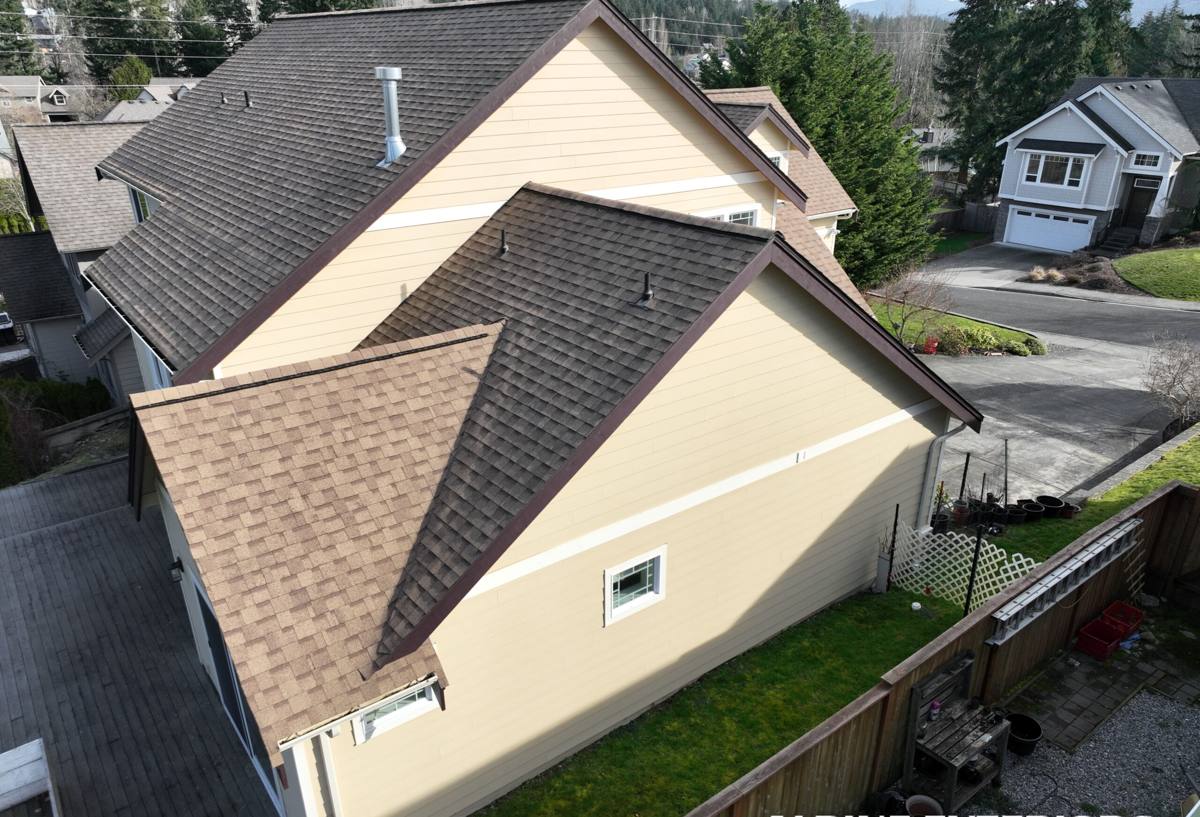
What Salt Air, Rain, and Moss Actually Do to a Deck
Moisture Intrusion
Driving rain doesn't just fall on a deck — in this region it comes in sideways often enough that end grain, fastener holes, and board gaps take on water that a purely vertical rainfall wouldn't reach. Wood decking absorbs that moisture, swells, and dries unevenly, which is where cupping, splitting, and eventually rot start. The framing underneath takes the same abuse, and because it's hidden, problems there go unnoticed the longest.
Moss and Algae Growth
A long moss season means long stretches where a deck surface stays damp and shaded enough for organic growth to take hold, especially on the north side of a house or under overhangs. Moss doesn't just look bad — it holds moisture against whatever it's growing on and makes the surface genuinely slippery, which matters on steps and landings.
Fastener and Hardware Corrosion
Salt air accelerates corrosion on any exposed metal — screws, joist hangers, structural connectors. Standard fasteners that would last for years inland can start rusting and staining a deck surface much sooner here. This is one of the most common shortcuts we see on decks that were built cheaply: the boards look fine, but the hardware holding it all together is undersized for the environment.
Why Composite Decking Fits This Climate
Composite decking is made from a blend of wood fiber and plastic, which means it doesn't absorb water the way solid wood does, doesn't need staining or sealing to stay protected, and resists the kind of surface mold and moss staining that plagues untreated wood. That's a real advantage in a climate where a deck spends a large part of the year wet.
Capped vs. Uncapped Composite
Not all composite boards perform the same way in wet climates. Capped composite has a plastic shell fully wrapping the board, which blocks moisture absorption at the core and resists staining from moss, tannins, and dirt. Uncapped or lower-grade composite can still absorb some moisture at cut ends and over time, and is more prone to surface staining. For Laurel's climate, we generally recommend fully capped boards — the extra material cost is small relative to the total project, and it's the difference that shows up five or ten years down the line, not in year one.
What a Correct Composite Deck Installation Involves
Composite boards are only as good as what's underneath and around them. Most of the problems we get called out to fix on composite decks aren't the decking material failing — they're installation shortcuts that let this climate get at the structure.
Substructure and Framing
Joists and beams should be rated for ground contact or coated appropriately, spaced to the manufacturer's specification for composite (which is often tighter than for wood), and pitched slightly to shed water rather than pool it. This is the part of the job nobody sees once the boards go down, which is exactly why it's worth getting right the first time.
Ventilation and Drainage
Composite decks built low to the ground or over a patio need airflow underneath to keep the framing dry and to keep moss and mildew from taking hold in the shaded, damp space below the boards. Blocking that airflow — a common mistake with skirting installed without vents — traps exactly the moisture this climate produces in volume.
Fasteners and Hardware
Given the corrosion risk from salt air, we spec stainless steel or coated structural hardware rated for coastal exposure, not standard galvanized fasteners. Hidden fastener systems, when used, need to be rated for the specific board profile — mixing systems is a common source of loose boards later.
Board Spacing and Direction
Composite boards need consistent gapping for drainage and for seasonal expansion, which is more pronounced in composite than in wood. Board direction and layout should also account for where rain actually hits the structure, not just aesthetics.
Comparing Decking Materials for This Climate
Homeowners in Laurel often ask us to compare composite against wood options before deciding. Here's how the common choices actually perform under local conditions, not just on paper:
| Material | Moss/Algae Resistance | Maintenance Needed | Typical Local Lifespan | Relative Cost |
|---|---|---|---|---|
| Capped Composite | Strong — surface resists staining and growth | Occasional washing | 25–30+ years | Higher upfront |
| Pressure-Treated Wood | Weak without regular sealing | Annual cleaning, periodic sealing/staining | 10–15 years before major repair | Lower upfront |
| Cedar | Moderate, needs treatment | Regular sealing to prevent graying and moss | 15–20 years with upkeep | Mid to higher |
The upfront cost gap is real, but so is the difference in how much attention each option demands every year it's exposed to this climate. Composite costs more to install and less to own over time; wood is the reverse.
Composite Decking Cost Factors
Every deck is priced on its own specifics, but the main variables that move the cost on a Laurel-area composite deck are consistent:
- Deck size and shape — square footage, plus cuts and angles that add labor
- Substructure condition — whether existing framing can be reused or needs replacement
- Height and stairs — elevated decks need railing and stair work that adds cost
- Board grade — uncapped versus fully capped composite, and the manufacturer line chosen
- Fastener and hardware spec — coastal-rated hardware costs more than standard, and is worth it here
- Site access — how easily materials and equipment can reach the build area
We'll walk through these specifics with you during the estimate rather than quoting a flat per-square-foot number that doesn't reflect your actual site.
Our Process from Estimate to Finished Deck
- On-site visit to assess the existing structure, drainage, sun/shade exposure, and any moss or moisture damage already present
- Honest recommendation on board grade and hardware based on your specific site conditions, not a one-size-fits-all upsell
- Written estimate covering material, labor, and any substructure repair or replacement needed
- Framing and substructure work built to shed water and allow airflow underneath
- Composite board installation with manufacturer-specified spacing, fastening, and finishing details
- Final walkthrough so you know what maintenance (if any) your specific deck actually needs going forward
Maintaining a Composite Deck in This Climate
Composite decking cuts maintenance significantly compared to wood, but "low-maintenance" isn't "no-maintenance" in a climate with this much rain and moss pressure. A short seasonal routine keeps a composite deck performing the way it's supposed to:
- Sweep debris and standing leaves off the surface regularly, especially in fall
- Wash the deck surface a couple of times a year to clear moss spores and surface grime before they take hold
- Check that gaps between boards stay clear so water keeps draining rather than pooling
- Confirm under-deck vents or skirting gaps aren't blocked by landscaping or debris
- Inspect visible hardware periodically for early signs of corrosion staining
Why Hiring a Crew That Already Works in Laurel Matters
A lot of deck problems we're called to fix started with a crew that builds the same way everywhere, regardless of climate. Whatcom County's mix of salt air, sustained rain, and moss pressure calls for specific choices in hardware, framing, and board selection that a generic build doesn't account for. Working regularly in and around Lynden means we've already seen how decks in this specific area age over five and ten years — which board grades hold up, where moss actually takes hold, and which shortcuts show up as problems down the road. That's not something you can fully substitute with a manufacturer's install manual alone.
If you're planning a new composite deck or replacing one that's showing its age, we're happy to take a look and give you a straightforward, no-pressure estimate — just fill out the form below.