 Lynden Exterior
 Window Installation Built for Laurel's Weather, Not Just Any Weather
Laurel sits in a part of Whatcom County where the weather doesn't do anything halfway. Winters bring long stretches of driving rain that hits windows sideways for days at a time. The marine air moving in off the Sound carries enough moisture and salt content to work on bare wood, painted trim, and window seals year-round. Add in a moss season that can stretch from fall through spring, and you've got a climate that is genuinely hard on windows — harder than most manufacturers' warranty language assumes when it was written for a national average.
A window that's a fine choice in Spokane or Boise is not automatically a fine choice in Laurel. The install details that don't matter much in a dry climate — flashing sequence, sill pan drainage, the order in which house wrap and window flange get lapped — are exactly the details that determine whether a Laurel home stays dry for the next twenty years or starts showing water stains around the trim in five.
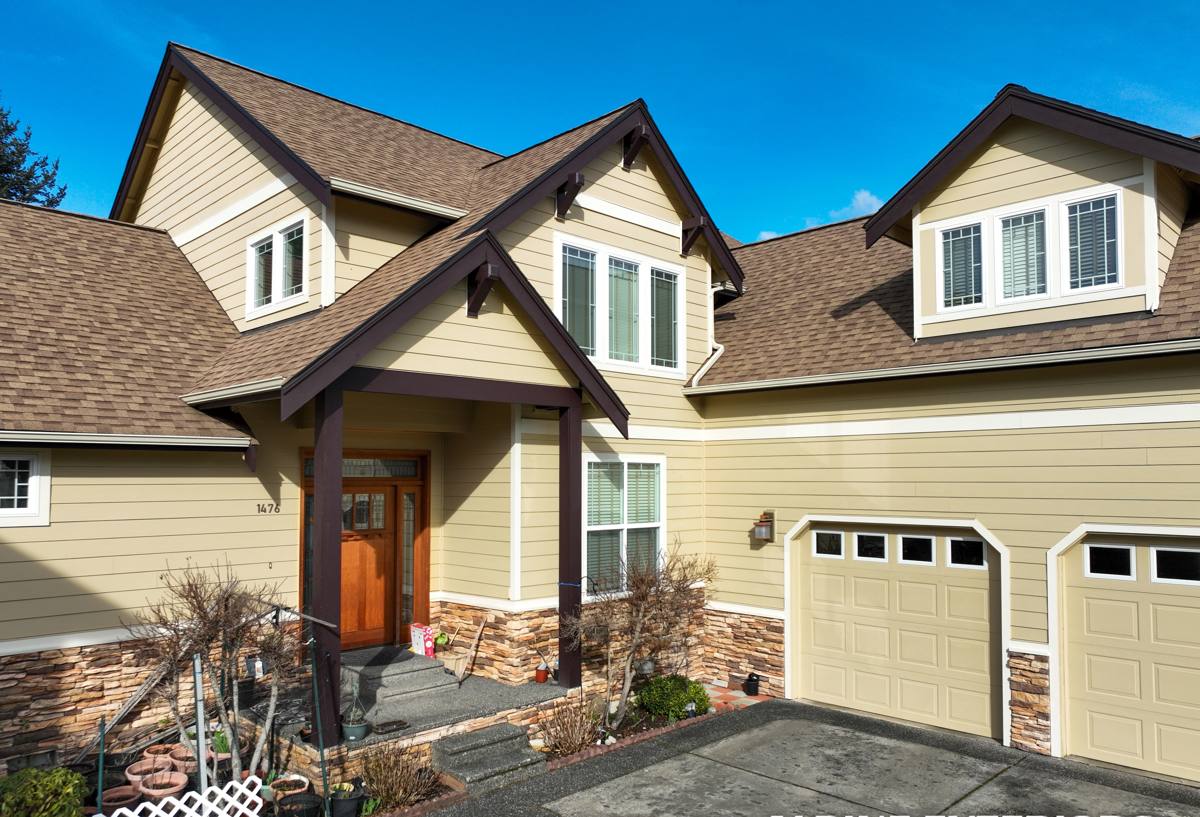
What Driving Rain and Salt Air Actually Do to a Window Over Time
It helps to understand the failure pattern, because it's consistent from house to house in this area.
Wind-driven rain finds the gaps
Ordinary rain falls straight down and mostly sheds off a wall. Wind-driven rain, which is common here, hits the wall at an angle and gets pushed into any gap, seam, or fastener hole it can find. Around a window, that means the top corners, the nailing flange, and any spot where old caulk has shrunk or cracked. Once water gets behind the exterior cladding, it can travel a long way before it ever shows up as a visible stain inside.
Salt-laden marine air accelerates corrosion and finish breakdown
Metal hardware, aluminum-clad exteriors, and even some vinyl formulations weather faster when the air carries salt. Hinges and locks stiffen or corrode. Painted wood trim chalks and fails sooner than the same product would in a drier inland climate.
Moss and algae hold moisture against the frame
A long moss season means organic growth gets a real foothold on north-facing walls, under eaves, and anywhere airflow is limited. Moss doesn't just look bad — it holds moisture against wood trim and caulk joints for weeks at a time, which is exactly the condition that leads to rot and seal failure.
Condensation signals a bigger problem
Persistent fogging or moisture between the panes of an insulated glass unit means the seal has failed and the argon gas (if there was any) is gone. That's not cosmetic — it's a sign the window has stopped performing and won't get better on its own.
Signs a Laurel-Area Home Needs Window Attention
- Fogging or moisture trapped between panes that doesn't clear
- Visible gaps, soft spots, or paint failure at the corners of the window trim
- Drafts you can feel near the frame even with the window fully closed and locked
- Windows that are hard to open, close, or lock — often a sign the frame has shifted or swollen
- Moss or dark staining building up along the sill or bottom trim
- Noticeably higher heating bills in winter with no other explanation
- Visible daylight or a whistling sound around the frame during windstorms
What a Correct Window Installation Actually Involves
Replacing a window looks simple from the outside — old one out, new one in — but the parts that determine whether it leaks in year three are mostly invisible once the trim goes back on. In a climate like this one, we don't skip steps that a drier region might get away with skipping.
Sill pan flashing
Every rough opening should have a sloped, sealed sill pan that directs any water that does get past the window back outside rather than letting it sit on bare framing. This is the single most common corner cut in budget installs, and it's the one that causes the most damage over time.
Proper flashing sequence with the water-resistive barrier
The house wrap or building paper has to integrate with the window flange in the right order — top flashing over the wrap, side and bottom flashing under it — so water is always shingled downward and outward, never trapped behind the cladding.
Backer rod and sealant, not caulk alone
Gaps around the frame need proper backer rod sized to the joint before sealant goes in. Sealant applied over an oversized gap without backing will crack and fail early, which is a common cause of the drafts and leaks we get called out to fix.
Correct shimming and fastening
A window that's out of square or under- or over-shimmed will bind, won't seal evenly, and puts stress on the glazing seals that shortens the life of the unit. Fasteners go where the manufacturer specifies, not wherever is convenient.
Interior and exterior finish work
Insulation in the gap between frame and rough opening (not stuffed too tight), interior trim reset cleanly, and exterior trim or brick mold sealed and painted or caulked to shed water.
Choosing the Right Window for This Climate
Frame material, glass package, and installation quality all matter, and none of them can compensate for a weak point in the other two. Here's how the common frame materials stack up for a home in Laurel's weather:
| Frame Material | Moisture & Salt-Air Performance | Maintenance | Typical Cost Position |
|---|---|---|---|
| Vinyl | Doesn't rot or corrode; performs well in wet, salt-influenced air | Low — occasional cleaning | Lower to mid-range |
| Fiberglass | Excellent — very stable in temperature and moisture swings, resists warping | Low | Mid to upper range |
| Wood (unclad) | Attractive but the most vulnerable to driving rain and prolonged moisture exposure without diligent upkeep | High — regular painting/sealing required | Mid to upper range |
| Aluminum-clad wood | Good exterior protection, but clad seams and hardware need monitoring in salt-influenced air | Moderate | Upper range |
We'll talk through the honest trade-offs for your home rather than push whatever has the best margin. For most Laurel-area homes dealing with regular wind-driven rain, vinyl or fiberglass frames with a well-executed install outperform wood on the exterior, simply because they don't depend on paint film integrity to stay watertight. If the look of real wood matters to you on the interior side, a wood-interior/clad-exterior unit can be the right compromise — we'll size that up honestly rather than assume it's automatically the better choice.
Glass packages worth asking about
Double-pane, low-E, argon-filled glass is the practical baseline for this climate — it manages both heat loss in winter and glare/heat gain in the brighter months. Triple-pane adds cost and weight and is worth discussing for north-facing rooms or homes closer to road noise, but it isn't automatically the right call for every opening.
How Our Installation Process Works
- On-site assessment. We look at each window opening individually — framing condition, existing flashing (if any is visible), signs of past water intrusion, and how exposed that wall is to prevailing wind and rain.
- Honest product recommendation. Based on that assessment and your budget, we recommend frame material and glass package, and explain the trade-offs plainly.
- Careful removal. Old windows come out without unnecessary damage to surrounding trim or siding, and we check the rough opening and framing for hidden rot before anything new goes in.
- Repair before install. If we find soft framing or old water damage, we address it before the new window goes in — installing a new window into a compromised opening just locks the problem behind new trim.
- Correct flashing and sill pan installation. This is the step that protects the investment for the next few decades, and it's non-negotiable regardless of how straightforward the job looks.
- Set, shim, and fasten to spec. Square, plumb, and level, with fasteners placed per manufacturer requirements.
- Seal and finish. Backer rod and sealant on the exterior, insulation and trim on the interior, and a final check that every sash operates and locks correctly.
- Walkthrough and cleanup. We show you the finished work, confirm operation on every window, and leave the site clean.
Why Hiring a Crew That Already Works the Laurel Area Matters
A crew that regularly works in Lynden and the surrounding Whatcom County communities has already seen how homes in this specific pocket of the county age. That's not a small thing. It means we recognize the difference between cosmetic moss staining and an actual moisture problem, we know which framing eras and construction styles tend to have flashing shortcuts baked in from a previous remodel, and we're not guessing at how a given product will hold up against a winter of driving rain because we've watched it happen on other homes nearby.
It also means practical things: we're not driving in from out of the area, we understand local permitting expectations, and we're accountable to a reputation in a community where word travels. If something needs a warranty callback, we're not far away.
What to Expect on Installation Day
- Work areas are protected with drop cloths and covers before removal begins
- Openings are never left uncovered overnight — weather protection goes up if a job spans more than one day
- Old windows and debris are hauled away as part of the job
- Each window is tested for smooth operation and a tight seal before we consider the job finished
- You get a walkthrough at the end, not just an invoice
Maintenance That Protects the Investment
A correctly installed window in the right material needs relatively little upkeep, but a little goes a long way in this climate. Rinse pollen, salt residue, and moss spores off frames a couple of times a year, especially on north- and west-facing walls that stay damp longest. Check and refresh exterior caulk lines every few years rather than waiting for a visible gap. Keep gutters and downspouts clear so runoff isn't sheeting directly down over window heads during heavy rain. None of this is complicated, but skipping it is how a well-installed window ends up with an avoidable problem a decade in.
Get a Straightforward Estimate
If you're dealing with drafty, foggy, or hard-to-operate windows in Laurel, or you're planning ahead before the next round of winter storms, we're happy to take a look and give you an honest read on what your home actually needs. There's no pressure and no hard sell — just a clear assessment and a fair price. Use the form below to request a free estimate.