 Lynden Exterior
 Why Maple Falls Roofs Wear Differently
Maple Falls sits in a part of Whatcom County where the roof over your head works harder than it does in drier climates. The combination of salt-laden air moving in off the Sound, long stretches of driving rain, and a moss season that can run most of the year puts steady, cumulative stress on asphalt shingles. None of it is dramatic on its own. It's the accumulation that causes problems: granule loss that speeds up in wet-dry cycling, fasteners that corrode faster in salt-influenced air, and moss colonies that lift shingle edges just enough to let water find a path underneath.
A shingle roof that's installed correctly for this climate and maintained on a reasonable schedule will handle all of this without drama for its full service life. A roof that's installed generically, without accounting for what Whatcom County weather actually does to a roof deck year over year, tends to show problems early — usually starting at the edges, valleys, and anywhere moss gets a foothold.
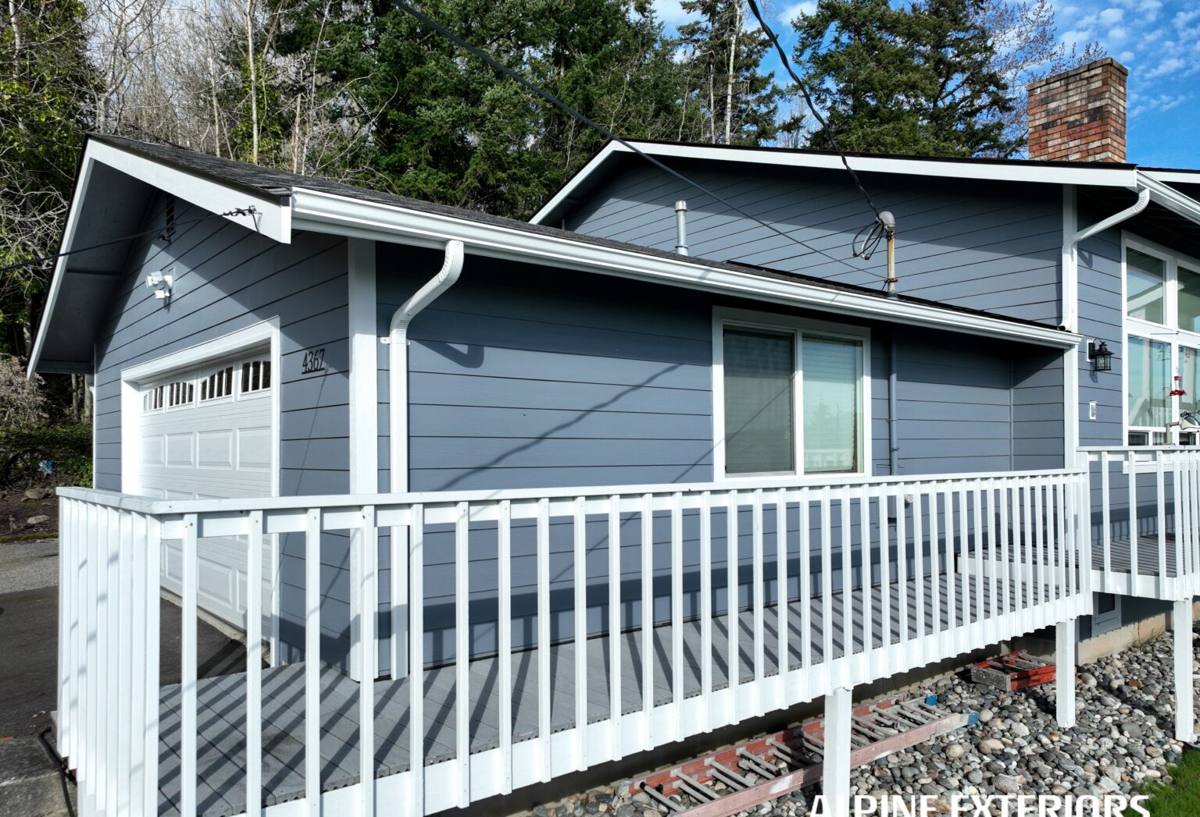
What a Correct Install Looks Like Here
Asphalt shingle roofing looks straightforward from the ground, but the parts you can't see from the driveway are what determine whether a roof holds up through a decade of Whatcom County winters. For Maple Falls homes specifically, we pay close attention to a handful of details that matter more here than they would in a drier, calmer climate:
- Underlayment quality: synthetic underlayment rated for extended wet exposure, not the cheapest felt option, since shingles alone are not the actual waterproofing layer.
- Ice-and-water shield at eaves, valleys, and around every penetration — the spots where driving rain and wind-driven water most often find a way in.
- Starter strip and drip edge installed correctly at the eaves and rakes, so wind-driven rain can't work its way under the first course.
- Nailing pattern and fastener choice matched to the shingle manufacturer's spec, using fasteners suited for a salt-influenced, high-humidity environment.
- Valley treatment that sheds water cleanly instead of trapping it against moss or debris.
Skipping any one of these doesn't usually cause an immediate failure. It shows up two, five, or eight years later as a leak that seems to come from nowhere, when really it came from a corner that was cut on day one.
Signs a Maple Falls Roof Needs Attention
Because this area gets a long moss season and frequent rain rather than dramatic storm events, roof problems here tend to develop slowly and quietly. Homeowners are often surprised by how much damage builds up before it becomes visible from the ground. Watch for:
- Moss or dark streaking building up along shaded slopes or north-facing sections of the roof
- Granules collecting in gutters or at downspout outlets
- Shingle edges that look curled, lifted, or cupped, especially near valleys
- Soft spots or sagging visible along the roofline
- Water stains on interior ceilings, especially after a stretch of heavy rain
- Daylight visible through the roof deck from inside an attic space
Any one of these on its own doesn't necessarily mean a full replacement is needed. But it does mean the roof should be looked at before the next wet season, since problems left alone through another rainy stretch tend to compound quickly.
Choosing the Right Shingle for This Climate
Not every asphalt shingle product is built the same way, and the differences matter more in a climate like this one than they would somewhere dry. We generally steer homeowners toward algae-resistant, higher-wind-rated shingle lines for Maple Falls roofs, because the upgrade cost is modest relative to how much longer the roof stays clean and tight.
| Shingle Tier | Typical Lifespan | Moss/Algae Resistance | Best Fit |
|---|---|---|---|
| 3-Tab / Economy | 15–20 years | Standard, requires more frequent cleaning | Budget-driven projects, outbuildings, rentals |
| Architectural / Dimensional | 25–30 years | Often includes algae-resistant granules | Most primary residences in this climate |
| Premium Architectural | 30+ years, stronger wind rating | Enhanced algae-resistant granule treatment | Homes with heavy shade, tree cover, or moss history |
The moss and algae resistance built into mid- and upper-tier shingles is a copper- or zinc-infused granule treatment, not a coating that wears off after a season or two. For a property with significant tree cover or shaded roof slopes, that upgrade tends to pay for itself in fewer cleanings and a longer-looking roof over time.
A Note on Product Choice
We install asphalt shingle systems because, done correctly, they offer a strong balance of cost, durability, and repairability for this climate. We're selective about which manufacturer lines we install, based on how well their warranty structure, algae-resistant granule technology, and wind ratings hold up to real Whatcom County weather — not on brand marketing. Happy to walk through the specific options and trade-offs during an on-site estimate.
Our Process, Start to Finish
Every roof project on a Maple Falls property follows the same basic sequence, adjusted for the specific slope, age, and condition of the home:
- On-site assessment: we look at the roof deck condition, ventilation, flashing, valleys, and any moss or moisture issues before quoting anything.
- Written estimate: a clear scope covering tear-off (if needed), underlayment, ice-and-water shield placement, shingle selection, and flashing work — no vague line items.
- Tear-off and deck inspection: old material comes off down to the deck, and any soft or damaged sheathing gets flagged and addressed before anything new goes down.
- Underlayment and flashing: ice-and-water shield at vulnerable areas, synthetic underlayment across the field, new flashing at valleys, chimneys, and penetrations.
- Shingle install: installed to manufacturer spec for nailing pattern, exposure, and fastener type.
- Cleanup and walkthrough: magnetic sweep for stray fasteners, debris removal, and a final walkthrough so you know exactly what was done.
We don't skip the deck inspection step, even on roofs that look fine from above. A shingle roof is only as good as the surface it's fastened to, and catching a soft spot during tear-off is far cheaper than dealing with it after the fact.
Ventilation and Moisture: The Part You Don't See
In a climate with this much sustained moisture, attic ventilation isn't optional — it's part of what protects the shingles from underneath. Poor airflow traps humid air against the roof deck, which shortens shingle life, encourages moss and mildew, and can lead to rot in the sheathing itself over time. When we replace a roof, we check intake and exhaust ventilation as part of the job, not as an upsell afterthought. A roof can be installed perfectly on the outside and still fail early if the attic underneath it can't breathe.
Maintenance That Actually Extends Roof Life
A well-installed shingle roof in Maple Falls doesn't need constant attention, but a little seasonal upkeep goes a long way given how long the moss and rain season runs here. A simple annual routine:
- Clear gutters and downspouts before the fall rains start in earnest
- Have moss growth treated or gently removed before it spreads across a slope — never pressure-washed, which strips granules
- Trim back overhanging branches to reduce shade and debris buildup on the roof
- Do a visual check from the ground after any major windstorm
- Schedule a professional inspection every few years, or sooner if you notice granule loss or interior stains
None of this requires getting on the roof yourself, and that's intentional — most of it can be done safely from the ground or handled during a routine service visit.
Cost Factors for a Maple Falls Roofing Project
Every roof is priced based on its own specifics, but the main variables that move the price on most Maple Falls jobs are consistent:
| Factor | Why It Matters |
|---|---|
| Roof size and pitch | Steeper roofs take longer and require more safety setup |
| Layers of existing shingles | Extra tear-off time and disposal cost if multiple layers are present |
| Deck condition | Soft or rotted sheathing found during tear-off adds material and labor |
| Shingle tier chosen | Economy vs. architectural vs. premium algae-resistant lines |
| Access and site conditions | Tree cover, driveway access, and staging space affect labor time |
| Flashing and ventilation scope | Chimneys, skylights, and vent upgrades add material and detail work |
We'd rather walk your specific roof and give you real numbers than quote a broad range that doesn't mean much until we've actually seen the deck.
Why a Crew That Already Works Maple Falls Matters
A roofing crew that's worked regularly in this specific part of Whatcom County has already seen how moss actually spreads on a shaded slope, how driving rain finds the weak points in a valley, and how salt-influenced air treats exposed fasteners over the years — not in theory, but on roofs a few minutes from yours. That familiarity shows up in small decisions: which underlayment to spec, how much ice-and-water shield to use at a given valley, which shingle line holds up best under heavy tree cover. It's the difference between a roof that's built to a generic spec sheet and one that's built for the weather it will actually face.
If you're weighing a repair, a full replacement, or just want an honest read on how much life is left in your current roof, we're glad to come take a look. The estimate is free, there's no pressure attached to it, and you'll walk away with a clear picture of your options — just fill out the form below to get started.