 Lynden Exterior
 Siding Built for What Maple Falls Weather Actually Does to a House
Maple Falls homes sit in a stretch of Whatcom County that doesn't get a break from moisture. Between driving rain off the water, salt-laden marine air, and a moss season that can stretch through most of the year, exterior siding here works harder than it does almost anywhere else in Washington. Fiber cement siding, installed correctly, is one of the few materials that holds up to that combination year after year without turning into a maintenance project. This page covers what that means specifically for a Maple Falls home, what a correct installation actually involves, and why the product we install — James Hardie, and only James Hardie — is the standard we hold ourselves to.
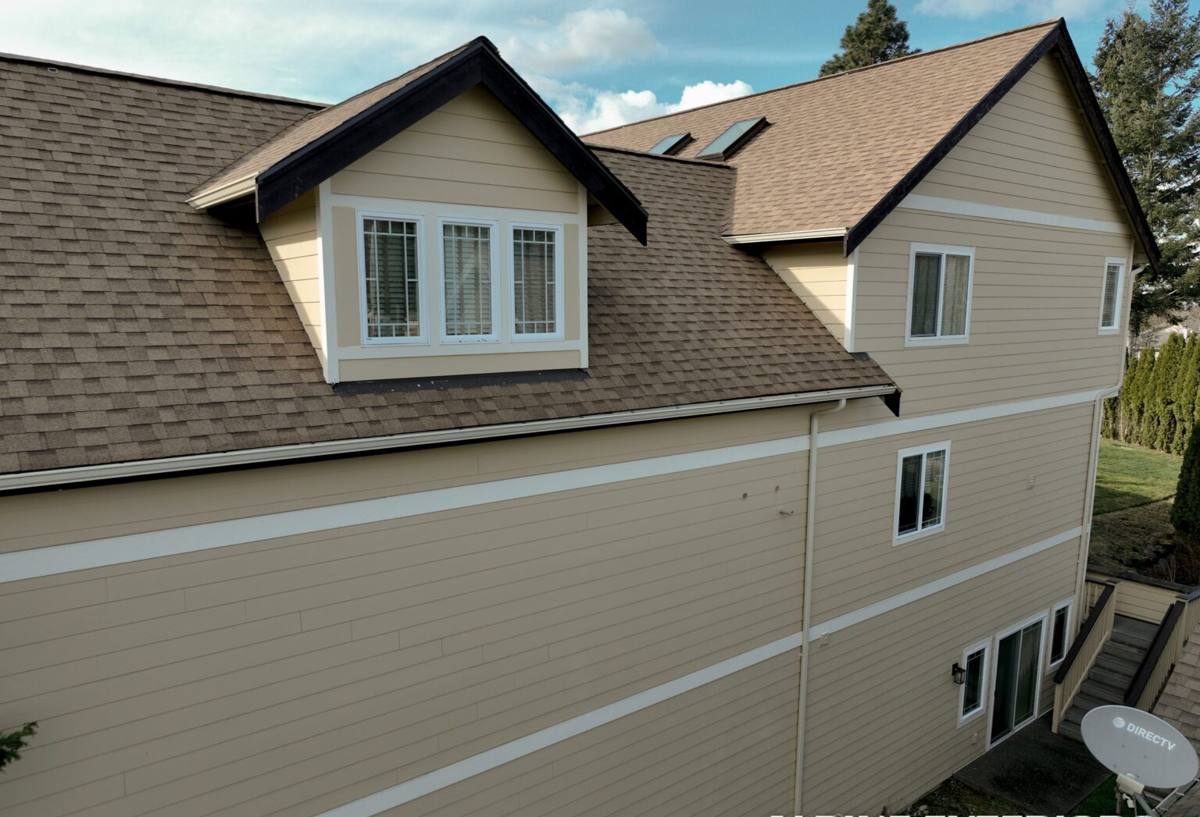
What the Local Climate Does to Exterior Siding
Driving rain and wind-driven moisture
Rain in this part of Whatcom County rarely falls straight down. Wind pushes it sideways into wall assemblies, seams, and trim joints, which means siding isn't just shedding water off a flat surface — it's resisting moisture that's actively being forced into every gap, lap, and fastener hole. Materials that swell, warp, or wick water when saturated lose their fight against this pattern fast. Siding that doesn't manage water at the seams eventually lets it behind the cladding, where it causes rot in sheathing and framing long before anyone notices a problem on the surface.
Salt-laden marine air
Proximity to the Salish Sea means the air carrying that rain also carries salt. Salt exposure accelerates corrosion on fasteners, flashing, and any metal trim components, and it degrades certain paint and coating systems faster than inland climates would. Siding materials and finish systems that aren't formulated to handle a marine-influenced environment can chalk, fade, or fail at the finish level well before the substrate itself gives out.
A long moss and algae season
Shade from tree cover combined with near-constant dampness gives moss and algae a long growing window on north-facing and shaded wall sections. Porous or organic siding materials give moss something to root into over time, and constant surface moisture feeds mildew and algae staining. Siding that resists moisture absorption at the surface stays cleaner longer and doesn't give growth anything to hold onto.
Why We Only Install James Hardie Fiber Cement
We've made a deliberate decision not to install vinyl, LP SmartSide, cedar, or other fiber cement brands like Allura or Cemplank. That's not marketing — it's a standard we hold because of what this climate does to lesser-suited products over a 20- or 30-year timeline.
Engineered for this exact climate zone
James Hardie manufactures regionally engineered product lines, and the HZ5 line is formulated specifically for the cold, wet Pacific Northwest climate zone that includes Whatcom County. That means the fiber cement formulation itself accounts for the freeze-thaw cycles, sustained moisture exposure, and humidity levels we actually get here, rather than a one-size-fits-all national product.
Non-combustible
Fiber cement is a non-combustible material, which matters for insurance considerations and general peace of mind, and it doesn't attract the pests that go after wood-based siding products.
Factory-applied ColorPlus finish
Rather than relying on field-applied paint that has to cure correctly on-site and gets re-coated every several years, Hardie's ColorPlus finish is baked on at the factory under controlled conditions. It resists fading and chipping better than site-applied paint and carries its own finish warranty separate from the product warranty. In a climate with this much rain and UV cycling, a factory finish that doesn't depend on perfect field conditions to perform is a real advantage.
A transferable warranty that reflects confidence in the product
Hardie backs its siding with a long-term, transferable limited warranty. That transferability matters to resale value — a future buyer inherits real warranty coverage, not just a product that looked good at installation.
What a Correct Fiber Cement Installation Actually Involves
Fiber cement siding is only as good as the installation behind it. The material can be excellent and still fail early if the assembly beneath it is done wrong — this is the single biggest factor separating a 30-year installation from one that causes problems in five.
- Water-resistive barrier: A correctly lapped and sealed weather barrier goes behind the siding, not just under it, so any moisture that does get past the cladding has a path to drain and dry rather than sitting against the sheathing.
- Proper flashing at every penetration: Windows, doors, hose bibs, vents, and any other wall penetration need flashing detailed to shed water outward, not just caulked over — caulk is a backup, not a primary defense.
- Correct clearances and gapping: Hardie specifies minimum gaps between siding and roof lines, decks, and grade, along with expansion gaps at butt joints, so the material can move seasonally without buckling or trapping moisture.
- Fastener pattern and type: Corrosion-resistant fasteners, driven to the manufacturer's specified depth and pattern, are essential in a salt-air environment — overdriven or under-driven fasteners are a common cause of premature siding problems.
- Caulking at the right joints only: Not every seam should be caulked — some are designed to allow drainage. Sealing the wrong joints traps water instead of letting it escape.
When any one of these steps is skipped or rushed, the siding itself takes the blame for what's really an installation failure. That's why we treat installation quality as the deciding factor in how long a job lasts, not just the product on the truck.
Comparing Siding Options for a Maple Falls Home
| Material | Moisture performance in this climate | Maintenance burden | Typical lifespan when installed to spec |
|---|---|---|---|
| James Hardie fiber cement | Engineered for wet, marine-influenced climates; resists moss and moisture absorption | Occasional wash; factory finish reduces repainting cycles | 30+ years |
| Vinyl siding | Sheds water but can warp, buckle, or gap at seams over time | Low, but cracks and fades with UV exposure and can trap moisture behind panels | 15-25 years |
| LP SmartSide (engineered wood) | Wood-based core is more vulnerable to sustained moisture than cement composite | Requires consistent caulk and paint maintenance to prevent moisture intrusion | Varies widely with maintenance |
| Cedar or primed spruce | Natural wood absorbs moisture readily; needs the finish to stay intact to perform | High — regular refinishing, sealing, and moss/mildew treatment | Highly dependent on upkeep |
This table reflects general product behavior, not claims about any specific manufacturer failing. Every material on this list can perform reasonably when installed and maintained correctly — the difference is how much ongoing attention that takes, and how forgiving the material is of a wet, salt-influenced climate when maintenance slips.
Our Installation Process
- On-site assessment: We walk the home, check existing siding and sheathing condition, and identify problem areas — shaded north walls, low-clearance sections near grade or decks, and existing moisture damage.
- Tear-off and substrate inspection: Old siding comes off and we inspect the sheathing underneath for rot or damage before anything new goes up. Damaged sheathing gets replaced, not covered over.
- Weather barrier and flashing installation: We install and lap the water-resistive barrier correctly and detail flashing at every window, door, and penetration before siding goes on.
- Hardie installation to manufacturer spec: Siding is installed with correct gapping, fastener pattern, and joint treatment specific to the product line and this climate zone.
- Trim, caulking, and final detailing: Trim work and caulking are finished at the joints that call for it, and the rest are left to drain as designed.
- Walkthrough and cleanup: We walk the finished job with the homeowner and clean the site thoroughly before we leave.
Maintenance Checklist for Fiber Cement Siding in This Climate
- Rinse siding annually, especially shaded and north-facing walls where moss and algae are more likely to establish
- Check caulked joints around windows and doors each fall for cracking or separation before winter rains set in
- Keep gutters clear so overflow doesn't run down the siding face repeatedly
- Trim back vegetation and tree cover that keeps wall sections shaded and damp longer than the rest of the house
- Look at fastener heads and trim edges periodically for early signs of corrosion staining
- Address any visible caulk failure or gap promptly rather than waiting for a full maintenance cycle
Why Hiring a Crew That Already Works in Maple Falls Matters
A siding crew that regularly works Maple Falls and the greater Lynden area already understands how this specific climate behaves on a wall — which sides of a house take the worst of the driving rain, how long moss actually takes to establish on a shaded elevation here, and what Whatcom County permitting and inspection expects for exterior work. That local familiarity shows up in the details: correct clearances for this rainfall pattern, flashing choices suited to salt exposure, and a realistic sense of which parts of a home need the most attention. A crew installing siding here for the first time is guessing at some of that. A crew that works this area regularly isn't.
Get a Free, No-Pressure Estimate
If your Maple Falls home's siding is showing moss, staining, cracked caulk, or you're planning ahead for a replacement, we're happy to take a look and walk you through what James Hardie fiber cement siding would involve for your specific home — no pressure, no hard sell. Use the form below to request a free estimate.