 Lynden Exterior
 Acme sits out in the rural country in the Nooksack valley that we serve out of Lynden, the kind of setting where a new house is often more exposed to weather than one packed into a tighter subdivision — more open sky, more wind, fewer neighboring rooflines to take the first hit. When a home is being framed up out here, the windows going in during that build are one of the few parts of the house that only get installed once under ideal conditions. Get the flashing and sequencing right while the wall is still open, and the windows perform for decades. Get it wrong, and the mistake gets buried behind siding and trim until it shows up as a stain on drywall years later.
We install new-construction windows on homes going up in and around Acme, working directly with builders and framers rather than showing up after the fact to patch someone else's shortcut. The climate here is the same marine-influenced system that shapes exterior work across Whatcom County — salt-tinged air moving in off the Sound, driving rain that doesn't fall straight down, and a wet season long enough to keep moss and algae established on anything that stays damp. New construction is the one point in a home's life where a window installer can build in real resistance to all three, instead of working around whatever's already there.
What Whatcom County's Climate Asks of a New Window Install
None of this is unique to Acme — it's the weather pattern the whole county lives with — but it matters more on a new build because every detail is still a decision, not a repair.
Wind-Driven Rain and Flashing
Rain in this part of Washington rarely falls straight down. Wind pushes it sideways into wall openings, up under sills, and around any flashing lap that isn't shingled the right direction. A window opening built for a calmer climate — flat sill, minimal head flashing, sealant standing in for real drainage — will eventually let water past the frame. On a new build, we control that from the rough opening out, before the window ever goes in.
A Long Wet Season and Moss
Whatcom County's mild, damp stretch of the year runs long, and any surface that stays shaded or slow to dry ends up hosting moss and algae eventually. On a window, that usually shows up on sills and lower frame edges that don't get sun or airflow. It's mostly a maintenance and appearance issue, but it's also a signal — a sill that stays wet long enough to grow moss is a sill that isn't draining the way it should.
Marine Air and Material Fatigue
The same marine air that carries moisture inland also carries a fair amount of salt, and salt-laden air accelerates corrosion on fasteners, hinges, and lesser hardware over time. It's a slower process than what a waterfront home deals with, but it's still real, and it's one more reason we pay attention to hardware quality and weatherstripping durability rather than treating every window as interchangeable.
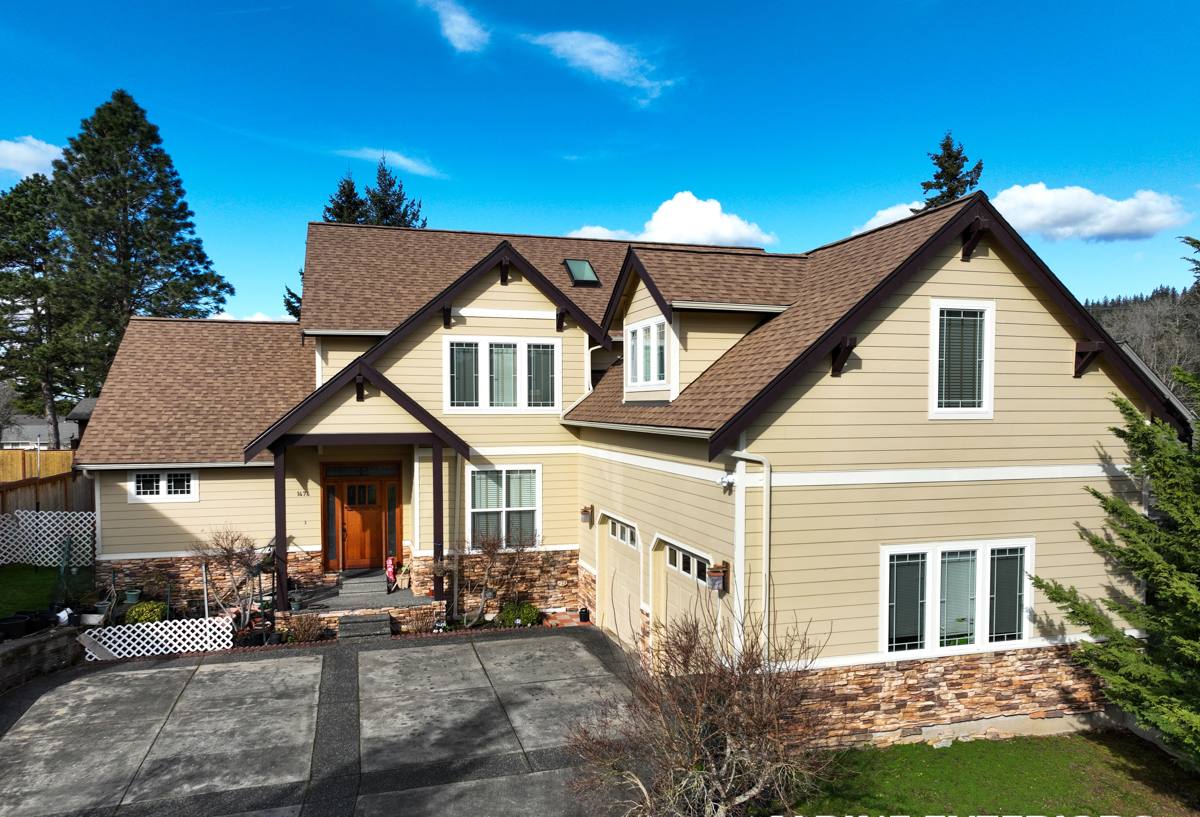
New Construction vs. Replacement: Why the Job Is Different
A lot of what people know about window installation comes from replacement work — pulling an old unit out of an existing, sided wall and fitting a new one into the same opening. New construction is a different job with a different set of risks.
One Shot at the Flashing Sequence
On a new build, the window goes in before the siding, sometimes before the weather-resistive barrier is fully lapped over the top of the opening. That means the flashing sequence — sill pan, side flashing, window unit, head flashing, WRB integration — has to happen in the right order, correctly shingled so each layer sheds water onto the layer below it. There's no siding to hide a mistake and no easy way to inspect it again once the wall is closed up. It has to be right the first time.
Working Inside Someone Else's Schedule
New-construction window work happens inside a builder's timeline, which means coordinating around framing inspections, the WRB going up, and whatever else is happening on site that week. Windows that show up early sit exposed to weather before the opening is ready; windows that show up late hold up the framers waiting to close in the wall. We work directly with the builder or general contractor to land the install at the right point in the schedule, not just whenever the truck happens to arrive.
What a Correct New-Construction Window Installation Involves
The steps themselves aren't a secret — most of them are standard practice. What separates a good install from one that leaks in five years is whether every step actually gets done, in order, on every opening, not just the ones someone happens to check.
- Rough opening checked for correct size, square, and plumb before the window ever gets set
- Sill pan flashing installed to shed any water that gets past the window back to the exterior
- Weather-resistive barrier integrated in proper shingle-lap order — never taped over a gap or reversed
- Window set plumb, level, and square, then fastened per the manufacturer's schedule, not just "close enough"
- Side and head flashing lapped correctly over the WRB so water is directed out and down, never trapped behind it
- Backer rod and appropriate sealant at the exterior joint — sealant is a backup to good flashing, not a substitute for it
- Insulation in the gap between frame and rough opening, without overpacking it to the point of bowing the frame
- Interior air seal completed before trim goes on, to control drafts and condensation risk
Skip or shortcut any one of these on a new build and the failure doesn't show up at the final walkthrough — it shows up two, five, or ten years later as a soft spot in the sill or a stain creeping down the interior wall.
Choosing Window Frame Materials for a New Build Here
Frame material matters more in a wet, marine climate than it does somewhere drier, because the frame is what's absorbing the daily cycle of rain, humidity, and occasional sun. There's no single right answer for every home — it depends on budget, the look you're after, and how much upkeep you want to take on.
| Frame Material | Moisture Behavior | Maintenance | Typical Cost Position |
|---|---|---|---|
| Vinyl | Doesn't rot or corrode; performance depends on weld and reinforcement quality | Low | Entry to mid |
| Fiberglass | Very stable in wet-dry cycling; minimal expansion or contraction | Low | Mid to upper |
| Aluminum-clad wood | Exterior face resists weather well; interior wood offers warmth and finish options | Moderate — interior wood still needs normal upkeep | Upper |
| Bare wood | Attractive but absorbs moisture at any exposed or damaged finish point | Highest — regular refinishing needed in this climate | Upper |
On new construction specifically, we also look at how each frame material handles the fastening and flashing details in the rough opening, since some composite and clad products have specific manufacturer requirements for how they're integrated with the WRB. We'll walk through what fits your build and your budget rather than pushing one product for every job.
Energy Code, Ratings, and Egress — the Numbers That Matter
Washington's state energy code sets minimum performance requirements for new-construction windows, and the numbers on the label aren't marketing — they're what the building department checks against.
- U-factor measures how well a window resists heat loss — lower is better, and it's the number the energy code cares about most
- Solar heat gain coefficient (SHGC) measures how much solar heat passes through — relevant for window orientation and room use
- NFRC label is the independent rating sticker that verifies both numbers rather than relying on a manufacturer's own claim
- Egress requirements apply to bedroom windows — minimum opening size and sill height are code minimums, not suggestions
We size and spec windows to meet code for the specific room and orientation, and we can walk you through what the numbers on your quote actually mean instead of just handing you a spec sheet.
How We Work With Builders and Framers in Acme
New-construction window work is a coordination job as much as an installation job. We show up on a schedule set with the builder, confirm rough openings match the window order before anything is set, and communicate directly with the framing crew when an opening needs adjustment rather than forcing a window to fit a hole that's slightly off. Once windows are in, we document the flashing and sealing work before the WRB and siding close it in, since that's the last point anyone gets a clear look at those details.
Why a Crew That Already Works This Area Matters
A window installer who's only ever worked in a drier climate can do everything "by the book" and still miss the details that matter here — the extra attention a sill pan needs when the wet season runs half the year, or how much lap and overlap is enough when rain routinely comes in sideways. We work new-construction jobs throughout the Acme area and the rest of the Lynden countryside, and that means the flashing sequence, the material choices, and the schedule coordination are all built around what actually happens to a house here, not around a generic install guide written for somewhere else.
If you're framing a new home in Acme or already have windows on order, we're happy to walk the site, look at the plans, and give you a straightforward, no-pressure estimate for the window package and installation — just fill out the form below to get started.