 Lynden Exterior
 Window Replacement Built for Nooksack's Climate
Nooksack sits in the flat, river-bottom farmland east of Lynden, and homes out here take a different kind of weather beating than a house tucked into town. The air off the Strait carries a fine salt tinge that works on metal hardware year-round, driving rain comes in sideways during winter storms, and the shade and dampness that settle over this part of Whatcom County keep moss growing on north- and west-facing surfaces for most of the year. Windows are one of the first places all of that shows up. A sill that looks fine in July can be soft by February, and hardware that operated smoothly last spring can seize or corrode by fall.
This page is about window replacement specifically for homes in and around Nooksack — what the local climate does to windows over time, what a correct replacement job actually involves, and why the crew doing the work matters as much as the window itself.
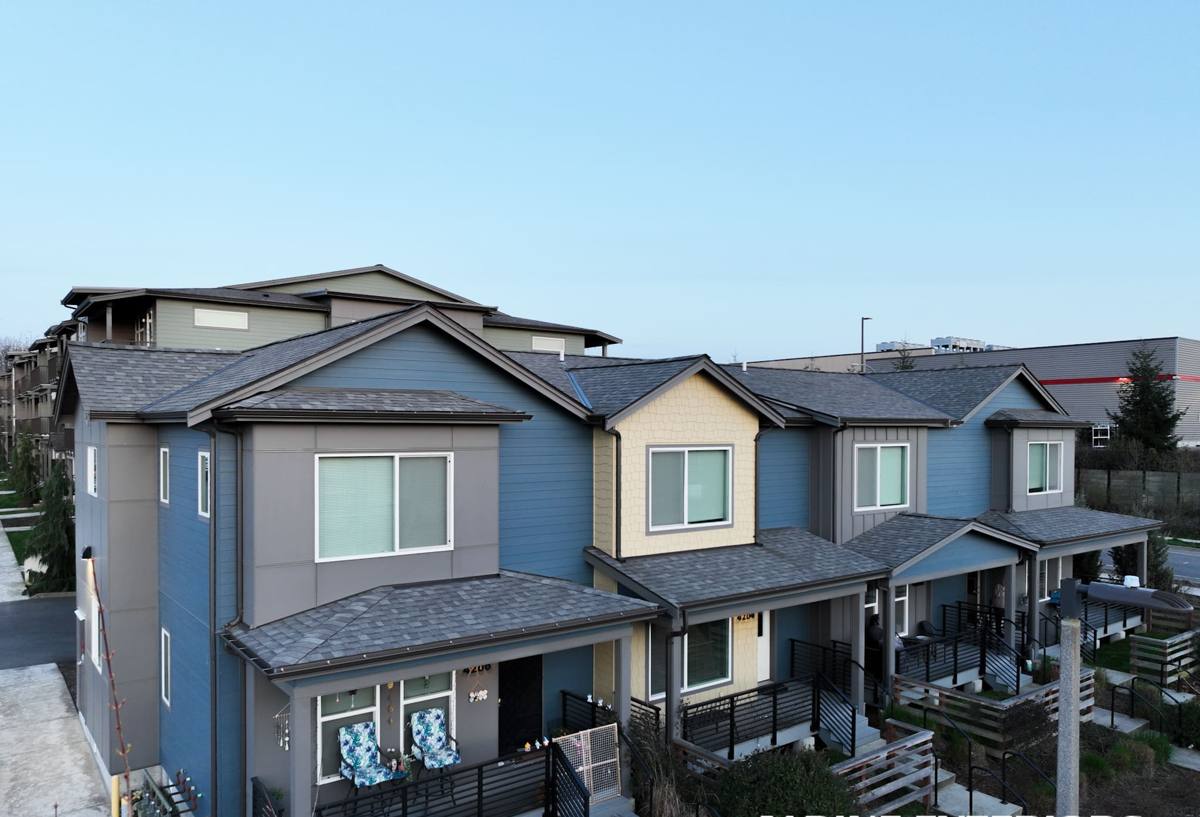
What the Local Climate Actually Does to Windows
Salt-tinged marine air
Whatcom County's marine-influenced air carries enough salt and moisture to accelerate corrosion on window hardware — hinges, cranks, balance mechanisms, and weep system covers — faster than it would in a drier inland climate. Aluminum frames and older steel hardware are especially prone to this. Once corrosion sets in on a moving part, the window stops sealing tightly even when the glass itself is fine.
Driving rain
Rain that comes in at an angle, pushed by wind, tests a window installation in a way that straight-down rain never does. It gets behind trim, finds gaps in flashing, and works its way into wall cavities that were never designed to handle standing moisture. Most water intrusion problems we find during a replacement aren't from the glass unit failing — they're from flashing and sealant details that were never right in the first place, or that have simply worn out after years of driving rain.
Long moss season
Moss doesn't just grow on roofs here. It establishes on window sills, in corners of frames, and on nearby trim and siding, and it holds moisture against wood and painted surfaces long after the rain has stopped. That constant dampness is what turns a small paint failure into soft, rotting wood over a season or two. Homes with mature trees or north-facing exposure — common around Nooksack's rural lots — see this faster than homes in the open.
Signs a Nooksack Home's Windows Need Attention
Most homeowners don't replace windows on a schedule — they replace them when something starts to fail. Here's what we tell people to watch for between now and their next full inspection:
- Fogging or a hazy film trapped between panes — the seal has failed and the gas fill is gone
- Soft, spongy, or discolored wood at the sill, corners, or exterior trim
- Moss or dark staining building up on the frame or the siding directly around a window
- Noticeable drafts or a cold patch of wall near the window in winter
- Windows that are hard to open, close, or latch, or that no longer stay up on their own
- Condensation forming on the inside of the glass regularly, not just on the coldest mornings
- Visible daylight or gaps where trim meets the wall or window frame
Any one of these on its own might just need a repair. Several of them together, especially on a home's older or original windows, usually means replacement is the more honest answer than another round of caulk and touch-up paint.
What a Correct Window Replacement Job Involves
The window product matters, but the installation is what determines whether that window performs for twenty years or fails again in five. In a climate that pushes rain sideways and keeps humidity high most of the year, the details matter more than they would somewhere drier.
Careful removal and opening inspection
Old windows come out without tearing up the rough opening. That exposes the sheathing and framing underneath, which is the only real chance to see whether moisture has already gotten into the wall — something that's common on older Nooksack homes where flashing details were never quite right to begin with. Any soft or rotted framing gets addressed before a new window ever goes in. Installing a new window into a wet or rotted opening just hides the problem behind a fresh frame.
Sill pan flashing
A sill pan creates a sloped, waterproofed pocket at the bottom of the opening so any water that does get past the window has somewhere to go — out, not into the wall. This is one of the most commonly skipped steps on lower-effort installs, and it's exactly the detail that matters most in a driving-rain climate.
Integration with the weather-resistive barrier
Flashing tape and trim need to shingle correctly with the house wrap or building paper already on the wall — upper pieces overlapping lower pieces — so water sheds down and out rather than working its way behind the layers. Done backwards, it actively channels water into the wall instead of away from it.
Shimming, squaring, and sealing
The window gets shimmed level, plumb, and square before fastening, then insulated with low-expansion foam and backer rod rather than packed solid with caulk. A window that's slightly out of square will bind, won't latch fully, and won't seal evenly around its perimeter — which shortens the life of both the hardware and the seals.
Interior and exterior finish work
Trim goes back cleanly, exterior caulk joints get finished to shed water, and interior surfaces are protected and cleaned up before we consider the job done.
Choosing the Right Window for a Nooksack Home
There isn't one "best" window for every house — it depends on the home's age, exposure, and budget. Here's how the common frame options compare for a climate like this one:
| Frame Material | Moisture Resistance | Maintenance | Best Fit |
|---|---|---|---|
| Vinyl | Very good — won't rot or corrode | Low; occasional cleaning | Most homes wanting solid performance at a reasonable cost |
| Fiberglass | Excellent — very stable in wet, temperature-swinging conditions | Low | Homes wanting a longer-term, lower-movement frame, often at a higher price point |
| Wood-clad | Good on the exterior clad side; interior wood still needs care | Moderate to higher | Homes prioritizing a traditional wood interior look |
| Aluminum | Weaker in salt-influenced, high-moisture air; prone to corrosion and condensation | Higher over time | Generally not what we recommend for this climate on new installs |
On glass, dual-pane with a low-E coating and argon gas fill is the standard, cost-effective choice for most homes here and performs well against both the temperature swings and the driving rain. Triple-pane adds meaningful extra insulation and sound dampening for homes closer to busier roads or with rooms that run cold in winter, but it comes at a higher cost and added weight on the frame and hardware — worth discussing based on the specific room and exposure rather than assuming it's always the better upgrade.
Our Process, Start to Finish
- On-site assessment. We look at the actual condition of each window and opening, not just the glass — sills, trim, and framing included.
- Product selection. We walk through frame material, glass package, and style options based on the home and the budget, with no pressure toward the most expensive option.
- Written estimate. Clear scope and pricing before any work is scheduled.
- Scheduling around weather. Given how much rain this area sees, we plan install days with the forecast in mind and protect openings during the work.
- Removal and structural check. Old windows come out, openings get inspected, and any needed repairs are flagged before proceeding.
- Installation and sealing. Sill pan flashing, correct shimming, and proper integration with the wall's weather barrier — every time, not just when it's convenient.
- Finish and cleanup. Trim, caulking, and a full site cleanup so the job doesn't leave a mess behind.
- Walkthrough. We go over the finished windows with the homeowner and cover warranty and care information before we consider the job complete.
What Affects the Cost of a Window Replacement
Every home is different, so exact numbers depend on a walk-through, but these are the factors that move the price up or down most:
| Factor | Why It Matters |
|---|---|
| Number and size of windows | More openings and larger units mean more material and labor |
| Frame material | Vinyl, fiberglass, and wood-clad sit at different price points |
| Glass package | Triple-pane and specialty coatings cost more than standard dual-pane low-E |
| Condition of the existing opening | Rotted framing or sheathing found during removal adds repair work |
| Access and height | Second-story or hard-to-reach windows take more time and equipment |
| Trim and finish complexity | Custom or non-standard trim profiles add labor |
We'd rather give a homeowner an honest range and explain what drives it than throw out a number that doesn't hold up once we're actually into the opening.
Why Hiring a Crew That Already Works in Nooksack Matters
A window replacement crew that's worked this specific area knows what to expect before the first window comes out. They know that flashing has to account for wind-driven rain, not just straight-down rainfall. They know moss and moisture around older frames often means checking the sill and framing more carefully than a quick visual would suggest. They're also familiar with the mix of older farmhouse-style construction and newer builds common in this part of Whatcom County, which affects how openings were originally framed and flashed.
That local experience shows up in fewer surprises during the job and a lower chance of callbacks for leaks or seal failures down the road — because the install was done right for this climate the first time, not for a generic one.
Caring for New Windows After Installation
A correctly installed window still benefits from a little seasonal attention in this climate:
- Keep weep holes along the bottom of the frame clear of dirt and debris so water can drain out as designed
- Address any moss building up on nearby siding or trim before it spreads onto the window frame itself
- Wipe down tracks and hardware periodically — the same salt-influenced air that affected the old windows will slowly affect new hardware too, just much more slowly with modern materials
- Avoid pressure washing directly at window seals and caulk lines, which can drive water into joints that are otherwise doing their job
- Do a quick visual check each fall before the rainy season ramps up, looking for any new gaps, soft spots, or caulk that's pulled away
None of this is heavy maintenance — it's a few minutes a couple of times a year that keeps a proper installation performing the way it's supposed to.
Get a Free, No-Pressure Estimate
If your windows in Nooksack are fogging, drafty, sticking, or just showing their age, we're happy to take a look and give you an honest read on whether repair or replacement makes more sense. Use the form below to request a free estimate — no pressure, just a straight answer based on what we actually see at your home.