 Lynden Exterior
 Why Nooksack-Area Homes Wear Out Siding Faster Than You'd Expect
Homes around Nooksack sit in one of the wetter, more moisture-persistent corners of Whatcom County. Storms roll in off the Salish Sea and stack up against the foothills to the east, dropping long stretches of driving rain rather than quick passing showers. That rain doesn't just fall straight down — wind-driven rain gets pushed sideways into wall assemblies, working its way behind poorly lapped siding, degraded caulk joints, and old nail penetrations that have opened up over the years.
Add in the tree cover and shade that much of this area enjoys, and you get long stretches where siding simply doesn't dry out between storms. That's the setup for moss and algae growth, which isn't just cosmetic — it holds moisture against the siding surface for weeks at a time. Combine that with the mild, damp air that carries salt influence up from the coast, and you have a climate that's genuinely tough on lower-grade siding materials. We see the results in Nooksack more than in drier parts of the state: swollen bottom edges, delaminating panels, soft trim, and paint that fails years ahead of schedule.
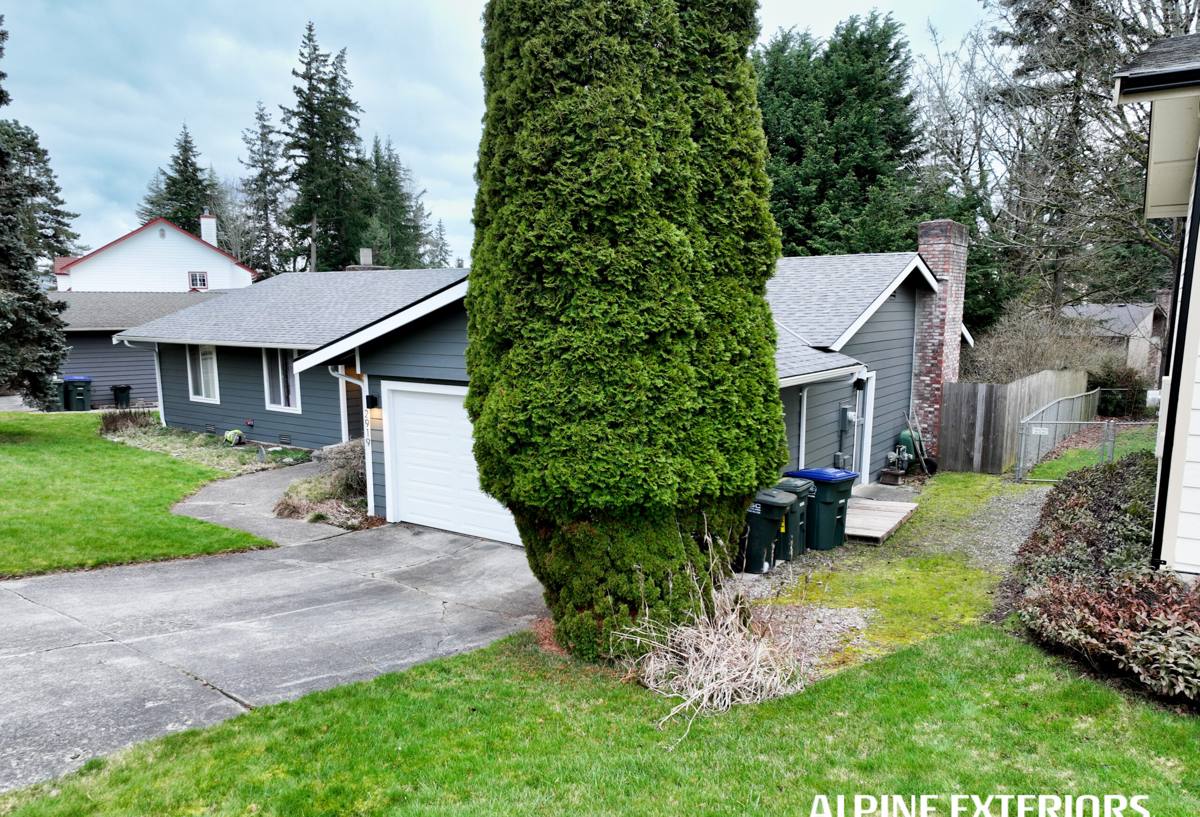
Signs a Nooksack Home Needs Siding Replacement, Not Just Repair
Not every siding problem calls for a full tear-off. But there's a point where patching becomes false economy — you're spending money to delay the inevitable while water keeps getting behind the wall. Here's what tells us a home has crossed that line:
- Soft or spongy spots when you press on the siding, especially near the bottom courses and around window trim
- Visible swelling, bubbling, or delamination on wood-based or composite siding panels
- Persistent moss or algae staining that returns within a season of cleaning
- Paint that's peeling or blistering in patches rather than fading evenly
- Warping, cupping, or gaps opening up between boards
- Interior signs — musty smells, damp drywall, or staining near exterior walls — that point to moisture getting past the siding entirely
If you're only seeing surface-level fading or a few loose boards, targeted repair may still make sense. Once moisture has gotten behind the material, replacement is almost always the more honest answer — and the more affordable one long-term, since repeated patch jobs on failing siding rarely stop the underlying water intrusion.
What a Correct Siding Replacement Actually Involves
A siding replacement is only as good as what happens underneath it. In a climate like Nooksack's, the water-resistive barrier and flashing details matter more than the siding brand on the outside — they're what actually keeps water out of the wall assembly when the siding itself gets wet, which it will.
Tear-Off and Inspection
We remove the old siding down to the sheathing and inspect for rot, soft spots, and existing moisture damage. This is the point where problems that have been hidden for years finally show themselves — and it's far cheaper to address them now than to bury them under new siding and deal with it in five years.
Water-Resistive Barrier and Flashing
A new weather-resistant barrier goes on correctly lapped, shingle-style, so water sheds down and out rather than working its way in. Every window, door, and penetration gets properly flashed and integrated with the barrier — this is the single most common place we find corners cut on older installs, and it's the detail that determines whether a wall stays dry for the next 30 years or starts failing in five.
Installation to Manufacturer Spec
Proper fastener placement, clearances off the ground and roofline, correct joint treatment, and factory-specified gaps all matter — not as boxes to check, but because each one is tied to how the material is engineered to handle moisture and movement over time.
Why We Install Only James Hardie Fiber Cement
We made the decision to standardize on James Hardie fiber cement siding and stop installing vinyl, LP SmartSide, primed spruce, cedar, or other fiber cement brands. That's not a sales pitch — it's a standard we hold because of what we've seen play out on homes in exactly this kind of climate.
Fiber cement is non-combustible and doesn't rely on paint film alone to stay watertight the way wood-based products do. Vinyl can work loose or crack in cold snaps and doesn't hold paint if you ever want to change the color. Engineered wood products depend heavily on maintaining an intact factory coating — once that's compromised at a cut edge or fastener hole, moisture has a direct path into the substrate, and in a climate that stays damp for months at a time, that's a real vulnerability. Hardie's fiber cement composition is dimensionally stable and holds up to sustained moisture exposure in a way that makes sense for Whatcom County's weather pattern specifically.
Choosing the Right Hardie Product for This Climate
James Hardie engineers its siding by climate zone, and Whatcom County falls into the HZ5 category — their line built for regions with sustained moisture, freeze-thaw cycling, and moss/mildew pressure. That's a meaningful distinction; siding engineered for a dry climate doesn't perform the same way here.
| Product Line | Best Fit For | Key Advantage in This Climate |
|---|---|---|
| HardiePlank Lap Siding | Most Nooksack-area homes | Traditional lap profile, engineered for the Pacific Northwest's moisture and temperature swings |
| HardiePanel Vertical Siding | Accent walls, gables, modern facades | Fewer horizontal laps means fewer water-entry points on exposed elevations |
| HardieShingle | Craftsman and traditional-style homes | Authentic shingle look without the moisture sensitivity of real wood shakes |
| HardieTrim | Window, door, and corner trim | Resists the soft, rotting trim we commonly find on older Nooksack homes |
All of it comes with Hardie's ColorPlus factory finish as an option, which is baked on and cured under controlled conditions rather than field-painted — a real advantage when you're trying to avoid repainting a house every few years in a climate that's hard on exterior coatings.
Our Siding Replacement Process
Every home is different, but the sequence stays consistent because it's built around getting the water management right, not just making the exterior look new.
- On-site inspection and assessment of existing siding, trim, and sheathing condition
- Written estimate outlining scope, product selection, and color options
- Full tear-off of old siding and inspection of sheathing for hidden damage
- Repair or replacement of any compromised sheathing before moving forward
- Installation of water-resistive barrier with correct lapping and flashing at all penetrations
- Installation of James Hardie siding, trim, and accessories to manufacturer spec
- Final walkthrough and cleanup
We don't skip the sheathing repair step to save time. Installing new siding over damaged sheathing just resets the clock on the same problem.
What Siding Replacement Costs Depend On
We don't publish flat prices because every home's scope is different, but the real cost drivers are consistent from job to job:
| Factor | Why It Matters |
|---|---|
| Home size and number of stories | More surface area and more complex access, especially on two-story homes |
| Sheathing condition underneath old siding | Rot or moisture damage found during tear-off adds repair scope |
| Product selection | Lap vs. panel vs. shingle profiles, and factory-finish vs. field-painted, price differently |
| Trim and detail work | Homes with more windows, corners, and architectural detail take more labor to trim out correctly |
| Site access | Landscaping, fencing, or tight lot lines can affect staging and disposal logistics |
The only way to get an accurate number is a walkthrough of your specific home — anything else is a guess.
Why It Matters That We Already Work in Nooksack
A crew that regularly works this specific area already knows what this climate does to a wall assembly over ten or twenty years, because we've torn open enough of them to see it firsthand. That translates into flashing and barrier details that account for wind-driven rain patterns typical of this part of Whatcom County, and product recommendations that reflect what actually holds up here rather than what's cheapest to install. It also means straightforward scheduling and a crew that's not learning the local climate on your home for the first time.
Protecting Your Investment After Installation
James Hardie siding is low-maintenance, not zero-maintenance. A little attention keeps it performing the way it's engineered to:
- Rinse siding annually to keep moss, algae, and organic buildup from taking hold, especially on shaded elevations
- Keep gutters clear and downspouts directed away from the wall to limit water running down the siding face
- Trim back vegetation and tree cover that keeps siding shaded and damp longer than it needs to be
- Inspect caulking at trim and penetrations every year or two and re-caulk as needed
- Address any impact damage or cracked caulk joints promptly rather than letting them sit through a wet season
If your Nooksack-area home is showing signs of aging siding, or you just want an honest read on whether repair or replacement makes sense, we're happy to take a look. Estimates are free and there's no pressure — just a straight assessment of what your home actually needs.