 Lynden Exterior
 Storm Season in Aldergrove, BC Asks a Lot of a Roof
Aldergrove sits close enough to Lynden that we treat it as part of our regular service area, and the roofs here take the same beating ours do. Pacific storm systems push through the Fraser Valley and funnel wind-driven rain straight at rooflines, salt-tinged air off the coast works into fasteners and flashing over time, and a long, damp moss season keeps shingles wet for months at a stretch. None of that is dramatic on its own. It's the combination, storm after storm, year after year, that eventually finds the weak point in a roof and turns it into a leak.
This page is specifically about repairing storm damage on Aldergrove homes, not a general roofing overview. If a recent windstorm, heavy rain event, or a winter system left you with missing shingles, a new stain on the ceiling, or just a feeling that something's not right up there, this is what we'd actually look at and do.
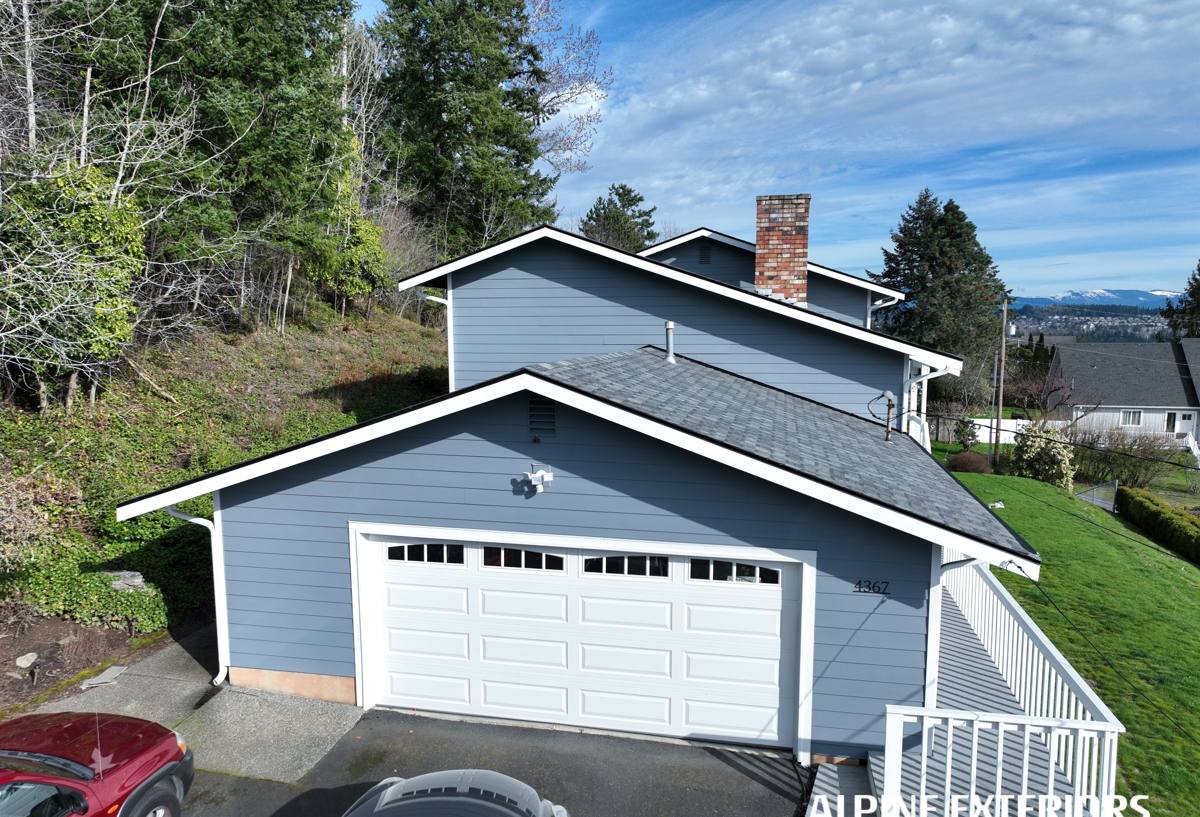
What Storm Damage Actually Looks Like on a Roof Here
Storm damage rarely shows up as one obvious hole. It's usually a handful of smaller failures that add up.
Wind Funneling Through the Valley
The Fraser Valley and the lowlands around Aldergrove act like a channel for wind gusts, and roofs catch the worst of it at ridges, edges, and any spot where a shingle tab has already started to lift. Wind doesn't need to be extreme to do damage — it needs a starting point, like one nail that backed out or one shingle edge that was already curling from age or heat cycling. Once wind gets under that edge, it works the surrounding shingles loose too.
Wind-Driven Rain and Flashing Failure
Straight-down rain rarely causes leaks on a healthy roof. Sideways, wind-driven rain is a different problem — it gets pushed up and under laps in the shingles and probes every seam around chimneys, skylights, vent pipes, and roof valleys. Most storm-related leaks we find trace back to flashing, not the shingle field itself. A section of shingles can look fine from the ground while the flashing beneath a valley or behind a chimney is quietly letting water into the decking.
Moss, Debris, and Long-Term Wear
The long, wet, shaded stretches of the year around here are ideal for moss, and moss doesn't just look bad. It holds moisture against the shingle surface far longer than the roof was designed to handle, and it grows under tabs and lifts them slightly — which is exactly the kind of small gap a storm needs to turn into real damage. A roof that's been carrying moss for a couple of seasons is more vulnerable to wind and rain damage than a clean one, even if both are the same age.
Signs Your Roof Took a Hit
After a storm, most homeowners can spot the obvious stuff from the ground, but several warning signs only show up if you know where to look:
- Shingles that are missing, cracked, curled at the edges, or visibly out of alignment
- A noticeable increase in granules collecting in gutters or at downspout outlets
- New water stains, discoloration, or a musty smell in the attic or on ceilings below the roofline
- Soft or spongy spots when the roof is walked, which can mean the decking underneath has taken on water
- Bent, lifted, or separated flashing around chimneys, vents, skylights, or roof valleys
- Daylight visible through the roof deck from inside the attic
- Gutters pulling away from the fascia, or debris and moss buildup that's trapping water against the roof edge
- Any leak that appeared or worsened right after a windstorm or heavy rain event
If you're seeing more than one of these, it's worth having someone look before the next storm system rolls through.
What a Correct Storm Repair Actually Involves
A Real Inspection, Not a Drive-By Quote
A proper storm damage assessment means getting on the roof and into the attic, not just looking up from the driveway. We check the shingle field, every flashing point, the ridge and valleys, and the underside of the decking from inside the attic where possible. That's the only way to tell whether damage is cosmetic or whether water has already reached the wood underneath, which changes the scope of the repair.
Matching Materials the Right Way
When we replace damaged shingles, we match the existing profile, style, and color as closely as the manufacturer's current lineup allows. We'll always tell you upfront if an exact match isn't realistic — shingle colors shift slightly between production runs, and a roof that's a few years old will have weathered differently than new material straight off the pallet. A small amount of blending difference on a patch repair is normal and honest; we're not going to pretend otherwise to make a quote sound better.
Flashing and Underlayment Done Right, Not Just the Visible Shingles
This is where a lot of storm repairs go wrong, and it's usually not because the shingle work was sloppy — it's because the flashing and underlayment underneath never got addressed. Replacing shingles over damaged or improperly lapped flashing just delays the same leak. A correct repair means pulling back enough of the surrounding material to inspect and, where needed, replace the flashing and underlayment before anything new goes back down.
Repair or Replace? What Decides It
Not every storm-damaged roof needs to come off. The right call depends on a few honest factors:
| Factor | Leans Toward Repair | Leans Toward Full Replacement |
|---|---|---|
| Roof age | Under two-thirds of expected lifespan | Near or past its expected service life |
| Extent of damage | Isolated to one section or a few spots | Spread across multiple slopes or the whole roof |
| Decking condition | Dry, solid, no soft spots found | Soft, delaminated, or water-stained decking |
| Repair history | First or second repair on this roof | Repeated patches over the same areas |
| Material availability | Close match still available | Discontinued product, no reasonable match |
We'll tell you plainly which side of this table your roof falls on, including when a repair is genuinely the right and more economical choice — we don't push replacement on roofs that don't need it.
How Our Process Works, Start to Finish
- Initial call and scheduling. You describe what happened or what you're seeing, and we schedule an on-site look, usually within a few days of a storm event.
- On-roof and attic assessment. We inspect the shingles, flashing, and decking, and check the attic from inside where access allows, documenting what we find.
- Written scope and estimate. You get a clear breakdown of what's damaged, what needs to happen, and what it costs — no vague verbal quote.
- Material matching and scheduling. We source shingles and flashing matched as closely as possible and set a work date around the weather window.
- Repair work. Damaged sections are removed, decking is checked and repaired if needed, flashing and underlayment are addressed, and new material is installed and sealed.
- Cleanup and final check. Debris and old materials are hauled off, and we walk the completed repair with you before we consider the job done.
Insurance Claims and Documentation
If your storm damage is significant enough that you're considering a claim, a few habits make the process smoother. Photograph visible damage from the ground if it's safe to do so, before anything is touched or covered up. Keep a copy of our written inspection findings and estimate — adjusters generally want a clear, itemized scope of the damage and the proposed repair, not a rough verbal description. We provide that documentation as a standard part of every assessment. What we won't do is promise a claim outcome; that decision sits with your insurer and your policy terms, and we'd rather be upfront about that than tell you what you want to hear.
Why a Crew That Already Works Aldergrove Matters
After any significant storm moves through Whatcom County and the border area, it's common to see unfamiliar trucks and door-to-door offers for fast, cheap roof repairs. Some of those crews do fine work. Many are gone before a repair has a chance to show its problems, with no local presence to call back to. Because we're based just up the road in Lynden and already work in Aldergrove regularly, we're not going anywhere after the job is done, and we have a track record in this area that's easy to check. That matters more with roofing than almost any other exterior trade, because a bad flashing detail or a rushed shingle match doesn't show up as a problem until the next real storm tests it.
After the Repair: Keeping Moss and Future Storms from Undoing the Work
A good repair holds up longer with a little upkeep, especially given how much moss pressure this climate puts on a roof. Keeping gutters clear so water doesn't back up under the roof edge, trimming back overhanging branches that keep sections of roof shaded and damp, and having the roof looked at after any major windstorm are the simplest ways to protect the work. Zinc or copper control strips near the ridge can help slow moss regrowth on the parts of the roof that stay shaded longest. None of this is complicated, but skipping it is how a well-done repair ends up needing attention again sooner than it should.
If you're dealing with storm damage on an Aldergrove home, or you just want a second opinion after the last windstorm came through, we're happy to take a look. Fill out the form below for a free, no-pressure estimate and we'll get back to you to schedule a time.