 Lynden Exterior
 Windows in Maple Falls Take a Different Kind of Beating
Maple Falls sits up against the foothills, where the rain doesn't just fall straight down — it drives sideways against the north and west sides of a house for days at a stretch. Add the moss season that stretches from fall through spring, the damp marine air that moves through Whatcom County off the Sound, and the shade that a lot of these lots get from mature trees, and you've got a set of conditions that will find every weak point in a window installation. Not the window itself, usually — the installation around it.
We've replaced enough failed windows in this area to know the pattern: the glass and frame are often fine, but the flashing, sealant, or sill pan underneath let water in years ago, and the rot spread quietly behind the trim until someone noticed a soft spot or a stuck sash. Good window installation in this climate isn't about picking a fancy product. It's about getting the water management right the first time, because you don't get many chances to fix it cheaply after the fact.
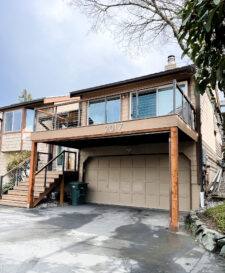
Signs a Maple Falls Home Needs Window Attention
What to look for from the outside
- Moss or dark streaking building up on the sill or below the window, even on walls that get some sun
- Paint or caulk that's cracked, peeling, or pulling away from the frame
- Soft or spongy trim when you press on it, especially at the bottom corners
- Visible gaps between the window frame and siding
What to look for from the inside
- Condensation between the panes (a sign the seal has failed) or heavy condensation on the inside glass every morning
- Drafts you can feel with your hand near the frame on a windy day
- Windows that are hard to open, close, or lock — often a sign the frame has shifted or swelled
- A musty smell near the window that doesn't clear up with airing out the room
Any one of these can be minor. Several together, especially on the weather-exposed side of the house, usually mean water has been getting past the original installation for a while.
What a Correct Installation Actually Involves
The window product is maybe a third of the job. The rest is the work most homeowners never see once the trim goes back on — and it's the part that determines whether the window lasts 10 years or 30.
Removal and opening inspection
Once the old window comes out, we look at the rough opening before anything goes back in. This is the only point where hidden rot, missing flashing, or a bad sill pan will actually be visible. If there's damaged framing, it gets addressed before a new window ever goes in — installing a new window over a compromised opening just hides the problem for a few more years.
Sill pan and flashing
The sill pan is what directs any water that gets past the window back outside instead of into the wall cavity. In a climate that gets driving rain against the same walls year after year, this detail matters more than almost anything else in the install. Flashing tape and house wrap integration have to be layered correctly — shingle-style, so water always flows down and out, never into a seam.
Setting, shimming, and sealing
The window has to be plumb, level, and square, shimmed so it isn't relying on the frame screws to hold its shape. Sealant goes where it's supposed to — not everywhere, since some gaps are meant to let a wall breathe and drain, and over-sealing can trap moisture instead of keeping it out.
Interior and exterior trim
Trim gets reinstalled or replaced, caulked at the right joints, and painted or finished to match. This is also where insulation around the frame gets checked — a gap packed too tight or left empty both cause problems.
Choosing a Window Frame for This Climate
There's no single "best" frame material — each has a real trade-off, and the right call depends on the exposure of that particular wall, your maintenance appetite, and budget. Here's how the common options actually compare for a Maple Falls property.
| Frame Material | Moisture Behavior | Maintenance | Typical Lifespan |
|---|---|---|---|
| Vinyl | Won't rot or corrode; performs well in wet, shaded areas | Low — occasional cleaning | 20-30 years |
| Fiberglass | Very stable in moisture and temperature swings, minimal expansion/contraction | Low | 30-40 years |
| Wood-clad | Good if cladding and flashing details are done right; vulnerable where cladding is compromised | Higher — watch for cladding damage and interior wood upkeep | 20-30 years with upkeep |
| Aluminum | Conducts cold and can condensate more in our damp winters unless thermally broken | Low | 20-30 years |
For heavily shaded, moss-prone walls, we generally steer homeowners toward vinyl or fiberglass because there's less to maintain and nothing to rot. Wood-clad windows can look great and perform well, but we're honest that they ask more of the homeowner over time — that's a maintenance trade-off, not a defect, and some people are happy to make it for the look.
Our Installation Process
- On-site assessment — we look at each window individually, not just the house as a whole, since sun exposure and rain exposure vary wall to wall
- Honest product recommendation — based on that specific wall's exposure, your budget, and how much upkeep you want going forward
- Written estimate — clear on scope, materials, and what happens if we find rot or framing damage once the old window is out
- Removal and opening inspection — the step that reveals whether anything beyond the window itself needs attention
- Flashing, sill pan, and setting — done to shed water correctly, not just to get the window in place
- Trim, sealing, and cleanup — finished to match the surrounding siding and painted or caulked as needed
- Final walkthrough — we check operation, seals, and finish with you before calling the job done
What Drives the Cost
Every window job is a little different, but the same few factors move the price up or down. We'd rather walk you through these than quote a number that doesn't hold up once we see the actual opening.
| Factor | Why It Matters |
|---|---|
| Frame material and size | Fiberglass and larger or custom-sized units cost more than standard vinyl |
| Condition behind the old window | Rot or framing repair adds labor and material that can't always be seen until removal |
| Access and height | Second-story or hard-to-reach windows take more time and equipment |
| Full-frame vs. insert replacement | Full-frame replaces the flashing and sill pan too; insert reuses the existing frame and is faster but only appropriate when that frame is still sound |
| Number of windows done at once | Bundling several windows in one visit is usually more efficient than one-off replacements |
Why Local Experience Matters for This Job
A window installer who mostly works drier, sunnier areas can put in a technically fine window and still get it wrong for a house like the ones out here — because the assumptions about how much water a wall will see, how long moss has to grow, and how much shade a north wall gets are different. A crew that already works Maple Falls and the surrounding Whatcom County area has seen which details actually fail first in this specific climate, and builds the install around that, not around a generic checklist.
There's also the practical side: knowing the area means knowing what permitting looks like for the county, having a realistic sense of driving time and scheduling for jobs out from Lynden, and not treating a rural or foothill property as an inconvenience to work around.
After Installation: What to Keep an Eye On
- Rinse moss and debris off sills and trim a couple of times a year, especially on shaded walls
- Check exterior caulking annually for cracking or gaps, particularly after a hard winter
- Keep gutters and downspouts clear so water isn't sheeting down the wall above a window
- Trim back vegetation that keeps a wall shaded and damp longer than it needs to be
- Open and close each window at least once each season to catch operating issues early
None of this is heavy maintenance — it's the kind of thing that takes an afternoon and catches small problems before they become expensive ones.
Get a Straight Answer for Your Home
If you're dealing with drafty windows, moss buildup you can't seem to get ahead of, or you just want a second opinion on whether it's time to replace instead of repair, we're happy to take a look. There's no pressure and no sales script — just an honest read on what your windows need and what it would take to fix it right. Use the form below to request a free estimate for your Maple Falls property.