 Lynden Exterior
 Decks Built for Life on Wiser Lake
Wiser Lake sits just outside Lynden in a part of Whatcom County where homes back up to water, tree lines, and open fields all in the same stretch of road. That mix creates a deck-building challenge you don't see everywhere: constant shade in some spots, full sun in others, damp lake air in the mornings, and heavy tree cover that drops needles, leaves, and moisture onto every horizontal surface. A deck built here has to handle all of it at once, not just look good on installation day.
We build and rebuild decks for homeowners around Wiser Lake and the rest of the Lynden area. This page covers what actually matters for a deck in this specific setting — framing, drainage, material choice, and the maintenance a lake-adjacent deck needs that a deck three miles inland might not.
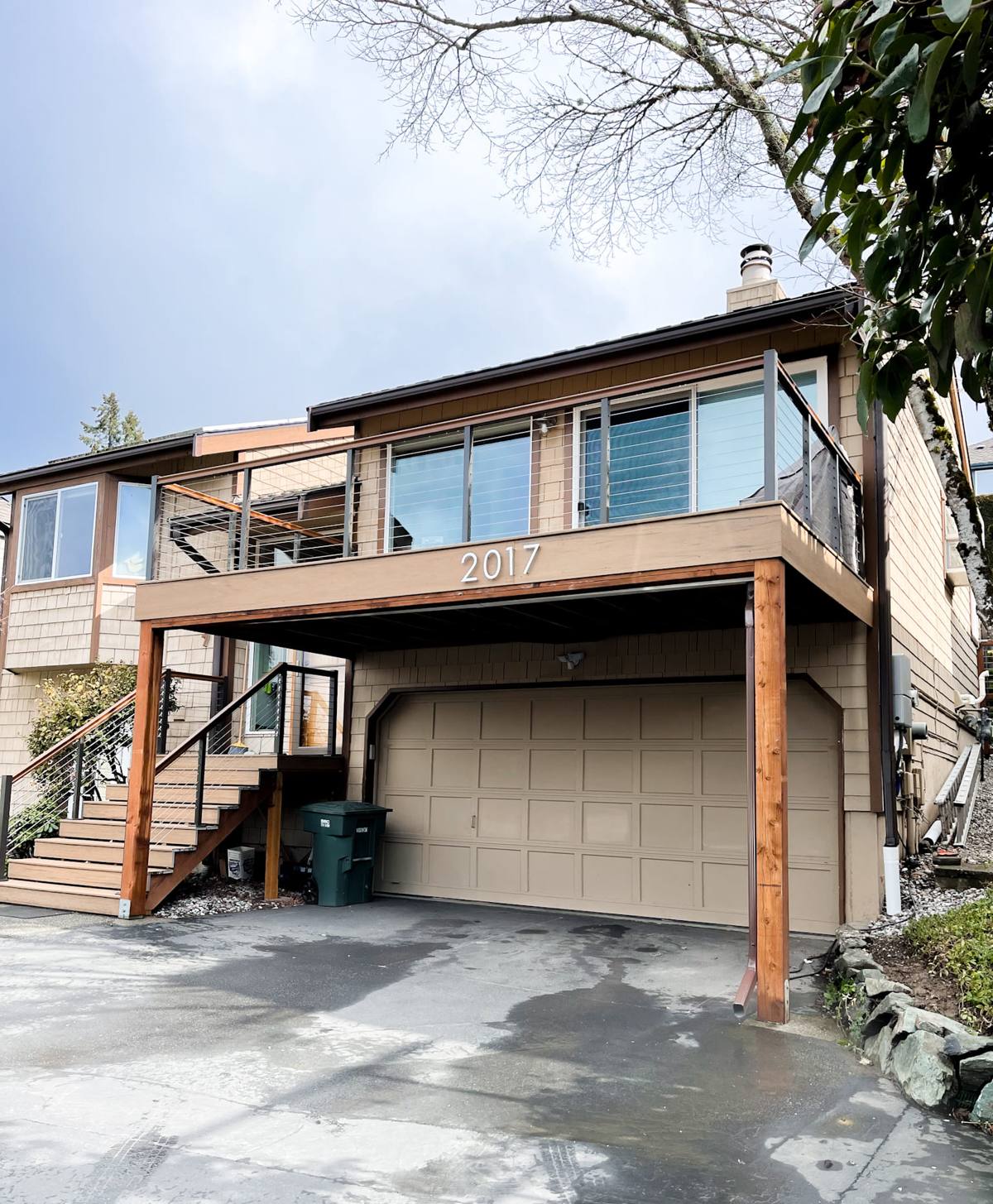
What Wiser Lake's Climate Actually Does to a Deck
Whatcom County's marine-influenced air, driving rain off the Pacific storm track, and a moss season that can run six months or more all put steady stress on outdoor structures. Lake-adjacent lots see it worse because there's more standing moisture in the air and often more shade from mature trees around the water.
Moss and Algae Growth
North-facing decks, decks under tree canopy, and decks close to the water rarely get enough direct sun to dry out fully between rains. That's exactly the condition moss and algae need. Left alone, moss holds moisture against the board surface, which accelerates rot in wood decking and can make composite boards dangerously slippery.
Driving Rain and Water Intrusion
Wind-driven rain doesn't just fall straight down — it gets pushed sideways into ledger boards, under railing posts, and into any gap where flashing was skipped or done poorly. On a lake lot, that moisture load is higher and more constant, which means the margin for error on flashing and drainage details is smaller than on a typical inland deck.
Freeze-Thaw and Ground Moisture
Whatcom County doesn't get extreme cold, but the repeated freeze-thaw cycles combined with consistently wet ground near the lake can work against footings that weren't set deep enough or poured on unstable soil.
Framing and Footings for a Lake-Adjacent Lot
Everything above the ground on a deck depends on what's happening below it. Lots near Wiser Lake often have a higher water table and softer soil than lots further into town, especially close to the shoreline or in low-lying yards.
- Footings need to be sized and set to local frost depth and soil conditions, not a one-size-fits-all number
- Wet or soft soil sometimes calls for larger footings or helical piers instead of standard poured concrete
- Ledger boards need proper flashing and a clear gap or flashing tape to keep water from wicking into the house rim joist
- Joist tops should be protected with joist tape so trapped moisture under the decking doesn't sit directly on bare framing
- Under-deck airflow matters — a deck built too close to the ground or grade sloped the wrong way traps moisture underneath year-round
These details don't show once the deck is finished, which is exactly why they're the details that get skipped by crews trying to save time. They're also the details that decide whether a deck lasts fifteen years or thirty.
Choosing Decking Material for This Climate
There's no single "best" decking material — there's a best material for how a specific deck sits on a specific lot. A shaded, lake-adjacent deck has different demands than a sun-exposed one on the same street.
| Material | How It Handles Moss/Moisture | Maintenance | Trade-Offs |
|---|---|---|---|
| Pressure-treated wood | Absorbs moisture; needs sealing to resist rot and staining | Annual cleaning and re-sealing, especially in shaded spots | Lowest upfront cost, shortest lifespan without upkeep |
| Cedar | Naturally rot-resistant but still needs finish to stop graying and moss uptake | Periodic cleaning and refinishing | Better natural look, more maintenance than composite |
| Capped composite | Resists moisture absorption well; surface film can still grow algae if never cleaned | Occasional wash-down, no sealing | Higher upfront cost, long service life |
| PVC decking | Doesn't absorb water at all; least food source for moss/mildew | Lowest maintenance of the group | Highest upfront cost, distinct look and feel underfoot |
For decks that sit under trees or get heavy morning dew off the lake, we lean homeowners toward capped composite or PVC unless they specifically want the look and feel of real wood and are prepared to maintain it. That's not a knock on wood — it's an honest read of how much upkeep a shaded, damp deck demands versus a sun-exposed one.
Railings, Stairs, and Grade Changes
Lake lots often have more elevation change than a standard in-town yard — a walkout basement, a slope down toward the water, or a deck built up to clear uneven ground. That changes the structural and code picture.
Guardrails and Height Triggers
Once a deck surface sits above a certain height off the ground, guardrails become a code requirement, not an option. On sloped lake lots, one side of the same deck can be well above that trigger height while the other side is nearly at grade — the design has to account for both.
Stairs to Lower Grade or Shoreline
Multi-level decks and stair runs down a slope need consistent rise and run, secure footings independent of the upper deck, and railings sized to code. Wet, mossy stair treads are a real fall hazard here, so tread material and surface texture matter as much as the structure underneath.
Permits Near Wiser Lake
Whatcom County requires permits for most new deck construction, and lots near lakes and other water bodies can carry additional shoreline-related requirements on top of standard building permits — setbacks, height limits, or review depending on the specific property and how close construction sits to the water. Requirements vary by lot, and we're not going to guess at your specific parcel's rules on a web page. As part of our process we help identify what your property actually needs and handle the permit paperwork so you're not the one tracking down requirements from the county.
How We Approach a Wiser Lake Deck Project
- Site visit and grade assessment — we look at sun/shade exposure, soil conditions, drainage, and how the deck will tie into the house
- Design and material discussion — sized to how you'll actually use the deck, with an honest conversation about material trade-offs for your specific spot
- Permit and engineering as needed — handled before framing starts, not worked around after
- Footings and framing — set to local soil and frost conditions, with ledger flashing and joist protection built in as standard, not upsells
- Decking, railing, and stairs — installed with attention to fastener spacing and board gapping appropriate for our wet climate
- Final walkthrough — we go over basic care so the deck holds up the way it's supposed to
Maintaining a Deck Through Moss Season
A well-built deck still needs seasonal attention in this climate. Most of it is simple, but skipping it shortens the life of even a well-framed deck.
- Sweep leaves and needles off the deck regularly through fall — trapped organic debris feeds moss and holds moisture against boards
- Rinse or lightly scrub shaded areas and stair treads before moss gets a foothold, not after it's established
- Check that gaps between boards stay clear of debris so water can drain through rather than pool
- Look underneath the deck once a year for standing water, damaged joist tape, or signs of rot at the ledger connection
- Reseal wood decking on the schedule the finish manufacturer recommends — don't wait for visible graying
Why a Crew That Already Works Wiser Lake Matters
A deck builder who mainly works drier, sunnier lots elsewhere in Whatcom County can still build a structurally sound deck — but they may not default to the flashing, footing, and material choices that a shaded, damp, lake-adjacent lot actually needs. We work this area regularly, which means we're not guessing at how a north-facing deck under mature trees behaves differently than one in open sun three streets over. We build for the site in front of us, not a generic spec.
If you're planning a new deck, replacing an aging one, or just want an honest read on whether your current deck's framing is holding up, we're glad to take a look. Reach out using the form below for a free, no-pressure estimate.