 Lynden Exterior
 Windows Built for the Fraser Valley's Wet Side
Abbotsford sits in a stretch of the Pacific Northwest that doesn't do anything halfway when it comes to weather. Long stretches of driving rain roll in off the water, humidity sits in the air for weeks at a time, and anything shaded or north-facing grows moss faster than most homeowners expect. Add in the salt air that carries inland from the coast, and you've got a climate that is genuinely hard on window assemblies — the frames, the seals, the sills, and everything tucked behind the trim that you can't see from the curb.
Custom windows aren't just about matching an odd-sized opening or getting a specific grille pattern. In this region, "custom" also means building the installation around how water actually moves across a wall in a place that sees this much sustained moisture. A window that would hold up fine in a dry inland climate can fail here in a fraction of the time if it's not detailed correctly for local conditions.
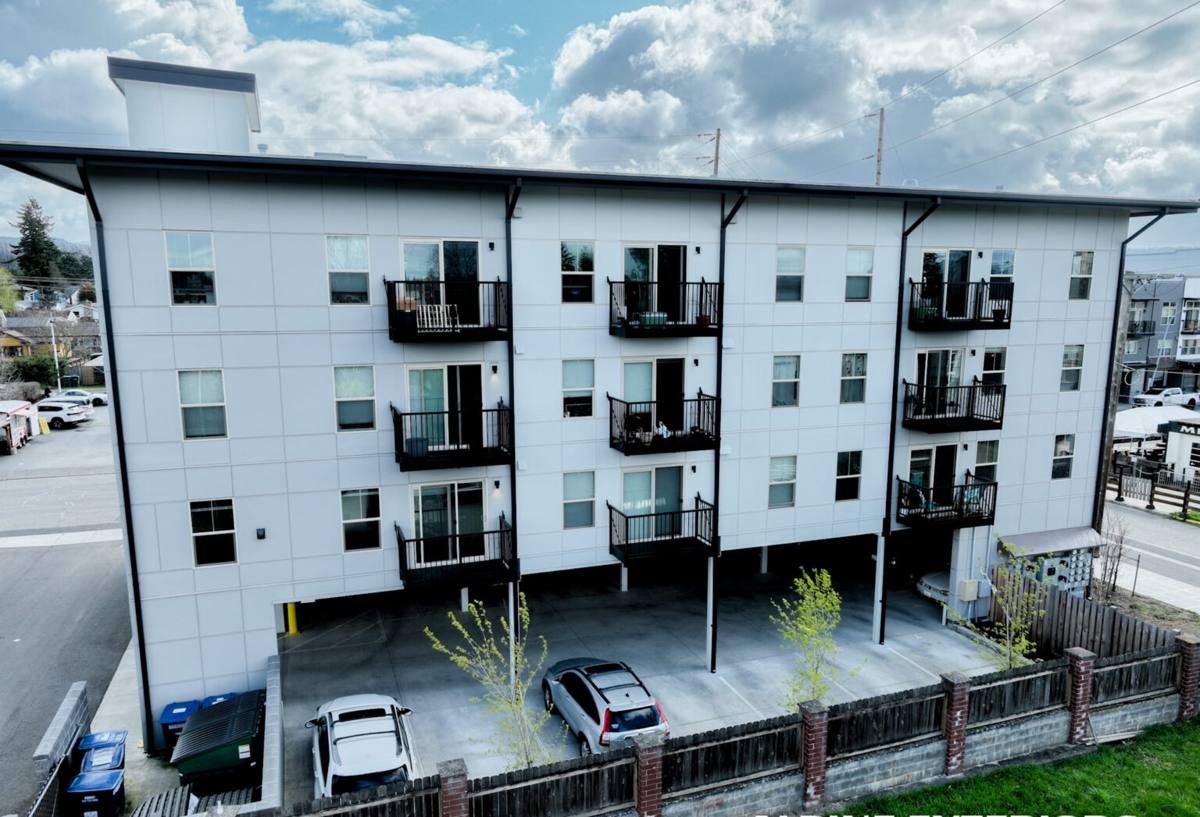
How Whatcom County and Fraser Valley Weather Wears Down Windows
Moisture Is the Real Enemy, Not Cold
Homeowners in this area often assume window failure is about temperature swings. In reality, most of the damage we see comes from prolonged moisture exposure — swollen wood sashes, corroded hardware, and seals that break down years before they should because they're rarely given a chance to fully dry out between rain events.
Moss and Organic Growth
A long moss season doesn't just show up on roofs. It creeps onto window sills, into corner joints, and along exterior trim where debris collects and stays damp. Left alone, that growth holds moisture against the frame and accelerates rot in wood components or finish failure on lower-grade vinyl and aluminum.
Salt Air and Metal Components
Hardware, screen frames, and some flashing materials corrode faster when salt-laden air is part of the daily environment. It's a slower process than coastal exposure right on the water, but over the life of a window it adds up — especially on the weep systems and hardware that a lot of installers don't think to spec for the local environment.
Signs Your Current Windows Are Losing the Battle
- Fogging or a permanent haze between the panes — a sign the seal has failed and the gas fill is gone
- Sashes that stick, drag, or won't stay up without a prop, usually from swelling or warped frames
- Visible moss or dark staining on the sill, especially on north- or west-facing windows
- Soft or spongy wood around the frame when pressed with a finger
- Drafts you can feel with your hand near the frame on a windy, rainy day
- Paint or finish peeling on the interior sill, which often points to condensation building up faster than it can dry
Any one of these on its own isn't necessarily an emergency. Several of them together, especially on the same window, usually means the unit has moved past the point where caulk and weatherstripping will fix it.
What a Correct Custom Window Installation Actually Involves
Removal and Opening Prep
Once the old window is out, the opening gets inspected before anything new goes in. This is the point where hidden rot, failed flashing, or past shortcuts from a previous installation show up. Skipping this step and just dropping a new window into a compromised opening is one of the most common ways custom window jobs fail early in a wet climate.
Flashing and Weatherproofing
This is the part of the job nobody sees once it's finished, and it's also the part that matters most here. Proper flashing tape, a correctly lapped weather-resistive barrier, and a sill pan that actually drains water back out — rather than trapping it against the framing — are non-negotiable in an area that gets this much sustained rain. We treat this stage as more important than the window itself, because a great window in a poorly flashed opening will still leak.
Setting and Sealing the Window
The unit gets shimmed level and plumb, fastened per the manufacturer's specification, and sealed with an exterior sealant rated for the movement and moisture cycles of this climate. Interior air sealing is handled separately from exterior weatherproofing — they solve different problems, and conflating them is another common shortcut we avoid.
Interior and Exterior Finish Work
Trim, casing, and sill work get finished to match the home, with attention to keeping any wood components properly primed and sealed on all sides — including the back, which is where a lot of hidden rot starts.
Choosing a Frame Material for This Climate
There's no single "best" material for every home — it depends on your budget, the home's style, and how much upkeep you're willing to take on. Here's how the common options actually compare for a wet, moss-prone climate like this one:
| Material | Moisture Resistance | Maintenance | Typical Lifespan |
|---|---|---|---|
| Vinyl | Strong — won't rot, resists moss staining | Low — occasional cleaning | 20–30 years |
| Fiberglass | Very strong — dimensionally stable in wet swings | Low | 30–40+ years |
| Wood (unclad) | Weakest — needs consistent upkeep in this climate | High — repainting/sealing on a cycle | Varies widely with maintenance |
| Wood with aluminum or fiberglass cladding | Good — exterior is protected, interior stays wood | Moderate | 25–35 years |
We'll walk through these trade-offs honestly during your estimate. A wood-interior, clad-exterior window can look fantastic and holds up well when the exterior is properly protected, but a fully exposed wood window in this rainfall pattern is a genuine maintenance commitment — not a defect in the product, just a fact of what wood does when it stays damp.
Glass Packages and Cost Factors
Beyond the frame, the glass package has a real impact on comfort and long-term performance in a damp climate. Here's a general breakdown of what drives cost on a custom window project:
| Factor | Why It Matters Here |
|---|---|
| Double vs. triple pane | Triple pane adds upfront cost but improves comfort and reduces interior condensation risk during long damp stretches |
| Low-E coating | Helps manage heat loss and reduces the temperature swing that contributes to interior condensation |
| Frame material | Drives both upfront cost and long-term maintenance, as shown above |
| Opening condition | Rot or flashing repair discovered during removal adds labor but protects the new window's lifespan |
| Custom sizing/shape | Non-standard openings cost more to fabricate correctly than stock sizes |
We don't quote a number without seeing the actual openings — a home with straightforward, standard-size windows costs meaningfully less than one with several custom shapes or openings that need structural attention. We'll always tell you which of these factors apply to your project before we give you a price.
Our Process, Start to Finish
- On-site assessment — we look at every opening being replaced, note the condition of the framing, and measure precisely.
- Honest recommendation — we walk you through material and glass options based on your budget and the specific exposure of each window, not a one-size-fits-all pitch.
- Written estimate — clear line items, no vague allowances.
- Scheduling — we build in realistic time for this region's weather patterns rather than rushing a job between rain events.
- Installation — removal, opening inspection, flashing, setting, and finish work as described above.
- Final walkthrough — we check operation, sealing, and finish on every window before we consider the job done.
Why a Crew That Already Works Abbotsford, BC Matters
Abbotsford sits just across the border from our home base in Lynden, and we treat jobs on that side of the line the same way we treat jobs in Whatcom County — with the same standards, the same materials, and the same crew. That familiarity matters for a few practical reasons. We already understand the building patterns common to homes in this part of the Fraser Valley, and we're used to scheduling around the border crossing and the logistics of moving materials and equipment across it, so it doesn't turn into a delay on your project.
Just as importantly, a crew that regularly works this specific area has already seen how local weather patterns affect window installations over time — not in theory, but on real homes in this region. That's the kind of judgment that doesn't come from a manufacturer's install manual alone; it comes from doing the work here repeatedly and paying attention to what actually holds up.
Keeping Custom Windows Performing After Installation
A correctly installed window still benefits from a little seasonal attention, especially given how long the wet season runs here:
- Clear moss, leaves, and debris from sills and tracks a couple of times during the wet months
- Check weep holes on vinyl and fiberglass frames to make sure they're not blocked and draining properly
- Inspect exterior caulking annually and touch up any cracked or separated sealant before the rainy season sets in
- Operate every window at least occasionally, even ones you rarely open, to keep hardware and seals from seizing
- Watch for early condensation between panes — it's the first sign of a failing seal and is easier to address early
If your windows are showing their age or you're planning a renovation that includes custom sizes or shapes, we're happy to come take a look. The estimate is free, there's no pressure, and you'll get a straight answer about what your home actually needs — just fill out the form below to get started.