 Lynden Exterior
 Siding Repair in Abbotsford, BC
Lynden Exterior Contractor works throughout Whatcom County and just across the line into Abbotsford, BC — close enough that the same weather is hitting both sides of the border every day. Homes in this area deal with a specific combination of conditions: salt-laced air moving in off the water, driving rain that gets pushed sideways by wind instead of falling straight down, and a moss season that runs longer here than in drier parts of the state. Siding that looks fine from the curb can be quietly failing underneath, and by the time a homeowner notices bubbling paint, a soft spot, or a dark stain creeping along a seam, there's usually already water doing damage behind the panel.
This page is about siding repair specifically — not full replacement, not a general overview of exterior work. It covers what actually goes wrong with siding in this climate, what a repair should include if it's going to hold, and how we approach repair calls in Abbotsford, BC and the surrounding area.
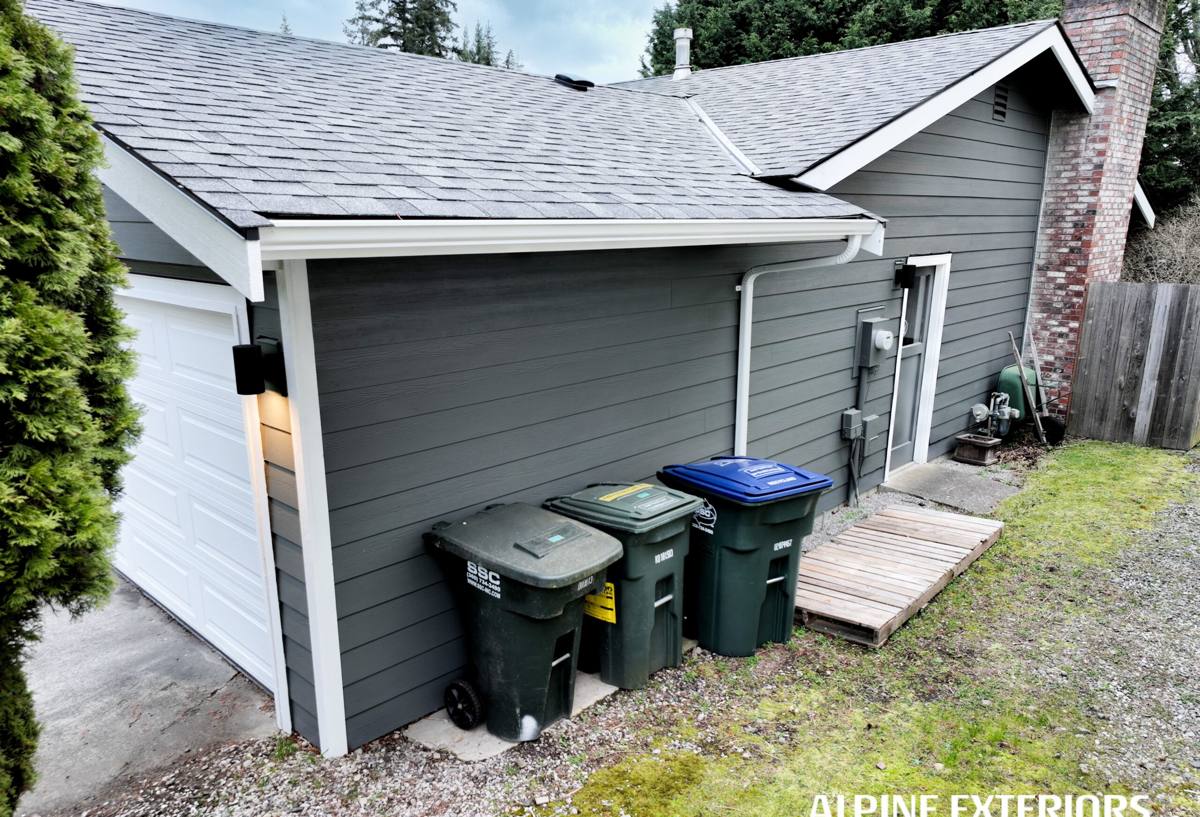
What This Climate Does to Siding Over Time
Salt Air and Coastal Moisture
Homes closer to the water pick up airborne salt that settles on exterior surfaces and accelerates corrosion of fasteners, flashing, and any exposed metal trim. On siding materials that aren't built to handle that exposure, it also speeds up finish breakdown — chalking, fading, and coatings that fail years ahead of schedule.
Driving Rain and Wind-Driven Water
Wind-driven rain doesn't behave like a normal shower. It gets forced up and under laps, into nail penetrations, and behind trim that would stay dry in calmer weather. Siding systems and installation details that work fine in low-wind regions can leak here if they weren't installed with wind-driven rain specifically in mind.
A Long Moss Season
Cool, damp stretches that run long in this part of Whatcom County and the Fraser Valley give moss and algae plenty of time to establish on north-facing walls, under eaves, and anywhere airflow is limited. Moss holds moisture directly against the siding surface, which is exactly the wrong thing for a material that's already fighting rain and humidity.
Signs Your Siding Needs Repair, Not Just Cleaning
- Soft or spongy spots when you press on the siding, especially near the bottom of walls or under windows
- Paint or caulk that's cracking, peeling, or pulling away at seams and trim joints
- Visible gaps where panels have shifted, warped, or separated from each other
- Dark staining or streaking that keeps coming back after cleaning
- Moss or algae that regrows quickly on the same spots even after washing
- Musty smell or visible mold on the interior wall directly behind an exterior wall
- Rust streaks below nail heads or metal trim pieces
- Siding that flexes or feels loose when pushed, suggesting failed fasteners underneath
What a Correct Siding Repair Actually Involves
A good repair isn't just cutting out the bad section and nailing up something new. It starts with figuring out why that section failed in the first place — otherwise the replacement piece fails the same way on the same timeline.
That means checking what's happening behind the siding, not just on the surface. Water-resistant barrier (housewrap), flashing at windows and penetrations, and the condition of the sheathing underneath all matter more than the visible panel. If the water intrusion point isn't identified and corrected, a cosmetic patch just buys a little time before the same spot fails again.
A repair done right typically includes:
- Removing enough surrounding material to see the actual extent of the damage, not just the visible spot
- Checking framing and sheathing underneath for rot before closing anything back up
- Correcting or replacing failed flashing and water-resistive barrier at the source of the leak
- Matching replacement material as closely as possible in profile, reveal, and finish
- Re-sealing and re-fastening to the same standard as new installation, not a shortcut version of it
Repair vs. Full Re-Siding: When Patching a Wall Stops Making Sense
Repair is the right call for isolated damage on siding that's otherwise sound. But there's a point where patching one section after another costs more, over time, than addressing the wall as a whole — and where the underlying material itself is the reason repairs keep being needed.
| Factor | Repair Usually Makes Sense | Re-Siding Worth Considering |
|---|---|---|
| Extent of damage | One or two isolated areas | Damage showing up in multiple areas across the same wall |
| Cause | A specific, identifiable failure point (one bad flashing detail, one impact) | Widespread moisture intrusion or a material reaching the end of its service life |
| Siding age and material | Newer siding, or a durable material still in good condition elsewhere | Original material is prone to recurring issues (warping, delamination, repeated moss/rot cycles) |
| Color match | Color/finish still available or close enough to blend | Discontinued color or heavily weathered finish that won't match a patch |
| Cost over time | One repair, reasonably confident it holds | History of repeat repair calls to the same wall |
We'll tell you honestly which side of that table your home falls on. Most repair calls are exactly that — a repair, done properly, that will hold for years. We only bring up re-siding when the numbers or the pattern of damage actually point that way.
What We Repair, and Why We Recommend James Hardie for Larger Scope Work
Lynden Exterior Contractor installs only James Hardie fiber cement siding — we don't install vinyl, LP SmartSide, cedar, or other fiber cement brands. But repair calls come to us on homes with all kinds of existing siding, and we're upfront about what that means.
For isolated repairs on non-Hardie siding, patching with a matching or compatible material is often the practical choice, and we'll do that work honestly rather than push a bigger project than the home needs. Where we draw the line is recommending a full re-side: when a home has reached the point where the existing material is the reason for repeated failures, we recommend James Hardie fiber cement specifically because it's non-combustible, holds up to sustained moisture exposure without the swelling or delamination issues that affect wood-based and some engineered products, and carries a factory-applied ColorPlus finish backed by a real warranty. In a climate that includes salt air, driving rain, and a long moss season, that combination matters more here than in milder regions.
This isn't a sales pitch tacked onto a repair page — it's the honest answer to "why does your patch use a different material than my siding, or why are you recommending replacement instead of another patch." We'd rather tell you that plainly than let a wall fail the same way a third time.
Our Process for Siding Repair Calls in Abbotsford, BC
Most repair jobs in this area follow the same basic sequence:
- Inspection. We look at the damaged area and the surrounding wall, including what's happening at nearby flashing, trim, and penetrations that could be feeding the problem.
- Diagnosis. We identify the actual water or moisture path, not just the visible symptom, before proposing a fix.
- Straight options. We explain what a repair involves, what it costs, and whether it's likely to be a lasting fix or a stopgap — and say so if it's the latter.
- The repair itself. Matching material where possible, correcting the underlying cause, and finishing to the same standard as new work.
- Cleanup and check-in. We leave the site clean and make sure you know what was found and what was done, in plain language.
Why a Crew That Already Works This Area Matters
Siding failures in Abbotsford, BC and Lynden tend to follow patterns tied to the local climate — which walls take the worst of the wind-driven rain, which shaded or north-facing sections stay damp long enough for moss to take hold, where salt air does the most damage to fasteners and finishes. A crew that's already working these streets has seen those patterns repeatedly and knows what to check first, rather than treating every repair as a blank slate.
There's also a practical side: a local crew can get to a leak faster, follow up if something needs a second look, and stand behind the work without the friction of a company that only shows up in the area occasionally.
Before You Hire Anyone for Siding Repair
- Ask them to explain what's causing the damage, not just what they'll replace
- Ask whether they'll check behind the siding, not just patch the visible surface
- Ask what happens if they find rot or water damage in the sheathing once they open the wall
- Ask how closely the replacement material will match what's already on the house
- Ask for a straight answer on repair vs. replacement, and why they're recommending one over the other
- Confirm they carry proper insurance and are comfortable putting the scope of work in writing
If you're seeing soft spots, recurring moss, staining, or gaps in your siding in Abbotsford, BC or the Lynden area, we're happy to take a look and give you a straight assessment — no pressure, no upsell. Fill out the form below for a free estimate.