 Lynden Exterior
 Deck Replacement in Acme: A Different Kind of Rebuild
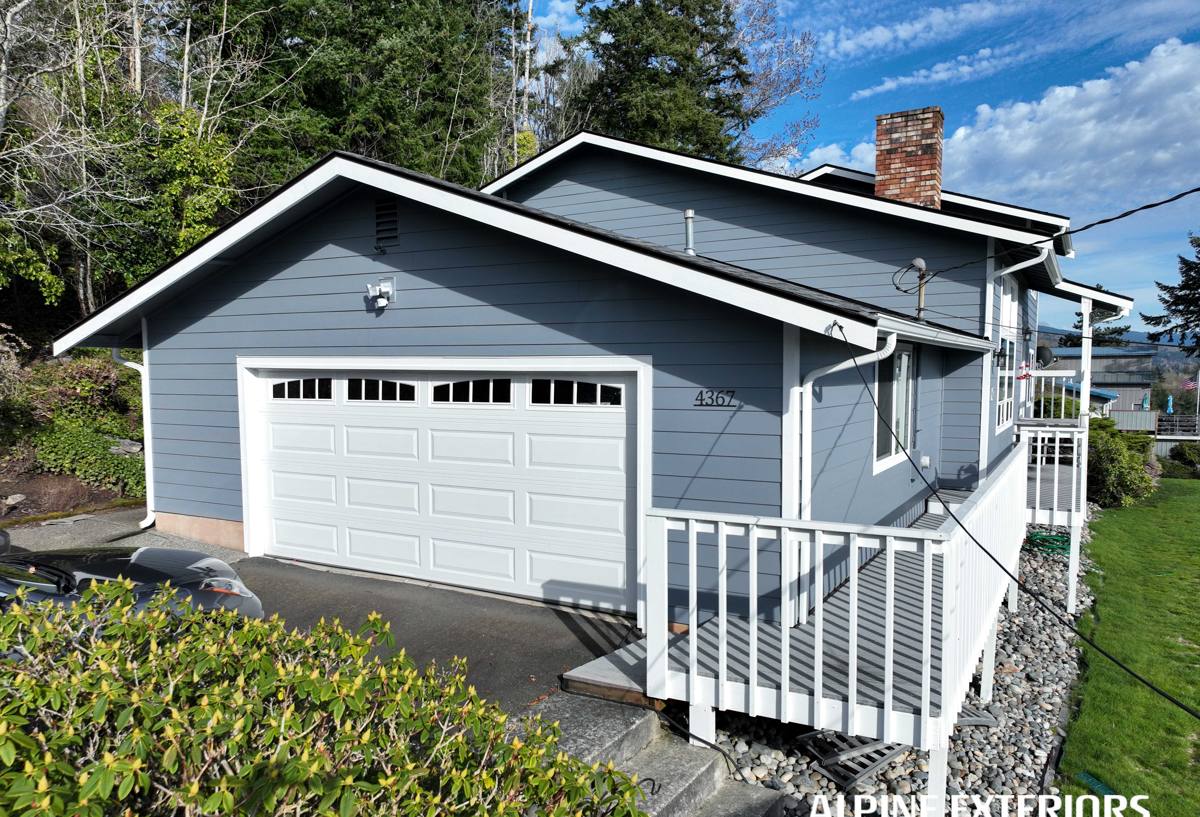
Acme sits back from the open flats around Lynden, closer to the foothills, with more tree cover and shade around most homes than you'll find in town. That changes how a deck ages here. A deck out in the open dries out between storms. A deck tucked under fir and cedar canopy, or shaded by a hillside, stays damp for days after the rain stops. That difference shows up in the framing long before it shows up on the surface, which is why a straight replacement — not another patch job — is often the honest answer once a deck starts showing its age out here.
We treat an Acme deck replacement as its own project, not a copy-paste of what we'd do on a sun-exposed lot closer to town. The structure underneath, the drainage details, and the material choice all get adjusted for a site that holds moisture longer.
Why Decks in This Part of Whatcom County Wear Out Faster
Whatcom County's marine-influenced weather means long stretches of steady, driving rain rather than short hard downpours. Combined with the humidity that settles in under tree cover, wood framing and decking rarely get a real chance to dry out for months at a time. Add in the moss season — a real stretch of the year here where anything horizontal and shaded grows a green film within weeks of being cleaned — and you've got conditions that push a deck toward rot years earlier than the same deck would fail in a drier climate.
Moss itself isn't just cosmetic. It holds water against the wood surface constantly, and its roots work into the grain and fastener holes, opening paths for moisture to travel deeper into the boards and framing below. On a shaded Acme lot, moss can take hold on the north side of a deck within a single wet season if it isn't kept in check.
The Freeze Cycle Adds Its Own Damage
This area does get cold snaps, and wet wood that freezes and thaws repeatedly splits and checks faster than wood that stays dry. A deck that's already saturated from months of rain going into a cold snap takes real damage from that freeze-thaw cycle, even if the cold spell only lasts a few days.
Signs It's Time to Replace, Not Just Repair
Not every tired-looking deck needs a full replacement, but there's a point where patching individual boards is just delaying a bigger problem. Here's what tells us a deck has crossed that line:
- Soft, spongy spots underfoot, especially near the house or in shaded corners
- Rot or discoloration at the ledger board where the deck attaches to the house
- Posts that feel soft or crumble slightly when probed at ground level
- Persistent moss or algae growth that returns within weeks of cleaning
- Visible sag, bounce, or movement when walking across the deck
- Rust streaks or loose fasteners where connectors meet framing
- Gaps or separation where deck boards meet, wider than when installed
If you're seeing two or more of these, especially soft framing or ledger rot, repair is usually a short-term fix on a structure that's already failing underneath.
What a Correct Deck Replacement Actually Involves
A deck replacement done right is a structural project first and a finish-material choice second. Here's what we look at closely on every job in this area.
Ledger Board and House Connection
The ledger board — where the deck bolts to the house framing — is the single most common failure point we find on older decks in wet climates. Proper flashing behind and over the ledger, correct fastener spacing, and a real gap or flashing detail to keep water from wicking between the deck and the siding are non-negotiable on a replacement.
Footings and Posts
Footings need to sit below frost depth and bear on undisturbed soil, which matters more on sloped or wooded Acme lots than on a flat, open parcel. Posts should be rated for ground contact where they meet grade, with post bases that keep the wood off the concrete rather than embedded directly in it.
Framing and Joists
Joist spacing, hardware, and blocking all get sized to the decking material and expected loads, not just copied from what was there before. Metal joist hangers and structural screws hold up far better than nails in a climate where everything stays damp for extended periods.
Decking Surface and Fastening
How boards are spaced and fastened affects how well a deck sheds water and resists the buildup that feeds moss. Hidden fastener systems, correct board gapping, and picture-frame edge details all play into long-term performance, not just looks.
Flashing and Drainage
Every point where the deck meets the house, a post, or a stair needs flashing that directs water away from end grain and fastener holes. On a shaded lot, we also think about how debris — needles, leaves, moss — will accumulate and whether the deck design makes it easy or hard to clean out.
Choosing a Decking Material for Acme's Climate
There's no universally "right" material — it depends on budget, how much shade the deck sits in, and how much upkeep you want to take on. Here's how the common options actually perform in a wet, shaded, moss-prone setting like much of Acme.
| Material | Upfront Cost | Moisture & Moss Resistance | Maintenance Needed | Realistic Lifespan Here |
|---|---|---|---|---|
| Pressure-treated wood | Lowest | Fair — needs sealing to perform | Annual cleaning and re-sealing | 10-15 years with upkeep |
| Cedar | Moderate | Good natural resistance, but surface still needs care | Regular cleaning, periodic oil or stain | 15-20 years with upkeep |
| Composite decking | Higher | Very good — doesn't absorb water like wood | Occasional washing, no sealing | 20-25+ years |
| Capped composite / PVC | Highest | Best — fully sealed surface resists moss and staining | Simple washing only | 25+ years |
We're honest with clients that untreated or unsealed wood in a shaded Acme yard will grow moss faster than the same wood in full sun, and skipping annual maintenance on a wood deck here shortens its life noticeably. That's not a knock on wood — it's just what the trade-off looks like, and it's worth knowing before you choose.
Our Deck Replacement Process
- On-site assessment — we check the ledger, framing, footings, and grading around the deck to understand what's actually failing and why.
- Design and material selection — we walk through material options based on your budget, sun exposure, and how much upkeep you want going forward.
- Permitting — Whatcom County and local building requirements are handled as part of the job, not left for the homeowner to sort out.
- Demolition — full removal of the old deck surface and framing down to sound structure, with any rotted posts or footings addressed at the source.
- Structural rebuild — new ledger connection, footings, posts, and framing built to current code and sized for the decking you've chosen.
- Decking installation — surface material installed with correct spacing, fastening, and flashing detail for long-term drainage.
- Final walkthrough — we go over the finished deck with you, including what maintenance it will and won't need.
What Affects the Cost of a Deck Replacement
Every deck is different, but these are the factors that most often move the price up or down on a replacement in this area.
| Factor | Why It Matters |
|---|---|
| Deck size and shape | Square footage and the number of angles, stairs, or levels directly drive material and labor |
| Decking material | Pressure-treated wood, cedar, composite, and PVC carry very different material costs |
| Site access and slope | Sloped or wooded Acme lots can add work for footings, hauling debris, and equipment access |
| Existing structural damage | Rotted ledger connections or footings that need full replacement add scope beyond surface work |
| Railing and stair requirements | Current code requirements for railing height and spacing may differ from an older deck's original build |
| Permit requirements | Local permitting adds time and a modest cost, but protects you if you ever sell the home |
Keeping Your New Deck Ready for Whatcom County Weather
A well-built deck still needs some ongoing attention in this climate, especially anywhere it sits in shade. This is what we recommend to every Acme homeowner after a replacement:
- Sweep off leaves, needles, and debris regularly, especially in fall and through moss season
- Rinse or wash the surface a few times a year to keep moss and algae from establishing
- Check that gaps between boards stay clear so water can drain rather than pool
- Inspect the ledger board area and flashing once a year for any signs of water intrusion
- Reseal or re-stain wood decking on the schedule your material actually needs — don't stretch it
- Trim back overhanging branches where practical to cut down shade and debris buildup
- Watch stair stringers and post bases at ground level, where moisture collects first
Why Hire a Crew That Already Works in Acme
A deck replacement is only as good as the judgment behind it — where the footings actually need to sit given the slope of your lot, how much shade a particular corner of the yard gets through the year, and which material trade-offs are worth it for your specific site. That judgment comes from having already worked on homes in this exact area, not from applying a generic checklist. We've seen how decks perform through a Whatcom County wet season and how they hold up once moss season sets in, and we build accordingly from the start rather than learning the hard way on your project.
Working locally also means straightforward permitting, realistic scheduling around our weather patterns, and being available afterward if a question comes up — not a one-time crew that's hard to reach once the job is done.
If your deck in Acme is showing soft spots, persistent moss, or just isn't holding up the way it used to, we're happy to take a look and talk through honest options. Reach out for a free, no-pressure estimate using the form below.