 Lynden Exterior
 Metal Roofing Built for Acme's Weather, Not Just Its Looks
Acme sits in a part of Whatcom County where the trees stay close, the rain settles in for months at a time, and the roof over your head works harder than it does almost anywhere else in the state. We've been doing exterior work across Lynden and the surrounding county long enough to know that a roof that performs well in a drier climate can still struggle here. Moisture that lingers under tree cover, driving rain that comes in sideways during winter storms, and a moss season that can run most of the year all put real demands on a roofing system.
Metal roofing, installed correctly, handles that load better than most alternatives. But "installed correctly" is doing a lot of work in that sentence. A metal roof is only as good as the flashing details, fastening pattern, and underlayment underneath it — and those are exactly the details that get rushed on a job priced too low or crewed by people who don't usually work rural, wooded lots like the ones around Acme.
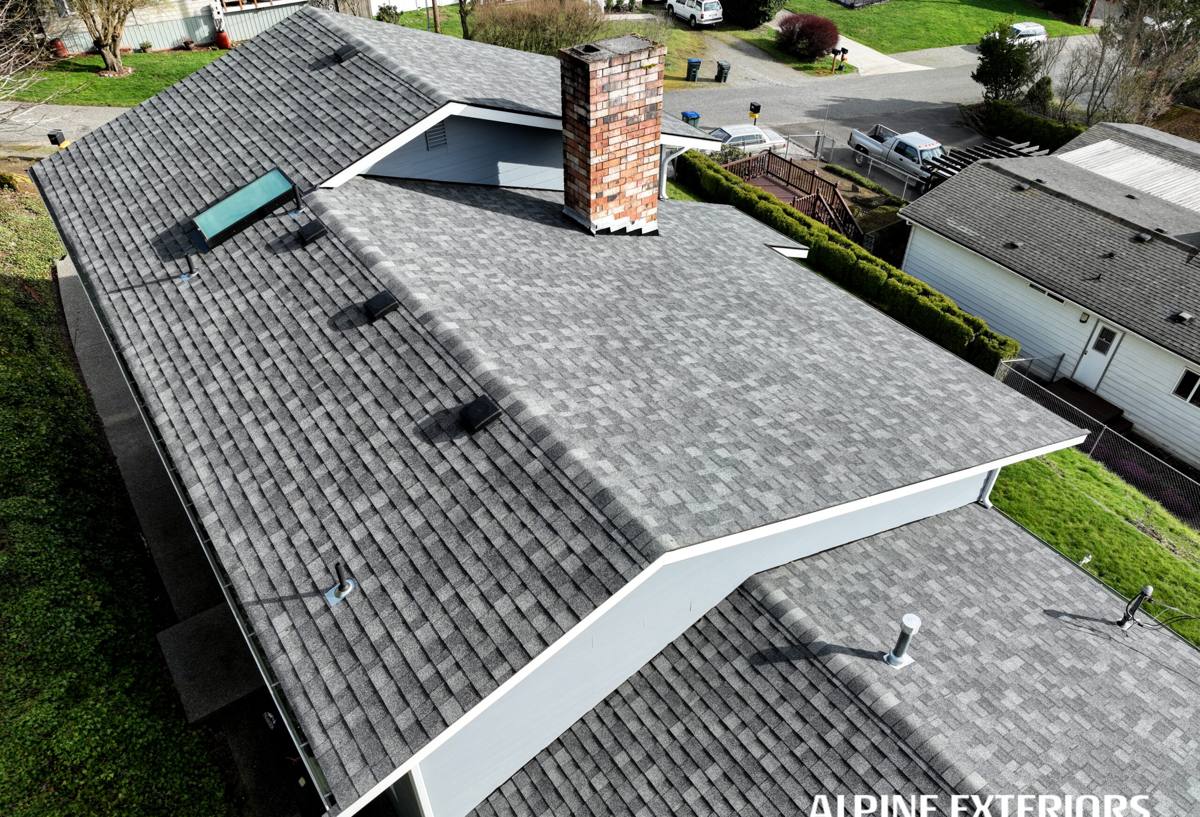
What Acme's Climate Actually Does to a Roof
Every roofing material on a house eventually has to deal with the same three things in this part of Whatcom County: sustained moisture, organic debris, and temperature swings between summer heat and winter cold snaps. On a wooded or semi-rural property, a few local factors make this worse than it would be on an open lot in town.
Shade and Slow Drying
Homes tucked under fir and cedar cover lose the sun exposure that helps a roof dry out between storms. A roof surface that stays damp longer gives moss and algae more time to establish, and it keeps fasteners and flashing seams wet for longer stretches than the manufacturer's warranty testing usually assumes.
Needle and Leaf Debris
Valleys, gutters, and any low-slope transition collect organic debris fast under tree cover. Left alone, that debris holds water against the roofing material and accelerates whatever wear is already happening from moisture and moss.
Driving Rain and Wind-Driven Moisture
Winter storms in this region don't just drop rain straight down — wind pushes it sideways, up under laps and around penetrations that would stay dry in a calmer climate. That's a flashing and underlayment problem more than a "panel material" problem, which is why we spend more time on those details than on the metal itself.
Metal Roofing Systems We Install
Not every metal roof is the same product wearing a different color. The two main systems homeowners in Acme choose between have real differences in cost, appearance, and long-term maintenance.
| System | How It's Fastened | Best Fit | Trade-Offs |
|---|---|---|---|
| Standing seam | Concealed clips; no exposed screws through the panel face | Long-term homes, steep or complex rooflines, moss-prone lots | Higher upfront cost; requires more precise install labor |
| Exposed fastener (screw-down) | Screws with rubber washers driven through the panel face | Budget-conscious projects, simpler rooflines, outbuildings | Washers age and need eventual re-torquing or replacement |
We install both, and we'll tell you honestly which one fits your roof and your budget rather than steering every job toward the higher-margin option. For a primary residence under heavy tree cover with a lot of moisture exposure, we usually recommend standing seam because there's no exposed fastener for water to work against over time. For a shop, detached garage, or a homeowner working with a tighter budget, screw-down panels are a legitimate, durable choice as long as the washers get checked periodically.
Panel Material
Most of what we install is steel with a factory-applied protective coating, sometimes aluminum on coastal-influenced or corrosion-sensitive properties. Bare Galvalume-type finishes are more affordable and hold up fine, but a painted finish with a quality paint system resists fading and chalking longer and gives you more color options to match the rest of the house. We'll walk through the actual options and warranty terms for whatever product line fits your project — we're not going to pretend one specific coating brand is the only right answer, because there are a few solid manufacturers doing this well.
The Details That Actually Determine How Long It Lasts
The panel material gets all the attention, but the parts of the job nobody sees are what separate a metal roof that lasts thirty-plus years from one that leaks in year six.
- Underlayment: A synthetic, high-temp underlayment rated for metal roofing — not leftover felt from a shingle job.
- Ice and water shield at vulnerable points: Valleys, eaves, and around every penetration, even in a climate that sees more rain than snow.
- Flashing at every transition: Chimneys, skylights, wall intersections, and roof-to-roof valleys are where almost all metal roof leaks actually start.
- Correct fastening pattern and spacing: Over- or under-driven screws on exposed-fastener systems are the single most common cause of early failures we get called to fix.
- Proper ventilation: Trapped attic moisture condenses on the underside of metal decking if the roof can't breathe, causing rot from the inside even when the exterior is doing its job.
- Panel expansion allowance: Metal moves with temperature swings; clips and fasteners have to accommodate that movement or seams and screw holes eventually work loose.
Any one of these done wrong can undo the value of an otherwise good product. This is the part of the job that separates a crew that occasionally installs metal roofing from one that does it as a core part of the business.
Living With a Metal Roof in Acme: Moss and Maintenance
Metal roofing resists moss far better than composition shingle, but "resists" isn't "immune." Under heavy tree cover, moss and algae can still take hold in dust, needle debris, and organic buildup that collects in valleys and along low-slope edges — the metal panel itself doesn't feed the growth, but debris sitting on top of it will.
What Keeps a Metal Roof Performing Long-Term
- Clear gutters and valleys of needle and leaf debris at least twice a year, more often on a heavily wooded lot.
- Trim back overhanging branches to cut down on debris load and let more sun and airflow reach the roof surface.
- Have exposed-fastener screws checked periodically — washers age and can be re-torqued or replaced well before they become a leak.
- Rinse off visible moss or algae buildup with plain water and a soft approach rather than pressure-washing, which can damage seams and coatings.
None of this is heavy maintenance compared to what a shingle roof needs under the same tree cover, but a little attention keeps a well-installed metal roof performing at its best for its full service life.
Our Process for an Acme Metal Roofing Project
We keep the process straightforward and give you real information at each step instead of vague timelines.
1. On-Site Assessment
We walk the roof, check the decking condition, look at ventilation, and evaluate every valley, penetration, and transition — the things that determine both scope and cost.
2. Honest System Recommendation
We'll lay out standing seam versus exposed fastener for your specific roof, with real trade-offs, not a one-size pitch.
3. Written Estimate
Materials, labor, tear-off if needed, flashing detail work, and timeline, spelled out so there are no surprises mid-project.
4. Installation
Proper underlayment, flashing, and fastening — done in the order and to the spec that actually protects the house, not the fastest order that gets panels on the roof.
5. Walkthrough and Cleanup
We review the finished roof with you, clear debris and fasteners from the property, and make sure you understand any maintenance recommendations before we leave.
Why It Matters That We Already Work in Acme
A crew that regularly works properties around Acme and the rest of Lynden knows what tree cover, moisture patterns, and rural roof access actually mean for a job before the first ladder goes up. That's not a marketing point — it affects real decisions, like how much extra debris protection a valley needs, whether a driveway can handle material delivery, and how a roofline interacts with the specific weather this part of Whatcom County sees every winter. We're not learning the local conditions on your project; we already know them.
Questions to Ask Before You Hire a Metal Roofing Contractor
- Is the crew installing the roof employed by the company, or is the job being subcontracted out?
- What underlayment and ice-and-water shield are included, and where specifically will they be used?
- How is the flashing detailed at valleys, chimneys, and wall transitions — and can they explain it, not just say "we'll flash it"?
- What's the manufacturer's warranty on the panel and coating, and what's the workmanship warranty from the installer?
- How will ventilation be handled so moisture doesn't get trapped under the new roof?
- Do they have local references or completed work you can see in this area?
A contractor who answers these clearly and specifically, without deflecting to "don't worry about that," is a contractor worth hiring.
Get a Straight Answer About Your Roof
If you're weighing metal roofing for a home in Acme, we're glad to come take a look, walk you through what your specific roof needs, and give you a straightforward estimate — no pressure, no inflated scare tactics about your current roof. Use the form below to request a free estimate and we'll get back to you to schedule a time.