 Lynden Exterior
 Roofs in Acme Take a Different Kind of Beating
Acme sits in a part of Whatcom County where the weather doesn't do anything halfway. Winters bring long stretches of steady rain, the tree cover along the Nooksack corridor and surrounding foothills keeps roofs shaded and damp longer than homes out in the open, and the marine-influenced air that moves through this part of Washington keeps humidity high even between storms. A roof out here isn't just shedding water a few times a year during a storm system — it's managing near-constant moisture exposure for months at a stretch. That changes what "roof repair" actually needs to mean. A quick patch that would hold up fine in a dry climate can fail here in a single wet season if it doesn't account for how water actually moves across a Whatcom County roof.
This page is about roof repair specifically for homes in and around Acme — not a general overview of roofing. If you're dealing with a leak, missing shingles, damaged flashing, or a roof that's just showing its age faster than it should, this is what a proper repair looks like out here, and why it matters who does the work.
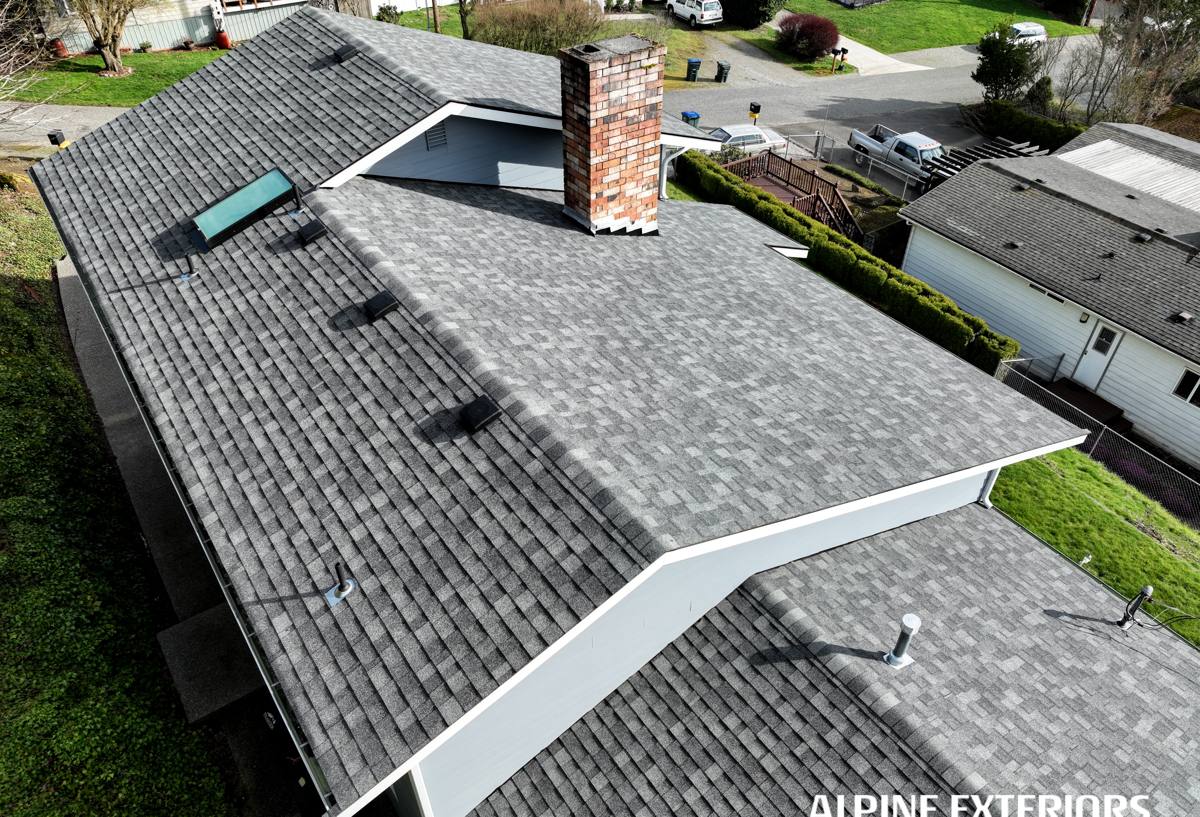
What Local Weather Does to a Roof Over Time
Moss and organic growth
Moss is the single biggest maintenance issue for roofs in this area, and it's more than cosmetic. Moss holds moisture directly against the roofing surface, works its way under shingle tabs and shakes as it grows, and lifts materials just enough for water to get underneath. On north-facing slopes and any section shaded by trees, moss can establish itself within a couple of seasons if it isn't addressed. Left alone long enough, moss growth is one of the most common reasons a roof that still has years of material life left starts leaking anyway.
Driving rain and wind-driven moisture
Straight-down rain is easy for any roof to handle. Driving rain — pushed sideways by wind during a storm — is what actually finds the weak points: lifted shingle edges, aging flashing, nail pops, and gaps around vents or chimneys. A repair that only addresses the surface layer and ignores how wind-driven water travels underneath it tends to come back as a leak within a season or two.
Shade, slow drying, and material fatigue
Roofs that stay damp longer between rain events age faster. Asphalt shingles lose granules more quickly when they don't get a chance to fully dry out, wood components are more prone to rot, and metal fasteners see more corrosion. This is a big part of why two roofs of the same age and material, one in full sun and one under tree cover, can be in noticeably different condition.
Signs Your Roof Needs Repair, Not Just a Look
Most roof problems in this area don't start as a dramatic leak — they start small and get worse through a wet winter. Worth checking for, or having us check for:
- Water stains on ceilings or upper walls, especially ones that appear or worsen after a storm
- Visible moss or dark streaking on the roof surface, particularly on shaded or north-facing sections
- Shingles that are curling, cracking, cupping, or missing granules in patches
- Flashing around chimneys, skylights, or roof-wall intersections that looks lifted, rusted, or gapped
- Sagging in the roofline or soft spots when walking the attic space above a section of roof
- Granules collecting in gutters or at downspout outlets
- Daylight visible through the roof deck from inside the attic
- Higher heating bills with no other explanation, which can point to moisture-compromised insulation
Any one of these on its own might be minor. Several together, or any sign paired with an active leak, means it's worth having someone look before the next storm system moves through.
What a Correct Roof Repair Actually Involves
Diagnosing the real problem, not just the symptom
The leak you see inside is often not directly above where the water is actually getting in — water can travel along the underlayment or framing before it shows up as a stain. A correct repair starts with tracing the path, not just patching the ceiling stain's rough location. That usually means getting on the roof, checking the attic from underneath, and sometimes pulling back a section of roofing to see what's happening at the deck level.
Matching materials and technique to what's already there
A repair should use materials and fastening methods compatible with the existing roof, not whatever's fastest. Mixing incompatible materials, using the wrong fastener length, or shortcutting the layering order (how each course of shingle or flashing overlaps the one below it) can create a repair that looks fine but fails the first time water is pushed at it sideways.
Flashing, valleys, and penetrations get the most attention
The flat field of a roof rarely fails first. Leaks concentrate at transitions — chimney flashing, valleys where two roof planes meet, pipe boots, skylight curbs, and wall intersections. Any real repair has to treat these points as the priority, since that's where driving rain and moss buildup do the most damage over time.
Cleanup and moss treatment as part of the job
Given how much moss affects roofs in this area, a repair that doesn't include clearing existing growth and treating the surface to slow regrowth is leaving the underlying cause in place. We treat moss management as part of a proper repair, not a separate add-on service.
Repair or Replace? How We Help You Decide
Not every damaged roof needs to come off. Age, extent of the damage, and how the rest of the roof is holding up all factor in. Here's the general logic we walk homeowners through:
| Factor | Leans toward repair | Leans toward replacement |
|---|---|---|
| Roof age | Under roughly 15 years, or well under material's expected lifespan | At or beyond the material's typical service life |
| Extent of damage | Isolated to one section, flashing point, or slope | Widespread across multiple slopes or the whole roof |
| Moss and moisture history | Recent growth, caught early, deck still sound | Long-term moss coverage with signs of deck rot underneath |
| Material availability | Matching shingle or material still available or close enough | Discontinued product, noticeable mismatch unavoidable |
| Underlying deck condition | Solid, no soft spots or rot found | Soft decking, rot, or repeated leaks in the same area |
We'll always tell you honestly which side of that line your roof falls on. Recommending a repair when a repair will genuinely hold, and being upfront when a repair would just be a short-term patch on a roof that needs replacing, is the standard we hold ourselves to.
Our Roof Repair Process
- Inspection. We get on the roof and in the attic where needed, checking not just the obvious damage but the flashing, valleys, and any shaded or moss-prone sections nearby.
- Honest assessment. We explain what we found, what's causing it, and whether a repair is the right call or if you're better served by a larger fix — in plain language, not a sales pitch.
- Written estimate. You get a clear scope of work and price before anything starts, so there are no surprises.
- The repair itself. Damaged materials removed, deck checked and repaired if needed, new materials installed matched to what's there, flashing and transition points properly re-sealed.
- Moss and debris cleanup. Existing moss and organic buildup cleared from the repair area and treated to slow regrowth.
- Final walkthrough. We show you the completed work and answer any questions before we consider the job done.
Common Roofing Materials We Repair Around Acme
Homes in this area are covered in a mix of materials, and each behaves a little differently in this climate:
| Material | How it holds up locally | Repair considerations |
|---|---|---|
| Asphalt composition shingle | Common and generally reliable; moss and prolonged dampness shorten its life if untreated | Matching shingle color and profile matters for a clean repair; granule loss is a key thing we check |
| Cedar shake | Handsome but more vulnerable to moss, moisture retention, and rot in shaded, damp conditions | Requires careful attention to ventilation and moss control to avoid recurring repairs |
| Metal roofing | Sheds moss and water well; main wear points are fasteners, seams, and flashing | Repairs focus on fastener condition, sealant at penetrations, and panel seams rather than the panels themselves |
| Flat or low-slope membrane | Common on additions and porches; slower drainage means standing water is a real risk | Seam integrity and proper slope toward drains are the priority in any repair |
Preventive Maintenance That Extends the Life of a Repair
A repair holds up longer when it's backed by basic upkeep between visits. A few habits make a real difference in this climate:
- Keep gutters clear so water isn't backing up under the roof edge during heavy rain
- Trim back branches that keep a section of roof shaded and slow to dry
- Have moss growth addressed early rather than letting it spread across a full slope
- Check the attic occasionally for musty smells, damp insulation, or daylight through the deck
- Schedule a roof check after any major windstorm, even if nothing looks obviously wrong from the ground
Why Hiring a Crew That Already Works This Area Matters
Roofing crews unfamiliar with Whatcom County conditions sometimes treat moss as cosmetic, underestimate how far driving rain can push water sideways under a roof edge, or use repair methods that work fine in drier climates but don't hold up here. A crew that regularly works roofs around Acme and Lynden knows which slopes and roof styles tend to hold moisture, where flashing tends to fail first in this weather pattern, and what a repair actually needs to include to last through a full wet season rather than just past the next dry stretch. That local pattern recognition is the difference between a repair that's genuinely done right and one that looks fine until the next storm.
Get a Straight Answer About Your Roof
If you're dealing with a leak, moss buildup, damaged flashing, or just want a second opinion on something you noticed on your roof, we're glad to take a look. We'll give you a clear, honest read on what's going on and what it would take to fix it right — no pressure, no upsell. Reach out for a free estimate using the form below.