 Lynden Exterior
 Why Window Installation in Custer Calls for a Different Approach
Custer sits in the part of Whatcom County that catches weather most inland homes never have to deal with. Close enough to the water to pick up salt-laden marine air, exposed enough to take driving, wind-pushed rain straight into wall assemblies, and wet enough for long stretches of the year that moss and algae get a real foothold on anything that stays damp. Windows are one of the first places all three of those show up. A window that would hold up fine on a sheltered inland lot can fail years early out here if it wasn't installed with this specific climate in mind.
That's not a knock on any particular product. It's a reminder that window installation is as much about the flashing, sealing, and fit as it is about the window itself. Get the installation wrong and even a good window will leak, fog, or rot its opening prematurely. Get it right, and a mid-range window will outlast a premium one that was rushed in.
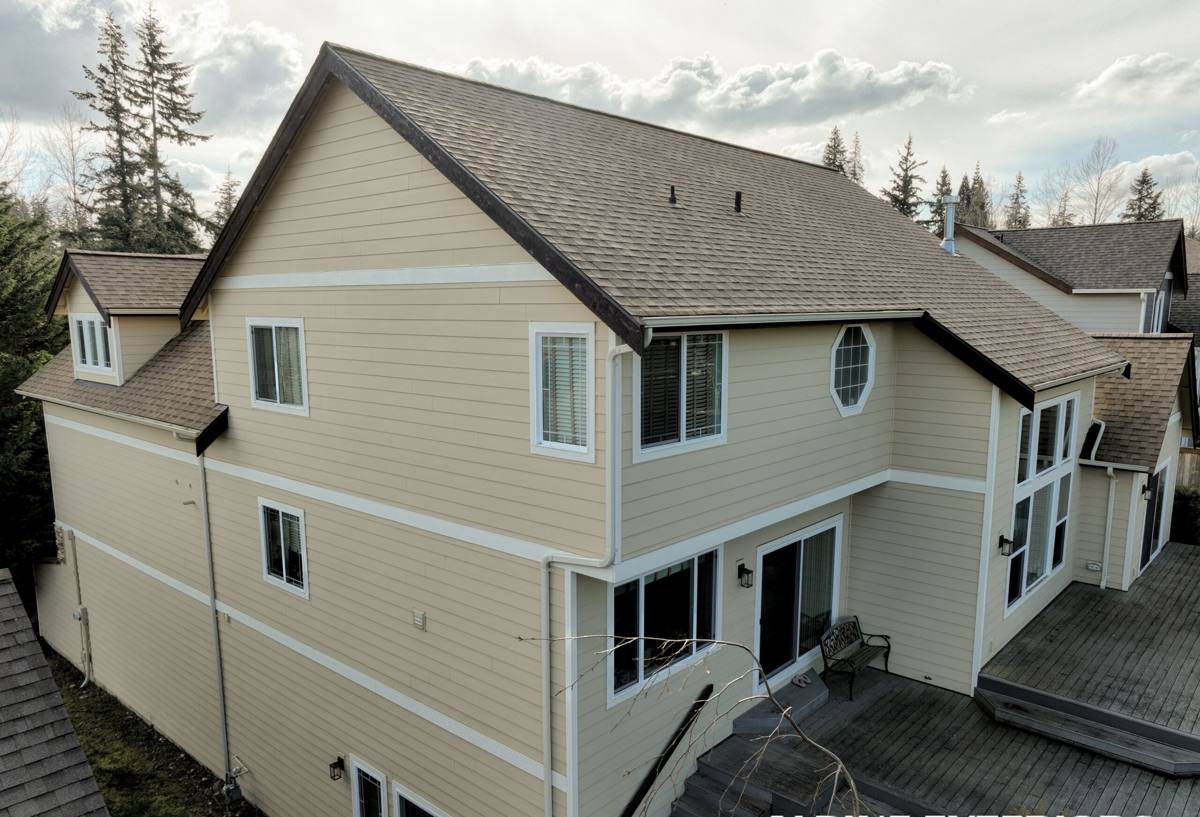
What Salt Air, Driving Rain, and a Long Moss Season Actually Do
Salt Air and Hardware
Airborne salt accelerates corrosion on exposed metal — hinges, locks, aluminum cladding, and screen frames all age faster near the water than they do a few miles inland. Weatherstripping also breaks down faster in salt-influenced air, which is usually the first thing that goes and the last thing homeowners notice, because the symptom is just "this window feels drafty now."
Driving Rain and Flashing
Wind-driven rain doesn't just fall on a window, it gets pushed sideways and upward into any gap in the flashing or sealant. A window that was caulked instead of properly flashed might pass a dry-weather inspection for years and then fail during the first real storm that hits the wall at an angle. This is the single most common root cause of interior water stains and rot found around older windows in this area.
Moss Season and Sustained Moisture
Whatcom County's wet season runs long, and anything that holds moisture against wood — moss on a sill, algae in a corner joint, debris packed into a track — keeps that wood wet for weeks at a time instead of drying between rain events. Wood windows and wood trim around any window type are the most exposed to this, but even vinyl and fiberglass frames can trap moisture behind them if the installation didn't account for drainage.
Signs a Custer Home's Windows Are Losing the Fight
Most window failures out here are gradual, not sudden. Homeowners usually notice one or two of these before realizing there's a real problem underneath:
- Fogging or a hazy film between panes of a double-pane window — the seal has failed and the gas fill is gone
- Soft, spongy, or discolored wood on the sill or the trim directly below the window
- A draft you can feel with your hand along the edge of the frame on a windy day
- Sashes that stick, drag, or won't stay open on their own anymore
- Caulk that's cracked, pulled away, or missing in sections around the frame
- Green or black staining on the exterior sill or the siding just below it
- Peeling or bubbling paint on interior trim near the window, even in rooms with normal humidity
Any one of these on its own might just mean a caulk touch-up. Two or more together, especially soft wood plus staining, usually means water has been getting behind the frame for a while.
What a Correct Window Installation Actually Involves
Water Management Comes First
Before a new window ever goes into the opening, the rough opening itself has to be right. That means a sloped sill pan or sill pan flashing so any water that does get past the window drains back out instead of pooling, and flashing tape applied in the correct shingle-style order — sill first, then jambs, then head flashing — so each layer sheds water onto the one below it rather than behind it. This is the part of the job that's invisible once the window is in and trimmed out, and it's also the part that determines whether the installation lasts fifteen years or fails in three.
Fit, Insulation, and Air Sealing
The window has to be set level, plumb, and square in the opening — even a small amount of racking stresses the frame and can cause the sashes to bind or the seals to fail early. The gap between the window frame and the rough opening gets filled with a low-expansion insulating foam or backer rod and sealant, not stuffed with fiberglass, which does nothing to stop air movement. On the exterior, the sealant used around the trim has to be a product rated for the actual movement and moisture cycling this climate puts it through, not just whatever's fastest to apply.
Interior Finish and Final Check
Once the window is set and sealed, trim goes back on, the interior is finished to match the rest of the room, and the whole unit gets tested — sashes operate smoothly, locks engage, and there's no visible gap anywhere around the perimeter.
Comparing Frame Materials for This Climate
There's no single "right" window material for every home — it depends on the home's age, exposure, and what the homeowner wants to maintain over time. Here's how the common options generally hold up under Custer's conditions:
| Frame Material | Moisture & Salt Air Performance | Maintenance | General Cost Position |
|---|---|---|---|
| Vinyl | Good — won't rot or corrode, but can become brittle with age and sun exposure | Low — occasional cleaning | Lower to mid-range |
| Fiberglass | Very good — dimensionally stable, resists moisture and salt air well | Low | Mid to upper range |
| Wood (unclad) | Weakest option here unless finish is maintained closely — most vulnerable to the wet season | High — needs regular refinishing | Mid to upper range |
| Wood-clad (exterior vinyl or aluminum shell over wood) | Good exterior protection, but any breach in the cladding traps moisture against the wood underneath | Moderate | Upper range |
| Aluminum | Fair — durable but conducts cold and is more prone to corrosion near salt air over time | Low to moderate | Lower to mid-range |
For most homes in Custer, vinyl and fiberglass tend to be the more forgiving long-term choices simply because they don't give moisture and salt air a foothold the way exposed wood does. That's a maintenance and durability judgment, not a statement that other materials can't work — plenty of well-maintained wood and wood-clad windows do fine here, they just ask more of the homeowner over time.
Our Installation Process
- On-site assessment of each opening — we check the existing flashing, sheathing condition, and framing for any hidden rot before quoting the job
- Careful removal of the old window and inspection of the rough opening once it's exposed
- Repair of any damaged sheathing or framing found underneath — this gets flagged and discussed before we cover it back up
- Installation of new sill pan flashing and shingle-lapped flashing tape at the jambs and head
- Setting the new window level, plumb, and square, then securing it per the manufacturer's fastening schedule
- Low-expansion foam or backer rod insulation around the perimeter, followed by exterior sealant
- Interior and exterior trim work to match the home
- Final operation check and job-site cleanup, including hauling away the old windows
Why a Crew That Already Works in Custer and Lynden Matters
Whatcom County covers a lot of different microclimates, and a crew that mostly works inland jobs won't necessarily think to flag the extra flashing detail or the salt-air hardware consideration that a Custer home actually needs. A crew that regularly works this specific area already knows the general housing stock out here — the mix of older farmhouses, ranch homes, and manufactured housing common to the area — and has seen firsthand which installation shortcuts show up as callbacks two or three winters later.
There's also a practical side to it: a local crew can get to a warranty question or a follow-up caulk check quickly, without a home visit turning into a half-day trip. That responsiveness matters more with windows than with almost any other exterior product, because small problems — a gap in caulk, a sash that's started to stick — are cheap to fix early and expensive to ignore.
What Affects the Cost of a Window Installation
Every home is different, so a real number only comes from an on-site look, but the main cost drivers are consistent from job to job:
- Number of window openings being replaced
- Frame material chosen (vinyl, fiberglass, wood, wood-clad, or aluminum)
- Whether it's a retrofit into a sound existing frame or a full-frame replacement with flashing and rough-opening work
- Whether hidden rot or moisture damage is found once the old window comes out
- Size and shape — standard sizes cost less than custom or oversized openings
- Access — second-story or hard-to-reach windows take more labor time
- Glass package — standard dual-pane versus upgraded low-E coatings or additional gas fill
Costs for a single window replacement can range from several hundred dollars for a straightforward retrofit into good framing, up to a few thousand for a larger opening with rot repair or custom sizing. The only way to get an accurate figure is to have someone look at the actual openings.
Caring for New Windows Through Moss Season
A correctly installed window still benefits from basic upkeep, especially heading into the wetter months. Keep sills and tracks clear of leaves and debris so water doesn't pool. Rinse accumulated salt film off frames and glass periodically if the home is closer to the water. Walk the exterior once a year and check that caulk lines are still intact — small cracks are a five-minute fix if caught early. And keep gutters clear and functioning, since a clogged gutter will sheet water directly down across upper windows during a heavy storm, putting stress on flashing that was never meant to handle that volume.
If you're weighing a window replacement in Custer or elsewhere around Lynden, we're happy to take a look at your home, walk through what your specific openings need, and put together a free, no-pressure estimate — no obligation either way.