 Lynden Exterior
 Ferndale Windows Deal With a Different Kind of Weather
Ferndale sits close enough to the water that homes here take on a different kind of wear than you'd see further inland in Whatcom County. Salt-laden air off the bay works its way into hardware, hinges, and unprotected metal. Driving rain off Puget Sound doesn't fall straight down — it gets pushed sideways into window seams by wind, which means flashing and sealant details that would be fine on a sheltered inland wall can fail on an exposed Ferndale elevation. And the long stretch of grey, wet months every year gives moss and algae plenty of time to take hold on sills, tracks, and anywhere water sits instead of draining.
None of that means Ferndale is a bad place to have windows — it just means the windows, and the installation, have to be matched to the conditions. A window that performs fine in a dry climate can start showing problems here in a few seasons: swollen sills, pitted hardware, black streaking below the frame, or a slow leak that only shows up during a hard westerly storm.
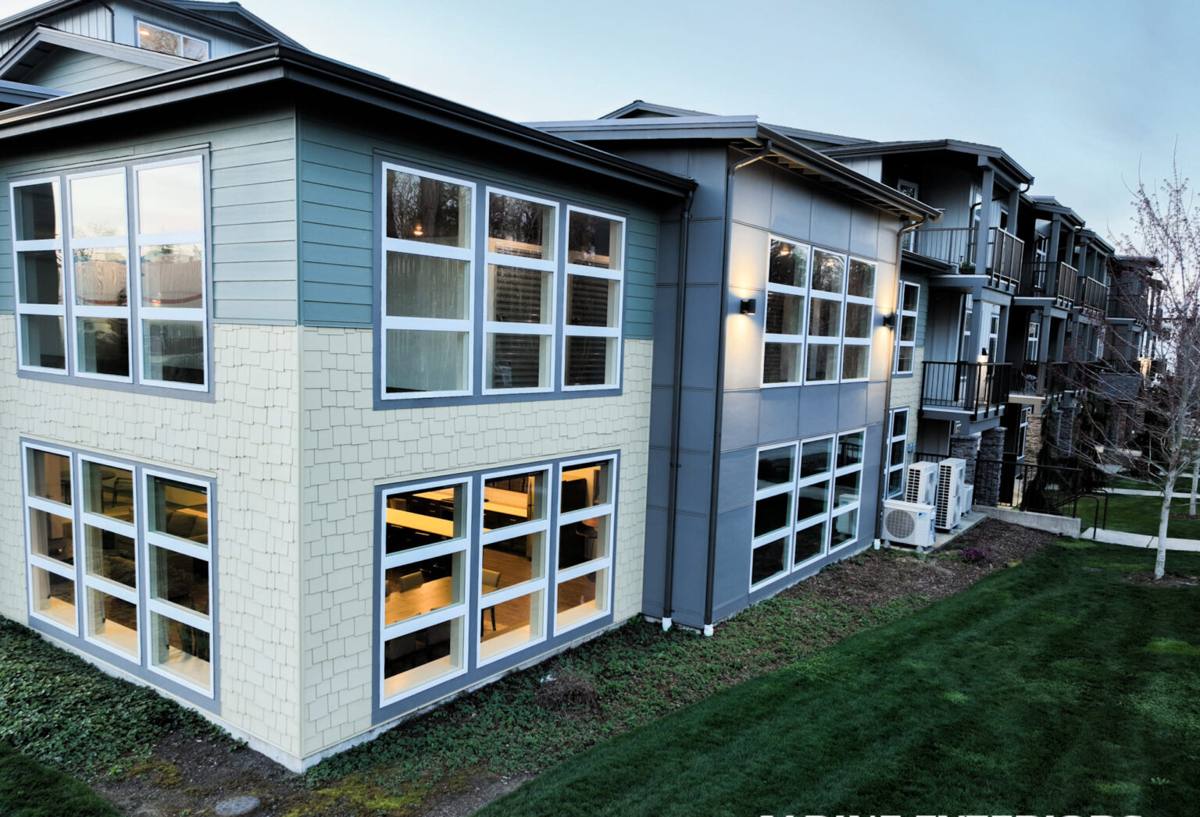
What "Custom" Actually Means on a Job Like This
"Custom" gets used loosely in this business, so it's worth being specific. On most Ferndale homes, custom windows come up for a few real reasons:
- The house is older, and the rough openings aren't a standard size that a stock window will drop into without extra framing work
- You're changing the shape or configuration — combining two windows into one larger unit, adding a picture window with operable flankers, or matching an odd angle in a bump-out or dormer
- You want a specific look (grid pattern, exterior color, interior wood finish) that isn't available off the shelf
- The opening is exposed to weather in a way that calls for upgraded flashing, sill pan, or drainage details beyond a standard install
Custom doesn't have to mean exotic or expensive — it just means the window and the install are built to fit your actual opening and your actual exposure, instead of forcing a stock unit into a space it wasn't designed for.
Older Ferndale Homes Need Extra Attention
A lot of the housing stock in and around Ferndale predates modern window standards. Original openings are often slightly out of square after decades of settling, and old sills were sometimes built without proper slope or flashing because that wasn't standard practice at the time. On these houses, a correct custom install usually involves rebuilding part of the opening — new sill pan, corrected flashing, sometimes new trim — not just swapping the sash.
Frame Materials: What Actually Holds Up Near the Water
Every frame material has trade-offs. Near the coast, those trade-offs matter more than they would on a sheltered inland lot. Here's how the common options actually behave under Ferndale's conditions:
| Material | How it handles salt air & moisture | Maintenance | Fit for Ferndale exposure |
|---|---|---|---|
| Vinyl | Won't corrode or rust; UV and temperature swings can affect long-term stability of dark colors | Low — occasional cleaning | Solid all-around choice, especially light-to-mid colors |
| Fiberglass | Very stable in moisture and temperature swings; resists corrosion well | Low | Strong option for higher-exposure walls facing prevailing weather |
| Wood or wood-clad | Real wood interior can be beautiful but needs the exterior fully protected from driving rain and salt air, or moisture will find any gap in the finish | Higher — finish upkeep on any exposed wood | Best reserved for sheltered elevations or well-detailed clad exteriors |
| Aluminum | Conducts cold and can corrode or pit faster in salt air unless properly coated | Moderate | Generally our least-preferred choice for exposed coastal walls |
We're not against any of these materials on principle — we're against putting the wrong material on the wrong wall. A wood window on a sheltered, covered porch elevation can last for decades. The same window on an open, rain-facing wall a few hundred feet from the water is a very different bet. Part of our job is being honest with you about which of your walls are "easy" and which ones need the more weather-resistant option, even if that's not the look you originally had in mind.
Glass and Sealing Details That Matter More Here Than Elsewhere
The glass package and the way the unit is sealed into the wall do more work in Ferndale's climate than they would in a drier region.
Glass
Low-E coatings and argon or krypton gas fills between panes cut down on heat loss, which matters through Whatcom County's long heating season. On west- and southwest-facing walls that catch more direct wind-driven rain, we also look at whether a slightly heavier glass package or laminated glass makes sense for sound and impact resistance — not just energy performance.
Flashing and Drainage
This is the part that actually determines whether a window leaks in five years. A correct install includes a sloped sill pan so any water that gets past the exterior seal drains back out instead of sitting against the framing, properly lapped flashing tape integrated with the house wrap or building paper, and sealant used only where it belongs — sealant is a backup layer, not the primary defense against water.
Moss and Algae
On horizontal or lightly sloped sills, and in shaded corners of the house, organic growth is mostly a moisture-and-light problem. Good drainage design and a sill that actually sheds water reduce how much moss and algae get a foothold in the first place — it's a lot easier to prevent than to keep scrubbing off.
Our Installation Process
The steps themselves aren't unusual, but where we put extra attention is specific to Ferndale's exposure.
- On-site assessment — we look at each opening individually, not just the house as a whole. Exposure, current condition of the sill and framing, and drainage all get checked wall by wall.
- Measuring and ordering — for true custom sizes or shapes, this step takes longer than a stock replacement, and we build that into the schedule rather than rushing it.
- Opening prep — removing the old unit, inspecting the framing and sheathing for hidden rot or past water damage before anything new goes in.
- Flashing and sill pan install — this is the step that gets skipped or shortcut most often industry-wide, and it's the one we spend the most care on.
- Setting and shimming the window — leveled, squared, and properly fastened so the unit operates correctly and the seal isn't stressed.
- Insulating and sealing — low-expansion foam or backer rod and sealant around the frame, sized correctly so it doesn't bow the frame in.
- Exterior and interior trim — finished to match the house, with attention to keeping trim details from creating new water traps.
- Final check — operation, seal, and cleanup before we call it done.
Because Ferndale weather can turn on short notice, we also plan installation days around the forecast where we can, and we don't leave an opening exposed overnight if a system is rolling in.
Signs Your Current Windows Are Already Losing the Fight
A lot of homeowners live with a slowly failing window for years because the signs are subtle at first. Worth checking for:
- Fogging or a permanent haze between the panes of a double-pane unit — the seal has failed
- Visible moss, algae, or black staining on or below the sill
- Sills or frames that feel soft, spongy, or show paint bubbling and peeling
- Noticeable draft near the frame even with the window latched
- Difficulty opening, closing, or locking that wasn't there a few years ago
- A musty smell or slight discoloration on interior drywall near the window during heavy rain
- Condensation forming on the interior glass or frame regularly through the wet months
Any one of these on its own might be minor. A few of them together on the same window, especially on a rain-exposed wall, usually means the unit or the install has already started to fail.
What Drives the Cost on a Custom Window Project
We don't quote sight-unseen, and we're not going to throw out numbers here that don't reflect your actual house. What we can tell you is what actually moves the price up or down on a project like this:
| Cost factor | Why it matters |
|---|---|
| Opening size and shape | Non-standard sizes and shapes (arches, angles, oversized units) cost more to manufacture and install than stock sizes |
| Number of openings | Doing several windows in one project generally lowers the per-unit labor cost versus a single window |
| Glass package | Upgraded Low-E coatings, gas fills, or laminated/impact glass add cost but pay off in comfort and durability, especially on exposed walls |
| Frame material | Vinyl is generally the most budget-friendly; fiberglass and wood-clad options cost more upfront |
| Condition of the existing opening | Hidden rot, out-of-square framing, or past water damage adds repair work before the new window can go in |
| Access and height | Second-story, hard-to-reach, or obstructed openings take more time and equipment |
| Trim and interior finish | Matching existing trim profiles or refinishing wood interiors adds labor beyond the window itself |
The honest answer to "what will this cost" is always "it depends on what we find when we look at your specific openings" — which is exactly why we start with a walkthrough rather than a phone quote.
Why It Matters That the Crew Already Works This Area
A window install done to a generic standard can still fail on a Ferndale house if it isn't built for this specific exposure. Knowing which walls in this area typically take the brunt of the weather, how the local moisture and moss cycle behaves through the wet season, and what kind of flashing and drainage detail actually holds up here isn't something you get from a manual — it comes from working houses in this part of Whatcom County season after season. As a crew based out of Lynden and working throughout the surrounding area, we see the same climate patterns your house deals with, on other houses, year-round, and we build that into how we spec and install every custom window.
If your Ferndale home has windows that are fogging, drafting, growing moss, or just past their working life, we're happy to come take a look. No pressure, no obligation — just a straight assessment of what's going on with your windows and what it would take to fix it right, followed by a free estimate using the form below.