 Lynden Exterior
 Building a Deck That Actually Holds Up in Bellingham
Bellingham sits close enough to the water that salt-laden air, near-constant winter drizzle, and shaded, moss-prone yards all factor into how a deck should be built. A deck design that works fine in a drier inland climate can start showing problems here within a few seasons — soft spots at the ledger board, black streaking on the boards, slick moss buildup on shaded sections, and fasteners that corrode faster than expected. None of that is inevitable. It comes down to material choices, flashing details, and drainage planning done correctly the first time.
We build and repair decks throughout the Bellingham area as part of our regular service territory out of Lynden, and we see the same climate-driven failure patterns often enough that we've built our process specifically around avoiding them.
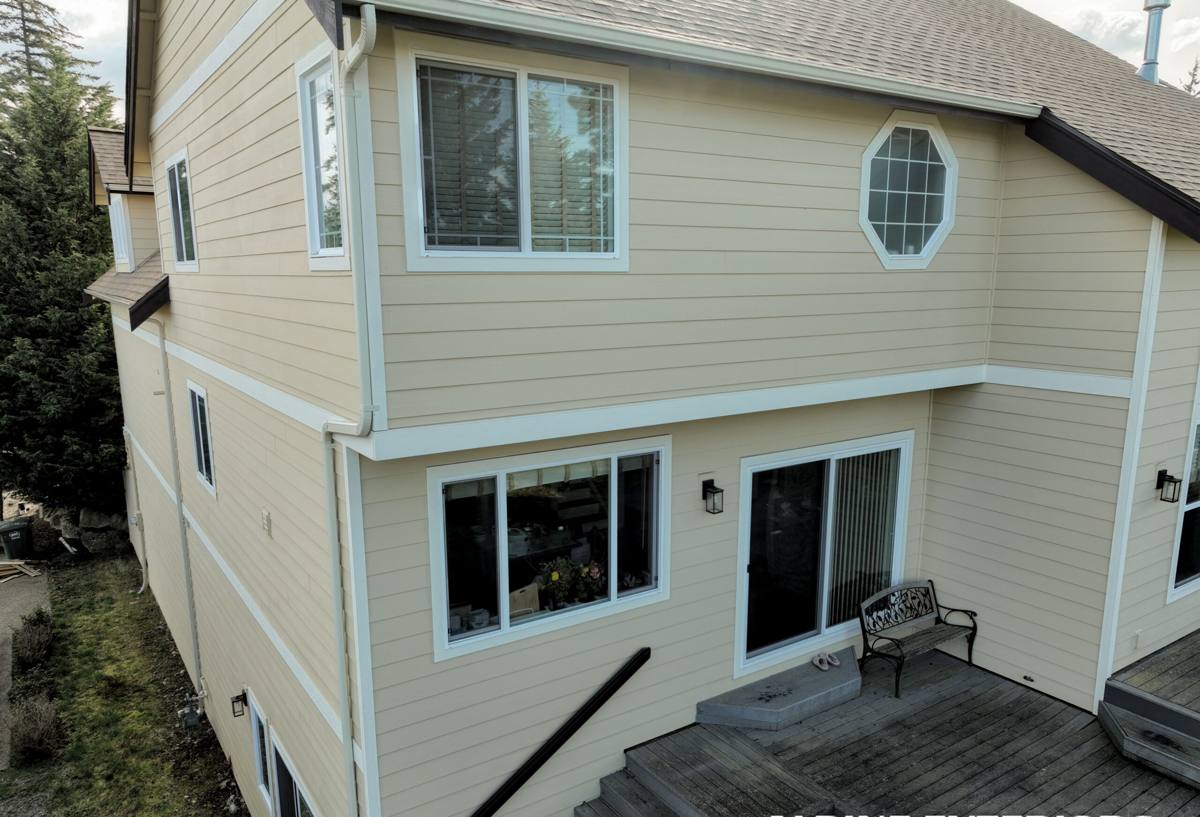
What Bellingham's Climate Does to a Deck Over Time
Moisture That Doesn't Let Up
Whatcom County gets long stretches of steady, driving rain rather than short hard downpours. That matters for deck construction because it means wood, fasteners, and connection points stay damp for extended periods rather than getting a quick soak and drying out. Any spot where water can collect and linger — a poorly flashed ledger board, a joist without a drip edge, board gaps that are too tight — becomes a slow rot problem instead of a fast one, which makes it easy to miss until the damage is already structural.
Moss and Algae Season
Shaded yards, tree cover, and consistent moisture give moss and algae a long growing season here. On a deck, that shows up as green or black staining, a slippery walking surface, and moss creeping into board gaps and fastener heads where it holds moisture against the wood or composite core. Decks built with tight board spacing, poor sun exposure, or the wrong surface material tend to need moss treatment far more often than one designed with airflow and drainage in mind from the start.
Salt Air and Corrosion
Proximity to Bellingham Bay means salt-influenced air reaches yards that aren't directly waterfront. Salt exposure accelerates corrosion in fasteners, joist hangers, and structural hardware — the parts of a deck you don't see once it's built, but that everything else depends on. Using the correct corrosion-rated hardware isn't optional here; it's the difference between hardware that lasts the life of the deck and hardware that fails quietly underneath a surface that still looks fine.
What a Correctly Built Deck Needs in This Climate
- Ledger board flashing that sheds water away from the house rim joist, not just a bead of caulk behind the board
- Corrosion-resistant, code-rated fasteners and joist hangers rated for treated lumber contact
- Joist tape or drip caps on structural framing to keep standing water off cut ends and fastener points
- Adequate board spacing and airflow underneath the deck to let wet wood dry between rain events
- Footings sized and set below frost depth per Whatcom County requirements, on soil that's been checked for drainage, not just assumed
- Surface material chosen with this specific yard's sun exposure and moss risk in mind, not a one-size-fits-all default
Skipping any one of these doesn't usually cause a visible problem in year one. It shows up in year four or five as soft framing, loose hardware, or a surface that's chronically slippery no matter how often it gets cleaned.
Choosing the Right Decking Material for a Bellingham Yard
There's no single "best" decking material — the right call depends on how much sun the deck gets, how much maintenance the homeowner actually wants to do, and budget. We walk through the real trade-offs rather than pushing whatever's easiest for us to install.
| Material | Moss/Moisture Behavior | Maintenance | General Cost Position |
|---|---|---|---|
| Pressure-treated wood | Absorbs moisture readily; needs sealing to resist staining and moss in shaded areas | Annual cleaning and periodic staining/sealing | Lowest upfront cost |
| Cedar | Naturally rot-resistant but still surface-stains and hosts moss without upkeep | Regular sealing to preserve color and resist moisture | Mid-range |
| Capped composite | Resists moisture absorption well; still needs occasional cleaning where moss can sit on the surface | Low — periodic washing, no sealing or staining | Higher upfront, lower long-term upkeep |
| PVC decking | Doesn't absorb moisture; least prone to rot, though surface can still grow algae film if never cleaned | Lowest — occasional washing | Highest upfront cost |
For yards with heavy shade and tree cover — common in and around Bellingham — we're often more cautious about recommending uncapped wood surfaces without a clear maintenance commitment from the homeowner, since moss and staining show up faster there than in open, sunny yards. That's a maintenance and moisture conversation, not a knock on wood as a material — plenty of well-maintained wood decks in this area hold up fine.
Framing and Structural Details We Don't Cut Corners On
Ledger Attachment and Flashing
The ledger board — where the deck attaches to the house — is the single most common failure point on decks in wet climates. We flash it with proper step flashing and a water-resistant barrier behind the board, not just sealant, since sealant alone degrades over time and driving rain will eventually find the gap.
Footings and Frost Depth
Whatcom County has specific footing depth requirements tied to local frost line and soil conditions. We set footings to meet code and to actual soil conditions on the lot, not a generic minimum, since drainage varies block to block even within Bellingham.
Joist Protection
Every cut end and top edge of a structural joist is a place water can enter end-grain and start rot from the inside out — which is exactly why it's often missed on decks that look fine from above. We use joist tape or drip caps on framing as standard practice, not an upgrade.
Airflow Underneath
Low-clearance decks or those built tight to grade trap moisture underneath with nowhere to go, which speeds up both rot and moss growth. Where clearance allows, we build in enough underside airflow to let the structure actually dry out between rain events, which in this climate might mean days apart rather than hours.
Permits and Whatcom County Requirements
Most decks above a certain height or attached to the house require a permit and inspection in Whatcom County and within Bellingham city limits. This covers footing depth, structural attachment, guardrail height and spacing, and stair requirements. We handle the permit process as part of the build rather than leaving it to the homeowner, and we build to pass inspection the first time — not to the bare minimum that might just barely get by.
Our Process for Bellingham Deck Projects
- On-site assessment — we look at sun exposure, drainage, existing structure (for replacements), and soil conditions specific to the property
- Material and design conversation — honest trade-offs on decking material, layout, and railing options based on maintenance appetite and budget
- Permit and engineering — drawings and permit submission handled on our end, sized to Whatcom County requirements
- Framing with moisture-management details built in — flashing, joist protection, and corrosion-rated hardware as standard, not upsells
- Surface installation and finish work — railings, stairs, and any sealing or finishing the chosen material requires
- Final walkthrough and maintenance guidance — what to check seasonally so the deck stays in the condition it was built in
Why a Locally Established Crew Matters for This Job
Deck building isn't complicated in principle, but building one that holds up to Whatcom County's rain patterns, moss pressure, and salt air specifically is a different standard than building to a generic national code minimum. A crew that regularly works Bellingham and the surrounding area has already seen which details matter here — where moss tends to take hold, how footing conditions vary by neighborhood, and which material choices hold up versus which ones create ongoing maintenance headaches for the homeowner. That local pattern recognition is hard to replace with a one-time out-of-area crew, no matter how skilled they are in general.
Maintaining a Deck Once It's Built
- Clear debris and standing leaves from board gaps and the underside structure each fall
- Wash the surface at least once a year to slow moss and algae buildup, more often in heavily shaded areas
- Reseal wood decking on the schedule appropriate to the product — typically every 1-2 years depending on sun exposure
- Check railing and stair connections annually for looseness, especially after winter storm seasons
- Inspect the ledger board area periodically for signs of water intrusion or soft wood
A well-built deck in this climate isn't maintenance-free, but it should be predictable — the kind of upkeep you can plan for rather than surprise repairs from moisture damage that was never properly managed in the first place.
If you're planning a new deck or need to replace one that's showing its age, we're happy to walk the property, talk through material options honestly, and put together a free, no-pressure estimate using the form below.