 Lynden Exterior
 Storm Damage in Deming: What Whatcom County Weather Does to a Roof
Deming sits along the Mt. Baker Highway corridor east of Lynden, in a part of Whatcom County where weather doesn't do anything halfway. Windstorms funnel up the Nooksack River valley, driving rain comes in sideways for days at a time, and moist, salt-tinged marine air pushes inland from Bellingham Bay and settles into every shaded roof plane. None of that is unusual for this part of Washington — but it means a roof out here works harder, and fails differently, than a roof in a drier climate.
Storm damage isn't always a dramatic event. Sometimes it's a single hard gust that lifts a row of shingles along a ridge. Sometimes it's weeks of driving rain finding a nail pop that's been loose since last winter. And sometimes it's the slow kind of damage — moss and moisture working under a flashing detail until a small leak becomes a rotted deck. All of it falls under "storm damage repair," and all of it needs to be diagnosed and fixed correctly the first time, because a rushed patch on a Deming roof rarely survives the next storm season.
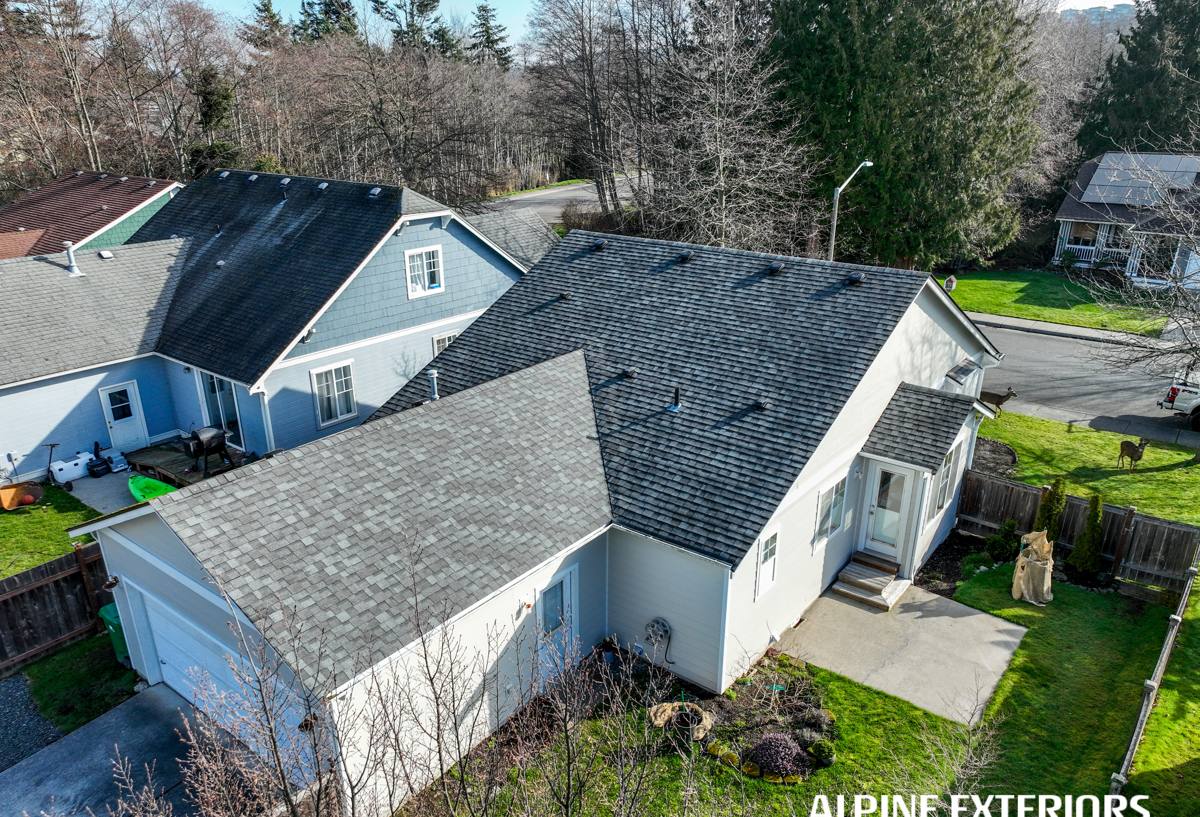
Signs Your Deming Roof Took a Hit
After a windstorm or a heavy rain event, most homeowners check for the obvious — missing shingles on the ground, an active leak in the ceiling. Those are real signs, but they're not the only ones, and waiting for a ceiling stain means water has already been getting in for a while. Here's what we tell Deming homeowners to actually look for:
- Shingles that look "off" — curled edges, exposed nail heads, or a color mismatch where the granule surface has been scraped or worn
- Granules collecting in gutters or at downspout outlets after a storm
- Bent, lifted, or missing flashing around chimneys, skylights, and roof-to-wall joints
- Soft or spongy spots when walking the roof edge (a sign of deck damage underneath)
- Debris — branches, needles, moss clumps — pooled in valleys where water should be draining freely
- New or spreading moss growth, especially on the north-facing or shaded slopes
- Ceiling or attic staining that appears after a storm, even faintly
- Gutters pulling away from the fascia or sagging under storm debris and standing water
Any one of these on its own might not be urgent. Several together, especially after a named windstorm or a multi-day rain event, mean it's worth having someone look before the next front rolls through.
What a Correct Storm Damage Repair Actually Involves
A storm damage repair that actually holds is not just replacing the shingles you can see from the ground. It's a sequence, and skipping steps is how a "repair" turns into a callback six months later.
Diagnosis before repair
We start on the roof, not on a ladder from the yard. That means checking the deck for soft spots, tracing water paths (which often travel sideways under shingles before showing up as a ceiling stain in a completely different room), and identifying whether the damage is isolated or a sign that the roofing system is past its useful life in that area.
Matching materials, not guessing
Shingle color and profile change between manufacturing runs, sometimes year to year. We try to match as closely as the market allows, and we're upfront when an exact match isn't possible — better to know that going in than to be surprised by a visible patch later.
Flashing and underlayment, not just shingles
Most of the leaks we trace back to storm damage aren't failed shingles at all — they're flashing that got bent or lifted in the wind, or underlayment that was already compromised and just needed a storm to expose it. A correct repair addresses the flashing detail and the underlayment, not just the visible shingle layer on top.
Deck repair when it's needed
If water has been getting into the roof deck, plywood or board sheathing can go soft, delaminate, or rot. Patching shingles over a compromised deck doesn't fix anything — it just hides the problem until it's bigger and more expensive.
Our Process, From Call to Finished Repair
We keep this simple and try to move at the pace the situation actually calls for — fast when there's active water intrusion, unhurried when it's a scheduled repair.
- Call or estimate request: Tell us what you're seeing and when the damage happened. If there's active leaking, say so — that changes our timeline.
- Emergency tarping (if needed): For active leaks or exposed decking, we can get a temporary weatherproof cover on the roof to stop water intrusion while we plan the permanent repair.
- On-roof inspection: We walk the roof, check the deck, flashing, and surrounding shingles — not just the obvious damage point — and photograph what we find.
- Written estimate: A clear scope of work and price range, including what's repair-only versus what would need to extend into a larger section if the deck or underlayment is compromised.
- Repair: Scheduled around weather — we don't tear into a roof section ahead of an incoming rain system if we can avoid it.
- Walkthrough: We show you what was done and what to watch for going forward, particularly if moss or debris buildup contributed to the original damage.
Repair vs. Replace: How We Make That Call
Not every storm-damaged roof needs a full replacement, and not every roof can be reasonably patched. The honest answer depends on the age and condition of the roof, not just the size of the storm damage. Here's how we think through it:
| Factor | Leans toward repair | Leans toward replacement |
|---|---|---|
| Roof age | Under 15 years, otherwise sound | Near or past expected lifespan for the material |
| Extent of damage | Isolated to one slope or section | Spread across multiple slopes or the whole roof |
| Deck condition | Solid, no rot found during inspection | Soft spots, delamination, or repeated leak history |
| Shingle match availability | Reasonably close match found | Discontinued or heavily weathered field shingles |
| Moss and moisture history | Minor, manageable with maintenance | Longstanding moss damage under multiple layers |
We'll always give you the repair option when it's a sound one — a full replacement isn't the answer just because it's simpler for us to sell. But we'll also tell you plainly when a repair is a short-term fix on a roof that's due for replacement anyway, so you can plan rather than get surprised.
Working With Your Insurance Claim
Wind and storm damage is one of the more common homeowner's insurance claims in this part of Washington, and most policies do cover it — but the claim process goes smoother with documentation done right the first time.
- We photograph damage before any repair work begins, which supports your claim and gives your adjuster a clear record
- We provide a written estimate that itemizes materials and labor, in the format most adjusters expect to see
- We can meet an adjuster on-site if that's helpful, and point out damage that's easy to miss from the ground
- We're honest about what's storm damage versus what's pre-existing wear — inflating a claim isn't something we'll do, and a good adjuster can usually tell the difference anyway
We're not a public adjuster and we don't negotiate your policy for you, but we'll give you the documentation and straight answers you need to have that conversation with your insurer.
Moss, Moisture, and the Long Recovery Season
Whatcom County's roofing challenge isn't really any single storm — it's the length of the wet season that follows one. From fall through spring, roofs here rarely get a real chance to dry out between rain events, and shaded, north-facing slopes around Deming's tree cover stay damp for extended stretches. That's exactly the environment moss needs to establish itself, and once moss gets a foothold under a lifted shingle edge or a damaged flashing seam, it holds moisture against the roof deck long after the storm that caused the original damage has passed.
This is why we don't treat storm repair as just "fix what broke and leave." If we find moss growth contributing to or resulting from storm damage, we'll address it as part of the repair — cleaning the affected area and talking through simple maintenance (keeping branches trimmed back, clearing valleys and gutters before the wet season) that reduces how often you're dealing with this again. A roof that drains and dries well handles the next windstorm a lot better than one that's already carrying moisture damage into it.
Preparing for Your Estimate Visit
A little prep on your end helps us give you a faster, more accurate assessment:
- Note roughly when you first noticed the damage or leak, and whether it followed a specific storm
- Take photos of any interior staining or dripping, including the date if you can
- Clear access to the attic if you have one, so we can check for water paths from the inside
- Let us know if you've already contacted your insurance company or have a claim number
- Mention any prior roof repairs or known trouble spots — that history helps us diagnose faster
Why a Crew That Already Works Deming Matters
Roofing crews that mostly work in drier climates, or that fly in for storm season and leave after, tend to treat every repair the same way regardless of region. A crew that works Lynden and the surrounding Whatcom County communities regularly knows which roof details fail first out here — the flashing styles that don't hold up to sustained wind-driven rain, the shaded slopes that need extra attention for moss, the deck conditions common in homes of a certain age in this area. That local pattern recognition is the difference between a repair that's cosmetically fine for a season and one that's actually built for what this valley's weather does year after year.
It also means we're not a stranger showing up once. If a repair doesn't hold the way it should, or you have a follow-up question next winter, you're calling a crew that's still local and still accountable — not chasing down a company that moved on to the next storm.
If you're dealing with storm damage on a Deming or Lynden-area roof, we're glad to come take a look. Reach out for a free, no-pressure estimate using the form below — we'll assess the damage honestly and tell you what it actually needs, whether that's a straightforward repair or something bigger.